


 Deutsch
 English
 Español
 Français
 Nederlands
 Português


 Share
Share




The 2026 Geopolitical Calculus: How AI-Driven Energy Demands Are Reshaping Global Power Dynamics
As 2026 unfolds, the explosive growth of artificial intelligence computing infrastructure is creating unprecedented energy demands that are fundamentally altering global energy security calculations, industrial competition, and geopolitical alignments. Recent World Economic Forum analysis highlights that this year marks a decisive shift where AI-driven energy demands are becoming a critical factor in data center location decisions and national competitiveness, coinciding with clean energy investment reaching $2.2 trillion in 2025 and energy security concerns intensifying amid geopolitical tensions. The convergence of three critical trends—the shift from climate-focused energy transition to competitive industrial execution, the emergence of AI as a primary driver of energy consumption patterns, and the evolution of energy security to encompass cyber resilience and supply chain protection—is creating a new global power landscape.
What is the AI-Energy Geopolitical Nexus?
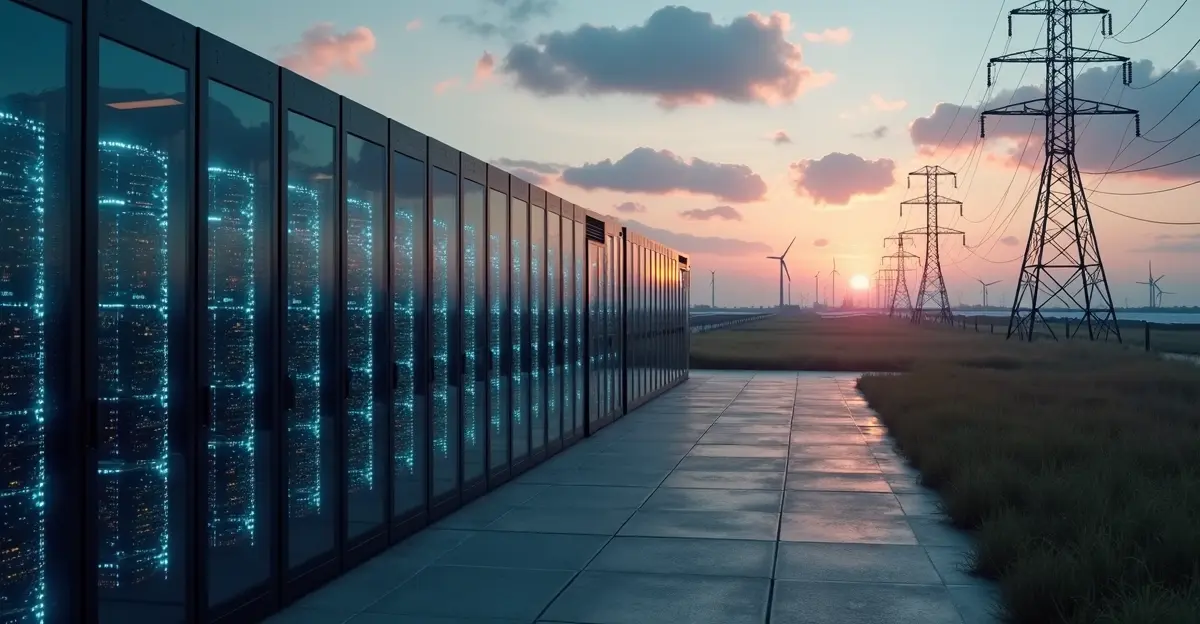
The AI-energy geopolitical nexus represents the intersection where artificial intelligence infrastructure demands meet global energy security and strategic competition. According to the International Energy Agency, data centers currently consume about 415 TWh of electricity (1.5% of global consumption in 2024), growing at 12% annually, with projections showing this could double to 945 TWh by 2030. This exponential growth is creating what experts call a "power bottleneck" that's reshaping how nations approach energy security strategies and industrial policy.
The Energy Consumption Reality: Numbers That Redefine Competition
The scale of AI's energy appetite is staggering. Training a single large language model like GPT-3 consumes approximately 1,287 MWh of electricity with 552 metric tons of CO2 emissions. By 2026, up to 11 GW of planned data center capacity faces delays due to power limitations and grid equipment shortages. Major tech companies are investing over $320 billion in data center infrastructure, outspending the entire US utility industry by a factor of two. US data center electricity consumption is projected to reach 300 TWh by 2028, potentially consuming 9% of total US electricity by 2030.
Regional Power Dynamics Shift
The United States, China, and Europe remain the largest consumers, with the US having the highest per-capita data center consumption at 540 kWh in 2024, projected to reach over 1,200 kWh by 2030. This regional concentration creates new dependencies and vulnerabilities, as nations compete for limited energy resources to power their AI ambitions. The global energy transition is now driven by industrial policy rather than traditional energy policy, with governments using tax credits, subsidies, and local-content rules to compete for clean energy manufacturing dominance.
Strategic Energy-AI Alliances: The New Geopolitical Reality
Nations are forming strategic energy-AI alliances based on mutual energy availability and technological capabilities. These partnerships represent a fundamental shift in how countries approach both energy security and technological competitiveness. The World Economic Forum argues that AI infrastructure must be treated as critical national infrastructure, comparable to electricity grids, ports, and oil pipelines. Recent drone attacks on Amazon Web Services facilities in the Middle East exposed the physical vulnerability of cloud infrastructure, marking a shift from cyber risks to kinetic threats.
Case Studies in Strategic Positioning
Several key developments illustrate this trend:
- US-China Competition: China leads global energy investment, spending twice as much as the European Union and nearly as much as the EU and US combined on clean energy technologies
- European Strategic Autonomy: Europe is pursuing ambitious domestic manufacturing strategies while facing energy constraints that limit data center expansion
- Middle Eastern Diversification: Energy-rich nations are leveraging their power generation capabilities to attract AI infrastructure investments
- Emerging Market Opportunities: Countries with abundant renewable energy potential are positioning themselves as future AI hubs
The Weaponization of Energy Access in Tech Competition
Energy access has become a weapon in technological competition, with nations using their energy resources as leverage in AI development races. The cybersecurity threats to critical infrastructure have expanded to include physical attacks on data centers, creating new dimensions of vulnerability. AI infrastructure now functions as a GDP multiplier, with IMF estimates suggesting AI could raise global GDP by 1.3-4% over the next decade through productivity gains across multiple sectors.
This economic impact makes energy access for AI infrastructure a matter of national competitiveness. Countries with reliable, affordable energy supplies gain significant advantages in attracting AI investments and developing domestic AI capabilities. Conversely, nations facing energy constraints risk falling behind in the global AI race, creating new forms of technological dependency and vulnerability.
Accelerating Fragmentation of Global Energy Markets
The AI-driven energy demand is accelerating the fragmentation of global energy markets, creating regional blocs with distinct energy-AI strategies. This fragmentation mirrors broader trends in global trade realignment and reflects the strategic importance of controlling both energy resources and AI capabilities. The outlook for 2026 emphasizes execution over ambition, competitive advantage over moral positioning, and near-term impacts like air quality and bill stability over distant climate targets.
Supply Chain Vulnerabilities
Supply chain shortages are severe, affecting specialized computing hardware (68% of providers report difficulties), cooling systems (62%), and transformers (44%). These bottlenecks create additional vulnerabilities in the AI-energy ecosystem, making resilience planning essential for national security.
Expert Perspectives on the Emerging Landscape
Industry analysts emphasize that the power bottleneck is now a critical physical infrastructure constraint affecting global AI development. "AI infrastructure has evolved from commercial real estate to strategic national assets," notes a World Economic Forum analysis. "The energy transition is now driven by industrial policy rather than traditional energy policy, with governments competing for clean energy manufacturing dominance."
According to the IEA report, accelerated servers (mainly for AI) account for almost half of the net increase in data center electricity consumption, with 30% annual increases. This growth trajectory suggests that AI will continue to reshape global energy patterns and geopolitical calculations for years to come.
FAQ: Understanding AI-Energy Geopolitics
How much energy do AI data centers consume?
AI data centers currently consume about 415 TWh of electricity (1.5% of global consumption), projected to double to 945 TWh by 2030. Training a single large language model can use over 284 megawatt-hours of electricity.
Why is 2026 a turning point for AI-energy geopolitics?
2026 marks when AI-driven energy demands become a critical factor in data center location decisions and national competitiveness, coinciding with $2.2 trillion in clean energy investment and intensifying geopolitical tensions.
How are nations responding to AI energy demands?
Nations are forming strategic energy-AI alliances, investing in clean energy manufacturing, and treating AI infrastructure as critical national infrastructure requiring protection similar to electricity grids and ports.
What are the main vulnerabilities in the AI-energy ecosystem?
Key vulnerabilities include power grid limitations, supply chain shortages for specialized hardware, physical security threats to data centers, and dependencies on specific energy sources or regions.
How does AI energy demand affect global competition?
AI energy demand creates competitive advantages for nations with reliable, affordable energy supplies while creating vulnerabilities for energy-constrained countries, potentially widening technological divides.
Future Outlook: Navigating the New Energy-AI Landscape
As we move through 2026, the intersection of AI development and energy security will continue to reshape global power dynamics. Nations that successfully navigate this complex landscape—balancing energy availability, technological development, and strategic partnerships—will gain significant advantages in the emerging AI-driven global economy. The convergence of energy and AI represents one of the most significant geopolitical developments of our time, requiring new approaches to international cooperation and strategic planning.

Follow Discussion