


 Deutsch
 English
 Español
 Français
 Nederlands
 Português


 Share
Share




The AI Energy-Geopolitics Nexus: How Power Grid Constraints Are Reshaping Global Compute Competition in 2026
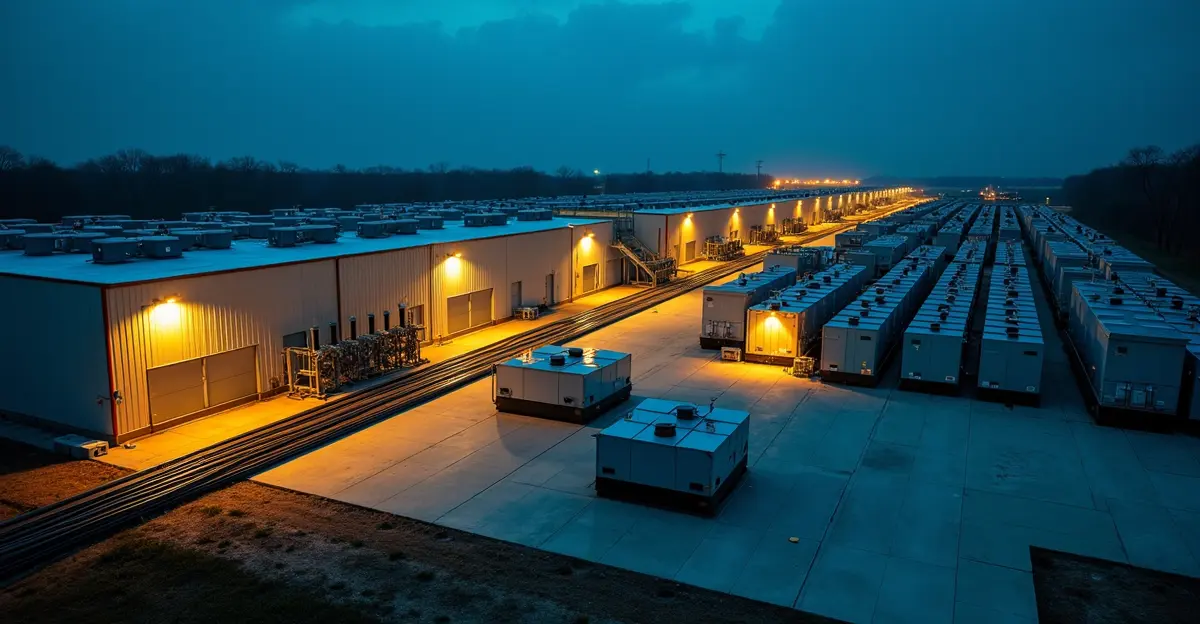
By 2026, artificial intelligence data centers are projected to consume approximately 1,100 terawatt-hours of electricity globally—equivalent to Japan's entire annual electricity consumption—creating a new geopolitical battleground where power availability, not just chip manufacturing, determines AI leadership. This unprecedented energy demand is forcing nations to strategically position energy infrastructure as a competitive advantage in the AI race, with profound implications for national security, economic competitiveness, and global power dynamics. The convergence of energy policy, technological competition, and national security has created what experts call the 'AI energy-geopolitics nexus,' where control over electricity generation and distribution is becoming as critical as control over semiconductor fabrication.
What is the AI Energy-Geopolitics Nexus?
The AI energy-geopolitics nexus refers to the intersection where artificial intelligence's massive computational demands meet global energy constraints and geopolitical competition. Unlike traditional technological races focused on semiconductor manufacturing or algorithm development, this new battleground centers on electricity infrastructure. According to the International Energy Agency (IEA), AI-driven data centers currently consume about 415 TWh of electricity annually, representing 1.5% of global electricity consumption in 2024, but this is projected to double to 945 TWh by 2030. The global semiconductor shortage has been compounded by this energy crisis, creating a perfect storm for technological competition.
The Scale of the Challenge: 1,100 TWh by 2026
Recent projections from multiple sources including Morgan Stanley, S&P Global, and industry analysts reveal the staggering scale of AI's energy appetite. The 1,100 TWh figure for 2026 represents a dramatic surge, with data center electricity demand growing 17% in 2025 alone—far outpacing global electricity demand growth of just 3%. This consumption level equals Japan's entire national electricity usage, highlighting how AI infrastructure is becoming an energy sector unto itself. The United States faces particularly acute challenges, with data centers projected to consume 6.7-12% of national electricity by 2028, up from 4% in 2024.
Regional Power Grid Constraints
Power grid limitations are emerging as critical bottlenecks in the AI race. PJM Interconnection, the largest U.S. grid operator, has warned of barely enough capacity starting summer 2026. Virginia has become ground zero for this crisis, where data centers now consume 40% of the state's electricity, potentially causing electricity bills to rise by $70 per month for families by 2028. Similar constraints are appearing globally, with Ireland facing grid limitations despite being a major data center hub, and European nations grappling with how to balance AI ambitions against energy security concerns.
Energy Sovereignty: The New Strategic Imperative
Nations are increasingly pursuing 'energy sovereignty' policies that treat AI infrastructure as critical national assets. This strategic approach involves developing domestic energy resources specifically to power AI development, reducing dependence on foreign energy supplies, and creating regulatory frameworks that prioritize national AI capabilities. France exemplifies this strategy, leveraging its nuclear power advantage (68% nuclear electricity) and €109 billion infrastructure plan to attract AI investments. The European Green Deal has taken on new urgency as member states recognize that clean energy capacity directly translates to AI competitiveness.
Comparative National Strategies
| Country | Energy Strategy | AI Advantage | 2026 Projection |
|---|---|---|---|
| United States | Nuclear restarts, natural gas expansion | Leading AI semiconductor design | 426 TWh data center demand |
| China | Massive clean energy investment | Rapid infrastructure deployment | 277 TWh data center demand |
| France | Nuclear power dominance | Energy security for AI | Strategic hub for European AI |
| UAE | Energy wealth deployment | Data center commitments | Geopolitical chip access navigation |
Tech Giants as Energy Players: Unprecedented Partnerships
The traditional utility model can't keep pace with AI-driven demand, forcing technology companies to become major energy infrastructure developers. Big tech companies are moving from being electricity buyers to infrastructure builders, with examples including Microsoft's 20-year agreement to restart the Three Mile Island nuclear reactor Unit 1, Alphabet's $4.75 billion acquisition of Intersect Power, and Google building a 1GW data center campus while committing to add 2.7GW of new power to regional grids. This blurring of lines between technology and energy sectors represents a fundamental shift in how critical infrastructure is developed and managed.
The Ratepayer Protection Pledge
In March 2026, the White House announced the Ratepayer Protection Pledge, securing commitments from major AI and technology companies including Amazon, Google, Meta, Microsoft, OpenAI, Oracle, and xAI. The pledge requires these companies to build, bring, or buy new power generation resources and cover all infrastructure upgrade costs for their data centers, preventing electricity price hikes from being passed to American households. This initiative represents a new model of public-private partnership where technology companies directly fund and develop energy infrastructure, addressing both grid reliability concerns and political pressure over rising electricity costs.
Geopolitical Implications and Strategic Leverage
Countries with abundant clean energy capacity are gaining strategic leverage in the global AI landscape. China's advantage in rapid energy infrastructure development and clean energy investments gives it significant competitive positioning, despite U.S. leadership in cutting-edge AI semiconductors. The Belt and Road Initiative has taken on new dimensions as energy infrastructure becomes central to technological competition. Meanwhile, nations with limited energy resources face difficult choices between supporting AI development and maintaining affordable electricity for citizens.
The US-China Energy-AI Competition
While the U.S. leads in cutting-edge AI semiconductors, China holds significant advantages in energy capacity and infrastructure development speed. U.S. electricity demand for data centers is projected to more than double by 2030 to 426 terawatt-hours (9% of total demand), while China's data center energy demand is expected to double to 277 TWh by 2030. However, China faces fewer constraints due to its historically rapid energy expansion and massive clean energy investments. This creates a complex competitive landscape where technological innovation must be matched by energy infrastructure development.
Future Outlook: The Energy-AI Convergence
The convergence of AI and energy systems is creating what the World Economic Forum calls the 'triple transition' challenge, where AI advancement, energy system restructuring, and geopolitical realignment are occurring simultaneously. Businesses and policymakers must navigate these interconnected challenges by treating AI as part of broader strategic transformation rather than isolated technology adoption. The climate change mitigation agenda has become inextricably linked with AI competitiveness, as nations recognize that sustainable energy systems provide both environmental benefits and strategic advantages in the technological race.
Frequently Asked Questions
How much electricity will AI data centers consume by 2026?
AI data centers are projected to consume approximately 1,100 terawatt-hours (TWh) of electricity globally by 2026, equivalent to Japan's entire annual electricity consumption. This represents a dramatic increase from current levels and is driving urgent grid infrastructure investments.
Which countries have strategic advantages in the AI energy race?
Countries with abundant clean energy capacity, particularly nuclear power nations like France and rapidly expanding renewable energy leaders like China, have significant advantages. The United States maintains leadership in AI semiconductor design but faces grid constraints that require urgent infrastructure development.
How are tech companies responding to energy constraints?
Major technology companies are becoming energy infrastructure developers, investing directly in power generation through nuclear restarts, renewable energy projects, and grid upgrades. They're also entering unprecedented partnerships with governments through initiatives like the Ratepayer Protection Pledge.
What is energy sovereignty in the AI context?
Energy sovereignty refers to national policies that prioritize domestic energy resources for powering AI development, reducing dependence on foreign energy supplies, and treating AI infrastructure as critical national assets requiring strategic energy planning.
How does AI energy consumption compare to other sectors?
By 2026, AI data center electricity consumption will exceed that of many medium-sized industrial economies. The 1,100 TWh projection represents approximately 3% of global electricity consumption, with growth rates far exceeding other sectors at 17% annually versus 3% global average.

Follow Discussion