


 Deutsch
 English
 Español
 Français
 Nederlands
 Português


 Share
Share




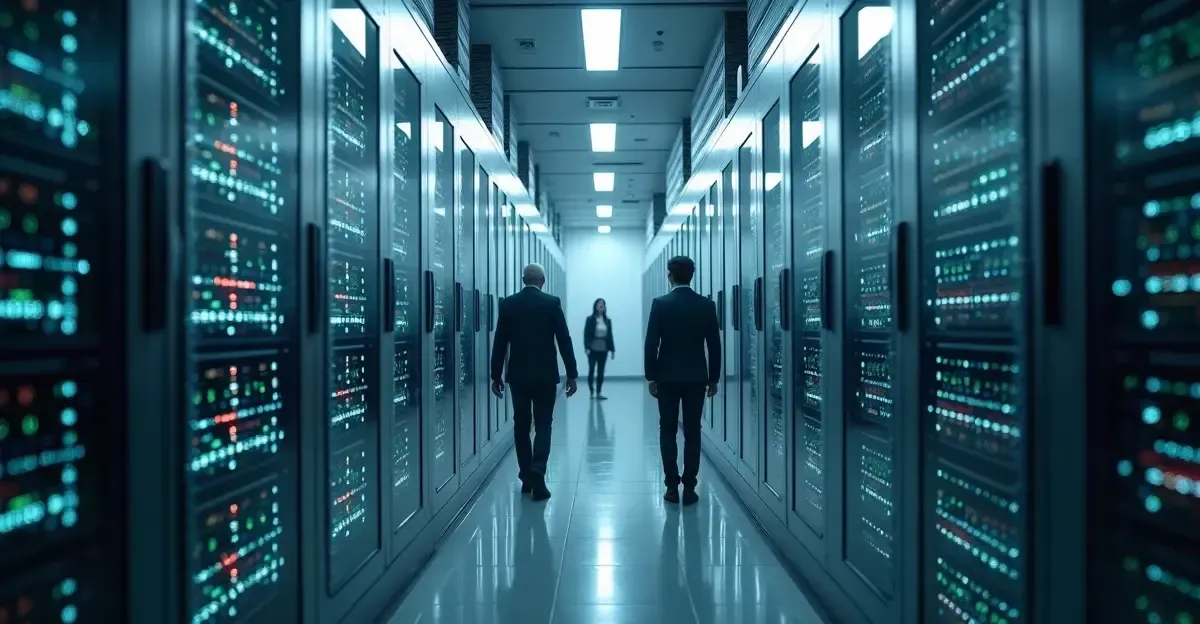
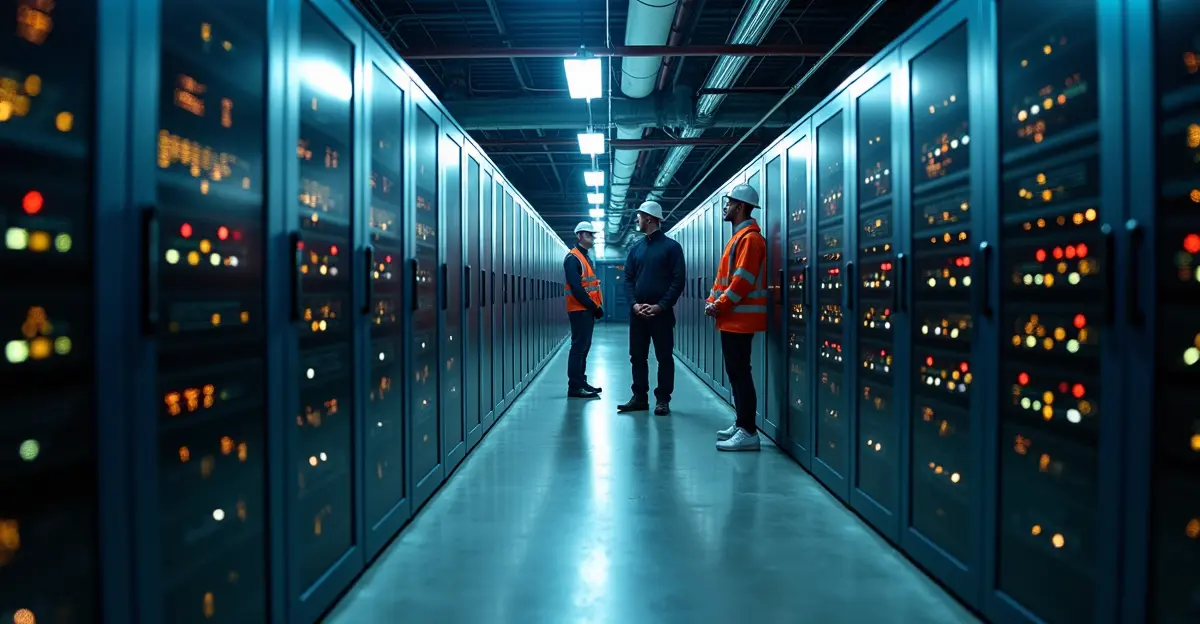
The artificial intelligence revolution is colliding head-on with the world's aging electrical grids, creating a power bottleneck that is reshaping global energy markets in 2026. AI data centers are projected to consume nearly 1,000 terawatt-hours (TWh) globally this year — more than doubling their electricity demand since 2022 and outpacing the total consumption of countries like Japan. This unprecedented surge is forcing hyperscalers including Microsoft, Google, and Amazon to pivot from passive energy consumers to active grid stakeholders, co-investing in nuclear restarts, small modular reactors, and on-site generation. The AI energy crisis is now the defining strategic tension of early 2026, with implications for utility rates, grid reliability, and the geography of digital infrastructure.
The Scale of the Power Crunch
The International Energy Agency (IEA) projects that data centers will consume approximately 1,000 TWh in 2026, equivalent to about 3% of global electricity use. In the United States alone, data center power demand could reach 74 GW by 2028, but only 25 GW is currently accessible — creating a 49 GW shortfall, according to Morgan Stanley. The investment bank warns that this gap threatens AI infrastructure expansion and is driving up electricity costs nationwide.
Nowhere is the strain more visible than in PJM Interconnection, the largest wholesale electricity market in the U.S., spanning 13 states and Washington, D.C. PJM's capacity prices for the 2026/2027 delivery year spiked to the market's price ceiling of $329.17 per MW-day — a nearly tenfold increase from previous years. Data centers alone drove $9.33 billion in capacity costs, according to industry analysts. The PJM capacity market crisis has sparked a sector-wide reckoning, with utilities and regulators scrambling to respond.
Grid Strain in Key Markets
Virginia: The Epicenter
Virginia's Loudoun County, home to nearly half of all U.S. data centers, has become ground zero for the power crunch. Dominion Energy's contracted capacity surged from 21.4 GW in July 2024 to 47.1 GW by the third quarter of 2025 — a 120% increase driven almost entirely by data center interconnection requests. In response, the Virginia House of Delegates introduced HB1515, a bill that would impose a temporary moratorium on new data center approvals until July 1, 2028, or until all pending interconnection requests are fulfilled. The bill, introduced by Delegate Irene Shin, reflects growing backlash from communities concerned about grid reliability and rising costs.
Ireland: A Cautionary Tale
Ireland offers a preview of what lies ahead for other markets. Data centers consumed 22% of Ireland's electricity in 2024, a share projected to reach 31% by 2034. After imposing a moratorium on new grid connections in 2021, the Commission for Regulation of Utilities (CRU) has lifted the freeze but with stringent conditions: new projects above 10 MVA must provide on-site generation or storage covering 100% of their capacity, and at least 80% of annual power must come from new renewable generation within six years. The Irish data center policy reset is being closely watched by regulators worldwide.
Singapore: Managed Growth
Singapore, which imposed a moratorium on new data centers in 2019 after they consumed 7% of national electricity, has transitioned to a managed growth model. In 2026, the city-state launched its second Data Centre Call for Application (DC-CFA2), offering 200 MW of new capacity with the most aggressive sustainability requirements in Asia-Pacific. Operators must achieve a Power Usage Effectiveness (PUE) of 1.25 at full load and source 50% of power from approved green energy pathways including biomethane and hydrogen.
Big Tech's Nuclear Pivot
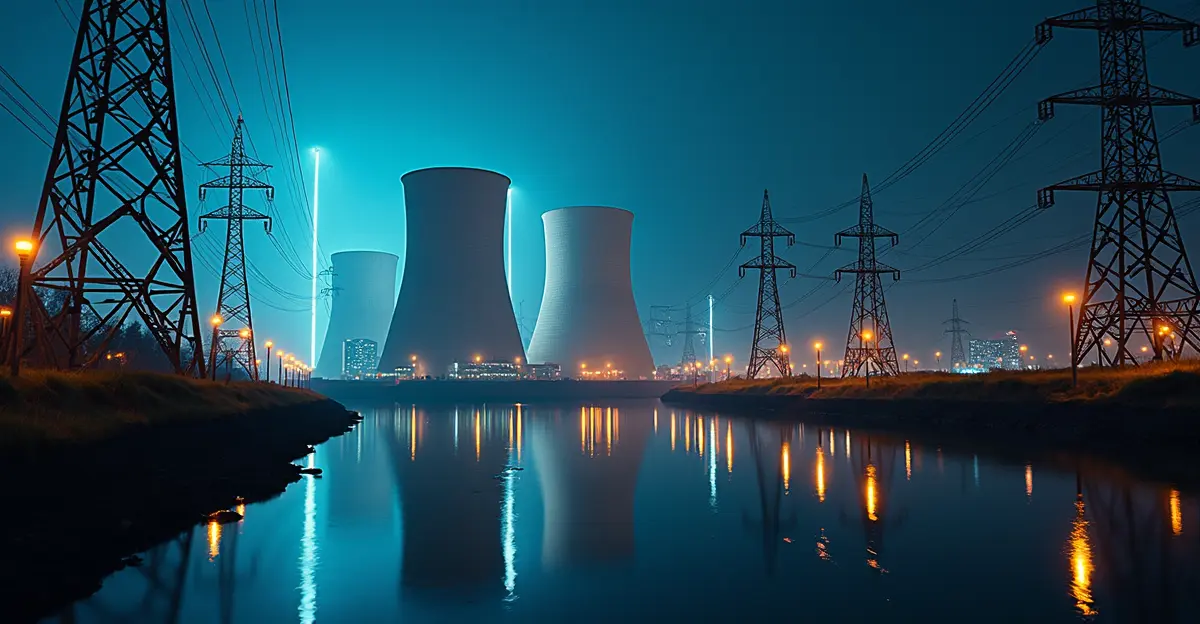
Facing grid constraints and carbon reduction targets, hyperscalers are making unprecedented investments in nuclear energy. Microsoft has signed a 20-year power purchase agreement with Constellation Energy to restart Three Mile Island Unit 1 in Pennsylvania — the same plant that suffered a partial meltdown in 1979. The reactor, renamed the Crane Clean Energy Center, is expected to come online by 2028, creating 3,400 jobs and generating $3 billion in tax revenue. The deal is projected to add $16 billion to Pennsylvania's GDP.
Amazon is investing more than $500 million in small modular reactor (SMR) technology, including the Cascade Advanced Energy Facility in Washington state, which aims to deploy up to 12 X-energy Xe-100 reactors providing 960 MW of capacity. Google and Oracle have also announced SMR investments, though none are commercially operational yet. The Big Tech nuclear energy investments mark a historic shift, with the Biden administration offering $900 million in new funding for SMR deployment.
Utility Rate Hikes Across 39 States
The AI power crunch is hitting consumers directly in their wallets. According to a January 2026 report from nonprofit PowerLines, U.S. utilities requested a record $31 billion in rate hikes in 2025 — more than double the near-record from 2024. Residential electricity prices rose 7% in 2025 alone, with cumulative increases of 42% since 2019. The South led with $14.3 billion in requests, including Florida Power & Light's record $6.9 billion compromise hike.
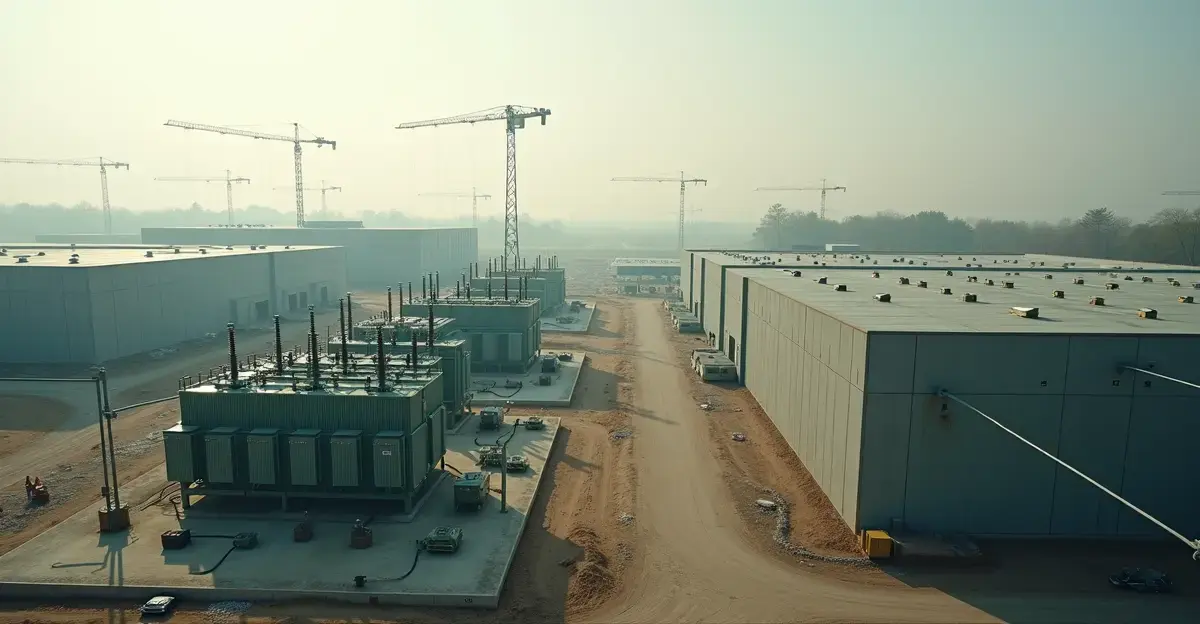
In Ohio, AEP Ohio received over 30 GW of interconnection requests — more than three times the state's 9.4 GW peak load. The utility's new Data Center Tariff, approved in July 2025, requires data centers drawing over 25 MW to pay for at least 85% of contracted capacity under 12-year agreements, shifting infrastructure costs from general ratepayers to developers. Speculative demand immediately dropped from 30 GW to 13 GW. Wood Mackenzie projects similar tariffs in at least 12 states by the end of 2026.
Europe's Affordability Crisis
Europe faces its own version of the AI power crunch. A study by think tank Interface found that AI clusters now demand 280-300 MW per facility — equivalent to roughly 250,000 European households. In the FLAP-D markets (Frankfurt, London, Amsterdam, Paris, Dublin), new facilities face 7-10 year grid connection queues. Ireland, the Netherlands, and Frankfurt have imposed effective bans until 2028-2030. OpenAI has paused investments in the UK and Norway due to high electricity prices. Grid congestion costs in Europe reached EUR 4.3 billion in 2024, and the IEA warns that without urgent reform, Europe's AI ambitions risk becoming costly stranded assets.
Expert Perspectives
"The AI industry is waking up to the fact that you can't scale compute without scaling power, and the grid wasn't built for this," says Dr. Sarah O'Connell, energy policy researcher at the Oxford Institute for Energy Studies. "We're seeing a structural shift where tech companies are becoming energy companies — building their own generation, signing nuclear PPAs, and in some cases, even buying utilities."
Morgan Stanley's 2026 outlook warns that developers expect power constraints by 2027-2028 due to grid underinvestment, and that hyperscalers could spend over $1 trillion in 2025-2026 on AI infrastructure, relying heavily on credit markets to finance energy projects. Natural gas is expected to meet about one-fifth of new power needs (excluding China), while nuclear, geothermal, and storage projects work through longer development timelines.
FAQ
How much electricity will AI data centers consume in 2026?
AI data centers are projected to consume nearly 1,000 TWh globally in 2026, more than double their 2022 consumption and equivalent to Japan's total electricity use.
Why are utility rates rising in the U.S.?
U.S. utilities requested a record $31 billion in rate hikes in 2025, driven by aging infrastructure, extreme weather, and surging electricity demand from AI data centers. Residential prices have risen 42% since 2019.
What are hyperscalers doing to secure power?
Microsoft, Amazon, Google, and Oracle are investing in nuclear restarts (Three Mile Island), small modular reactors (SMRs), and on-site generation. Amazon alone has committed over $500 million to SMR development.
Which markets are most affected by data center grid strain?
Virginia (U.S.), Ireland, Singapore, and the FLAP-D markets in Europe (Frankfurt, London, Amsterdam, Paris, Dublin) face the most severe grid constraints, with some imposing moratoriums or strict new connection requirements.
What is the PJM capacity price spike?
PJM Interconnection's capacity prices for the 2026/2027 delivery year hit the market ceiling of $329.17/MW-day, a nearly tenfold increase, driven largely by data center demand. This has added $9.33 billion in capacity costs.
Conclusion: A New Energy Paradigm
The AI power crunch is not a temporary bottleneck but a structural transformation of global energy markets. As data centers become the fastest-growing source of electricity demand, the relationship between digital infrastructure and the grid is being fundamentally renegotiated. The future of AI infrastructure investment will depend on whether regulators, utilities, and hyperscalers can collaborate to build the energy systems of tomorrow — or whether the grid becomes the single greatest constraint on AI progress.


Follow Discussion