


 Deutsch
 English
 Español
 Français
 Nederlands
 Português


 Share
Share




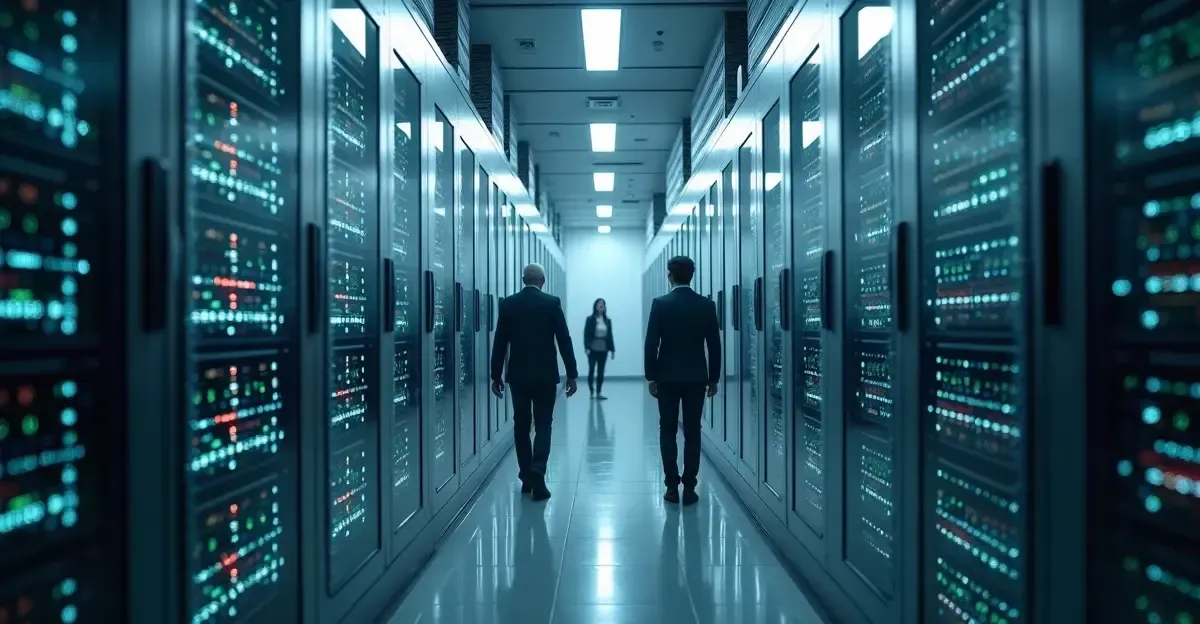
In 2026, the collision between artificial intelligence's insatiable energy appetite and America's aging power grid has shifted from forecast to measurable crisis. Nearly half of all planned US data center capacity has been canceled or delayed — a 7 GW shortfall — while wholesale electricity capacity prices in the PJM Interconnection, the nation's largest grid operator, have spiked tenfold. The AI power trap is now the defining energy policy challenge of the decade.
The Scale of the Crisis
The International Energy Agency (IEA) projects that global data center electricity consumption will reach 1,000 TWh in 2026, roughly equivalent to Japan's entire annual power use. In the United States, data center demand is forecast to hit 150 GW by 2028, up from roughly 25 GW today. Yet the grid infrastructure to support this growth simply does not exist.
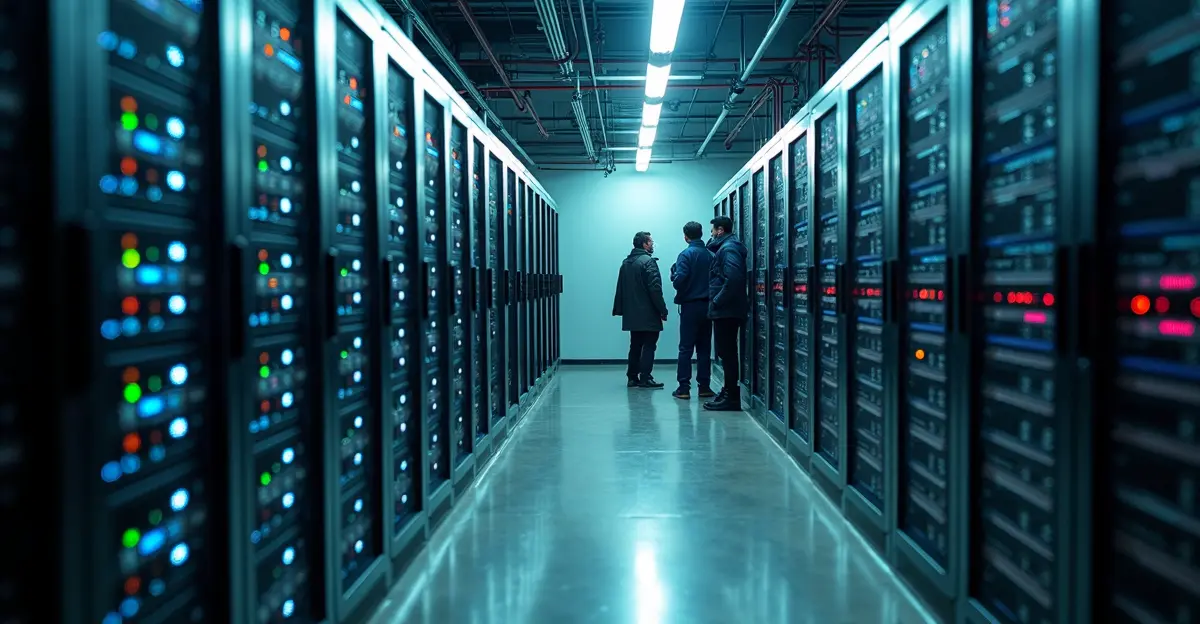
According to Sightline Climate's Data Center Outlook, of the 12 GW of US data center capacity announced for 2026, only about 5 GW is under active construction. The remaining 7 GW faces delays or outright cancellation due to power grid bottlenecks, electrical equipment shortages, and growing community opposition. The four largest hyperscalers — Alphabet, Amazon, Meta, and Microsoft — have committed roughly $650 billion on AI infrastructure in 2025-2026, but capital is not the bottleneck; physical infrastructure is.
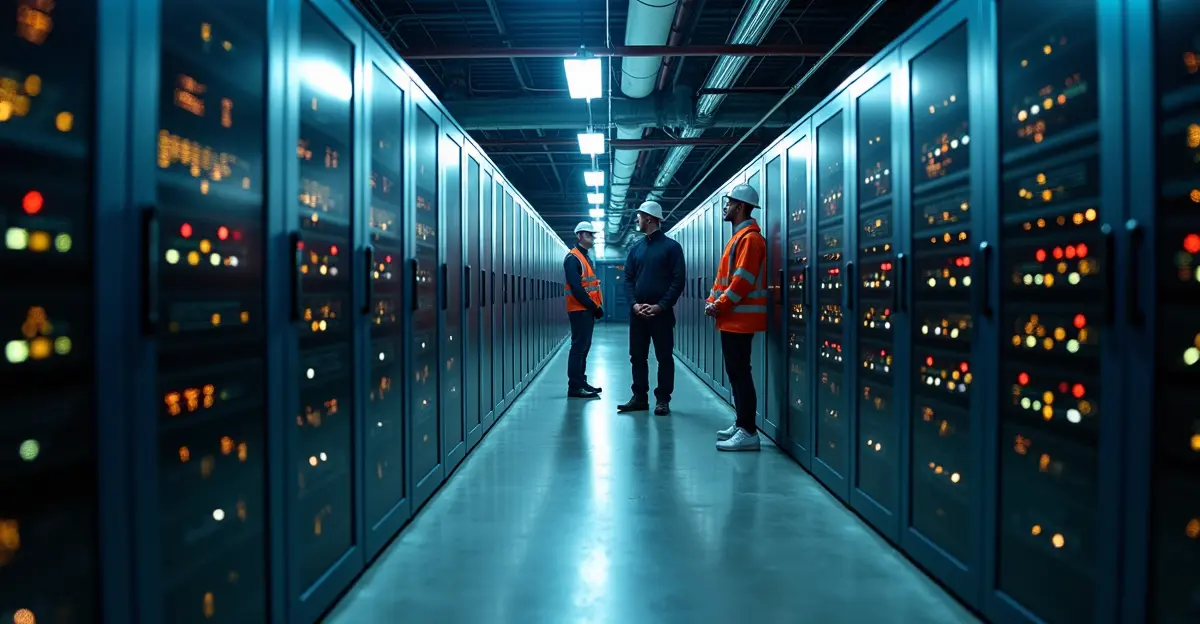
The US data center boom is hitting a transformer crunch. Lead times for high-voltage transformers have stretched to 36-48 months, with some deliveries now quoted at 128 weeks. US manufacturing capacity falls short of AI sector needs, forcing continued reliance on Chinese components — a vulnerability compounded by tariff policies.
PJM Capacity Prices: A Tenfold Shock
PJM Interconnection's 2026-2027 Base Residual Auction cleared at $329.17 per MW-day, an 11x increase from $28.92/MW-day in 2024-2025. Data center demand drove 63% of the price increase, adding $9.3 billion in capacity costs for the 2025-2026 delivery year alone. The 2027-2028 auction fell 6,625 MW short of reliability requirements — the first system-wide shortfall in PJM history.
The average household in PJM territory faces an estimated $70 per month increase by 2028. Cumulative costs through 2033 could reach $100-$163 billion, according to analysis by the PJM capacity market experts at Introl. In response, over 238 data center-related bills were introduced in 2025 across all 50 states, with 40 enacted in 21 states. Oregon created the first dedicated data center rate class, Virginia's SB 253 shifts costs from households to data centers, and at least six states have introduced construction moratoriums.
Nuclear Renaissance: Restarting Three Mile Island
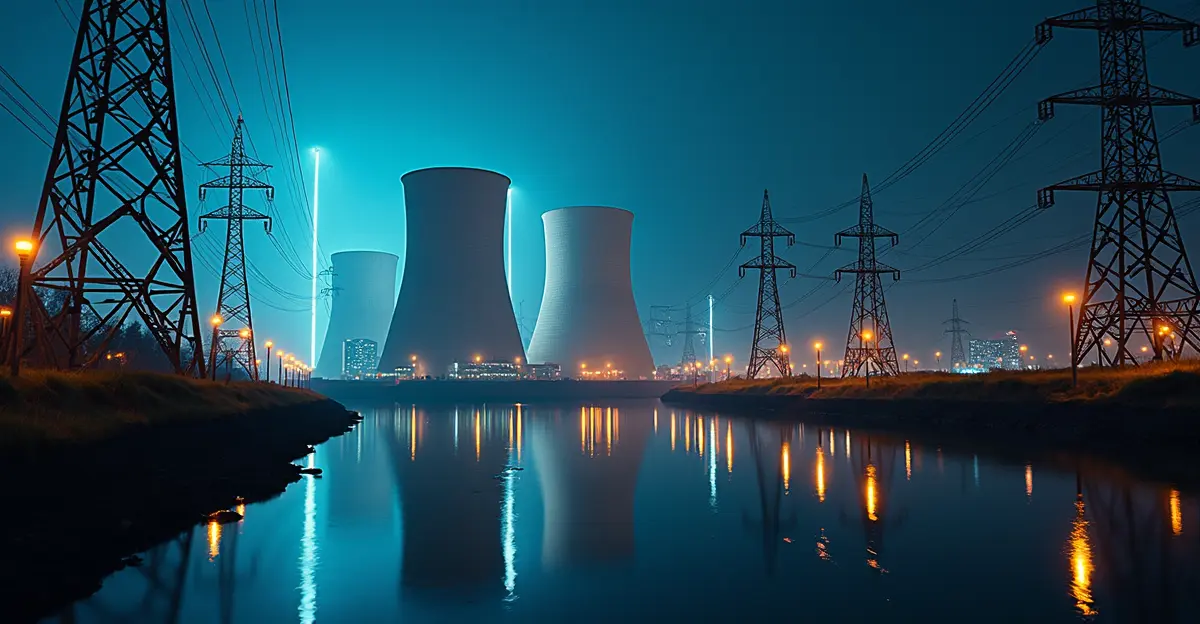
Hyperscalers are racing to secure behind-the-meter nuclear power. The most dramatic example is Microsoft's $1.6 billion agreement with Constellation Energy to restart Three Mile Island Unit 1 — renamed the Crane Clean Energy Center — in Pennsylvania. The reactor, which operated safely from 1978 until its 2019 economic shutdown, will undergo extensive upgrades targeting 837 MW of output by 2028. Under a 20-year power purchase agreement, all capacity will flow to Microsoft's AI data centers.
The restart of Three Mile Island — site of the worst commercial nuclear accident in US history in 1979 — underscores how profoundly AI energy demand is reshaping energy policy. The project is projected to create 3,400 jobs and contribute $16 billion to Pennsylvania's economy. It also signals a broader nuclear renaissance: the US nuclear fleet consists of 96 operating reactors providing about 18-19% of US electricity, with industry planning for an additional 23.4 GW of new nuclear capacity through 2039.
Small Modular Reactors: Unproven Promise
Tech giants are also investing heavily in small modular reactors (SMRs), though no commercial SMR is yet operational in the US. Amazon committed $500 million to X-energy for 5 GW by 2039. Google signed the first corporate SMR deal with Kairos Power for 500 MW. Meta has an agreement with TerraPower. Oracle is also pursuing nuclear options.
SMRs offer key advantages: factory-built modules reduce construction to 24-36 months (versus 5-10 years for traditional plants), passive safety systems, and 5-300 MW per module for flexible deployment. However, challenges remain around upfront capital costs, waste management, and the risk of insufficient testing in the race to market. The NRC is expected to issue first commercial SMR construction permits in 2026, but actual power delivery remains years away.
Community Opposition and Policy Backlash
Community opposition is fundamentally reshaping data center development strategy in 2026. Nearly 3,000 facilities are planned or underway in the US as of late 2025, bringing development closer to population centers and sparking resistance. Residents in Utah are protesting the massive 'Stratos Project,' a 9 GW AI data center backed by Kevin O'Leary near the shrinking Great Salt Lake. In Ohio, Oregon, Georgia, and other states, communities are demanding tech companies self-fund their power infrastructure.
Key opposition drivers include concerns over utility rates and grid reliability, aesthetics and land use, noise and vibrations, and water usage. A Harvard Gazette survey found that the public broadly is quite negative about data centers, with concerns about rising electricity rates being particularly legitimate. The community opposition to data centers is now a major factor in project timelines.
Net-Zero Commitments Under Strain
The AI power crisis is forcing a hard reckoning with Big Tech's climate pledges. Microsoft is internally debating whether to scale back its ambitious hourly clean energy matching goal, as the rapid buildout of AI data centers strains its ability to meet those targets. The company has explored natural gas, including a partnership with Chevron and Engine No. 1 to build a massive gas plant in West Texas (up to 5 GW).
Google removed specific net-zero language from its main sustainability page, replacing it with AI-focused messaging. Amazon's operational carbon emissions grew 182% from 2020 to 2023 due to data center energy use. A NewClimate Institute report questions whether these companies can meet their pledges, noting that emissions targets have 'lost their meaning.' The tension between AI and net-zero commitments is becoming a central reputational risk for the industry.
Regulatory Response: FERC Steps In
The Federal Energy Regulatory Commission (FERC) has committed to acting by June 2026 on a new large load interconnection rulemaking (Docket No. RM26-4-000). The reforms aim to establish a framework for timely, orderly, and non-discriminatory connections for data centers and other large loads. FERC has already directed PJM on transparency rules for co-located loads and approved SPP's new study processes.
Chairman Laura V. Swett emphasized the pivotal moment: 'We are seeing rapid demand growth that requires collaborative solutions to maintain grid reliability while preventing undue cost shifts to other customers.'
FAQ: AI Data Center Power Crisis
How much electricity will AI data centers consume in 2026?
The IEA projects global data center electricity consumption will reach 1,000 TWh in 2026, roughly 3% of global electricity use — equivalent to Japan's total consumption.
Why are data centers being delayed or canceled?
Primary causes include transformer shortages (lead times of 36-48 months), power grid interconnection bottlenecks, permitting delays, and growing community opposition. Of 12 GW planned for 2026, only 5 GW is under construction.
How much are PJM capacity prices increasing?
PJM's 2026-2027 capacity auction cleared at $329.17/MW-day, an 11x increase from $28.92/MW-day in 2024-2025. Data centers drove 63% of the increase.
Can nuclear power solve the AI energy crisis?
Nuclear offers reliable, carbon-free baseload power, but new plants take years to build. The Three Mile Island restart (837 MW) won't deliver until 2028, and commercial SMRs are still unproven in the US.
Are Big Tech companies abandoning climate goals?
Several companies are quietly scaling back net-zero commitments as AI energy demands surge. Microsoft may abandon its hourly clean energy matching goal, Google removed net-zero language from its sustainability page, and Amazon's emissions have grown 182% since 2020.
Conclusion: The Structural Deficit
The AI power trap represents a fundamental structural deficit between AI ambition and grid reality. PJM projects 5-7 GW of data center load added annually but only 2-3 GW of new supply through 2032, creating a persistent reliability gap. Connection timelines in Northern Virginia have extended to seven years. The next 18-24 months will reward whoever controls the physical layer — utilities with available capacity, permitted sites, and electrical OEMs — not whoever announces the largest dollar figure.
As one analyst put it: 'The AI energy crisis is forcing industries to choose between AI capabilities and environmental commitments, accelerating innovation in grid modernization, load flexibility, and on-site power solutions.' 2026 marks the year this choice became unavoidable.
Follow Discussion