


 Deutsch
 English
 Español
 Français
 Nederlands
 Português


 Share
Share




The AI Energy Paradox: How Artificial Intelligence's Power Demands Are Reshaping Global Energy Markets and Geopolitics
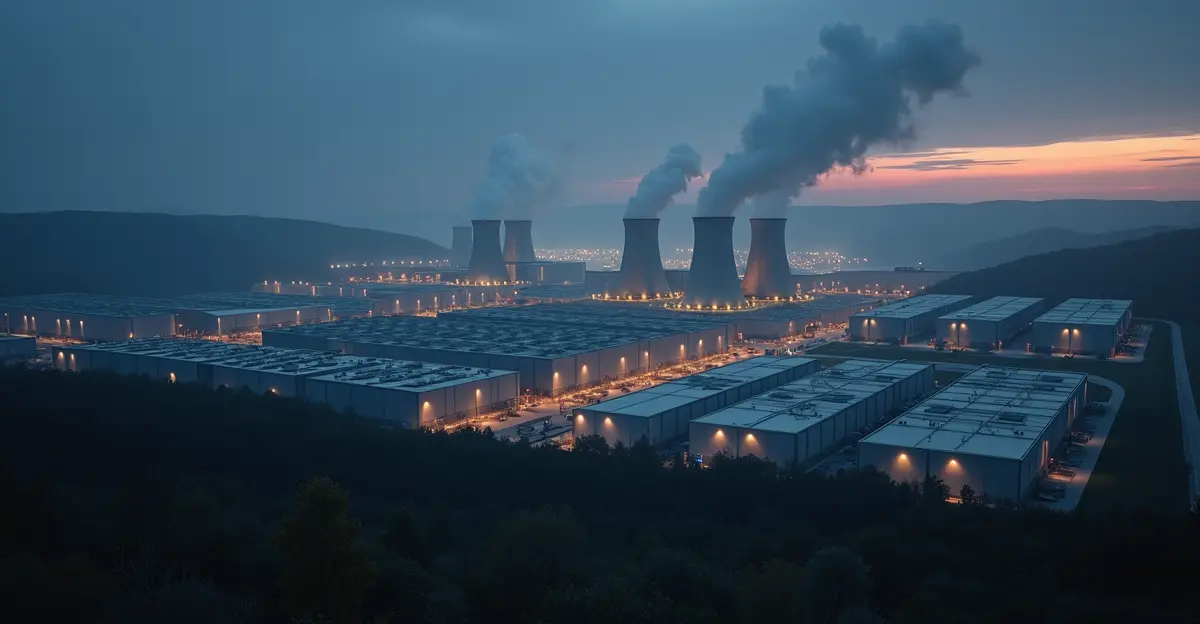
The explosive growth of artificial intelligence has triggered an unprecedented energy crisis that threatens to reshape global power grids, energy markets, and geopolitical relationships. According to a 2024 U.S. Department of Energy report, data center electricity demand has tripled over the past decade and is projected to double or triple by 2028, with AI applications driving this unprecedented growth that could consume 12% of U.S. electricity within four years. This creates what experts call the 'AI energy paradox' - the very technology promising to revolutionize efficiency is itself becoming one of the world's largest energy consumers.
What is the AI Energy Paradox?
The AI energy paradox describes the contradictory situation where artificial intelligence systems, designed to optimize energy use and create efficiencies across industries, require massive amounts of electricity to operate. A single modern AI training cluster can draw 100 megawatts or more - enough to power approximately 75,000 homes. This paradox is creating unprecedented challenges for global energy infrastructure as nations scramble to balance AI advancement with sustainable energy policies.
The Scale of AI's Energy Consumption
Current data reveals staggering numbers about AI's energy appetite. As of March 2026, U.S. data centers consume approximately 176 terawatt-hours of electricity annually, representing 4.4% of the nation's total power consumption. The Electric Power Research Institute projects this could reach 9-17% by 2030. Globally, data centers consumed about 415 TWh of electricity in 2024 (1.5% of global electricity consumption), growing at 12% per year and projected to double to 945 TWh by 2030.
Regional Concentration and Grid Strain
The concentration of data centers in specific regions is creating severe grid strain. Virginia hosts the world's largest data center cluster with 561 facilities, where data centers consumed 26% of the state's total electricity supply in 2023. A July 2024 incident in northern Virginia saw 60 data centers simultaneously disconnect, creating a 1,500-megawatt power surplus that nearly caused cascading outages. Electricity rates near data centers have increased by up to 267% compared to five years ago, with residential utility bills rising 6% nationwide in August 2024.
Comparative Energy Use: AI vs Traditional Computing
| System Type | Energy Consumption | Comparison |
|---|---|---|
| AI Training Cluster | 100+ MW | Powers 75,000 homes |
| Traditional Data Center | 20-50 MW | Powers 15,000-37,500 homes |
| ChatGPT Query | 0.34 Wh | 5x more than Google search |
| AI Image Generation | 2.91 Wh avg | Half smartphone charge per image |
Geopolitical Implications of AI Energy Demands
The World Economic Forum describes a 'triple transition' challenge where AI advancement, global energy system restructuring, and geopolitical realignment are converging simultaneously. Control over compute infrastructure, semiconductors, and data has become a national security priority, leading to export controls, digital sovereignty measures, and regulatory fragmentation. Major tech companies like Amazon, Google, Meta, and Microsoft collectively spent over $330 billion in capital expenditures in 2025, creating new dependencies and vulnerabilities in the global system.
The Nuclear Power Solution
Data centers are increasingly turning to nuclear power solutions to meet their massive energy demands. Microsoft has made headlines with its deal to restart the Three Mile Island reactor, while collaborations between Microsoft and NVIDIA aim to transform nuclear energy development through AI-powered tools that streamline permitting, design, construction, and operations. These initiatives aim to reduce nuclear plant development time by up to 92% for some partners, with early adopters reporting $80 million in annual savings.
Impact on Global Energy Markets
The AI boom is fundamentally reshaping global energy markets in several key ways:
- Electricity Price Inflation: Residential utility bills rose 13% in Virginia, 16% in Illinois, and 12% in Ohio in 2024, directly correlated with data center concentration.
- Grid Reliability Concerns: Data center demand accounts for 63% of the $14.7 billion power capacity bill for 2025-2026 in the PJM grid region.
- Resource Competition: Nations are competing for energy resources to power AI infrastructure, creating new geopolitical tensions.
- Infrastructure Investment: The U.S. Department of Energy has over 30 programs to support data center energy needs while maintaining grid reliability.
Expert Perspectives on the Energy Challenge
Industry experts warn that the current trajectory is unsustainable. 'The rapid load growth from data centers is unprecedented and represents a primary driver of capacity market conditions and high prices that get passed to consumers,' notes a grid reliability analyst. Meanwhile, the U.S. Department of Energy is implementing strategies including enabling onsite power generation and storage, reusing retired coal facility infrastructure, developing innovative rate structures, and commercializing next-generation technologies like geothermal, advanced nuclear, and long-duration storage.
Future Outlook and Solutions
Looking ahead to 2028 and beyond, several critical developments will shape the AI energy landscape:
- Efficiency Improvements: Google's improvements in software efficiency have reduced energy use by a factor of 33 for typical AI prompts.
- Policy Interventions: States like Oregon are implementing legislation requiring data centers to pay for their grid strain.
- Alternative Energy Sources: Increased investment in nuclear, geothermal, and advanced renewable technologies.
- Global Coordination: International cooperation will be essential to address the transnational energy challenges created by AI infrastructure.
Frequently Asked Questions
How much electricity do AI data centers consume?
U.S. data centers consumed 176 terawatt-hours of electricity in 2023 (4.4% of total consumption), projected to reach 325-580 TWh (6.7-12%) by 2028. Globally, consumption was 415 TWh in 2024, projected to double to 945 TWh by 2030.
Why is AI so energy-intensive?
AI requires powerful processors (GPUs) that consume 2-4 times more energy than traditional chips, plus intensive cooling systems. Training large language models involves massive computational workloads that can run for weeks or months continuously.
How does AI energy use affect electricity prices?
In data center-heavy states, residential electricity prices surged 13% in Virginia, 16% in Illinois, and 12% in Ohio in 2024. Data center demand accounts for 63% of power capacity costs in some grid regions, with costs passed to consumers.
What solutions exist for AI's energy problem?
Solutions include nuclear power partnerships, efficiency improvements (Google reduced energy use 33x), onsite generation/storage, advanced cooling technologies, and policy interventions requiring data centers to pay for grid strain.
How does AI compare to human energy use?
A 2024 study found humans have 130 to 2900 times higher carbon impact than AI for comparable tasks, though a 2025 study found GPT-4 had 5-19 times more carbon impact than human programmers for programming tasks.
Conclusion: Navigating the Triple Transition
The AI energy paradox represents one of the most significant challenges of our technological era. As artificial intelligence continues its exponential growth, the world faces a complex triple transition: advancing AI capabilities while restructuring global energy systems and navigating geopolitical realignments. The strategic implications are profound, with data centers projected to consume electricity equivalent to a medium-sized industrial economy by 2030. Successfully navigating this challenge will require unprecedented cooperation between technology companies, energy providers, policymakers, and international partners to ensure that AI's promise doesn't come at the cost of grid stability, affordable energy, or environmental sustainability.
Follow Discussion