


 Deutsch
 English
 Español
 Français
 Nederlands
 Português


 Share
Share




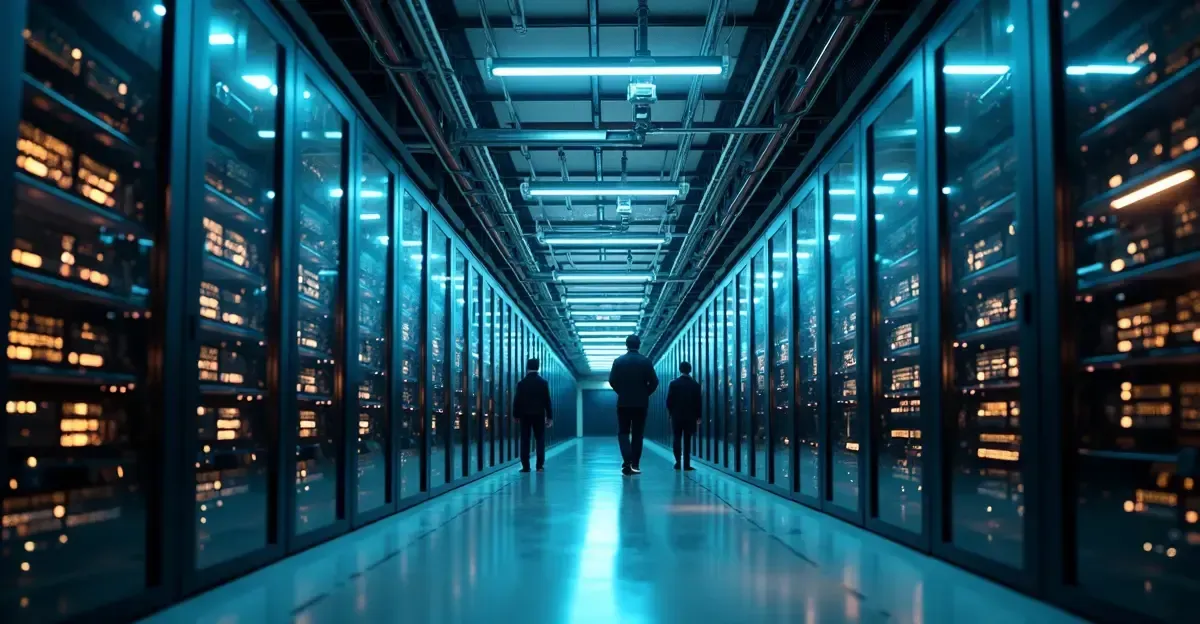
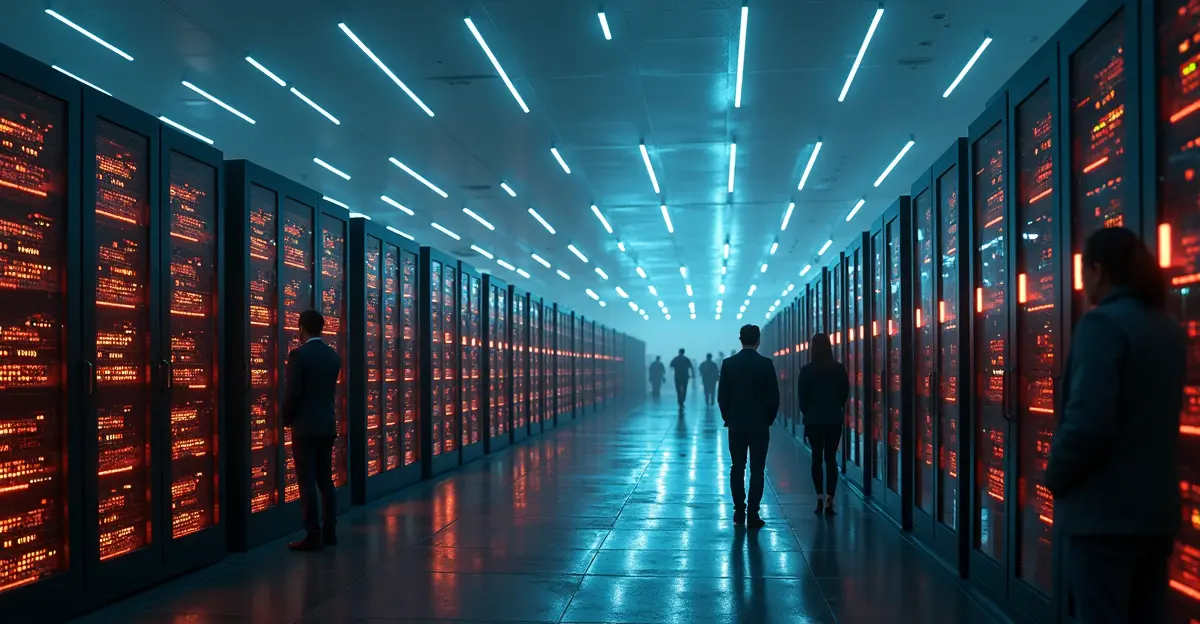
Artificial intelligence data centers are on track to consume over 1,000 terawatt-hours (TWh) of electricity globally in 2026 — equivalent to Japan's entire annual energy use — according to projections from the International Energy Agency (IEA). This unprecedented surge, driven primarily by AI inference workloads rather than model training, is reshaping global energy strategy and straining aging grid infrastructure. The AI energy paradox pits exponential compute growth against climate targets, forcing hard choices for policymakers and tech giants alike.
The Scale of the Surge
AI inference queries have skyrocketed from 2 billion daily in 2024 to over 11 billion in 2026, according to industry data. Each query requires significant compute power, and the cumulative effect is staggering. The IEA estimates that data center electricity consumption could reach 1,000 TWh this year, up from 415 TWh in 2024 — more than doubling in just two years. This represents roughly 3.5% of global electricity demand, up from 1.5% in 2024.
Unlike training workloads, which are episodic and can be scheduled, inference workloads are continuous and latency-sensitive, meaning they must run on always-on infrastructure. This shift has profound implications for grid planning. "The AI inference compute boom is fundamentally different from what we've seen before," says Dr. Sarah Chen, energy systems analyst at the IEA. "Training is a sprint; inference is a marathon — and it's run 24/7."
Grid Hotspots: Northern Virginia Under Pressure
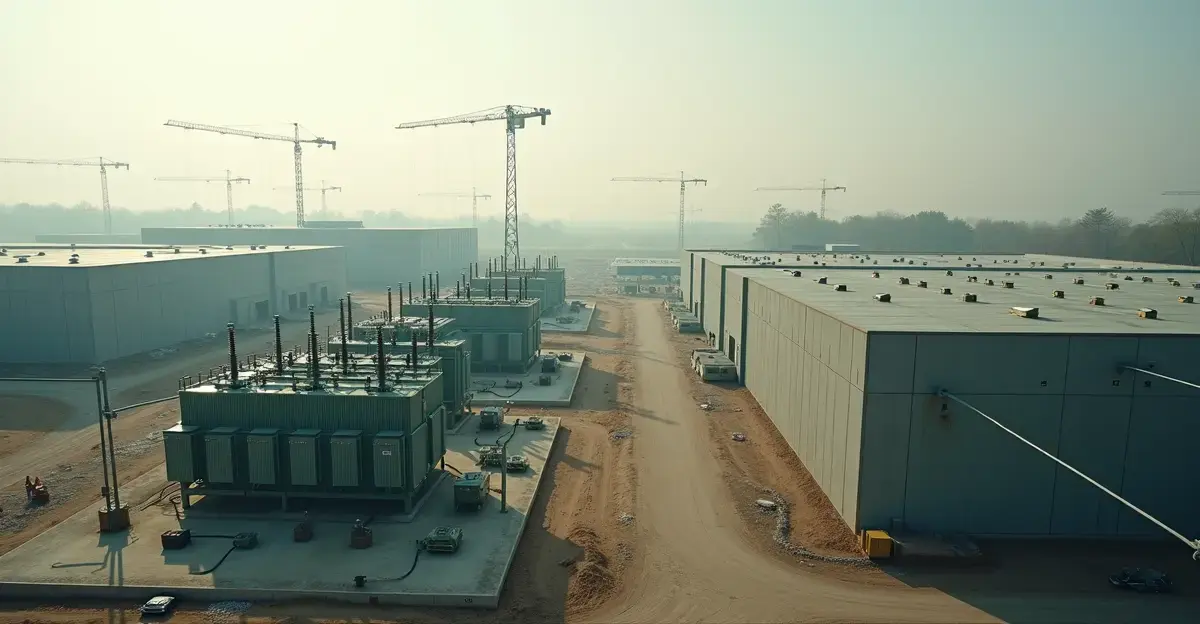
Nowhere is the strain more visible than in Northern Virginia, home to the world's largest concentration of data centers. Dominion Energy, the regional utility, reports that data center load could reach 35 gigawatts (GW) by 2026 — nearly double the region's total generation capacity of 19 GW. This imbalance has forced grid operators to consider emergency measures, including rolling blackouts during peak demand.
"We are facing a fundamental mismatch between load growth and generation capacity," says Mark Johnson, former FERC commissioner. "The grid was not designed for this pace of growth." The situation has sparked a wave of opposition from local communities, with dozens of data center projects delayed or canceled between 2024 and 2025 due to data center community opposition.
Tech Giants Go Nuclear
In response, the world's largest technology companies have signed nuclear power purchase agreements totaling 47 GW of future capacity. Microsoft, Google, and Amazon have all announced deals with nuclear developers, including commitments to small modular reactors (SMRs). However, most SMR designs are not expected to be commercially operational until 2028–2032, leaving a critical gap in the near term.
"Nuclear is the only carbon-free baseload power source that can match the scale of AI's energy demand," says Dr. Emily Park, nuclear policy expert at the Breakthrough Institute. "But SMRs are still unproven at scale. The first operational SMRs in the West are years away." As of 2026, only China and Russia have operational SMRs, while Western projects face regulatory hurdles and construction delays.
The Natural Gas Bridge
With nuclear years away and renewables intermittent, many grid operators are turning to natural gas peaker plants to fill the gap. These plants can be brought online quickly but emit significant CO₂, undermining climate commitments. The IEA warns that if data center demand continues to grow at current rates, natural gas could account for 30% of new generation capacity by 2027.
"The risk is that we lock in a new wave of fossil fuel infrastructure that will operate for decades," says Maria Torres, climate policy director at the World Resources Institute. "This is the central tension of the AI era: can we decarbonize fast enough to keep pace with compute growth?"
Policy and Regulatory Responses
Governments are scrambling to respond. The U.S. Department of Energy has launched a "Data Center Grid Resilience" initiative, while the European Union is considering mandatory energy efficiency standards for AI workloads. In Virginia, state regulators have imposed a moratorium on new data center connections until grid upgrades are completed.
The energy transition vs AI growth debate is likely to define energy policy throughout 2026. Some experts argue for a "compute efficiency" mandate, similar to fuel economy standards for vehicles. Others advocate for massive investment in grid modernization and energy storage.
FAQ
How much electricity will AI data centers consume in 2026?
The IEA projects over 1,000 TWh, equivalent to Japan's total annual electricity consumption.
Why is AI inference more energy-intensive than training?
Inference runs continuously on always-on infrastructure, while training is episodic. With over 11 billion daily queries in 2026, inference workloads dominate total energy use.
Can nuclear power solve the data center energy crisis?
Tech companies have signed 47 GW of nuclear agreements, but most SMRs won't be operational until 2028–2032, leaving a near-term gap.
Will natural gas fill the gap?
Many grid operators are turning to natural gas peakers, risking increased CO₂ emissions and undermining climate targets.
What is Northern Virginia's data center capacity?
Data center load could reach 35 GW against just 19 GW of generation capacity, creating a severe grid imbalance.
Conclusion
The AI energy paradox — exponential compute growth versus finite grid capacity — is the defining infrastructure challenge of 2026. Whether the energy transition can accelerate fast enough to avoid a fossil fuel lock-in remains an open question. The decisions made this year will shape both the future of AI and the trajectory of global climate action.
Sources
- International Energy Agency (IEA) — Electricity 2026 Report
- Dominion Energy — Northern Virginia Load Forecast
- Breakthrough Institute — Nuclear Innovation Report
- World Resources Institute — Energy & Climate Analysis

Follow Discussion