


 Deutsch
 English
 Español
 Français
 Nederlands
 Português


 Share
Share




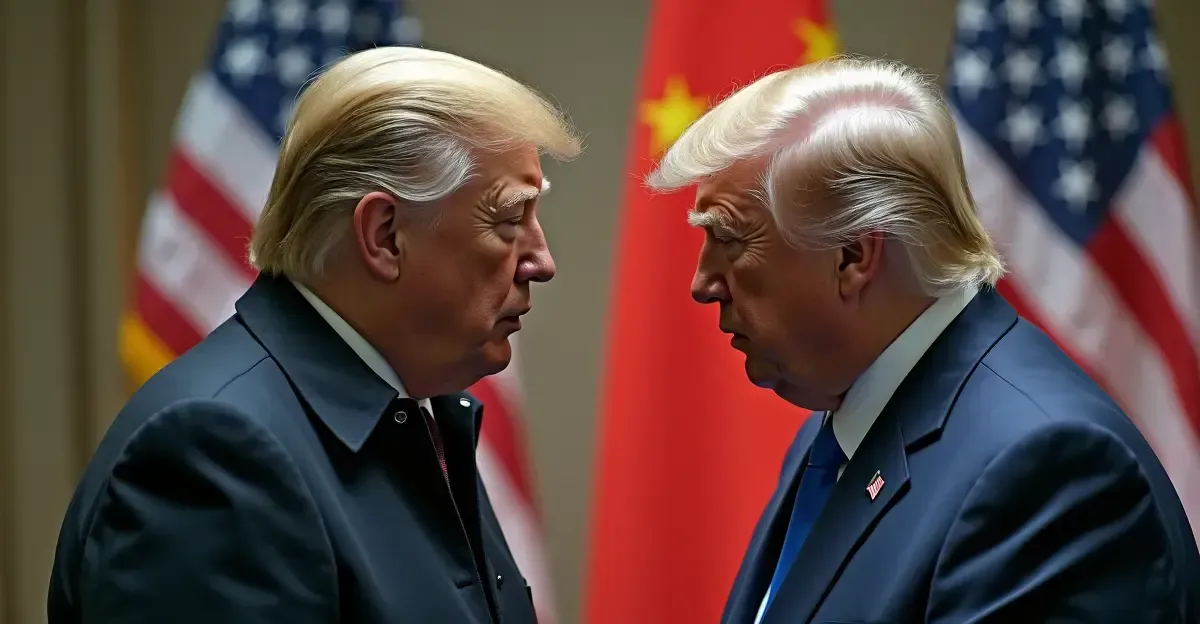
The concept of 'sovereign AI' has moved from academic ambition to urgent policy reality in 2026, as middle powers from India to Saudi Arabia, Brazil to South Korea race to build state-backed national AI infrastructure. This trend, accelerated by US-China tech decoupling and DeepSeek's cost-disruption of the AI training market, represents a fundamental shift in how nations balance technological sovereignty against global AI interdependence. The Atlantic Council's January 2026 analysis identifies sovereign AI as a top geopolitical trend for the year, while Stanford's 2026 AI Index confirms that national AI strategies are expanding fastest among emerging economies.
What Is Sovereign AI and Why Does It Matter?
Sovereign AI refers to a nation's ability to develop, control, and deploy artificial intelligence systems using its own infrastructure, data, and talent — rather than relying on foreign technology providers. The strategic stakes extend beyond computing power to control over data, energy grids, and the geopolitical leverage inherent in AI supply chains. According to Trisha Ray, associate director at the Atlantic Council's GeoTech Center, sovereign AI is about nations building and controlling AI systems using their own infrastructure, data, and talent. However, significant challenges remain, including a lack of diverse, high-quality datasets and the undigitized status of hundreds of thousands of languages worldwide.
The US-China tech decoupling has been a primary catalyst. As export controls on advanced semiconductors tighten, nations that once relied on importing AI capabilities are now forced to develop domestic alternatives. The US-China semiconductor tech war has deepened significantly by early 2026, with decoupling progressing faster than anticipated. China enacted the Remote Access Security Act, closing the 'cloud loophole' by requiring government approval, data localization, and source code disclosure for foreign IT firms.
DeepSeek's Cost Disruption: A Game Changer for Sovereign AI
DeepSeek, a Chinese AI company, disrupted global AI economics with its DeepSeek-R1 model released in January 2025. The model achieved performance comparable to OpenAI's o1 at a training cost of just $6 million — a fraction of the $100 million-plus typical for frontier models. Its 671-billion-parameter Mixture of Experts architecture activates only 37 billion parameters per pass, dramatically reducing inference costs. The release triggered a 17% single-day drop in Nvidia's share price and accelerated sovereign AI initiatives across Asia by lowering barriers to entry for national AI programs.
This cost disruption has made sovereign AI economically viable for nations that previously could not afford the massive capital expenditure required to compete with US and Chinese tech giants. As one analyst noted, DeepSeek proved that frontier AI doesn't require a trillion-dollar budget — it requires smart engineering and strategic focus.
National AI Infrastructure: A Global Overview
India: Three Sovereign Models at the AI Impact Summit
India took a bold step toward AI independence by unveiling three sovereign AI models at the India AI Impact Summit in New Delhi on February 18, 2026. Part of the IndiaAI Mission launched in March 2024 with Rs 10,000 crore in funding, these models aim to reduce reliance on foreign tech giants. Sarvam AI debuted two LLMs (30 billion and 105 billion parameters), with the larger model excelling in reasoning and coding benchmarks, outperforming rivals like DeepSeek R1 and Google's Gemini Flash. Gnani.ai introduced Vachana TTS, a voice-cloning text-to-speech system supporting 12 Indian languages using just 10 seconds of audio. BharatGen's Param2 17B MoE, led by IIT Bombay, is an open-source model tailored for Indic languages in governance, education, healthcare, and farming.
Saudi Arabia: The $100 Billion HUMAIN Project
Saudi Arabia has declared 2026 as the 'Year of Artificial Intelligence,' marking a significant milestone in its Vision 2030 transformation agenda. The Kingdom's HUMAIN project leads the global sovereign AI infrastructure race with approximately $100 billion allocated across 11 data centres (2.2 GW capacity) and hundreds of thousands of NVIDIA GPUs. This positions Saudi Arabia as an emerging AI powerhouse, leveraging its financial resources to build a knowledge-based economy and reduce dependence on oil revenues.
South Korea: $735 Billion Sovereign AI Initiative
South Korea has launched a massive $735 billion sovereign AI initiative, positioning itself to become the world's third AI superpower. Samsung Electronics committed $230 billion alone, with contributions from SK Hynix, Naver, Kakao, and partnerships with AWS, Microsoft, and NVIDIA. The plan demands 500,000 GPUs, 50 new data centres (2 GW capacity), and complete supply chain localization by 2030. The AI Basic Act, passed in January 2026, provides the regulatory framework, while five consortia compete for sovereign AI development with $381 million in government funding. SK Telecom and NVIDIA also announced plans to build a gigawatt-scale AI Cloud in South Korea, with the first AI factory coming online in 2027.
Brazil: PBIA 2024-2028 and Regulatory Framework
Brazil's Plano Brasileiro de Inteligência Artificial (PBIA) 2024-2028, with an investment of R$ 23 billion over four years, aims to transform the country into a world reference in AI. The plan includes developing a supercomputer among the five most powerful in the world, powered by renewable energy, and creating Portuguese-language models reflecting Brazil's cultural diversity. Brazil is also building a comprehensive federal AI regulatory framework, with Projeto de Lei nº 2.338/2023 categorizing AI systems into excessive, high, and non-high risk categories, inspired by the EU AI Act.
United Kingdom: Sovereign AI Fund
The UK established a £500 million Sovereign AI Fund in April 2026, designed to invest directly in early-stage and growth-stage British AI companies. The fund provides capital, access to the AI Research Resource (AIRR) supercomputer network, and strategic support. Prime Minister Keir Starmer has positioned the UK as an 'AI maker, not an AI taker.' As of May 2026, the fund has backed nine startups, including Callosum, Ineffable Intelligence, and Isomorphic Labs.
Geopolitical Implications and Challenges
The sovereign AI race carries profound geopolitical implications. The AI supply chain geopolitics are reshaping alliances and dependencies. Export controls remain the largest risk to build-out velocity, as nations compete for limited supplies of advanced GPUs. The Stanford 2026 AI Index reports that global AI compute capacity has grown 3.3x annually since 2022, with Nvidia GPUs accounting for over 60% of capacity. However, training frontier models can generate over 72,000 tons of carbon-equivalent emissions, raising sustainability concerns.
Another critical challenge is talent. As Ray notes, the three essential building blocks of AI sovereignty are data, compute, and talent — and many nations lack all three. The undigitized status of hundreds of thousands of languages worldwide presents a particular obstacle for developing nations seeking to build culturally relevant AI systems.
The global AI regulation landscape is also fragmenting. The EU AI Act, Brazil's proposed framework, and South Korea's AI Basic Act represent different approaches to governance, creating a patchwork of regulations that multinational companies must navigate. This fragmentation could either spur innovation through regulatory competition or create barriers to international AI cooperation.
Expert Perspectives
The battle of the stacks will intensify throughout 2026, with implications extending far beyond technology markets into the fundamental structure of international economic and security relationships, warns the Atlantic Council analysis. The council outlines four possible futures for national AI ecosystems, ranging from fully independent sovereign stacks to deeply integrated global systems.
Stanford's 2026 AI Index confirms that national AI strategies are expanding fastest among emerging economies, with AI sovereignty emerging as a central global policy principle. The index notes that global corporate AI investment more than doubled to $581.7 billion in 2025, though heavily concentrated in the US ($285.9 billion) versus China ($12.4 billion). This concentration underscores the urgency for middle powers to develop domestic capabilities.
FAQ: Sovereign AI in 2026
What is sovereign AI?
Sovereign AI refers to a nation's ability to develop, control, and deploy artificial intelligence systems using its own infrastructure, data, and talent, reducing reliance on foreign technology providers.
Why is sovereign AI becoming important in 2026?
US-China tech decoupling, DeepSeek's cost disruption of AI training, and growing concerns over data privacy, national security, and economic competitiveness have accelerated the sovereign AI race.
Which countries are leading the sovereign AI race?
India, Saudi Arabia, South Korea, Brazil, the United Kingdom, France, Japan, and the UAE are among the most active nations building sovereign AI infrastructure in 2026.
What are the main challenges to achieving AI sovereignty?
Key challenges include access to advanced GPUs (subject to export controls), high-quality local datasets, skilled AI talent, energy infrastructure for data centres, and the high cost of building and maintaining AI systems.
How does DeepSeek affect sovereign AI?
DeepSeek's low-cost training breakthrough (approximately $6 million for frontier-level performance) has dramatically lowered the barrier to entry for nations seeking to develop their own AI models, making sovereign AI economically viable for more countries.
Conclusion: The Future of Sovereign AI
The sovereign AI race of 2026 represents a fundamental restructuring of global technological power. As nations invest hundreds of billions of dollars in domestic AI infrastructure, the world is moving toward a multipolar AI landscape where technological sovereignty is a key measure of national power. The future of AI governance will depend on whether these sovereign systems can coexist and interoperate, or whether they will deepen geopolitical divisions. What is clear is that the era of AI dependence on a handful of nations and companies is ending, replaced by a more fragmented but potentially more resilient global AI ecosystem.




Follow Discussion