


 Deutsch
 English
 Español
 Français
 Nederlands
 Português


 Share
Share




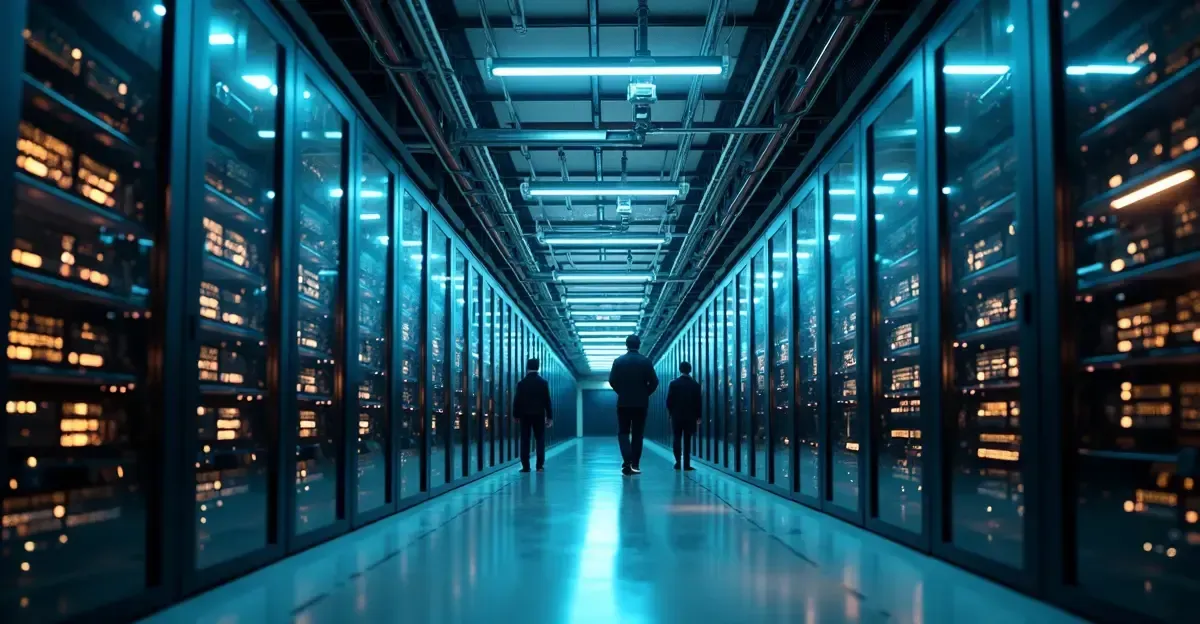
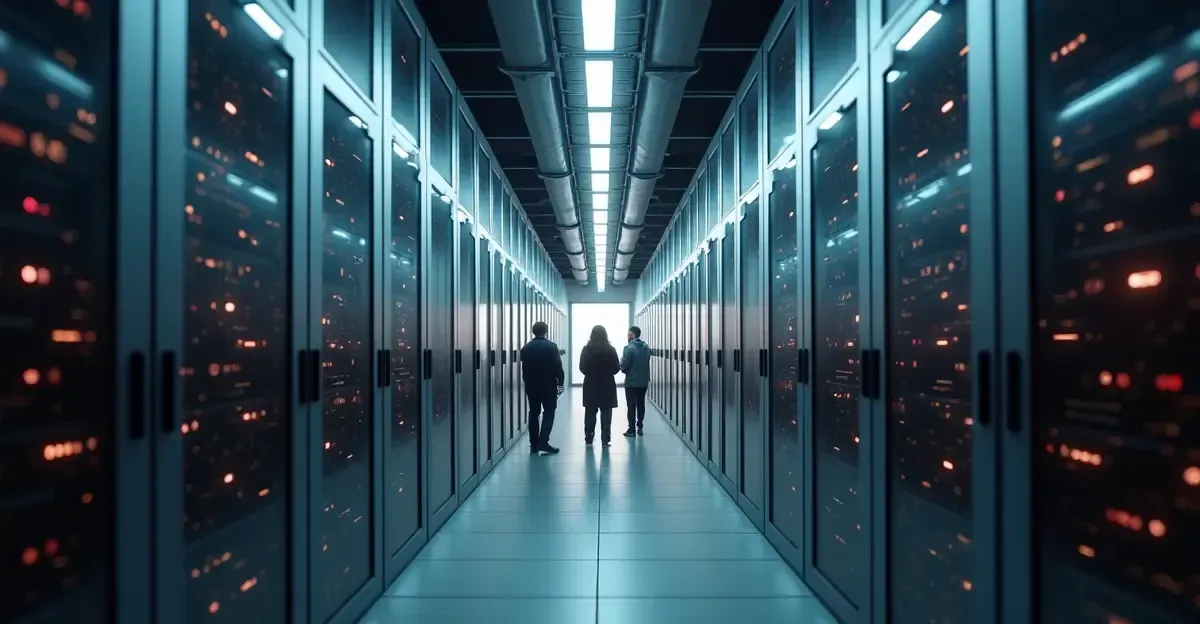
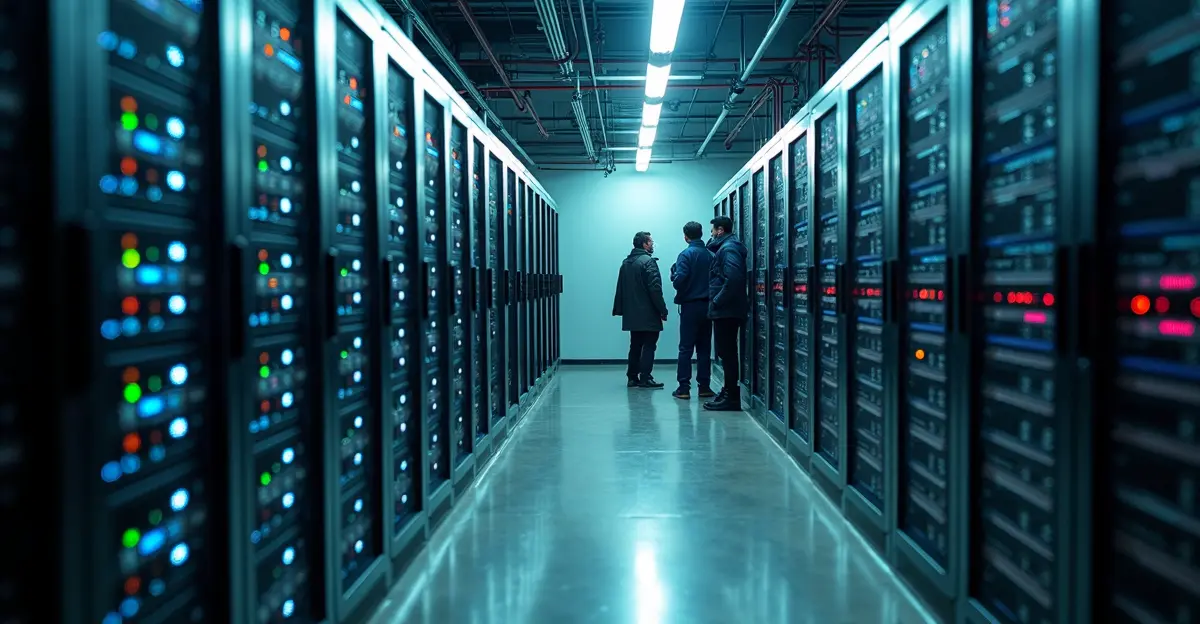
The rapid expansion of artificial intelligence is driving an unprecedented transformation of global energy systems. By 2026, AI data centers are projected to consume between 6% and 12% of total U.S. electricity, up from 4.4% in 2023, according to the U.S. Energy Information Administration (EIA). This surge has shifted the primary bottleneck for AI infrastructure from capital availability to grid capacity, forcing technology giants to rethink their power strategies entirely.
The Grid Bottleneck Crisis
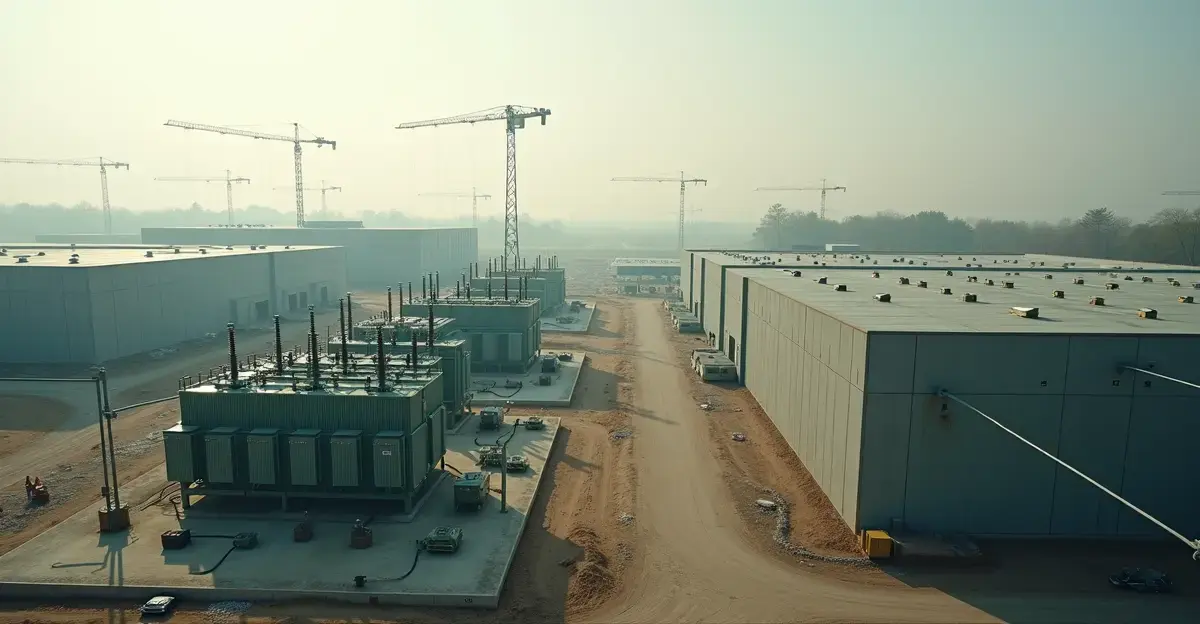
In 2026, nearly half of planned U.S. AI data center capacity—approximately 7 gigawatts—has been delayed or canceled due to grid constraints, transformer shortages, and interconnection queues stretching four to five years. Of the roughly 12 GW of AI data center capacity expected this year, only about 5 GW is under active construction. This gap between announced capital expenditure and energized megawatts is the widest on record, with Alphabet, Amazon, Meta, and Microsoft on track to spend over $650 billion on AI infrastructure in 2026, yet unable to power it all.
Wholesale electricity prices near major data center clusters have surged up to 267% over the past five years, according to Grid Status data analyzed by Bloomberg. In Northern Virginia, data centers now account for 39% of electricity consumption, while in Oregon the figure reaches 33%. Household rates in data center-heavy states like Maine have risen 36.3% in a single year, sparking political backlash and regulatory scrutiny. The rising cost of electricity for consumers has become a central policy debate.
From Grid Dependency to On-Site Generation
In response to these constraints, hyperscalers are pivoting decisively from grid dependency to behind-the-meter generation. Goldman Sachs Research projects that behind-the-meter energy systems—including fuel cells, gas turbines, and geothermal—will supply 25-33% of the incremental 730 terawatt-hours of data center demand through 2030.
Nuclear Power: Small Modular Reactors and Restarts
Nuclear energy has emerged as a leading long-term solution. Google signed a deal with Kairos Power for small modular reactors (SMRs), aiming for first power by 2030. Microsoft reached an agreement with Constellation to restart a reactor at Three Mile Island in Pennsylvania. Amazon invested $500 million with Dominion Energy to explore SMR development near Virginia. These moves signal a dramatic shift in corporate attitudes toward nuclear power, which was largely shunned by tech companies a decade ago. The revival of nuclear energy for AI data centers is reshaping utility planning nationwide.
Fuel Cells: Speed to Power
Fuel cells have become the fastest-growing on-site generation technology for AI data centers. Unlike gas turbines with lead times exceeding five years, fuel cells can be deployed in under 90 days. In January 2026, Bloom Energy announced a landmark 1 GW agreement with American Electric Power, followed by a $5 billion partnership with Brookfield for Energy-as-a-Service financing. Fuel Cell Energy secured a 450 MW collaboration with SDCL. Goldman Sachs estimates fuel cells could meet 6-15% of incremental data center power demand, requiring 8-20 GW of capacity by 2030. The stationary fuel cell market is projected to reach $7.8 billion, transforming from niche backup power into a critical enabler of AI infrastructure.
Geothermal: Long-Term Firm Power
Geothermal energy is also gaining traction. Fervo Energy raised $462 million in Series E funding to advance its 500 MW Cape Station project in Utah, expected to deliver 100 MW by 2026 and reach full capacity by 2028. Analysis from Project InnerSpace indicates geothermal could supply electricity and cooling at costs comparable to natural gas by 2035 ($50-$60/MWh), with data centers potentially saving up to $3.2 billion over 30 years by using geothermal thermal energy for direct cooling. The U.S. has roughly 3,400 GW of accessible geothermal potential, and approximately 80% of oil and gas workforce skills are transferable to geothermal development.
The New Metric: Tokens Per Watt Per Dollar
As energy becomes the defining constraint, a new efficiency metric has emerged: tokens per watt per dollar. Introduced by NVIDIA CEO Jensen Huang at GTC 2026, this metric measures how much AI inference work a system produces per unit of power and cost. It synthesizes three dimensions: computational performance (FP8 PFLOPS), acquisition cost, and power consumption. Custom hyperscaler silicon like Google's TPU v7 Ironwood and Microsoft's Maia 200 now outperform merchant GPUs by 2-3x on this metric for inference workloads. The tokens per watt metric and AI efficiency is becoming the key benchmark for hyperscaler procurement decisions.
At the macro level, tokens per watt contextualizes rising data center power usage by demonstrating that computing output is advancing faster than energy consumption. Steven Carlini of Schneider Electric argues this metric should become the industry standard, replacing older measures like PUE and FLOPS per watt that fail to capture AI workload economics.
Implications for Energy Markets and Industrial Policy
The AI-energy nexus is reshaping wholesale electricity markets, utility regulation, and industrial policy. Utilities filed $29 billion in rate hike requests in the first half of 2025 alone—up 142% from the previous year. Debates are intensifying over whether tech giants or consumers should bear these costs, with 'high-load tariffs' and data center-specific pricing emerging as policy solutions.
McKinsey projects that global spending on data center infrastructure could reach $7 trillion by 2030, with $5.2 trillion specifically for AI-related capacity. Of this, energy providers require $1.3 trillion. The report identifies five key investor groups: Builders, Energisers, Technology developers, Operators, and AI architects—each facing distinct challenges around labor shortages, grid capacity, and supply chain concentration.
The global race for AI dominance and energy access is now fundamentally an energy race. Countries with abundant, cheap, and reliable power—whether from nuclear, geothermal, natural gas, or renewables—will have a structural advantage in attracting AI infrastructure investment. This dynamic is already reshaping industrial policy in the United States, China, Europe, and the Middle East.
Expert Perspectives
"The bottleneck has shifted from GPU/chip shortages to physical power infrastructure—specifically transformers, switchgear, and batteries," notes a 2026 analysis from Tech Insider. "The result is the widest gap on record between announced AI capital expenditure and energized megawatts."
"Fuel cells offer a 9-12 month speed advantage over gas turbines, with higher efficiency and lower emissions," says Goldman Sachs Research. "They could ultimately meet 6-15% of incremental data center power demand."
"Tokens per watt is the new CEO metric," declared Jensen Huang at GTC 2026. "Data centers are power-constrained, and every watt has a cost, a physical limit, and an opportunity cost."
Frequently Asked Questions
How much electricity will AI data centers consume by 2026?
AI data centers are projected to consume between 6% and 12% of total U.S. electricity by 2026, up from 4.4% in 2023. Globally, electricity consumption from data centers, AI, and crypto is expected to exceed 1,000 TWh by 2026, doubling from 460 TWh in 2022.
Why are tech companies building their own power plants?
Grid interconnection delays of 3-5 years, transformer shortages, and soaring wholesale electricity prices (up 267% near data center clusters) have made grid dependency untenable. On-site generation using fuel cells, nuclear SMRs, geothermal, and gas turbines offers faster deployment and greater control over power costs and reliability.
What is 'tokens per watt per dollar'?
It is a new efficiency metric introduced by NVIDIA CEO Jensen Huang that measures AI inference output (tokens) per unit of power consumed and capital cost. It synthesizes performance, cost, and energy efficiency into a single benchmark for evaluating AI hardware and infrastructure decisions.
Which energy technologies are winning the AI data center race?
Fuel cells are the fastest to deploy (under 90 days) and are seeing gigawatt-scale commitments. Nuclear power (both SMRs and reactor restarts) offers long-term firm power but faces regulatory and construction timelines. Geothermal is emerging as a credible baseload option with significant U.S. resource potential. Natural gas turbines remain an option but face 5+ year lead times.
How will AI data center energy demand affect household electricity bills?
Household electricity rates in data center-heavy states have already risen sharply—36.3% in Maine, for example. Utilities filed $29 billion in rate hike requests in the first half of 2025, up 142% year-over-year. Policymakers are considering 'high-load tariffs' to ensure tech giants bear a fair share of grid upgrade costs rather than passing them to residential consumers.
Conclusion: Energy Access Determines AI Leadership
The convergence of AI and energy is creating a new strategic paradigm. In 2026, the ability to secure reliable, affordable, and rapidly deployable power has become the single most important determinant of AI infrastructure leadership. The emerging metric of tokens per watt per dollar encapsulates this shift: energy efficiency and energy access are now inseparable from technological competitiveness. As McKinsey's $7 trillion infrastructure build-out unfolds over the remainder of the decade, the winners will be those who can solve the power puzzle—whether through nuclear restarts, fuel cell factories, geothermal fields, or grid modernization. The AI revolution, it turns out, will be powered not just by silicon, but by electrons.


Follow Discussion