


 Deutsch
 English
 Español
 Français
 Nederlands
 Português


 Share
Share




AI's Energy Hunger Sparks a Nuclear Renaissance
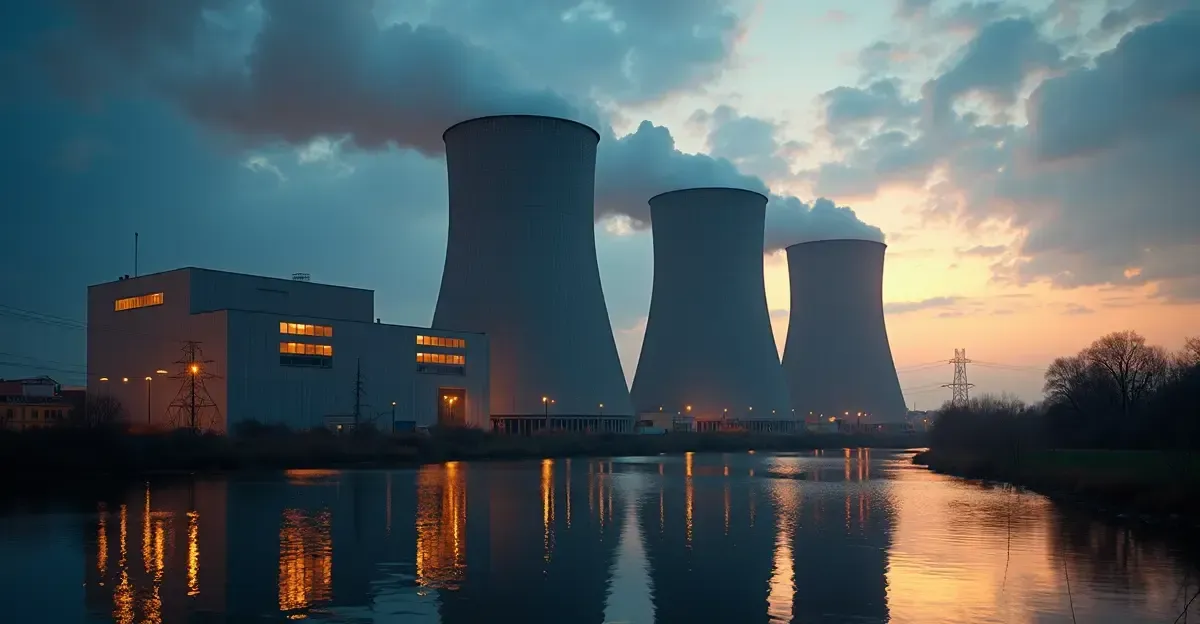
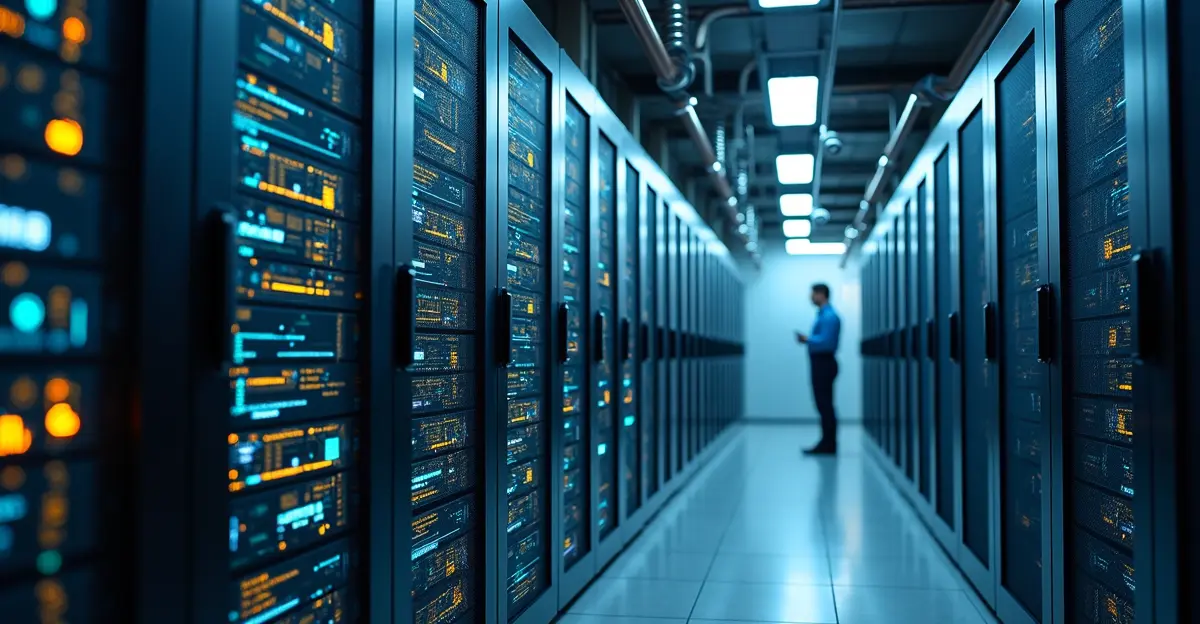
In 2026, the voracious energy demands of artificial intelligence are rewriting the rules of power generation. Each hyperscale AI data center now requires up to 80 megawatts (MW)—more than double the 32 MW typical just a few years ago. To meet this insatiable appetite, Amazon, Microsoft, Google, and Meta have collectively committed over 9.8 gigawatts (GW) of capacity through small modular reactor (SMR) deals, including the historic restart of Three Mile Island and investments in next-generation reactor designs. This unprecedented pivot marks what many analysts call the defining energy-technology story of the decade.
With the EU AI Act's high-risk provisions taking full effect in August 2026 and global data center energy demand projected to double by 2030, the convergence of AI scaling limits and nuclear energy deployment has become urgent. The EU AI Act compliance is pushing hyperscalers to secure reliable, carbon-free baseload power that renewables alone cannot guarantee for 24/7 AI infrastructure.
The SMR Revolution: A New Nuclear Paradigm
What Are Small Modular Reactors?
Small modular reactors (SMRs) are advanced nuclear reactors with a power capacity of up to 300 MW per unit—roughly one-third the size of traditional reactors. They are designed for factory fabrication, modular assembly, and scalable deployment. Unlike conventional gigawatt-scale plants, SMRs offer lower upfront capital costs, shorter construction timelines, and enhanced safety features. Their ability to provide 95%+ capacity factor—versus 25-35% for solar and wind—makes them ideal for powering AI data centers that cannot tolerate intermittency.
Key SMR Technologies in Play
Several SMR designs are vying for dominance in the AI energy market:
- GE Hitachi BWRX-300: A boiling water reactor design targeting 300 MW, with licensing underway in Canada and the U.S.
- NuScale VOYGR: A light-water SMR offering 77 MW per module, with up to 12 modules per plant.
- Kairos Power KP-X: A fluoride salt-cooled, high-temperature reactor backed by Google's 500 MW deal.
- TerraPower Natrium: A sodium-cooled fast reactor with molten salt energy storage, supported by Meta's 6.6 GW commitment.
- X-energy Xe-100: A high-temperature gas-cooled reactor, with Amazon investing $700 million for up to 12 units.
The SMR technology race is intensifying as regulators and investors race to certify these designs.
Hyperscaler Nuclear Deals: A $100 Billion Pipeline
The scale of Big Tech's nuclear commitments is staggering. According to industry tracker SMR Intel, 13 announced projects now commit over 9.8 GW of nuclear capacity, with total investment exceeding $100 billion when including associated data center campuses.
| Company | Key Deal | Capacity (MW) | Expected Online |
|---|---|---|---|
| Microsoft | Three Mile Island restart (Constellation) | 835 | 2027-2028 |
| Amazon | X-energy SMRs + Susquehanna AI campus | 960+ | 2030-2032 |
| Kairos Power SMR fleet | 500 | 2030 | |
| Meta | TerraPower, Oklo, Vistra, Constellation | Up to 6,600 | 2030-2035 |
Microsoft's $16 billion, 20-year power purchase agreement (PPA) to restart Three Mile Island Unit 1—renamed the Crane Clean Energy Center—is the most emblematic deal. The plant, shuttered in 2019, received a $1 billion federal loan from the Trump administration in November 2025, with the first advance expected in Q1 2026. Constellation Energy aims to resume power generation by mid-2027, pending Nuclear Regulatory Commission (NRC) approval.
Amazon has invested $700 million in X-energy to develop up to 12 Xe-100 SMRs, alongside a $20 billion+ AI campus at the Susquehanna nuclear site in Pennsylvania. Google secured the first NRC construction permit for a non-water-cooled reactor in 50 years through its partnership with Kairos Power. Meta leads the pack with up to 6.6 GW across multiple developers, including TerraPower's Natrium reactor and Oklo's Aurora design.
Regulatory Breakthroughs and Hurdles
The NRC's new Part 53 regulatory framework, finalized in March 2026, streamlines advanced reactor licensing, aiming for approvals within 18 months—down from the decade-long process for traditional plants. This regulatory modernization is critical for SMR deployment at scale. However, challenges remain, including limited high-assay low-enriched uranium (HALEU) fuel supply and a thin nuclear engineering talent pool. The NRC Part 53 licensing framework is expected to accelerate SMR approvals globally.
Globally, the UK, Canada, and Poland are advancing SMR programs, with the UK targeting 24 GW of nuclear by 2050 and Canada's Ontario Power Generation planning a BWRX-300 fleet. The SMR market, valued at $6.9 billion in 2025, is projected to reach $13.8 billion by 2032, according to industry estimates.
Economic and Strategic Implications
Nuclear power offers AI hyperscalers a unique value proposition: 24/7 carbon-free electricity at a predictable cost. SMR levelized cost of energy (LCOE) is estimated at $60-120/MWh, competitive with gas-fired generation when including carbon pricing. Moreover, nuclear plants require only ~50 acres of land and can operate independently of the grid, reducing transmission bottlenecks.
Goldman Sachs estimates that 85-90 GW of new nuclear capacity is needed by 2030 to meet AI data center demand—with well under 10% currently available. This gap presents both a challenge and an opportunity for the nuclear supply chain, which must scale up manufacturing capacity for reactor components, HALEU enrichment, and skilled workforce development.
The AI data center energy crisis is driving innovation in co-location models, where data centers are built directly adjacent to nuclear plants. Amazon's Susquehanna campus and Meta's planned 1.2 GW Oklo campus exemplify this trend.
Expert Perspectives
"Nuclear is the endgame for sustainable AI infrastructure," says Dr. Jessica Green, energy policy analyst at the Breakthrough Institute. "Renewables alone cannot provide the 24/7 baseload power that AI training and inference require. SMRs offer a scalable, carbon-free solution that aligns with Big Tech's net-zero commitments."
However, critics warn of cost overruns and construction delays. "The nuclear industry has a poor track record of delivering on time and on budget," notes Mark Cooper, senior fellow at the Institute for Energy and the Environment. "SMRs are unproven at scale, and the first-of-a-kind costs could be significantly higher than projections."
Regulatory support is strong. The Trump administration's executive orders in May 2025 prioritized nuclear energy for national security and AI competitiveness, while the EU AI Act's energy efficiency provisions are pushing European hyperscalers to explore nuclear partnerships.
FAQ: Big Tech and Nuclear SMRs
Why are AI data centers driving nuclear power demand?
AI training and inference require massive, continuous electricity. A single AI query can consume up to 10 times the power of a standard Google search. With data center energy demand projected to reach 1,300 TWh by 2035, nuclear provides reliable, carbon-free baseload power that renewables cannot guarantee.
What is the difference between SMRs and traditional nuclear reactors?
SMRs are smaller (up to 300 MW vs. 1,000+ MW), factory-built, and modular. They offer lower upfront costs, shorter construction times, and enhanced safety features, making them suitable for private investment and co-location with data centers.
When will the first SMRs power AI data centers?
Existing reactor restarts like Three Mile Island (Microsoft) could deliver power by 2027-2028. New-build SMRs from Kairos Power, X-energy, and TerraPower are targeting 2030-2035 for first commercial operations.
What are the main challenges facing SMR deployment?
Key challenges include limited HALEU fuel supply, a thin nuclear engineering workforce, first-of-a-kind cost risks, and regulatory approvals across multiple jurisdictions. Supply chain scaling is also critical.
How much nuclear capacity have Big Tech companies committed to?
As of mid-2026, Amazon, Microsoft, Google, and Meta have collectively committed over 9.8 GW across 13 announced projects, with total investment exceeding $100 billion including associated data center infrastructure.
Conclusion: The Nuclear-AI Nexus
The year 2026 marks a critical inflection point where regulatory frameworks, corporate partnerships, and capital decisions will shape the future of AI infrastructure. Big Tech's nuclear bet is not merely an energy play—it is a strategic imperative to ensure AI scaling is not constrained by power availability. If SMRs deliver on their promise, they could transform both the nuclear industry and the global energy landscape. The next five years will determine whether this renaissance becomes a revolution or a cautionary tale.



Follow Discussion