


 Deutsch
 English
 Español
 Français
 Nederlands
 Português


 Share
Share




The insatiable energy appetite of artificial intelligence is reshaping global power markets, driving a nuclear renaissance centered on Small Modular Reactors (SMRs). By 2026, AI data centers are projected to consume over 1,000 terawatt-hours (TWh) annually — more than the entire electricity consumption of Japan — with a single AI query requiring up to 10 times the power of a standard Google search. To meet this 24/7 carbon-free baseload demand that solar and wind cannot guarantee, major tech firms including Microsoft, Amazon, Google, and Meta have signed landmark power purchase agreements (PPAs) with nuclear operators and invested billions in SMR development. As first commercial SMR deployments target 2028–2030, 2026 has emerged as the critical inflection point where regulatory frameworks, tech-utility partnerships, and capital allocation decisions will determine whether nuclear power becomes the backbone of the AI infrastructure buildout.
The AI Energy Crisis: Why Nuclear Is the Only Answer
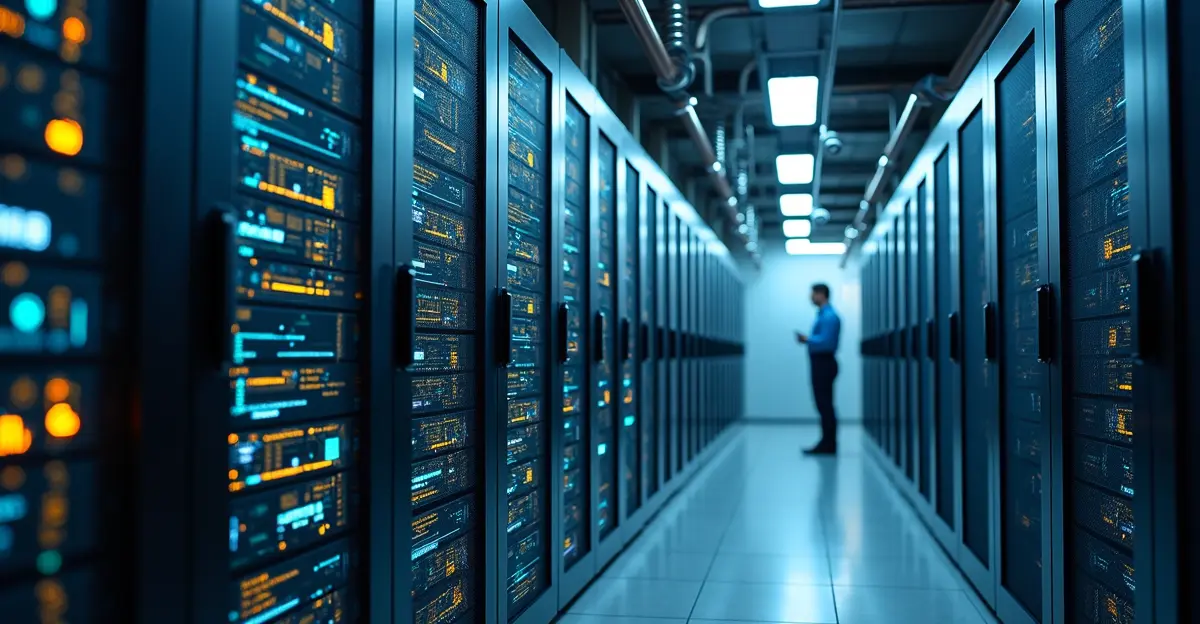
Global energy investment in 2025 surpassed $3.3 trillion, with $2.2 trillion directed to clean technologies, according to the International Energy Agency (IEA). Yet renewable sources alone cannot provide the uninterrupted, high-density power that AI data centers require. The AI data center power crisis stems from the fundamental architecture of generative AI: training large language models requires thousands of GPUs running for weeks, while inference queries demand real-time computation. A single ChatGPT query consumes approximately 2.9 watt-hours versus 0.3 watt-hours for a standard search — a nearly tenfold increase. At scale, this translates to explosive growth in electricity demand, with Morgan Stanley warning of a 49 GW generation shortfall in the U.S. alone by 2028.
Data center operators face a structural dilemma: solar and wind are intermittent, battery storage at grid scale remains expensive, and natural gas undermines corporate net-zero pledges. Nuclear power, with its 90%+ capacity factor and zero-carbon operation, offers the only proven technology capable of delivering baseload power around the clock. This realization has triggered a wave of corporate nuclear commitments unprecedented in the history of the energy industry.
Big Tech's Nuclear Shopping Spree: $9.8 GW and Counting
As of mid-2026, every major hyperscaler has signed at least one nuclear deal, committing over 9.8 GW of capacity across 13 announced projects. The scale and speed of these agreements represent a strategic pivot from renewable PPAs to nuclear offtake contracts spanning 20 years or more.
Microsoft: Restarting Three Mile Island
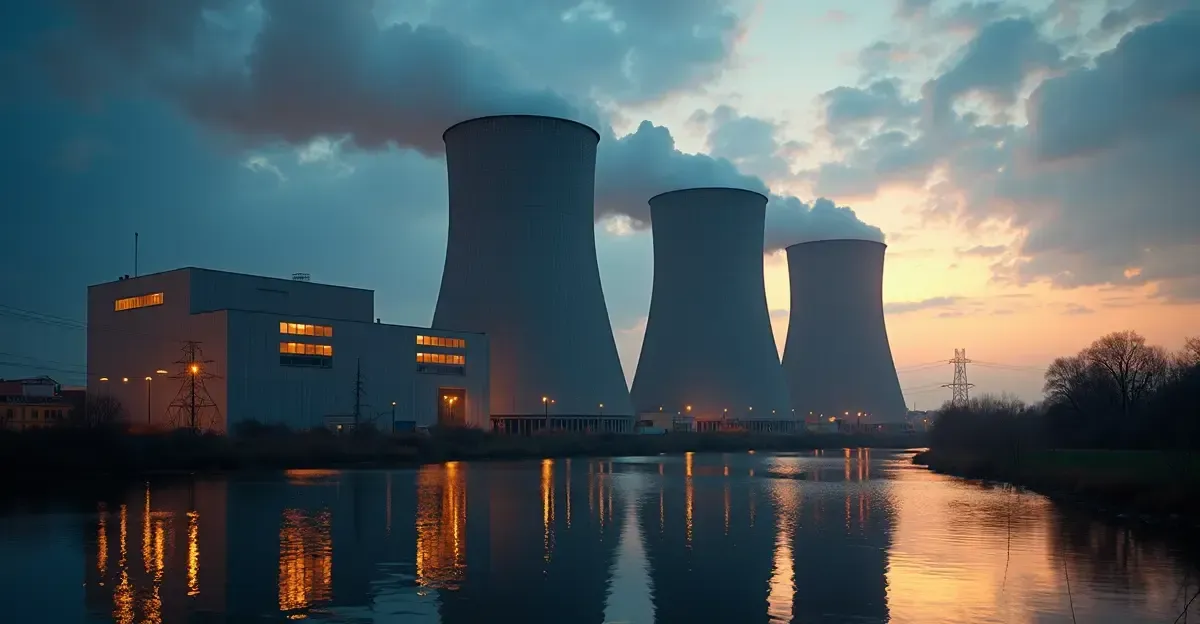
Microsoft fired the starting gun in September 2024 with a 20-year, $16 billion PPA with Constellation Energy to restart Three Mile Island Unit 1 — the undamaged reactor at the site of America's most famous nuclear accident. Renamed the Crane Clean Energy Center, the 835 MW plant is expected online by 2027, supported by a $1 billion federal loan approved in November 2025. Constellation will invest $1.6 billion in plant upgrades, including new turbines, and the license has been extended to 2054. The deal created 3,400 direct and indirect jobs and contributed $16 billion to Pennsylvania's GDP.
Amazon: Betting Big on X-energy
Amazon has placed the largest single corporate bet on SMRs, investing $700 million in X-energy through its Climate Pledge Fund. X-energy went public in April 2026 in a $1.02 billion IPO — the largest pure-play advanced nuclear listing in U.S. history — with shares pricing 36% above the marketed range. Amazon secured an offtake agreement for up to 5 GW of Xe-100 reactors by 2039, including a 320 MW project with Energy Northwest in Washington and a 300 MW project with Dominion Energy in Virginia. The Xe-100 is an 80 MW high-temperature gas-cooled pebble-bed reactor using TRISO-X fuel that is meltdown-proof by design. Amazon is also developing a $20 billion AI campus at the Susquehanna nuclear plant in Pennsylvania.
Google: First SMR Construction Permit in 50 Years
Google signed a Master Plant Development Agreement with Kairos Power in October 2024 to deploy 500 MW of KP-FHR reactors by 2035. The first 50 MWe unit is targeted for 2030, followed by three plants of two 75 MWe modules each, sited in Tennessee Valley Authority territory. Kairos Power secured the first NRC construction permit for a non-water-cooled reactor in over 50 years for its Hermes test reactor at Oak Ridge, Tennessee. The Kairos Power Google SMR deal is notable for its high-temperature output (650°C), which enables absorption cooling for data centers, improving power usage effectiveness (PUE).
Meta: The Largest Nuclear Commitment
Meta has the largest overall commitment at up to 6.6 GW across three partners: TerraPower (up to eight Natrium reactors, 2.8 GW baseload plus 1.2 GW storage), Oklo (up to 16 Aurora reactors at a Pike County, Ohio campus, 1.2 GW), and Vistra (extending the life of three existing nuclear plants). Meta's deals also include a prior agreement with Constellation. The TerraPower Natrium design, backed by Bill Gates, features a sodium-cooled fast reactor with molten salt energy storage, enabling load-following capability ideal for data center demand profiles.
Regulatory Inflection Point: Part 53 and NRC Reform
The U.S. Nuclear Regulatory Commission (NRC) finalized Part 53 in March 2026 — a new technology-inclusive regulatory framework for advanced reactors, more than a year ahead of the 2027 deadline set by Congress. Part 53 is the first new reactor licensing framework since Part 52 in 1989 and the first major update to licensing standards since Part 50 in 1956. Under the new rule, reactor designs could receive approval in 18 months or less, with application costs potentially reduced by half. NRC Chairman Ho Nieh called it a historic milestone. The NRC SMR licensing reforms also include streamlined security requirements and graded approaches based on risk analysis.
These regulatory changes are critical because no commercial SMR is yet operating in the United States. Only China and Russia have operational SMRs — Russia's floating Akademik Lomonosov (since 2020) and China's HTR-PM pebble-bed reactor (grid-connected in 2022). The NRC's Part 53 rule, combined with executive orders mandating faster approvals, aims to close this gap and position the U.S. as a global leader in advanced nuclear deployment.
Economic and Geopolitical Implications
The nuclear-AI nexus carries profound implications for energy markets, grid reliability, and geopolitics. Data center electricity costs have risen 42% since 2019, according to the Brookings Institution, and PJM capacity prices have spiked tenfold. Communities in Ohio, Georgia, and Missouri are pushing back against data center development, while utilities requested $31 billion in rate hikes in 2025 alone. The global energy investment trends 2025 show nuclear capital flows growing 50% over five years to approximately $75 billion annually, yet grid investment at $400 billion is lagging behind generation spending, posing electricity security risks.
The World Economic Forum has flagged SMRs as a top emerging technology for 2026, recognizing their potential to decarbonize hard-to-abate sectors beyond data centers, including industrial process heat, hydrogen production, and desalination. However, challenges remain: HALEU (high-assay low-enriched uranium) fuel supply is constrained, supply chain bottlenecks for transformers and other components persist with lead times of 2-4 years, and public acceptance of nuclear power, while improving, remains fragile.
Expert Perspectives
"The scale of AI energy demand is unprecedented in modern history. We are seeing a structural shift where the largest companies in the world are committing to nuclear power not as a hedge, but as a core strategy," said Dr. Maria Korsnick, President and CEO of the Nuclear Energy Institute. "SMRs offer the scalability and factory-built economics that can make nuclear power competitive with natural gas, but only if regulatory reform continues at the current pace."
John Fabian, writing in Nuclear Newswire in 2026, noted that the definition of SMR remains contested: the NRC defines SMRs as light-water reactors under 300 MWe, while the World Nuclear Association includes any reactor under 300 MWe with modular technology. This definitional ambiguity could affect licensing pathways and investor confidence.
FAQ
What is a Small Modular Reactor (SMR)?
An SMR is a nuclear fission reactor with a rated electrical power of less than 300 MWe, designed for factory fabrication and modular construction. SMRs incorporate passive safety features and can be deployed in multi-unit configurations to scale power output.
Why are AI data centers driving nuclear power adoption?
AI data centers require 24/7 carbon-free baseload electricity that solar and wind cannot reliably provide. A single AI query uses up to 10x more power than a standard search, and total data center consumption is projected to exceed 1,000 TWh by 2026, forcing tech companies to secure dedicated nuclear capacity.
When will the first commercial SMRs be operational in the U.S.?
First deployments are targeted for 2028–2030. Kairos Power aims for a 50 MWe unit by 2030, X-energy's first Xe-100 units are expected around 2029, and TerraPower's Natrium is targeting 2032. Existing reactor restarts like Three Mile Island Unit 1 will deliver power sooner, by 2027.
How much have tech companies invested in nuclear power?
As of mid-2026, tech companies have committed over 9.8 GW of nuclear capacity through PPAs and direct investments. Microsoft's Three Mile Island deal is valued at $16 billion, Amazon invested $700 million in X-energy, and Meta's commitments span up to 6.6 GW across multiple partners.
What are the main challenges facing SMR deployment?
Key challenges include HALEU fuel supply constraints, supply chain bottlenecks for specialized components, regulatory timelines (though Part 53 aims to reduce these), high upfront capital costs, and public acceptance. The NRC's new Part 53 framework is designed to address regulatory hurdles.
Conclusion: 2026 as the Inflection Point
The convergence of AI's insatiable power demand, corporate net-zero commitments, and regulatory modernization has made 2026 the defining year for nuclear energy's revival. With over $3.3 trillion in global energy investment flowing into clean technologies and the World Economic Forum recognizing SMRs as a top emerging technology, the nuclear-AI partnership is poised to reshape the global energy landscape. The decisions made in 2026 — on regulatory frameworks, capital allocation, and project timelines — will determine whether nuclear power becomes the backbone of the AI infrastructure buildout or remains a promising technology stuck in development. For investors, policymakers, and energy professionals, the message is clear: the nuclear reboot is underway, and AI is the catalyst.



Follow Discussion