


 Deutsch
 English
 Español
 Français
 Nederlands
 Português


 Share
Share




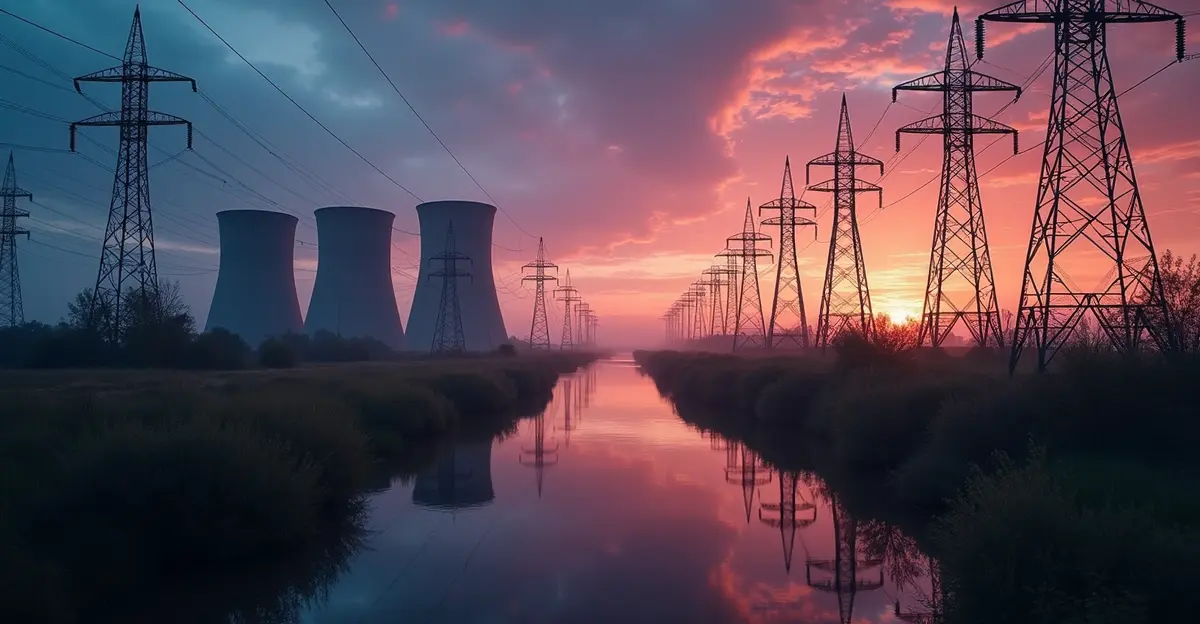
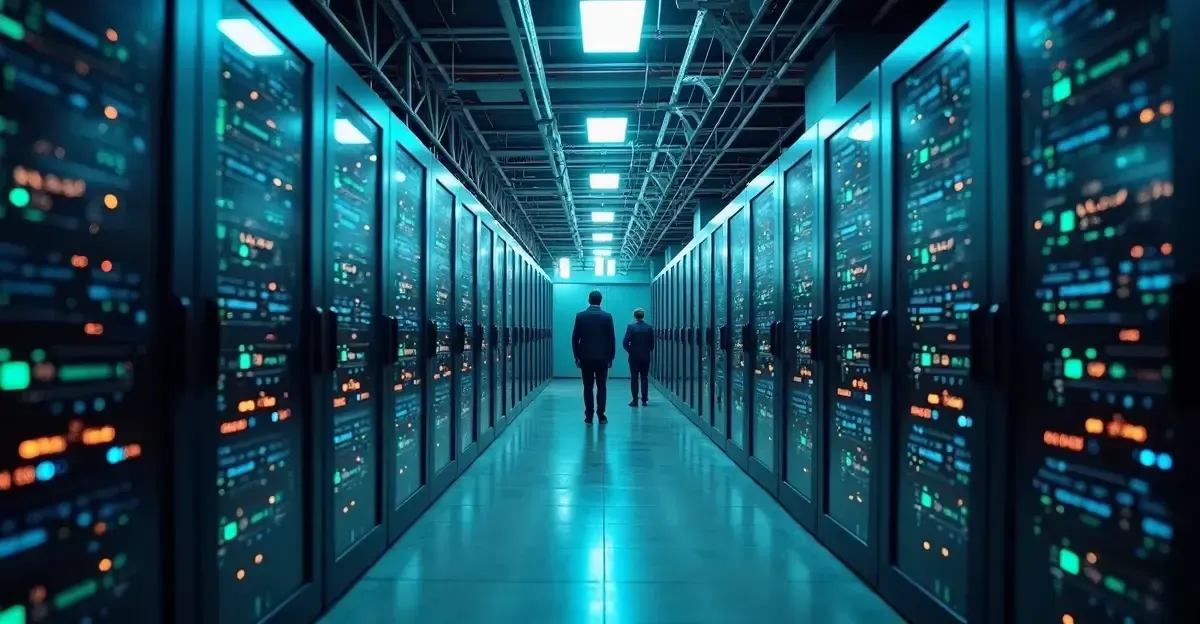
The global artificial intelligence boom is colliding with a hard physical limit: the world's power grids. In 2026, data center electricity demand is projected to surpass 1,000 terawatt-hours (TWh) annually, according to the International Energy Agency (IEA) — equivalent to the entire electricity consumption of Japan. Yet the power infrastructure needed to support this surge is taking decades to build, while AI hardware scales in months. This structural mismatch between AI's insatiable energy appetite and grid capacity has become the defining bottleneck of the AI era, with profound implications for energy markets, industrial policy, and the pace of AI deployment worldwide.
The 1,000 TWh Threshold: A New Energy Reality
Global data center electricity consumption has more than doubled since 2020, driven overwhelmingly by AI workloads. The IEA projects that data centers will consume over 1,000 TWh in 2026, up from 415 TWh in 2024. To put that in perspective, a single H100 GPU draws 700 watts, and a 10,000-GPU cluster demands grid capacity that most midsize cities lack. AI inference — the process of running trained models — has now surpassed training in energy consumption, and the trend is accelerating.
Goldman Sachs Research projects U.S. data center power demand will more than double to 66 GW by 2027, up from 31 GW in 2025, representing a 15% compound annual growth rate through 2030. Data centers' share of total U.S. peak summer power demand is expected to jump from 4.1% in 2025 to 8.5% by 2027. The global AI infrastructure buildout is creating energy demand on a scale not seen since the electrification of industry.
Grid Bottlenecks: Substations Become the New GPU Shortage
The most acute constraint is no longer chip supply — it is physical electrical infrastructure. Nearly half of planned U.S. AI data centers scheduled for 2026 have been delayed or canceled, according to industry tracking data. Of roughly 12 GW of planned capacity for 2026, only about one-third (~5 GW) is under active construction. The bottleneck has shifted decisively from GPUs to transformers, switchgear, and substation interconnection delays that now stretch up to five years.
Lead times for high-voltage power transformers have ballooned from 24-30 months to as long as five years, clashing with AI deployment cycles under 18 months. U.S. imports of Chinese high-power transformers surged from under 1,500 units in 2022 to over 8,000 through October 2025, highlighting continued reliance on foreign supply chains despite tariffs. The data center construction supply chain crisis is now a top-tier risk for hyperscalers.
PJM's 6 GW Shortfall: A Warning for the Nation
The PJM Interconnection, which covers 13 Mid-Atlantic and Midwest states, provides the clearest example of grid stress. In its 2027-2028 capacity auction, PJM procured 145,777 MW — falling 6.6 GW below reliability requirements for the first time in its history. Capacity prices hit a record $333.44 per MW-day, a nearly tenfold increase from prior years. Nearly 300 GW of proposed generation is stuck in PJM's interconnection queue, with only 3 GW successfully coming online in 2025 — a 72x disconnect between applications and completions.
Gartner predicts that by 2027, power shortages will restrict 40% of AI data centers worldwide. The research firm warns that organizations deploying AI workloads may face significant operational constraints as energy grids struggle to keep up. Energy access has become a first-order competitive variable alongside compute and talent.
Hyperscalers Go Nuclear: Direct Power Investment
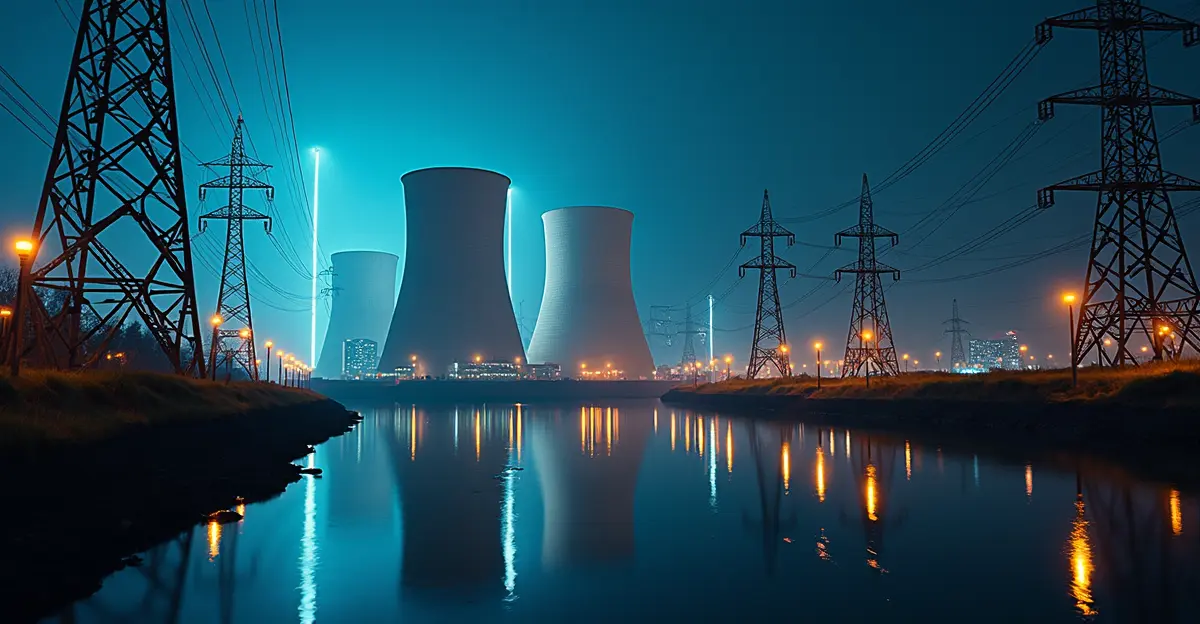
Faced with grid paralysis, the world's largest tech companies are bypassing utilities and investing directly in power generation — with a striking pivot toward nuclear energy. As of May 2026, a total of 13 announced nuclear-powered data center projects commit over 9.8 GW of capacity for AI infrastructure.
Microsoft locked in 835 MW via a $1.6 billion, 20-year power purchase agreement for the Three Mile Island Unit 1 restart, now renamed the Crane Clean Energy Center, expected online by 2027. Google committed to 500 MW from Kairos Power's fluoride salt-cooled high-temperature reactors. Amazon invested $700 million in X-energy for up to 12 Xe-100 small modular reactors (SMRs), totaling 960 MW. Meta leads with up to 6.6 GW in nuclear agreements spanning TerraPower's Natrium reactor, Oklo's Aurora design, and partnerships with Vistra and Constellation Energy.
This represents more capital commitment to nuclear power than any prior decade in U.S. history. The nuclear energy revival for AI data centers is reshaping the energy landscape, though the earliest electrons from these projects are not expected until 2027 at the earliest.
Economic and Policy Implications
The power crunch is already driving up costs for everyone. Wholesale electricity prices near major data center hubs have risen by up to 267%, according to RBC Wealth Management. The average U.S. household could see electricity bills rise $15-25 per month due to AI-driven grid upgrade costs. Utilities requested $31 billion in rate hikes in 2025 alone, and multiple states now demand that tech companies self-fund power infrastructure rather than shifting costs to ratepayers.
Despite these constraints, Alphabet, Amazon, Meta, and Microsoft are still projected to spend over $650 billion on AI infrastructure in 2026. This creates the widest gap on record between announced AI capital expenditure and actual energized megawatts — capital is fully committed, but the physical electrical layer needed to absorb it is years behind schedule.
The AI energy policy and regulation landscape is evolving rapidly, with FERC approving expedited interconnection tracks for data center loads and states debating cost allocation frameworks.
Expert Perspectives
The power grid was never designed for this pace of demand growth. We are asking a system built for 20th-century load patterns to absorb 21st-century AI workloads, and it is showing strain everywhere, said a Goldman Sachs Research analyst. Energy access has become the single greatest impediment to data center growth, replacing real estate and even chip supply as the primary constraint.
Gartner's research director added: Organizations that fail to proactively plan for energy availability when siting AI data centers will face operational disruptions by 2027. Power, not compute, will determine who wins in AI.
Frequently Asked Questions
How much electricity will AI data centers consume in 2026?
Global data center electricity consumption is projected to exceed 1,000 TWh in 2026, equivalent to Japan's total annual electricity use, according to the IEA.
Why are AI data centers being delayed or canceled?
Nearly half of planned U.S. AI data centers for 2026 face delays or cancellations due to grid interconnection bottlenecks, transformer shortages (lead times up to 5 years), and substation capacity constraints.
What are tech companies doing to solve the power problem?
Hyperscalers like Microsoft, Google, Amazon, and Meta are investing directly in power generation, including over 9.8 GW of nuclear capacity through PPAs, reactor investments, and plant restarts.
How will the AI power crunch affect electricity prices?
Wholesale electricity prices near data center hubs have risen up to 267%, and U.S. households could see $15-25 monthly increases due to grid upgrade costs passed through by utilities.
When will new nuclear power come online for AI data centers?
The earliest nuclear-powered AI data center electrons are expected in 2027 from Microsoft's Three Mile Island restart. Most SMR projects will not deliver power until 2028-2030.
Conclusion: The Defining Bottleneck of the AI Era
The AI power crunch of 2026 represents a fundamental structural challenge. Grid infrastructure upgrades take 4-6 years, while AI hardware scales in months. The 2,600 GW of generation and storage projects stuck in U.S. interconnection queues — more than double the country's existing capacity — will take years to resolve. In the near term, natural gas plants will fill the gap, creating tension between Big Tech's carbon-neutral pledges and fossil fuel reliance. The race to power AI is now a race to rebuild the world's electrical infrastructure at a pace never attempted before. The outcome will determine not only the trajectory of AI deployment but also the shape of global energy markets for decades to come.
Follow Discussion