


 Deutsch
 English
 Español
 Français
 Nederlands
 Português


 Share
Share




In 2026, the artificial intelligence revolution faces an unexpected adversary: the power grid. Global data center electricity consumption is projected to reach 1,000 terawatt-hours (TWh) this year — equivalent to Japan's entire annual energy use — yet grid connection timelines of 4 to 10 years clash with data center build cycles of just 2 to 3 years. The International Energy Agency (IEA) and DNV have both flagged 2026 as the year grid connectivity overtakes chip supply as the binding constraint on AI growth. This structural mismatch is forcing hyperscalers to pursue behind-the-meter solutions, revive nuclear projects, and compete for access to cheap, reliable clean electricity — reshaping energy markets, industrial policy, and technology competition worldwide.
The Scale of the Crisis
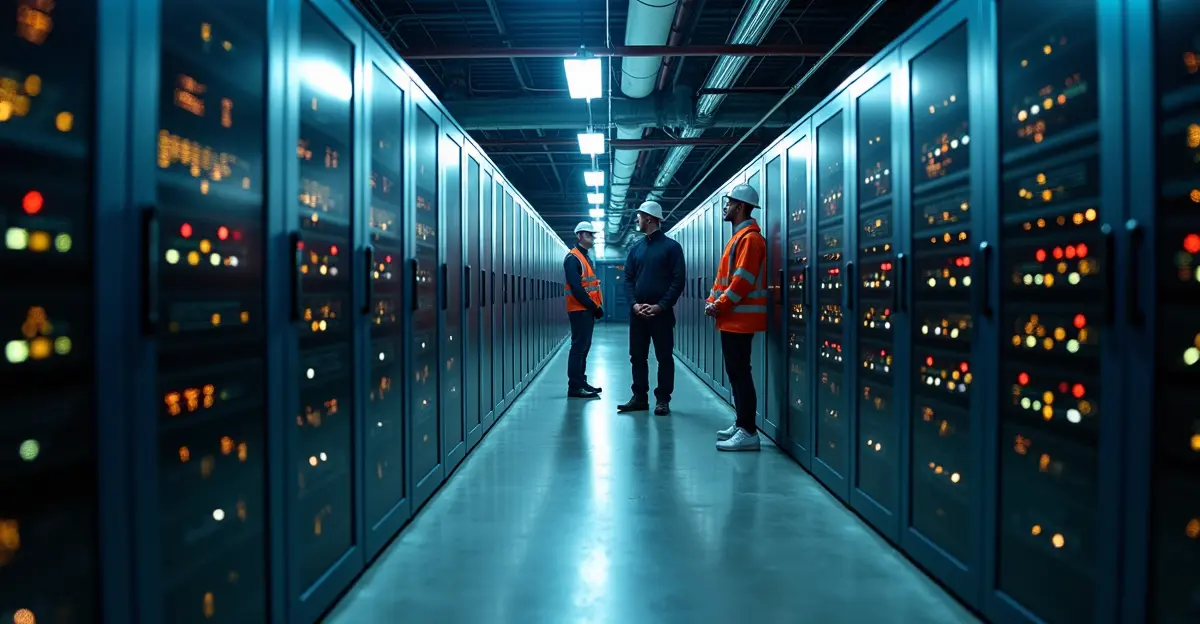
After two decades of sub-1% annual growth, U.S. electricity demand is surging at an unprecedented rate. The IEA's Electricity 2026 report projects that AI data centers will consume roughly 3% of global electricity this year, up from about 1% in 2022. Goldman Sachs forecasts a 165% increase in global data center power demand by 2030, with capacity reaching 92 GW by 2027. The AI data center energy crisis is driven by the unique power profile of AI workloads: GPU clusters draw 40 to 100 kilowatts per rack — four to ten times more than traditional server racks — and run continuously at peak utilization.
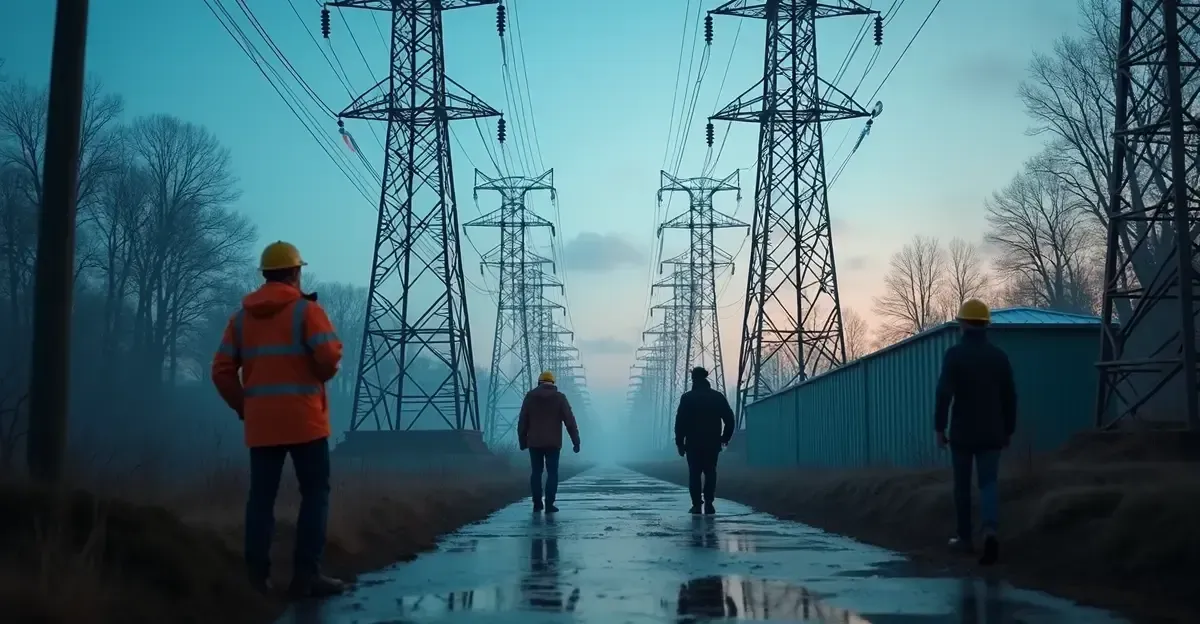
Grid infrastructure simply cannot keep pace. According to the IEA, interconnection queues worldwide have reached record levels, with 2,300 GW of generation and storage capacity waiting for connection approval. Median project timelines have stretched to five years in the United States, while data center developers need capacity in months. The result is a structural bottleneck that now constrains AI progress more than chip supply or algorithmic breakthroughs.
Regional Grid Meltdowns
Virginia: The Epicenter
Northern Virginia, home to the world's largest concentration of data centers, is ground zero for the grid crisis. Data centers already consume 25% of PJM Interconnection's capacity in the region, and that share could reach 41–59% by 2030. Dominion Energy has been accused of creating a 'crisis by contract' by privately agreeing to provide data centers with power far beyond available capacity. The Piedmont Environmental Council reports that Virginia's sales tax exemption for data centers cost the state $1.6 billion in fiscal year 2025 alone, while contributing to decreased grid reliability and higher residential electric bills.
Ohio and Ireland: Moratoriums Take Hold
In Ohio, American Electric Power (AEP) initially claimed 30 GW of potential new data center demand — more than triple the state's entire 2023 peak load of 9.4 GW. After revising that figure down to 13 GW, AEP implemented a moratorium on new data center connections. The independent market monitor for PJM, Monitoring Analytics, has filed a complaint with the Federal Energy Regulatory Commission (FERC) asking for a pause on new data center connections across the entire PJM footprint until the grid has adequate capacity.
In Ireland, Dublin's grid operator has also imposed a moratorium on new data center connections, citing capacity constraints. The global data center power demand surge is forcing regulators worldwide to choose between AI-driven economic growth and grid reliability.
Hyperscalers Go Off-Grid
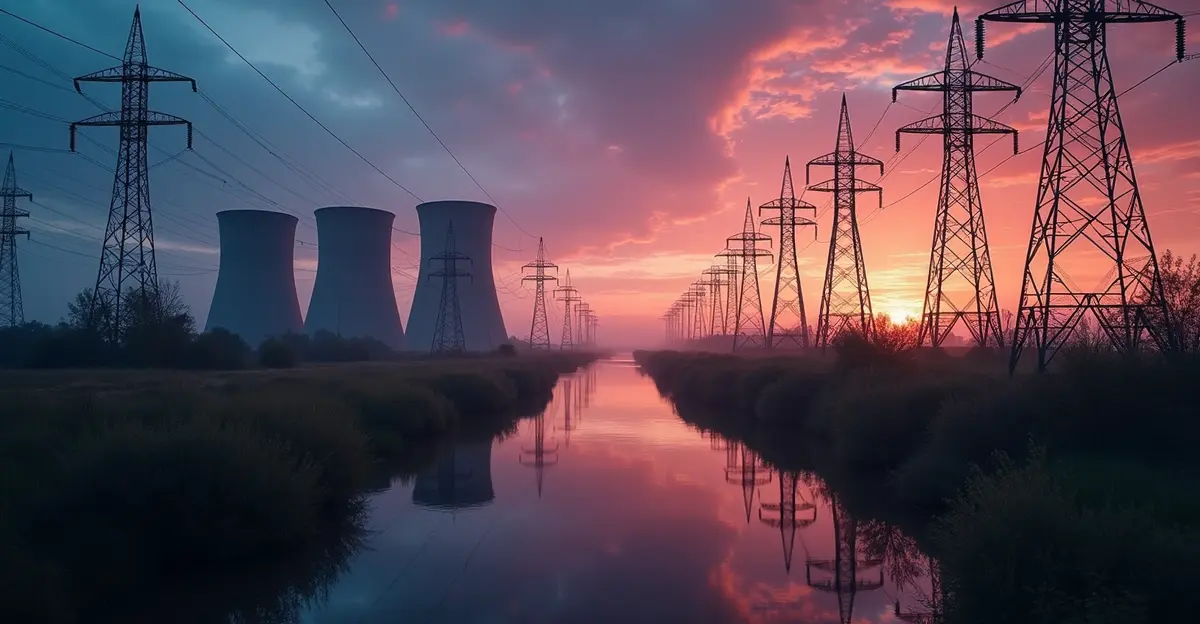
Faced with grid connection delays of 4–10 years, hyperscalers are increasingly bypassing the grid altogether through behind-the-meter solutions. Microsoft is restarting Three Mile Island Unit 1 at a cost of $1.6 billion, targeting 835 MW of carbon-free power by 2027. Amazon has signed a 1.92 GW power purchase agreement with Talen Energy's nuclear plant, while Google has committed to 500 MW of small modular reactors (SMRs) from Kairos Power. Meta has secured 1,121 MW in nuclear-backed PPAs.
These nuclear power for AI data centers deals provide the revenue certainty needed to finance capital-intensive SMR projects, which cost $1–3 billion per plant. However, none of these SMRs are commercially operational yet in the United States, leaving natural gas to fill the interim gap — a contradiction to tech companies' climate commitments. In Texas, Project Matador, a 17 GW behind-the-meter energy campus by Fermi America, is pursuing proven AP1000 nuclear reactors rather than unproven SMRs, leveraging ERCOT's deregulated market structure.
Economic and Policy Shockwaves
The grid bottleneck is driving dramatic cost increases. PJM capacity prices have spiked tenfold — from $28.92 to $269.92 per megawatt-day — adding approximately $9.3 billion in costs driven by data center demand alone. Electricity costs have risen 42% since 2019, with utilities requesting $31 billion in rate hikes in 2025. Transformer lead times have stretched to 2–4 years, further slowing grid expansion.
Communities across Ohio, Oregon, Georgia, and Virginia are pushing back, demanding tech companies self-fund power infrastructure. The Ohio Manufacturers' Association is challenging AEP's tariff plan in the Ohio Supreme Court, arguing that residential and industrial customers should not subsidize data center grid connections. The data center grid connection moratoriums are creating a regulatory patchwork that complicates hyperscaler planning.
Expert Perspectives
"Access to the grid now rivals technology risk for developers," says Ditlev Engel, CEO of DNV Energy, in a World Economic Forum article. "While AI computing power doubles every 5–6 months, connecting a data centre to the grid can take 4–10 years. This mismatch is the defining energy challenge of our time."
The IEA's Electricity 2026 report emphasizes that grid capacity is now the primary constraint on AI expansion. The agency recommends a range of measures, including strategic site selection near retired power plants, behind-the-meter battery storage, interruptible 'emergency lane' connections that could unlock 5–15% additional capacity, and demand flexibility through workload shifting.
FAQ
Why is grid connectivity the bottleneck for AI in 2026?
AI data centers require massive, continuous power — up to 100 kW per rack — but grid connection timelines of 4–10 years far outpace data center construction cycles of 2–3 years. The IEA and DNV both identify grid capacity as the binding constraint on AI growth in 2026.
How much electricity will AI data centers consume in 2026?
Global data center electricity consumption is projected to reach 1,000 TWh in 2026, equivalent to Japan's entire energy use, accounting for roughly 3% of global electricity consumption.
What are hyperscalers doing to bypass grid constraints?
Hyperscalers are pursuing behind-the-meter solutions including nuclear power purchase agreements (Microsoft restarting Three Mile Island, Amazon's Talen deal), small modular reactors (Google's Kairos partnership), and on-site natural gas generation. Some are building massive co-located energy campuses like Project Matador in Texas.
Which regions are most affected by data center grid constraints?
Northern Virginia, Ohio, Texas, and Dublin, Ireland face the most acute constraints. Grid operators in Ohio and Ireland have imposed moratoriums on new data center connections, while Virginia's share of data center power could reach 59% by 2030.
How are electricity costs being affected?
PJM capacity prices have risen tenfold, adding $9.3 billion in costs. Electricity costs overall have increased 42% since 2019, with utilities requesting $31 billion in rate hikes in 2025. Residential bills in PJM territory are rising $16–18 per month due to data center demand.
Conclusion: The New Strategic Imperative
The grid ceiling represents a fundamental shift in the AI landscape. For years, the primary constraints on AI progress were algorithmic innovation and chip supply. In 2026, power infrastructure has taken center stage. The AI infrastructure investment 2026 landscape is being reshaped by energy access, with hyperscalers spending over $200 billion on capex in 2024 alone and committing hundreds of billions more through 2030.
The solutions exist — behind-the-meter generation, grid modernization, demand flexibility, and nuclear revival — but they require unprecedented coordination between utilities, regulators, developers, and policymakers. As DNV's Engel puts it, "Strong leadership is needed to align clean energy investments, grid build-out and AI growth. The alternative is a future where AI progress is throttled not by innovation, but by the physical limits of our power infrastructure."


Follow Discussion