


 Deutsch
 English
 Español
 Français
 Nederlands
 Português


 Share
Share




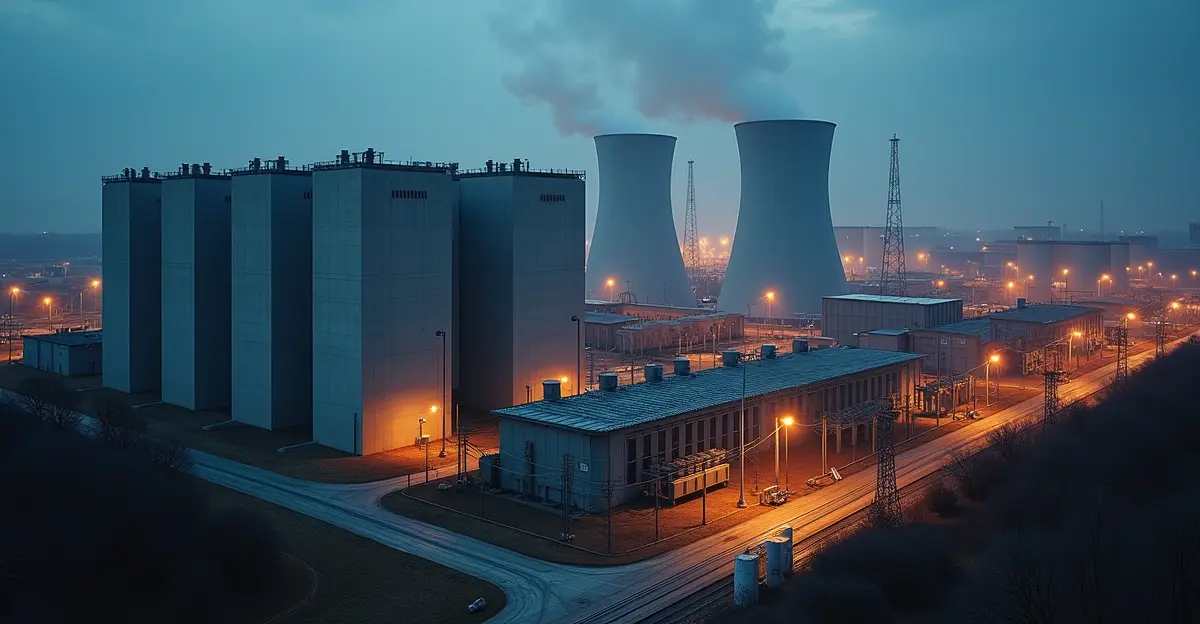
By April 2026, the convergence of three major global reports — the IMF's World Economic Outlook, the IEA's latest data center energy analysis, and the World Economic Forum's strategy meetings — has crystallized a stark warning: artificial intelligence is consuming electricity faster than the world's aging grids can deliver it, and no coordinated framework exists to manage the resulting energy-security tension. Global data center electricity demand is projected to reach approximately 945 TWh annually by 2030, with AI workloads accounting for a rapidly growing share. Individual AI server racks now draw as much power as 65 households, while grid infrastructure — much of it built decades ago — requires four to five years for transmission upgrades. Data centers, by contrast, are built in months. This mismatch is creating a new geopolitical vulnerability: nations with reliable, scalable power are gaining AI advantage, while others risk strategic irrelevance.
The Scale of the Mismatch
The IEA's Energy and AI report projects that global electricity supply to meet data center demand will grow from 460 TWh in 2024 to over 1,000 TWh by 2030 in its base case. AI-specific consumption has surged from roughly 30 TWh (9% of data center load) in 2022 to an estimated 200 TWh (37% share) in 2026. The power density of AI server racks has increased eleven-fold between 2020 and 2025, with a single NVIDIA GB200 NVL72 rack drawing 132 kW — compared to 5–10 kW for a conventional rack. By 2027, a single AI rack could have peak demand equivalent to 65 households, according to IEA analysis.
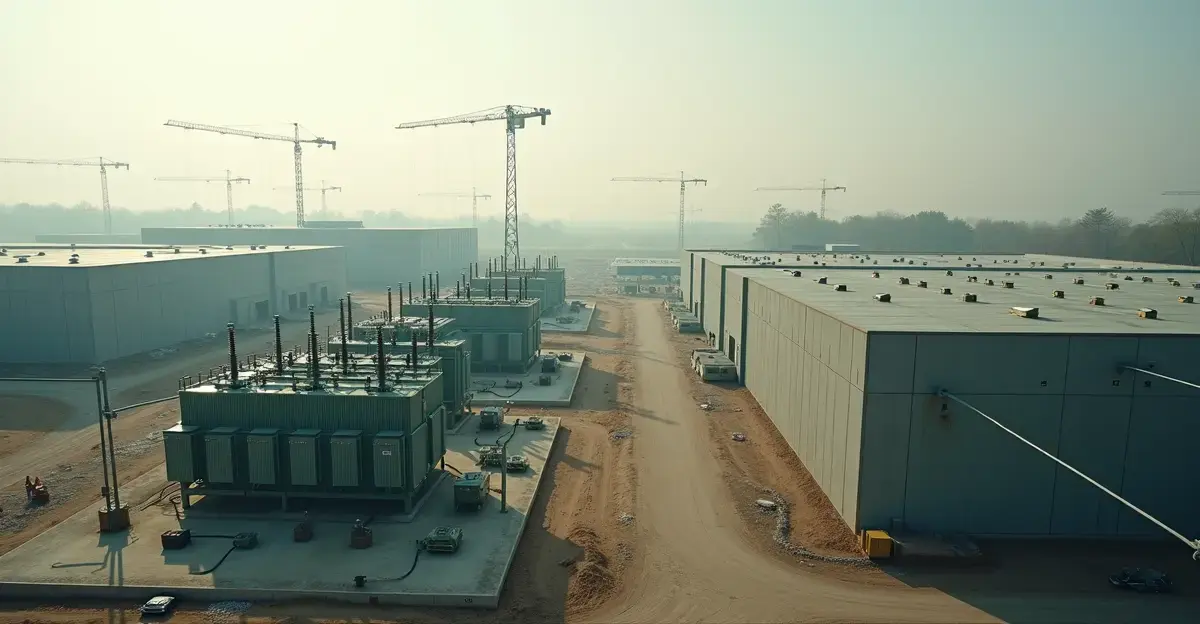
Yet the global electricity grid infrastructure was never designed for such concentrated, rapidly scalable loads. Transformer lead times have stretched from 30 months to as long as five years in some regions. A utility in Northern Virginia — the world's largest data center market — recently told a developer that the high-power transformer needed for a new campus would not arrive for five years. The developer had budgeted for 18 months.
Grid Bottlenecks Become Strategic Chokepoints
The World Economic Forum, in its May 2026 analysis titled "Is power grid connectivity the strategic bottleneck for AI?", argues that grid connectivity has become the single greatest constraint on AI development. While AI computing power doubles every 5–6 months and data center investment accelerates, power grids take 4–10 years to connect new facilities — far exceeding the 2–3 year planning cycle for AI data centers.
This timeline mismatch is not merely an operational inconvenience; it is reshaping national security calculus. The AI and national security nexus is now inseparable from energy policy. Nations that can rapidly scale clean, reliable power to AI hubs gain a decisive strategic edge in model training, inference deployment, and technological sovereignty. Those that cannot face a future of strategic irrelevance.
The US-China Dimension
The geopolitical divide between the United States and China was a central theme at the 2026 WEF Annual Meeting in Davos. President Donald Trump framed American energy policy as a weapon of economic supremacy, championing fossil fuels and nuclear power through deregulation. Meanwhile, Elon Musk highlighted China's massive deployment of solar energy — over 1,000 GW annually — and its aggressive nuclear buildout, arguing that solar paired with batteries is the only path to sustainable abundance. However, high US tariffs on Chinese solar panels hinder domestic deployment, creating a paradoxical vulnerability for American AI ambitions.
Investment Flows and the Infrastructure Race
The five largest tech companies — Microsoft, Google, Amazon, Meta, and Apple — exceeded $400 billion in combined capital expenditure in 2025, with a projected 75% jump in 2026. This marks the largest infrastructure investment cycle since the 2000s telecom buildout. Yet much of this capital is flowing into data center construction rather than grid modernization, exacerbating the bottleneck.
Microsoft's $1.6 billion restart of Three Mile Island Unit 1, accelerated to 2027, exemplifies the lengths to which hyperscalers are going to secure dedicated power. Amazon, Google, and Oracle are pursuing nuclear and small modular reactor (SMR) investments. Meanwhile, natural gas is filling the gap in the interim, raising questions about Big Tech's climate commitments. The AI data center power crisis is forcing a reckoning between sustainability goals and the immediate need for reliable, always-on electricity.
Economic Ripple Effects
Goldman Sachs warns that data center demand will boost core inflation through 2028. In the US PJM interconnection market, capacity prices have spiked tenfold. AEP Ohio has paused data center interconnections entirely. Electricity costs for US households have risen 42% since 2019, and a ratepayer revolt is growing as communities demand that tech companies self-fund power infrastructure rather than shifting costs to residential customers.
Energy Sovereignty as the New Strategic Imperative
The concept of "energy sovereignty" has entered the geopolitical lexicon. The energy sovereignty and AI race is driving new "Energy-for-Intelligence" pacts, where energy-rich nations trade clean power to AI superpowers in exchange for grid optimization expertise. Data centers are migrating to energy-redundant regions — the Nordics, the Middle East, and parts of Africa — seeking both renewable energy surplus and favorable regulatory environments.
Ultra High Voltage Direct Current (UHVDC) transmission lines are creating continental super-grids, but also sparking "Grid Nationalism" as countries seek to control cross-border electricity flows. Shell's 2026 Energy Security Scenarios — titled Archipelagos, Surge, and Horizon — explore the trade-offs between energy security, economic growth, and carbon emissions in an AI-driven world. The core finding: energy production has become the defining factor of national power, and the winner of the AI race will be the nation that can keep the lights on.
Expert Perspectives
Ditlev Engel, CEO of DNV Energy, wrote in the WEF forum: "Grid connectivity has become the strategic bottleneck for AI development. While AI computing power doubles every 5–6 months and investment in data centres accelerates, power grids take 4–10 years to connect new facilities. Strong leadership and a new mindset is needed to align clean energy investments, power grid build-out and AI growth for the benefit of all."
NVIDIA CEO Jensen Huang described the current period at Davos 2026 as "the largest infrastructure buildout in history," with AI's insatiable demand for electricity becoming a primary constraint on innovation.
FAQ
How much electricity do AI data centers consume in 2026?
Global data center electricity demand reached approximately 460–490 TWh in 2025, with AI-specific consumption estimated at ~200 TWh (37% of total data center load). The IEA projects total data center demand will reach ~945 TWh by 2030.
Why is grid infrastructure unable to keep up with AI growth?
AI data centers can be built in months, but transmission upgrades and transformer manufacturing require 4–5 years or more. Grid infrastructure in many regions is decades old and was not designed for the concentrated, high-density loads that AI server racks demand.
Which countries are gaining AI advantage from reliable power?
The United States leads with 45% of global data center electricity consumption, followed by China (~100 TWh) and Europe (~65 TWh). However, grid constraints in Northern Virginia and other US hubs are eroding this advantage, while China's rapid solar and nuclear buildout is accelerating its AI capabilities.
What are the economic impacts of the AI-energy tension?
Goldman Sachs warns of inflationary pressure through 2028. US electricity costs have risen 42% since 2019. PJM capacity prices have spiked tenfold, and transformer lead times of up to 5 years have caused $64 billion in delayed or blocked data center projects.
Is there a global framework to manage AI energy demand?
No. The IMF, IEA, and WEF have all highlighted the absence of a coordinated global framework. Current efforts are fragmented — hyperscalers are pursuing bilateral power purchase agreements, nuclear restarts, and behind-the-meter generation, but no multilateral mechanism exists to align grid build-out with AI growth.
Conclusion: The 2026 Inflection Point
April 2026 marks a critical inflection point. The IMF's World Economic Outlook, the IEA's data center energy report, and the WEF's strategy meetings all converge on the same warning: AI growth is outpacing grid capacity, and no global framework yet exists to manage the resulting energy-security tension. The nations that move fastest to align energy policy with AI strategy will define the technological and geopolitical landscape of the next decade. Those that delay will find themselves not just in the dark, but irrelevant.



Follow Discussion