


 Deutsch
 English
 Español
 Français
 Nederlands
 Português


 Share
Share




AI's Power Surge: How Data Center Energy Demands Are Reshaping Global Grids and Geopolitics
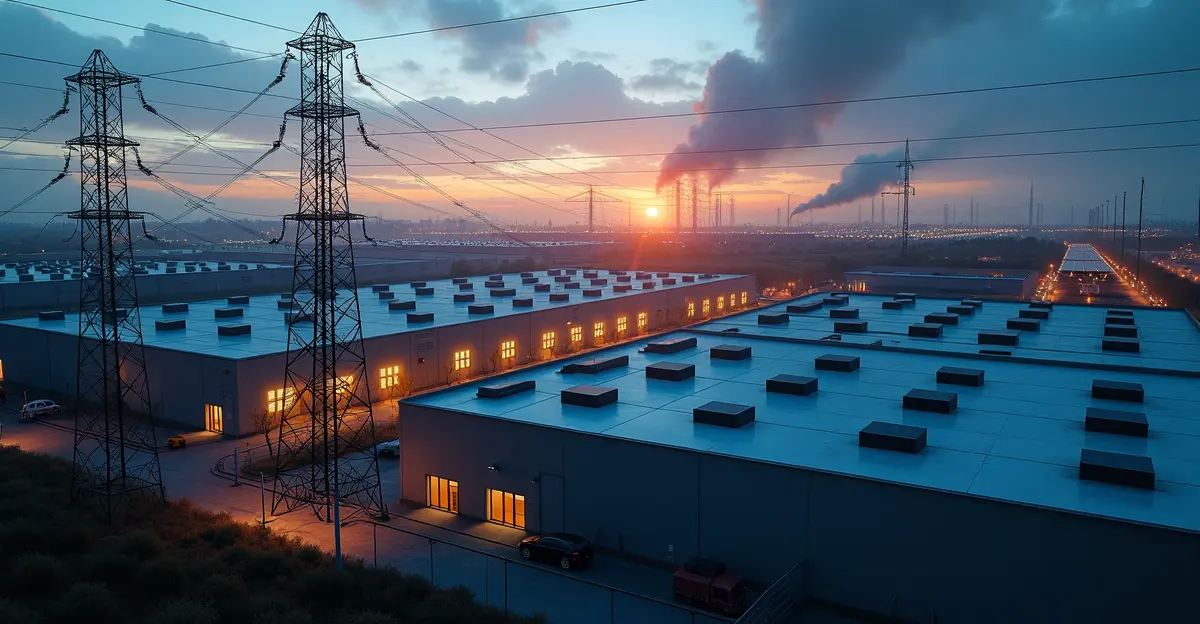
The explosive growth of artificial intelligence is creating an unprecedented energy crisis as data center power demands threaten to overwhelm global electricity grids and reshape geopolitical relationships. Recent projections from Gartner (November 2024) predict power shortages will restrict 40% of AI data centers by 2027, while McKinsey analysis shows US data center power consumption could surge from 3.7% to 11.7% of total demand by 2030, creating urgent strategic challenges for energy infrastructure and policy. This energy crunch is forcing nations to balance AI development against grid stability, accelerating renewable energy investments while creating new dependencies on critical minerals and energy infrastructure.
What is the AI Data Center Energy Crisis?
The AI data center energy crisis refers to the unprecedented electricity demands created by artificial intelligence infrastructure that are straining global power grids beyond their designed capacity. Unlike traditional data centers that primarily store information, AI data centers function as industrial-scale computational engines, with high-performance servers consuming up to 1,000 times more power than conventional web searches. According to S&P Global research, data center grid-power demand is projected to increase by 22% in 2025 and nearly triple by 2030. This represents a structural shift in global energy consumption patterns that few policymakers anticipated would accelerate so rapidly.
The Grid Reliability Crisis: Northern Virginia's Near-Cascade Event
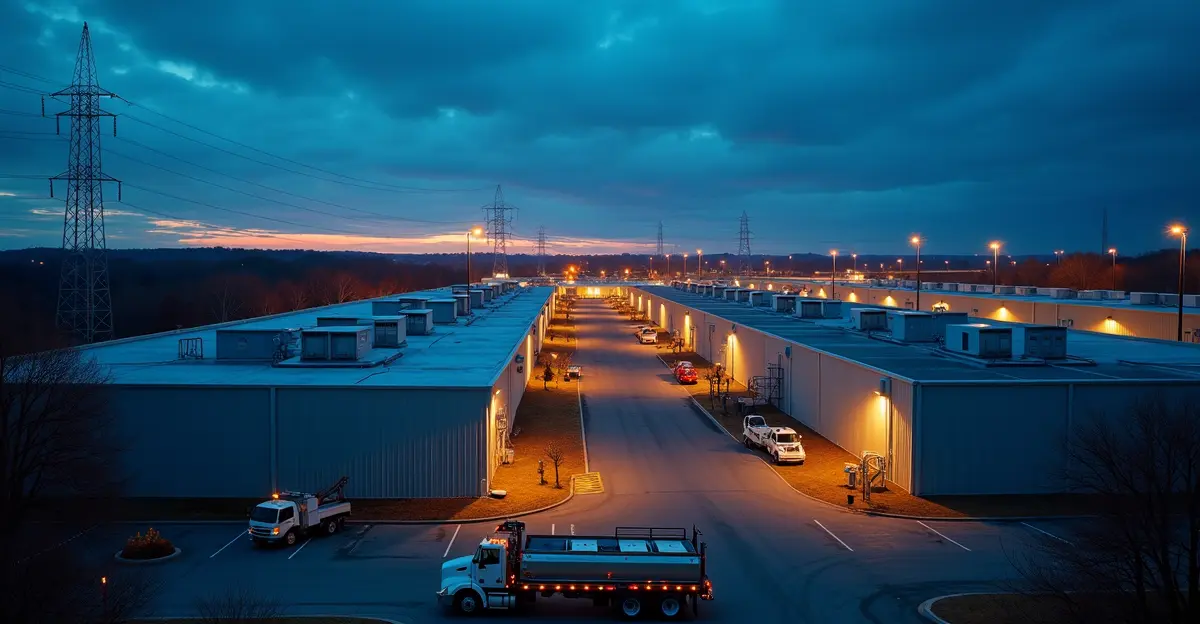
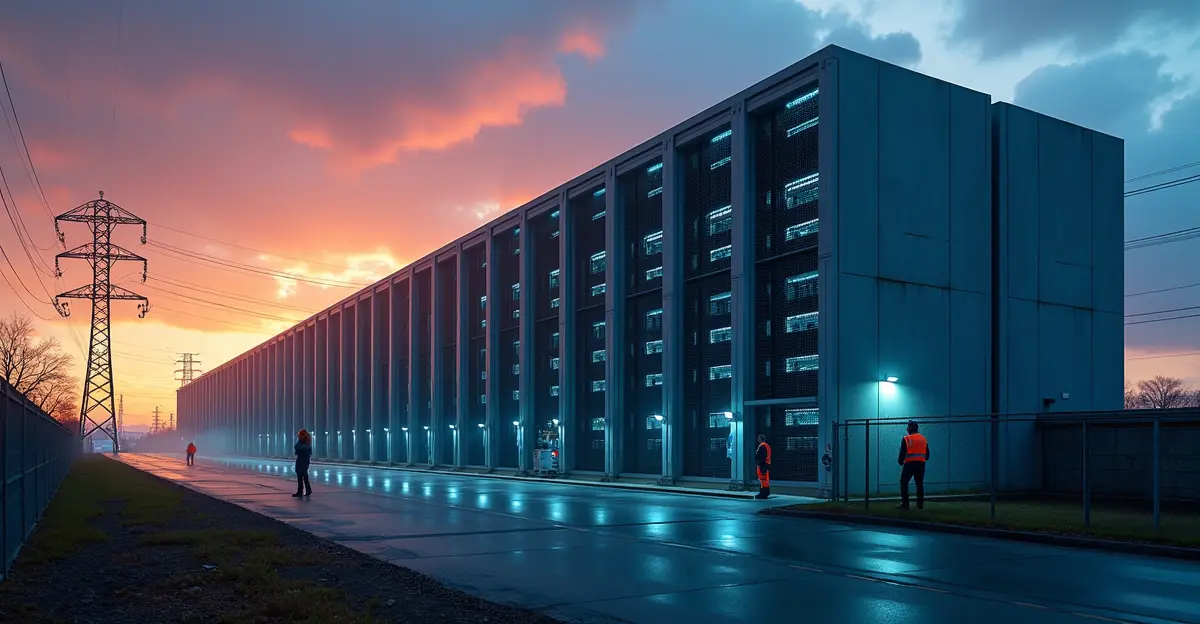
The vulnerability of modern power grids to AI-driven demand spikes became alarmingly clear in July 2024 when northern Virginia narrowly avoided widespread blackouts. In what grid operators described as a "near-cascade event," 60 data centers in Fairfax County simultaneously disconnected from the grid after a lightning arrestor failure, removing 1,500 megawatts of load instantaneously. Grid operators PJM Interconnection and Dominion Energy had to rapidly cut power plant output to prevent dangerous voltage surges that could have caused system-wide outages.
This incident revealed critical vulnerabilities in grid infrastructure not designed to handle such massive, sudden load changes. The data centers remained off-grid for hours, highlighting how backup systems often don't automatically reconnect to the main grid, requiring manual intervention. With Virginia's data center power demand growing 88% to 40GW by December 2024, such incidents underscore urgent reliability concerns in the world's busiest data center market. Similar patterns are emerging in other major tech hub regions across the United States and Europe.
Projections and Scale of the Challenge
The International Energy Agency's World Energy Outlook 2025 reveals alarming trends about AI-driven data center energy consumption. Data center investment is expected to reach $580 billion in 2025, surpassing the $540 billion spent on global oil supply. Electricity consumption by data centers is projected to triple by 2035, with data centers driving half of all electricity consumption growth through 2030.
Key Statistics and Projections
- US Data Center Power Consumption: Projected to rise from 3.7% to 11.7% of total demand by 2030 (McKinsey)
- Global Data Center Investment: $580 billion in 2025, exceeding global oil supply investment
- Power Shortage Impact: 40% of AI data centers restricted by 2027 (Gartner)
- Regional Concentration: Over 85% of new data center growth concentrated in US, China, and Europe
- Virginia Demand Surge: 88% growth to 40GW by December 2024
The Belfer Center analysis highlights that data center electricity consumption is projected to grow from 176 terawatt hours (4.4% of U.S. total) in 2023 to between 325-580 TWh (6.7-12.0%) by 2028. This rapid growth requires over 50 gigawatts of additional capacity, representing a $500+ billion investment in data center infrastructure alone.
Geopolitical Implications and Energy Dependencies
The AI energy surge is creating new geopolitical dependencies and reshaping global power dynamics. As nations compete for AI supremacy, access to reliable electricity and critical minerals has become a strategic imperative. The IMF notes that despite AI's intangible reputation, it has a massive physical footprint driving a global resource race.
Big Tech companies are becoming major power players, investing billions in renewable energy and exploring nuclear and geothermal options. However, the rapid AI buildout forces reliance on fossil fuels like coal and natural gas through 2030, with nuclear power viewed as the long-term carbon-free solution. This creates tensions between climate goals and technological competitiveness, particularly as countries implement policies like the EU carbon border tax.
The primary bottleneck has shifted from power generation to physical infrastructure, including grid upgrades, transformer shortages, and vulnerabilities in critical mineral supply chains (copper, lithium, rare earths). Geopolitical competition is intensifying, with the US restricting chip exports to China while China controls key mineral supplies. This resource competition represents a fundamental shift in how nations approach energy security in the digital age.
Strategic Responses and Policy Interventions
Governments and corporations are implementing diverse strategies to address the AI energy challenge. Texas Senate Bill 6 represents early regulatory intervention, while major tech companies are forming direct partnerships with energy producers through power purchase agreements to bypass grid limitations.
Emerging Solutions
- Renewable Energy Acceleration: Major investments in solar, wind, and battery storage
- Nuclear Power Expansion: Small modular reactors and advanced nuclear technologies
- Grid Modernization: $500+ billion needed for transmission infrastructure
- Energy Efficiency Innovations: Liquid cooling, advanced power management
- Geographic Diversification: Site selection based on power availability rather than traditional tech hubs
Investment strategies are pivoting toward securing power, with companies like Microsoft making multi-billion dollar commitments tied to regions with reliable energy capacity. The geographic distribution of new AI data centers is now following power availability rather than traditional tech hubs, reshaping the global data center map.
Expert Perspectives on the Energy-AI Nexus
Industry experts warn that insufficient regulation risks grid instability, rising consumer costs, and setbacks to climate goals, while overregulation could hinder AI development. According to Gartner research, organizations must evaluate power shortage risks, negotiate long-term power contracts, and explore energy-efficient alternatives like edge computing and smaller language models.
"The AI boom is exacerbating geopolitical tensions and contributing to the climate crisis, calling for urgent policy responses to address energy security challenges," notes the International Energy Agency's 2025 report. Meanwhile, grid operators emphasize the need for better coordination on how large facilities disconnect and reconnect to prevent future reliability threats.
Impact on Climate Goals and Sustainability
The AI energy surge presents complex challenges for global climate objectives. While AI can help optimize energy use through smart grid management and efficiency algorithms, efficiency gains may be offset by increased demand due to the Jevons paradox. The situation jeopardizes sustainability goals, as short-term solutions may require keeping fossil fuel plants operational longer, potentially increasing CO2 emissions.
Major tech companies' net-zero pledges face significant pressure from the rapid AI buildout. According to research published in Scientific Reports, the environmental impact of AI includes substantial electricity consumption for training and usage of deep learning models, with the carbon footprint of AI models during training representing a significant consideration. One study suggested that by 2027, energy costs for AI could increase to 85–134 Twh, nearly 0.5% of all current electricity usage.
FAQ: AI Data Center Energy Demands
How much power do AI data centers consume compared to traditional data centers?
AI data centers consume significantly more power—up to 1,000 times more than traditional web searches. High-performance AI servers (GPUs and ASICs) require exponentially more electricity, with the largest hyperscale data centers having power needs matching small cities.
What was the northern Virginia grid incident in July 2024?
In July 2024, 60 data centers in northern Virginia simultaneously disconnected from the grid after a lightning arrestor failure, removing 1,500 megawatts of load. Grid operators narrowly prevented cascading outages by rapidly reducing power generation, highlighting grid vulnerabilities to sudden load changes.
How will power shortages affect AI development by 2027?
Gartner predicts power shortages will restrict 40% of AI data centers by 2027. This could limit new data center growth from 2026, increase operating costs for large language models, and potentially slow AI innovation in regions with constrained power infrastructure.
What are the geopolitical implications of AI energy demands?
AI energy demands are creating new dependencies on critical minerals and energy infrastructure, intensifying competition between nations. The US and China are particularly engaged in strategic competition over semiconductor manufacturing and mineral supplies, while Big Tech companies are becoming major players in global energy markets.
Can renewable energy meet AI data center power demands?
While renewable energy is expanding rapidly, current growth rates may not keep pace with AI demand spikes. The rapid AI buildout forces continued reliance on fossil fuels through 2030, though nuclear power is viewed as a long-term carbon-free solution for meeting base load requirements.
Future Outlook and Strategic Imperatives
The intersection of AI development and energy infrastructure represents one of the most critical challenges of the coming decade. As data center power demands continue their exponential growth, nations must balance technological competitiveness with grid reliability and climate objectives. Strategic investments in grid modernization, renewable energy, and energy-efficient computing will determine which countries and companies dominate the AI era while maintaining stable, sustainable energy systems.


Follow Discussion