


 Deutsch
 English
 Español
 Français
 Nederlands
 Português


 Share
Share




The AI Energy Crisis: How Artificial Intelligence is Reshaping Global Power Grids and Geopolitics
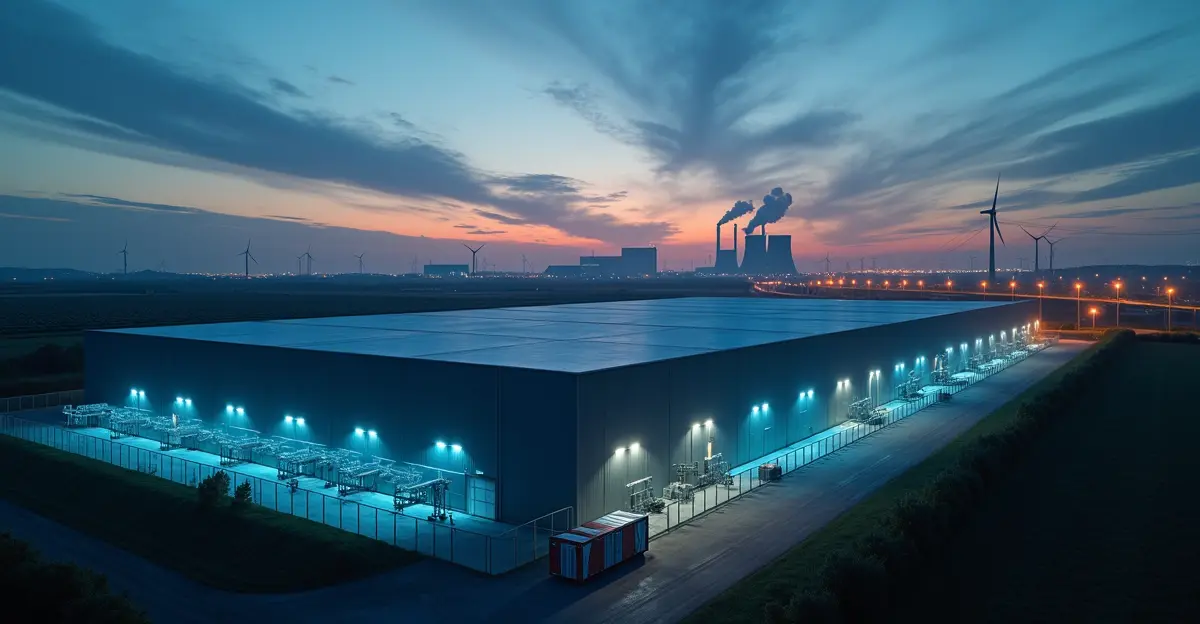
The explosive growth of artificial intelligence and hyperscale data centers is creating unprecedented strain on global electricity infrastructure, with U.S. data center consumption projected to reach 6.7-12.0% of total electricity by 2028. This energy demand surge is forcing strategic realignments in energy policy, grid investment, and international relations as countries compete for power resources while balancing climate commitments. Recent reports from McKinsey and the Belfer Center highlight that AI's energy consumption is reaching critical levels, with data centers already causing grid reliability incidents and projected to consume up to 12% of U.S. electricity within four years, forcing urgent policy and infrastructure decisions.
What is the AI Energy Crisis?
The AI energy crisis refers to the unprecedented electricity demands created by artificial intelligence systems and the hyperscale data centers that power them. Unlike traditional computing, AI models require massive computational power for both training and inference, with some estimates suggesting that training a single large language model can consume as much electricity as 100 U.S. homes use in a year. This energy intensity is compounded by the rapid adoption of generative AI tools like ChatGPT, which process billions of queries daily, each requiring significant computational resources. The global data center electricity consumption reached approximately 415 terawatt-hours in 2024, representing about 1.5% of global electricity demand, but projections indicate this could double by 2030 due to AI expansion.
The Scale of the Challenge
According to industry analyses, U.S. data centers alone are projected to consume between 6.7% and 12.0% of the nation's total electricity by 2028, up from approximately 4% in 2023. This represents a staggering increase that threatens to overwhelm existing grid infrastructure. The International Energy Agency (IEA) projects that global data center electricity consumption could double by 2030, with AI workloads being the primary driver. This surge comes at a time when many regions are already struggling with grid reliability, aging infrastructure, and the transition to renewable energy sources.
Grid Reliability Concerns
Several U.S. regions have already experienced grid reliability incidents directly linked to data center expansion. In Virginia, home to the world's largest concentration of data centers, utilities have warned that new data center projects could exceed available capacity within years. Similar challenges are emerging in Texas, Georgia, and the Pacific Northwest, where electricity grid infrastructure is being tested by both AI demands and the electrification of transportation and heating. Grid operators are scrambling to upgrade transmission lines, substations, and generation capacity, but these projects typically require 5-10 years for planning and construction.
Geopolitical Implications
The AI energy crisis is reshaping international relations and strategic alliances around electricity grids and critical mineral supply chains. Countries with abundant, low-cost electricity are becoming increasingly attractive for data center investment, creating new economic and political dependencies. Nations like Norway, Sweden, and Iceland, with their renewable hydroelectric and geothermal resources, are positioning themselves as 'AI havens,' while Middle Eastern countries are leveraging natural gas resources to attract AI infrastructure.
Critical Mineral Competition
The energy-intensive nature of AI computing is intensifying competition for critical minerals essential for both computing hardware and energy infrastructure. Copper, lithium, cobalt, and rare earth elements are becoming strategic resources in the AI energy race. China currently dominates many of these supply chains, creating potential vulnerabilities for Western nations seeking to expand their AI capabilities. This mineral competition is leading to new trade agreements, investment in domestic mining, and exploration of alternative materials and technologies.
Policy Responses and Infrastructure Investment
Governments worldwide are implementing policies to address the AI energy challenge while balancing climate commitments. The European Union has introduced regulations requiring data centers to meet strict energy efficiency standards and source increasing percentages of their power from renewables. In the United States, the Department of Energy has launched initiatives to improve data center efficiency and accelerate grid modernization. However, these efforts face significant challenges, including regulatory hurdles, financing constraints, and technical limitations.
Renewable Energy Integration
Many tech companies are pursuing aggressive renewable energy strategies, with Google, Microsoft, and Amazon leading corporate renewable energy procurement globally. However, the intermittent nature of solar and wind power presents challenges for data centers requiring 24/7 reliability. This has led to increased interest in nuclear power generation, particularly small modular reactors (SMRs), which can provide carbon-free baseload power. Several data center operators are exploring partnerships with nuclear developers, though regulatory and public acceptance hurdles remain.
Environmental Sustainability Tensions
The AI energy crisis highlights fundamental tensions between technological advancement, energy security, and environmental sustainability. While AI has potential applications in climate modeling, grid optimization, and renewable energy integration, its own energy demands threaten to undermine climate goals. Some analysts warn that unchecked AI growth could delay or derail emissions reduction targets, particularly if data centers rely on fossil fuels during the transition period. This has sparked debates about whether certain AI applications should be prioritized or restricted based on their energy intensity and societal value.
Expert Perspectives
'We're facing a perfect storm of technological demand and infrastructure limitations,' says Dr. Elena Rodriguez, energy policy analyst at the Belfer Center. 'The AI revolution is happening faster than our ability to build the power infrastructure to support it. We need coordinated action between tech companies, utilities, and policymakers to avoid grid failures and ensure sustainable growth.' Industry leaders echo these concerns, with Microsoft President Brad Smith noting, 'The electricity demands of AI are unlike anything we've seen before. We're working closely with utilities and governments to ensure we can meet these needs while advancing our climate commitments.'
Future Outlook
The trajectory of the AI energy crisis will depend on several factors: technological innovation in energy-efficient computing, speed of grid modernization, policy frameworks, and international cooperation. Breakthroughs in quantum computing or neuromorphic chips could potentially reduce AI's energy footprint, but these technologies remain years from widespread deployment. In the near term, the industry faces difficult trade-offs between AI advancement, energy availability, and environmental impact. The coming years will likely see increased regulatory scrutiny of data center energy use, more strategic partnerships between tech and energy companies, and potentially, geographic shifts in AI development based on electricity availability and cost.
FAQ Section
How much electricity do AI data centers consume?
Global data centers consumed approximately 415 terawatt-hours in 2024, about 1.5% of global electricity. U.S. data centers are projected to consume 6.7-12.0% of national electricity by 2028, with AI workloads being the primary growth driver.
Why is AI so energy-intensive?
AI models require massive computational power for training and inference. Training large language models involves processing trillions of parameters across specialized hardware, while each query to systems like ChatGPT requires significant processing power, creating cumulative energy demands.
What regions are most affected by AI energy demands?
Virginia, Texas, Georgia, and the Pacific Northwest in the U.S., as well as Ireland, the Netherlands, and Singapore globally, are experiencing significant grid strain from data center expansion. These regions offer favorable conditions for data centers but face infrastructure challenges.
Can renewable energy power AI data centers?
While tech companies are major purchasers of renewable energy, the intermittent nature of solar and wind creates reliability challenges. Many operators are exploring hybrid approaches combining renewables with nuclear, natural gas with carbon capture, or grid-scale energy storage.
What policies are governments implementing?
Policies include energy efficiency standards for data centers, requirements for renewable energy sourcing, incentives for grid modernization, and strategic planning for electricity infrastructure. The EU has particularly stringent regulations, while the U.S. is focusing on voluntary partnerships and research initiatives.

Follow Discussion