


 Deutsch
 English
 Español
 Français
 Nederlands
 Português


 Share
Share




The AI Energy Paradox: How Data Center Power Demands Are Reshaping Global Energy Markets and Geopolitics
The artificial intelligence revolution faces an unprecedented energy crisis, with projections showing AI-driven data centers will consume 1,000 terawatt-hours of electricity by 2026—equivalent to Japan's total annual electricity consumption—creating strategic vulnerabilities at the intersection of technology, energy infrastructure, and national security. This exponential growth, driven by hyperscale investments exceeding $320 billion in 2025 alone, is transforming data centers from passive consumers to active grid stakeholders while forcing geopolitical realignments as nations scramble for technological sovereignty in the AI era.
What is the AI Energy Paradox?
The AI energy paradox describes the contradictory reality where artificial intelligence systems become exponentially more efficient while simultaneously driving unprecedented electricity consumption growth. According to International Energy Agency data, global electricity generation for data centers is projected to grow from 460 TWh in 2024 to over 1,000 TWh in 2026 and 1,300 TWh by 2035. This represents a doubling of power consumption in under four years, with AI expected to account for 12% of US grid energy by 2028. The paradox emerges because while AI token costs have dropped 280-fold in two years through hardware and software optimization, these efficiency gains are overwhelmed by exponential demand growth for AI inference and training.
The Infrastructure Crisis: 50% of Projects Delayed
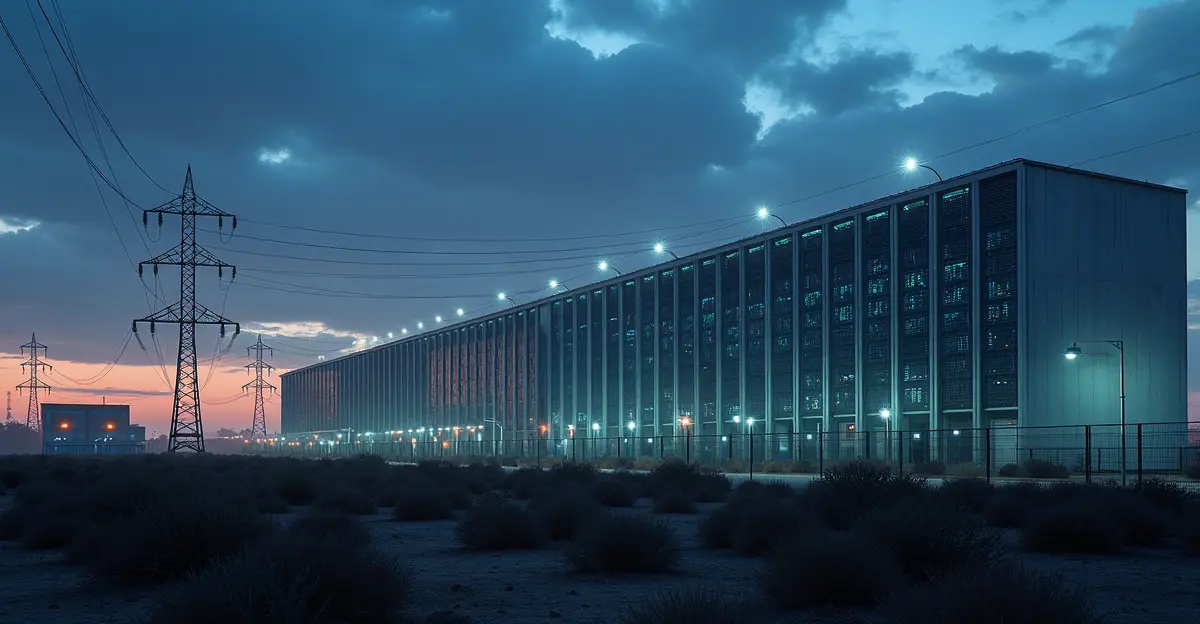
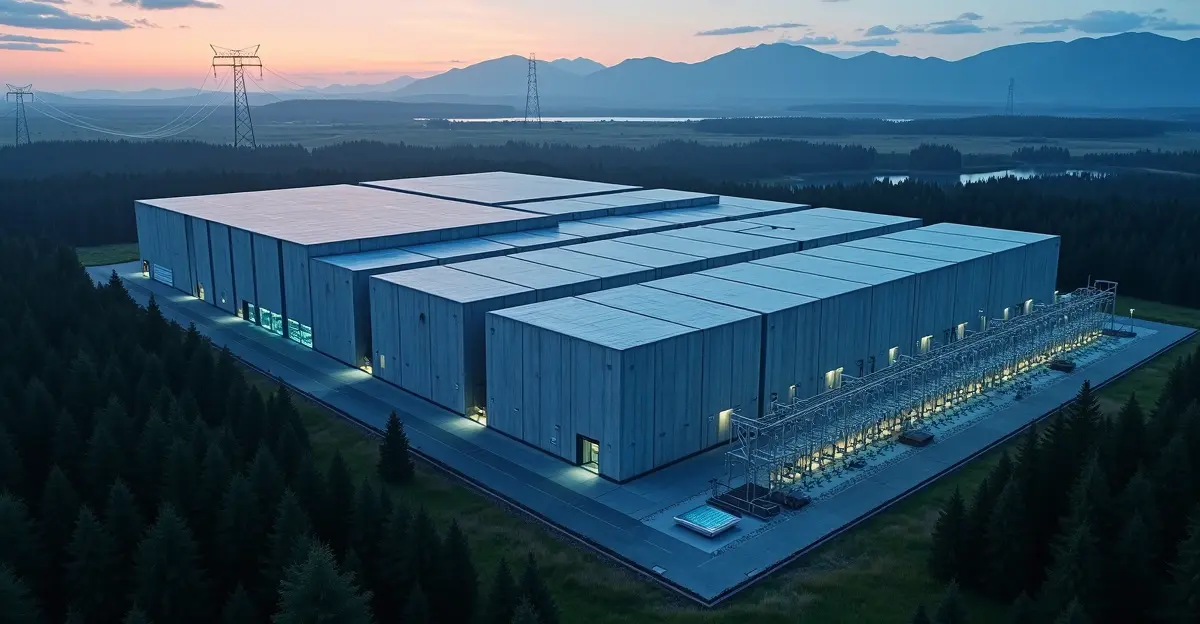
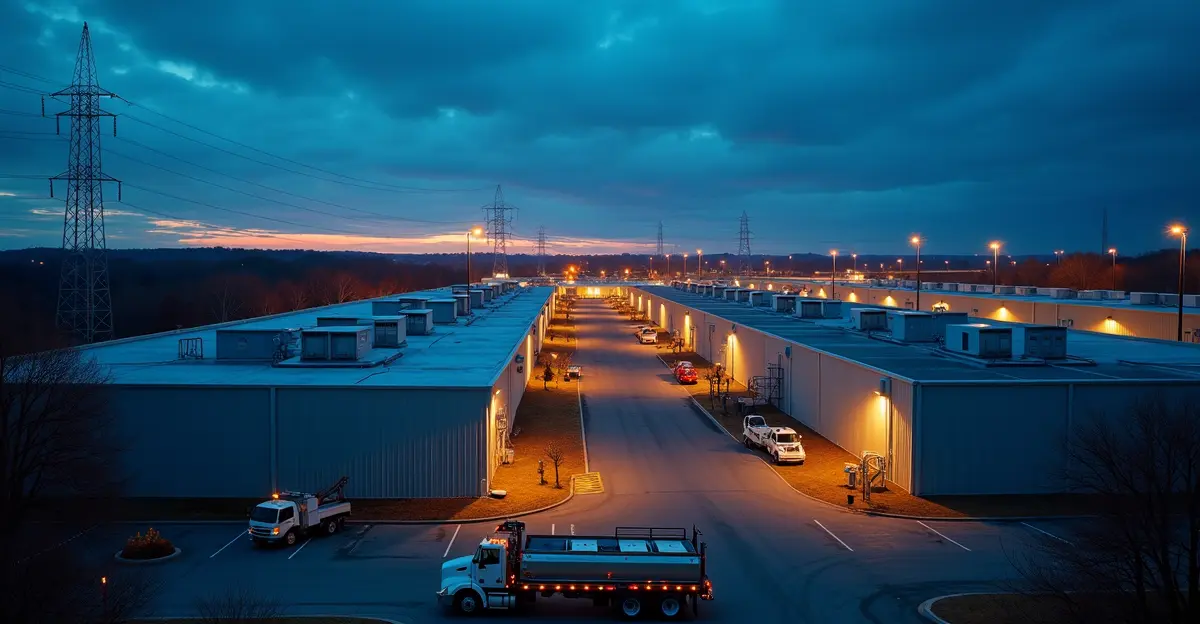
Recent analysis reveals that 50% of global data center projects face delays due to power limitations and grid shortages, with up to 11 gigawatts of planned capacity stalled despite available financing. The United States, home to over 4,000 data centers with one-third concentrated in just three states—Virginia (643), Texas (395), and California (319)—faces particular strain. US data centers consumed 183 terawatt-hours of electricity in 2024, representing over 4% of the nation's total electricity consumption, equivalent to Pakistan's annual electricity demand. This is projected to grow by 133% to 426 TWh by 2030.
The crisis stems from multiple compounding factors: AI inference explosion, aging grid infrastructure, geographic concentration in areas like Northern Virginia, and the renewable energy gap. Grid operators project reliability shortfalls, while household electricity bills could rise $15-25 per month due to socialized grid upgrade costs. The US energy grid modernization faces unprecedented pressure as data center developers seek steady, low-carbon power with predictable costs and small land footprints—requirements that traditional grid expansion struggles to meet.
Technological Solutions: From Liquid Cooling to Nuclear Power
Advanced Cooling Systems
As AI chips generate unprecedented heat densities, traditional air cooling becomes inadequate. Liquid cooling systems, including direct-to-chip and immersion cooling technologies, are becoming standard in AI-optimized data centers. These systems can reduce cooling energy consumption by 40-50% compared to conventional air conditioning, while enabling higher compute densities. Major hyperscalers are investing billions in these technologies to manage the thermal challenges of next-generation AI hardware.
Hybrid Energy Mixes
Data centers are evolving from pure electricity consumers to sophisticated energy managers. Current energy sources for data centers include coal (30%), renewables (27%), natural gas (26%), and nuclear (15%). However, renewables are the fastest-growing source, meeting nearly 50% of additional demand growth through 2030, primarily from wind and solar PV. The challenge remains that natural gas and coal together will meet over 40% of new demand until 2030, creating tension with corporate sustainability goals.
Small Modular Reactors (SMRs)
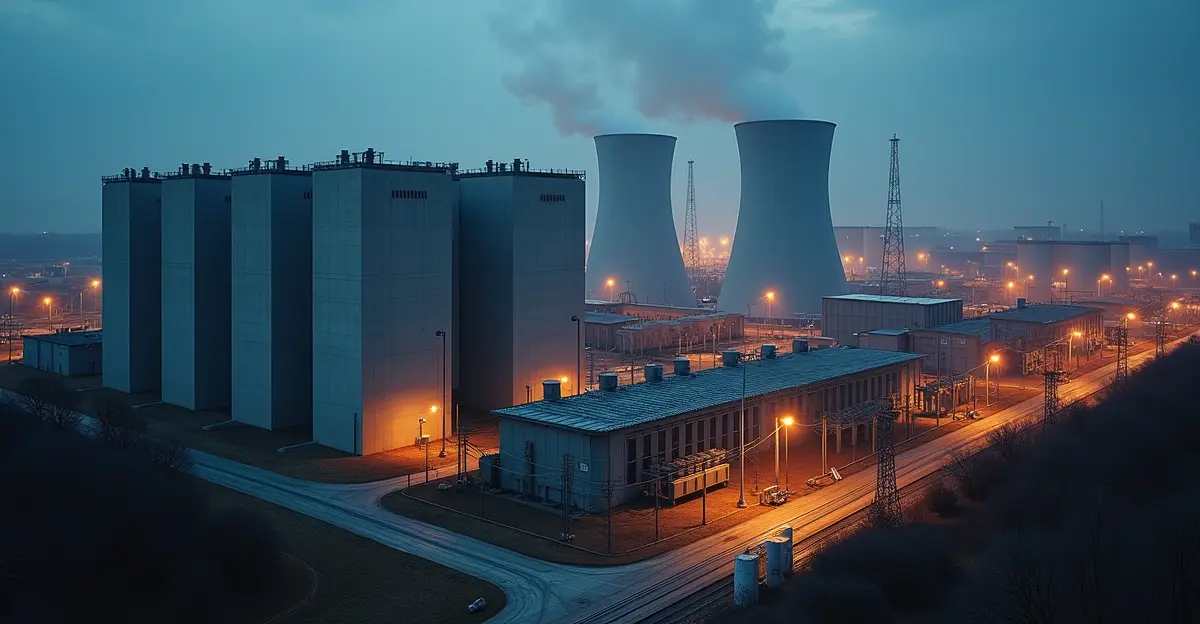
Small modular reactors are emerging as a critical solution for powering AI data centers, with tech companies committing over $10 billion to nuclear partnerships. SMRs offer factory-fabricated modular designs with 24-36 month construction times, passive safety systems, and power outputs of 5-300 MW per module. Major tech companies are leading adoption: Amazon Web Services plans 5 GW of SMR capacity by 2039, Google made the first corporate SMR purchase agreement with Kairos Power for 500 MW, and Microsoft secured 837 MW from Constellation Energy. The first commercial SMR-powered data centers are expected by 2030, addressing the need for reliable, carbon-free 24/7 power that renewables cannot provide alone.
Geopolitical Implications: The New Digital Sovereignty
The AI energy crisis is accelerating technological sovereignty movements as nations recognize that control over compute infrastructure, semiconductors, and energy resources has become a national security priority. Currently, 90% of AI compute is managed by US and Chinese companies, but Deloitte forecasts that over $100 billion will be committed to building sovereign AI compute by 2026, with the share managed outside the US and China likely doubling to 20% by 2030.
Europe is leading this drive with initiatives like the EuroStack Initiative and over €100 billion in planned investments for cloud computing, AI data centers, semiconductors, and satellite communications. Key European efforts include the EU's AI Continent Action Plan with €20 billion for AI gigafactories, the EU Chips Act with €43 billion for semiconductor manufacturing, and satellite constellations like IRIS² to reduce dependence on foreign providers. This fragmentation of global tech supply chains represents a fundamental shift in how nations approach digital infrastructure security.
Market Dynamics and Investment Patterns
The convergence of AI advancement and energy constraints is creating new market dynamics. Hyperscalers like Amazon, Microsoft, and Google are investing over $320 billion in data center infrastructure in 2025 alone, outspending the entire US utility industry. This investment surge is driving innovation across multiple sectors:
- Energy Infrastructure: Utilities are accelerating grid modernization projects, with transmission investment needs estimated at $20-30 billion annually through 2030
- Semiconductor Manufacturing: The US CHIPS Act and similar initiatives worldwide are driving $250+ billion in semiconductor investments
- Cooling Technology: The liquid cooling market is projected to grow from $2.6 billion in 2024 to $12.5 billion by 2030
- Nuclear Energy: SMR investments exceed $10 billion with first deployments expected by 2030
These investments reflect a fundamental rethinking of how digital infrastructure integrates with energy systems. Data centers are no longer just buildings with servers—they're becoming integrated energy complexes that must manage complex relationships with grid operators, renewable energy providers, and regulatory bodies.
Strategic Vulnerabilities and Future Outlook
The AI energy paradox creates multiple strategic vulnerabilities. Geographic concentration of data centers in specific regions creates single points of failure. Dependence on specific energy sources, particularly in regions where 60% of data center power still comes from fossil fuels (22% coal, 38% natural gas), creates climate and supply chain risks. The semiconductor supply chain remains highly concentrated, with advanced chip manufacturing dominated by a few companies in specific geographic regions.
Looking forward, several trends will shape the landscape:
- Regulatory Evolution: Governments are implementing data center impact fees and reporting requirements, with Gartner estimating that by 2028, 65% of governments worldwide will introduce technological sovereignty requirements
- Energy Innovation: Beyond SMRs, advanced geothermal, next-generation battery storage, and hydrogen fuel cells will play increasing roles
- Architectural Shifts: Edge computing and distributed AI architectures may reduce some central data center loads
- International Competition: The race for AI supremacy will increasingly depend on energy infrastructure capabilities
The global semiconductor competition has become inextricably linked with energy policy, creating complex interdependencies that will define technological leadership for decades. As nations recognize that AI capability depends fundamentally on energy availability, we're witnessing the emergence of energy as the ultimate constraint on digital advancement.
Frequently Asked Questions
How much electricity will AI data centers consume by 2026?
AI-driven data centers are projected to consume 1,000 terawatt-hours of electricity by 2026, equivalent to Japan's total annual electricity consumption. This represents a doubling from 2024 levels and will account for approximately 3% of global electricity generation.
Why are 50% of data center projects facing delays?
Half of global data center projects face delays primarily due to power limitations and grid shortages. Up to 11 gigawatts of planned capacity is stalled despite available financing, as aging grid infrastructure cannot support the rapid expansion of energy-intensive AI facilities.
What are Small Modular Reactors (SMRs) and why are they important for AI?
Small Modular Reactors are factory-built nuclear reactors with 5-300 MW capacity per module. They're crucial for AI because they provide reliable, carbon-free 24/7 power that renewables cannot guarantee alone. Tech companies have committed over $10 billion to SMR partnerships, with first deployments expected by 2030.
How is the AI energy crisis affecting geopolitical relations?
The crisis is accelerating technological sovereignty movements as nations recognize that control over compute infrastructure has become a national security priority. Europe is investing over €100 billion in sovereign AI infrastructure, while the US and China dominate current AI compute capacity, creating new geopolitical tensions.
What solutions exist for the AI energy paradox?
Solutions include liquid cooling systems (reducing cooling energy by 40-50%), hybrid energy mixes with increased renewables, Small Modular Reactors, grid modernization investments, and policy reforms requiring data centers to pay true grid impact fees rather than socializing costs.

Follow Discussion