


 Deutsch
 English
 Español
 Français
 Nederlands
 Português


 Share
Share




The AI Power Paradox: How Data Center Energy Demands Are Reshaping Global Energy Security
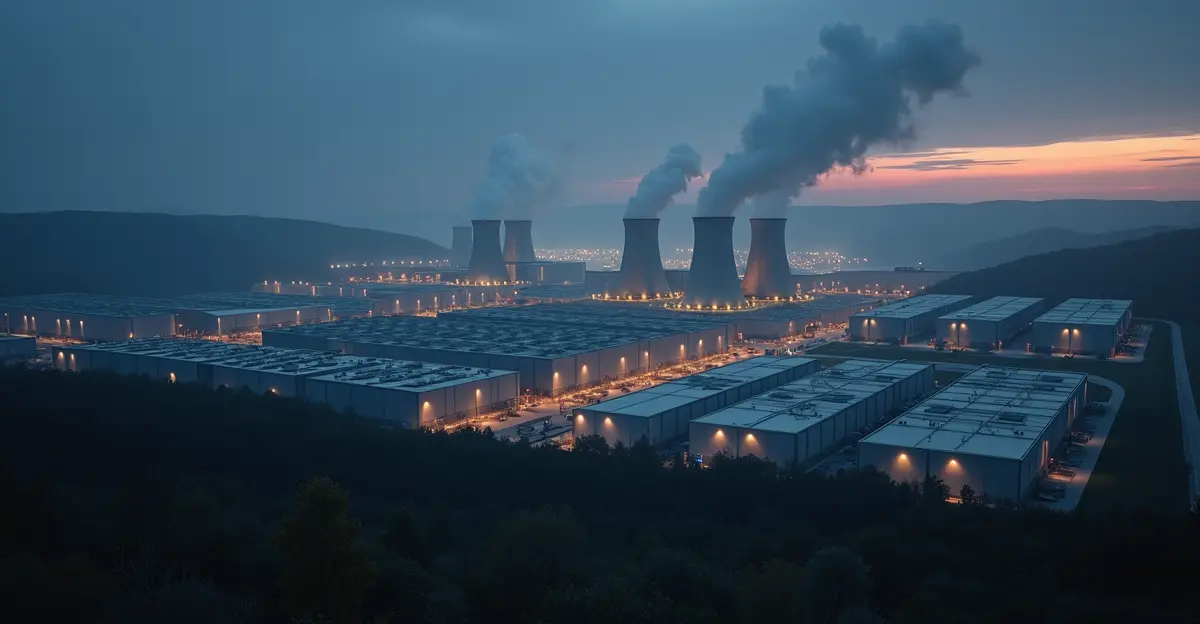
The explosive growth of artificial intelligence is creating an unprecedented energy paradox: while AI promises efficiency gains across industries, the data centers powering this revolution now consume over 4% of U.S. electricity, with projections indicating a staggering 133% growth by 2030. This surge is fundamentally altering global energy security calculations, forcing nations to reconsider energy mix strategies and creating new geopolitical tensions around AI infrastructure concentration in regions like Virginia, Texas, and California.
What is the AI Power Paradox?
The AI power paradox describes the contradictory reality where artificial intelligence, marketed as an efficiency driver, imposes massive energy demands that strain power grids and challenge climate goals. U.S. data centers consumed 183 terawatt-hours of electricity in 2024, equivalent to Pakistan's entire annual electricity demand. With the AI boom accelerating, energy use is projected to grow by 133% to 426 TWh by 2030, creating urgent strategic questions about energy security, grid stability, and geopolitical positioning in the global AI race.
The Scale of Data Center Energy Consumption
Recent data reveals the staggering scale of AI-driven energy demands. According to Pew Research Center analysis, the United States has over 4,000 data centers, with one-third concentrated in just three states: Virginia (643 facilities), Texas (395), and California (319). These facilities are not evenly distributed – Northern Virginia's 'Data Center Alley' alone consumes more electricity than most entire states, with data centers using 26% of Virginia's total electricity supply in 2023.
Regional Concentration Creates Grid Strain
The geographic concentration of data centers creates acute grid challenges. Virginia leads dramatically with 25.6% of its electricity consumed by data centers, followed by Nebraska (11.7%), Oregon (11.4%), and Iowa (11.4%). This concentration means that just 15 states account for 80% of the national data center load. The U.S. electric grid faces unprecedented strain, with AI-driven demand outpacing available power in some regions, leading to project delays and emergency grid adjustments.
Strategic Implications for Energy Security
The data center boom intersects with broader energy security concerns in three critical ways. First, it forces reconsideration of energy mix strategies as nations balance AI development with climate commitments. Second, it creates new dependencies on critical mineral supply chains essential for semiconductor manufacturing. Third, it reshapes geopolitical calculations as control over compute infrastructure becomes a national security priority.
Nuclear Power Emerges as Strategic Solution
Tech giants are increasingly turning to nuclear power to meet their massive energy needs. Microsoft has restarted Three Mile Island, while Amazon and other major players are investing in small modular reactors. The Department of Energy's UPRISE Initiative aims to add 5 gigawatts of carbon-free baseload capacity by 2029 specifically to meet surging electricity demands from AI data centers. This nuclear renaissance represents a fundamental shift in corporate energy strategy, as traditional renewable sources like solar and wind cannot provide the consistent baseload power required for 24/7 AI operations.
Geopolitical Consequences of Infrastructure Concentration
The concentration of AI infrastructure in specific regions creates new geopolitical vulnerabilities. Northern Virginia, home to about 70% of global internet traffic, has become a strategic chokepoint. Similarly, semiconductor manufacturing clusters in Taiwan and South Korea face heightened security concerns. The escalating conflict in Iran threatens global AI chip supply chains by disrupting critical mineral production, including helium (Qatar accounts for over one-third of global supply) and bromine (Israel and Jordan produce two-thirds globally).
Critical Mineral Supply Chain Risks
The AI revolution depends on secure access to critical minerals essential for semiconductor manufacturing. These materials represent both an economic opportunity and a strategic necessity. As AI technology advances rapidly, countries must secure access to and develop expertise in processing these minerals to avoid dependency on foreign supply chains. The global semiconductor shortage of recent years demonstrates how vulnerable these supply chains remain to geopolitical disruptions.
Competition Between AI Development and Traditional Energy Priorities
A fundamental tension is emerging between AI development and traditional energy security priorities. Major tech companies like Amazon, Microsoft, Google, and Meta collectively spent over $200 billion on capital expenditures in 2024, representing a 62% year-over-year increase. This massive investment drives energy demand that competes with residential, industrial, and transportation needs.
Economic and Social Impacts
The data center boom has caused retail electricity prices to rise 42% since 2019, with capacity market prices spiking nearly tenfold in some regions. Local communities face the burdens of social and environmental impacts such as energy and water use, while faraway actors receive the projects' benefits. This has led to growing opposition movements, with billions of dollars in projects halted or delayed by data center resistance in the US between May 2024 and June 2025.
Expert Perspectives on the Energy-AI Nexus
Energy analysts warn that the current trajectory is unsustainable. 'The rapid expansion of AI and hyperscale data centers is creating a watershed moment for the U.S. electric grid,' notes a Belfer Center analysis. 'Data center electricity consumption is projected to grow dramatically from 176 terawatt hours (4.4% of U.S. electricity) in 2023 to 325-580 TWh (6.7-12.0%) by 2028.' This growth poses significant challenges including grid reliability risks, potential stranded costs for utilities, and conflicts with climate goals.
Future Outlook and Policy Considerations
The future requires balanced regulation to support AI development while preventing grid instability, rising consumer costs, and setbacks to climate objectives. Regulatory debates are emerging as states like Texas implement policies to address reliability and affordability concerns. The EU Green Deal and similar initiatives worldwide must now account for the massive energy demands of AI infrastructure.
Frequently Asked Questions
How much electricity do AI data centers currently consume?
U.S. data centers consumed 183 terawatt-hours of electricity in 2024, representing over 4% of the nation's total electricity consumption. This is equivalent to Pakistan's entire annual electricity demand.
Which states are most affected by data center energy consumption?
Virginia leads with 25.6% of its electricity consumed by data centers, followed by Nebraska (11.7%), Oregon (11.4%), Iowa (11.4%), Wyoming (11.3%), Nevada (8.7%), Utah (7.7%), and Arizona (7.4%).
Why are tech companies turning to nuclear power?
Nuclear energy offers reliable, carbon-free baseload power that can provide the continuous, high-capacity energy needed for 24/7 AI operations, which intermittent renewables like solar and wind cannot consistently provide.
What are the geopolitical risks of AI infrastructure concentration?
Concentration in regions like Northern Virginia creates strategic chokepoints, while dependency on critical minerals from geopolitically unstable regions like the Middle East threatens supply chain security for semiconductor manufacturing.
How will data center growth affect electricity prices?
Data center expansion has already caused retail electricity prices to rise 42% since 2019, with capacity market prices spiking nearly tenfold in some regions, potentially leading to higher costs for all consumers.
What solutions exist for sustainable AI development?
Solutions include nuclear power expansion, improved data center efficiency, strategic location planning to balance grid loads, and investment in next-generation cooling technologies and renewable energy integration.

Follow Discussion