


 Deutsch
 English
 Español
 Français
 Nederlands
 Português


 Share
Share




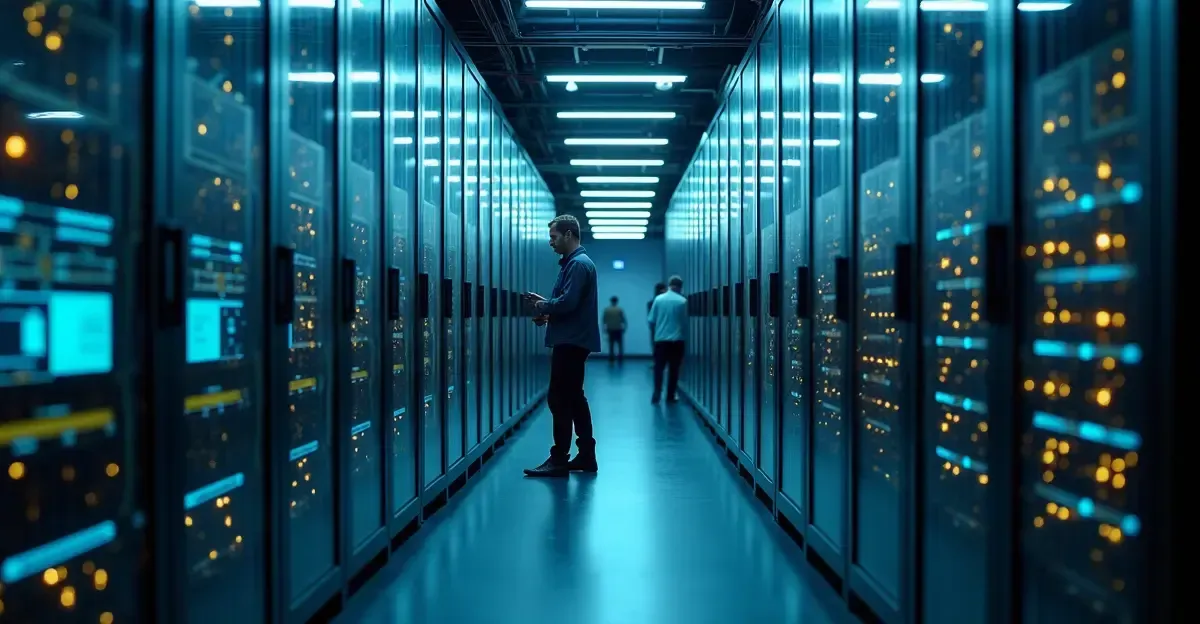
In 2026, artificial intelligence has become the single most disruptive force in global energy markets. AI data centers are projected to consume over 1,000 terawatt-hours (TWh) of electricity this year — surpassing Japan's total national consumption — as daily AI inference queries hit an estimated 11 billion, up from just 2 billion in 2024. This explosive growth has transformed data centers from passive energy consumers into active grid stakeholders, forcing a historic pivot toward nuclear power. Microsoft, Google, Amazon, and Meta have collectively signed power purchase agreements (PPAs) for 47 gigawatts (GW) of future nuclear capacity, most relying on small modular reactors (SMRs) expected online between 2028 and 2032. The binding constraint on AI growth is no longer cost or carbon targets — it is physical power availability.
The 1,000 TWh Threshold: A Grid-Scale Emergency
According to the International Energy Agency's Electricity 2026 report, global data center electricity consumption has doubled since 2024, reaching 1,080 TWh — equivalent to 3% of worldwide electricity use. Goldman Sachs forecasts U.S. data center demand will rise 165% by 2030, consuming 8% of total U.S. power. The AI data center energy crisis is most acute in Northern Virginia, home to 35% of the world's data centers. Dominion Energy's current generation capacity stands at 19 GW, while data center load in the region could reach 35 GW by 2028. The North American Electric Reliability Corp. has categorized Virginia at "elevated risk" for electricity supply shortfalls, warning that new generation projects are not keeping pace with demand growth.
Gary Wood, president of Central Virginia Electric Cooperative, warned in 2025 that rolling blackouts are "very likely" in the next 3-5 years. The data center grid strain in Virginia has become a national policy concern, with state legislators scrambling to reform cost allocation and demand forecasting.
Big Tech's Nuclear Pivot: 47 GW and Counting
In response to this crisis, the world's largest technology companies have embarked on the most aggressive private nuclear procurement campaign in history. As of May 2026, the four hyperscalers have committed to 47 GW of nuclear capacity through a combination of reactor restarts, SMR orders, and behind-the-meter power agreements.
Key Corporate Nuclear Deals
- Microsoft: Signed a 20-year, $16 billion PPA to restart Three Mile Island Unit 1 (835 MW, targeting 2028). This is the first restart of a retired U.S. nuclear plant for dedicated AI data center power.
- Google: Ordered up to 500 MW of Kairos Power's fluoride salt-cooled, high-temperature KP-FHR reactors, with first units expected by 2030.
- Amazon: Invested $700 million in X-energy for up to 12 Xe-100 high-temperature gas-cooled reactors, plus a $20 billion+ AI campus at the Susquehanna nuclear site.
- Meta: Issued an RFP for 1-4 GW of new nuclear generation and signed PPAs with TerraPower, Oklo, Vistra, and Constellation, totaling up to 6.6 GW.
These anchor customer agreements de-risk the $1-3 billion capital costs of first-of-a-kind SMRs. The small modular reactor cost analysis shows first-of-a-kind LCOE estimates of $80-150/MWh, with Nth-of-a-kind targets of $50-80/MWh through factory fabrication and learning-curve effects. While still above solar ($30-50/MWh) and natural gas ($40-75/MWh), SMRs offer 24/7 carbon-free dispatchable power at 90%+ capacity factor — a critical advantage for data centers that cannot tolerate intermittency.
From Passive Consumers to Active Grid Stakeholders
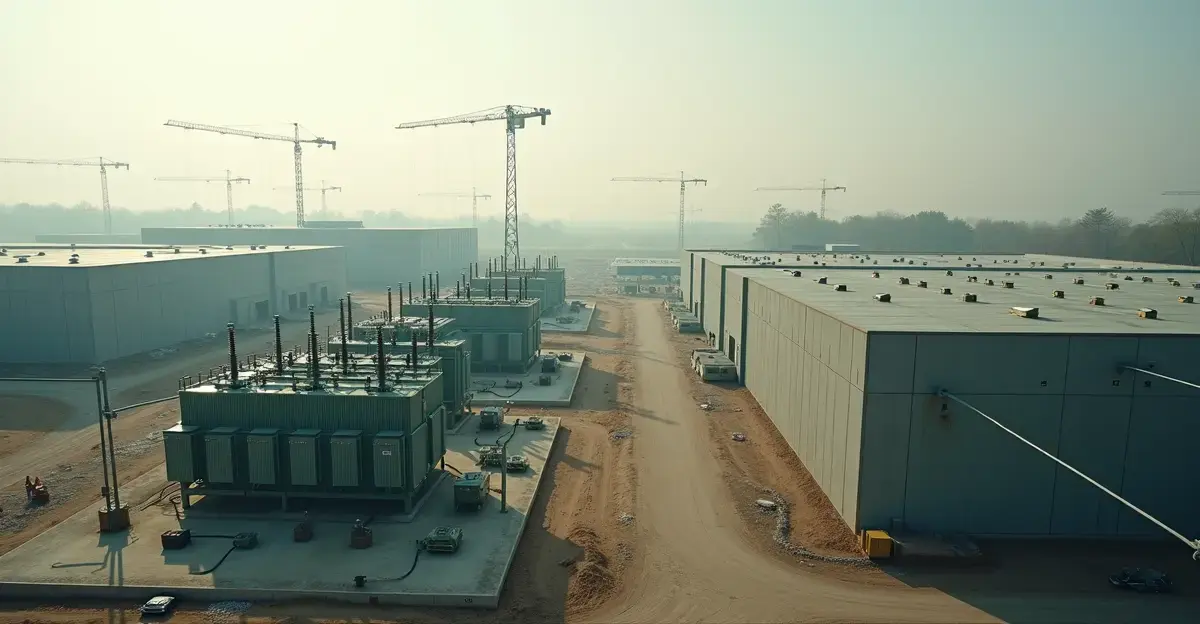
The shift toward nuclear is fundamentally changing how data centers interact with the grid. Rather than drawing power from public utilities, hyperscalers are increasingly pursuing "behind-the-meter" arrangements, where SMRs are co-located with data centers and connected directly, bypassing congested transmission grids. This model, pioneered by Amazon's Talen Energy deal (1.9 GW through 2042), allows data centers to secure reliable, carbon-free power without waiting 7-15 years for grid interconnection upgrades.
Deloitte's 2026 Tech Predictions report notes that inference workloads now account for two-thirds of all AI compute, up from one-third in 2023. The market for inference-optimized chips has grown to over $50 billion. However, new techniques like post-training scaling (using 30x more compute) and test-time scaling (using 100x more compute) are driving demand even higher. The AI inference compute demand growth shows no signs of slowing, with compute demand rising 4-5x per year out to 2030.
Grid Infrastructure: The Binding Constraint
Despite the nuclear pivot, Goldman Sachs estimates that less than 10% of the 85-90 GW of new nuclear capacity needed by 2030 will be available globally. This gap ensures continued reliance on natural gas and renewables through the decade. In Northern Virginia, utilities are extending the life of fossil fuel plants and deploying peaker gas turbines to maintain reliability, potentially raising CO2 emissions by 15% according to some estimates.
Battery storage is emerging as a complementary solution. Lithium-ion systems offer 90% round-trip efficiency and millisecond response for frequency stabilization. The U.S. Inflation Reduction Act provides tax credits targeting 100 GW of battery storage deployments by 2030. Long-duration options like flow batteries, sodium-ion, and Form Energy's iron-air systems are scaling up, with levelized costs expected to drop to $100/MWh by 2030.
Expert Perspectives
"The scale of AI energy demand has caught policymakers and utilities off guard," says John Fabian, writing in Nuclear Newswire. "The way 'SMR' is being used today does not seem consistent and is design dependent, but the commercial momentum is undeniable. We are seeing more nuclear capacity contracted in the past 18 months than in the prior two decades combined."
John-David Lovelock, Distinguished VP Analyst at Gartner, notes that AI infrastructure spending is driving much of the $2.52 trillion in global AI spending forecast for 2026. "AI-optimized server spending will rise 49%, representing 17% of total AI spending. The energy to power these servers is becoming the critical bottleneck."
FAQ: AI Data Centers and Nuclear Power
How much electricity do AI data centers consume in 2026?
AI data centers are projected to consume over 1,000 TWh globally in 2026, surpassing Japan's total electricity use and representing 3% of global consumption.
Why are tech companies turning to nuclear power?
Nuclear power provides 24/7 carbon-free baseload energy that renewables cannot match, making it ideal for data centers that require constant, reliable power. SMRs also allow behind-the-meter connections that bypass congested grids.
When will small modular reactors be operational for data centers?
Most SMRs are expected online between 2028 and 2032. Microsoft's Three Mile Island restart targets 2028, while Google's Kairos Power reactors aim for 2030.
What is the cost of SMR power compared to other sources?
First-of-a-kind SMRs have an LCOE of $80-150/MWh, with Nth-of-a-kind targets of $50-80/MWh. This compares to solar ($30-50/MWh), natural gas ($40-75/MWh), and large nuclear ($140-180/MWh).
Will there be blackouts due to data center energy demand?
Regions like Northern Virginia face elevated risk of supply shortfalls. The North American Electric Reliability Corp. warns that new generation projects are not keeping pace, and rolling blackouts are considered "very likely" in the next 3-5 years without accelerated infrastructure investment.
Conclusion: The Clean-Energy Arms Race
The convergence of AI's insatiable power demand and nuclear energy's renaissance is reshaping global energy strategy. Physical power availability has become the binding constraint on AI growth, forcing unprecedented collaboration between tech giants, utilities, and regulators. The 47 GW of nuclear PPAs signed to date represent a down payment on a clean-energy future, but the gap between ambition and delivery remains wide. As the global energy transition and AI continue to intersect, the next five years will determine whether the grid can keep pace with the intelligence revolution.


Follow Discussion