


 Deutsch
 English
 Español
 Français
 Nederlands
 Português


 Share
Share




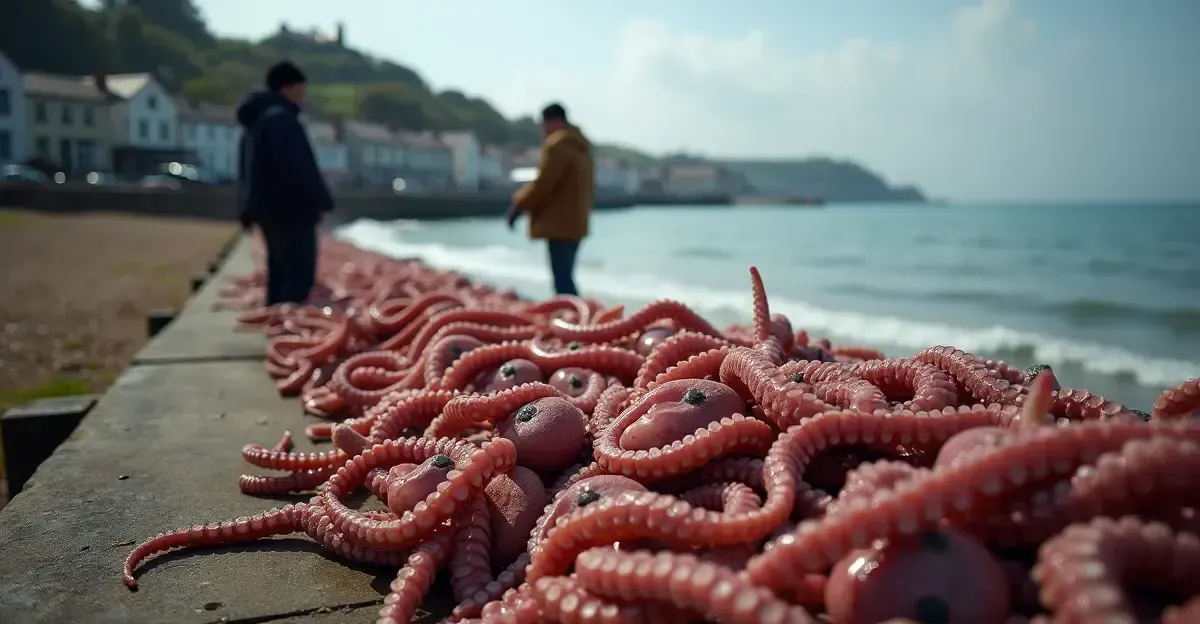
More than 120 beachgoers were stung in a single day at San Sebastián, Spain, after a mass arrival of Portuguese man o' war — a venomous marine hydrozoan often mistaken for a jellyfish — forced the closure of all three of the city's main beaches on August 4, 2026. Authorities raised red flags at La Concha, Ondarreta, and Zurriola as lifeguards treated dozens of victims, with some requiring hospitalization. As warm seas and shifting winds drive the creatures closer to shore, experts warn the phenomenon could escalate into a recurring coastal plague.
What Is the Portuguese Man O' War?
Despite its jellyfish-like appearance, the Portuguese man o' war (Physalia physalis) is not a single animal but a colonial siphonophore — a cluster of hundreds of genetically identical zooids functioning as one organism. Its gas-filled bladder, or pneumatophore, acts as a sail, propelling it across the ocean surface while tentacles that can stretch up to 30 meters (some reports say 40 meters) trail below, armed with venom-filled cnidocytes. "It's a beautiful organism," says Dutch jellyfish expert Piet Sondervan. "But that beauty hides danger: people see the colorful balloon and swim closer, unaware of the nearly invisible tentacles." The marine biology of siphonophores has fascinated researchers for centuries, yet their unpredictable beach invasions remain a challenge for coastal management.
What Happened in San Sebastián?
On Tuesday, August 4, lifeguards at San Sebastián's three iconic beaches recorded roughly 120 sting incidents, mostly minor, among an estimated 3,000 bathers. More serious cases included a swimmer hospitalized near Getaria and a woman treated by ambulance at Zarautz. Beaches in nearby Mutriku and Zumaia also reported stings. By midday, city officials closed the beaches, reassessing conditions at least every two hours. The red-flag protocol was triggered not only by specimen numbers but also by size: more than ten large individuals (over 20 cm float) on Ondarreta, or fifteen on La Concha and Zurriola, mandate automatic closures. This incident echoes the 2026 French beach closures across the Basque and Landes coasts, where dozens of beaches were shut after similar swarm events.
Why Did They Appear Now?
Authorities attribute the influx to a combination of persistent north-easterly winds and unusually warm sea surface temperatures, hovering around 24.8°C. "The water temperature must be right, around 24 degrees," explains Sondervan. "Add offshore winds pushing them coastward, and nutrient-rich waters — often due to overfishing reducing natural predators — and you have a problem." Research increasingly links the expanding range of Physalia physalis to climate change, with warmer oceans boosting reproduction and altering current patterns. A 2024 study in Marine Pollution Bulletin confirmed that onshore wind and sea surface temperature are the strongest predictors of mass stranding events.
Health Risks and First Aid for Stings
A Portuguese man o' war sting delivers intense, immediate pain via thousands of microscopic nematocysts that inject venom. Symptoms include a characteristic red, beaded whip-like mark, swelling, burning, and in severe cases, muscle cramps, vomiting, or respiratory distress. Children, the elderly, and those with cardiovascular conditions are at higher risk. "The pain can cause cramping, which in the worst case leads to drowning," warns Sondervan. Dead specimens washed ashore remain dangerous for days, as their tentacles continue to fire.
How to Treat a Sting
- Rinse the area with saltwater — never fresh water, which triggers more venom release; vinegar is now recommended by some researchers over seawater.
- Remove visible tentacles with tweezers or a gloved hand; do not rub with sand or a towel.
- Immerse the sting in hot water (45°C / 113°F) for 20–45 minutes to neutralize the venom.
- Avoid ice packs, alcohol, urine, or shaving cream, which can worsen the sting.
- Seek emergency care if symptoms escalate to difficulty breathing, chest pain, or severe cramping.
Will the 'Plague' Spread Further?
Sondervan believes the conditions are ripe for a prolonged invasion. "The temperature and circumstances are such that it could become a plague there," he says. The species has already been sighted increasingly further north; in recent years, rare specimens like the compass jellyfish and even half-meter-wide cauliflower jellyfish have appeared off the Dutch coast. As global sea temperatures continue to break records — the El Niño year of 2026 has already seen record-high ocean temperatures for this time of year — the impact of climate change on marine ecosystems is expected to push such invasions toward new coastlines, threatening tourism, public health, and local economies.
FAQ
Is the Portuguese man o' war a jellyfish?
No. It is a siphonophore — a colonial organism made up of specialized zooids. It superficially resembles a jellyfish but is biologically distinct.
Can a dead man o' war still sting?
Yes. Even after washing ashore and dying, its tentacles retain active nematocysts capable of delivering a painful sting for days or even weeks.
How long do man o' war tentacles grow?
Average tentacles reach 10 meters, but they can extend up to 30 meters (100 feet), with some reports suggesting 40 meters.
Where are Portuguese man o' war commonly found?
They inhabit tropical and subtropical Atlantic, Indian, and Pacific oceans, but warming seas are expanding their range into temperate waters, including the Cantabrian Sea and Bay of Biscay.
Is the sting fatal to humans?
Fatalities are extremely rare. However, the pain can cause drowning, and severe allergic reactions may require hospitalization.





Follow Discussion