


 Deutsch
 English
 Español
 Français
 Nederlands
 Português


 Share
Share




AI's Insatiable Energy Appetite Drives Historic Nuclear Pivot
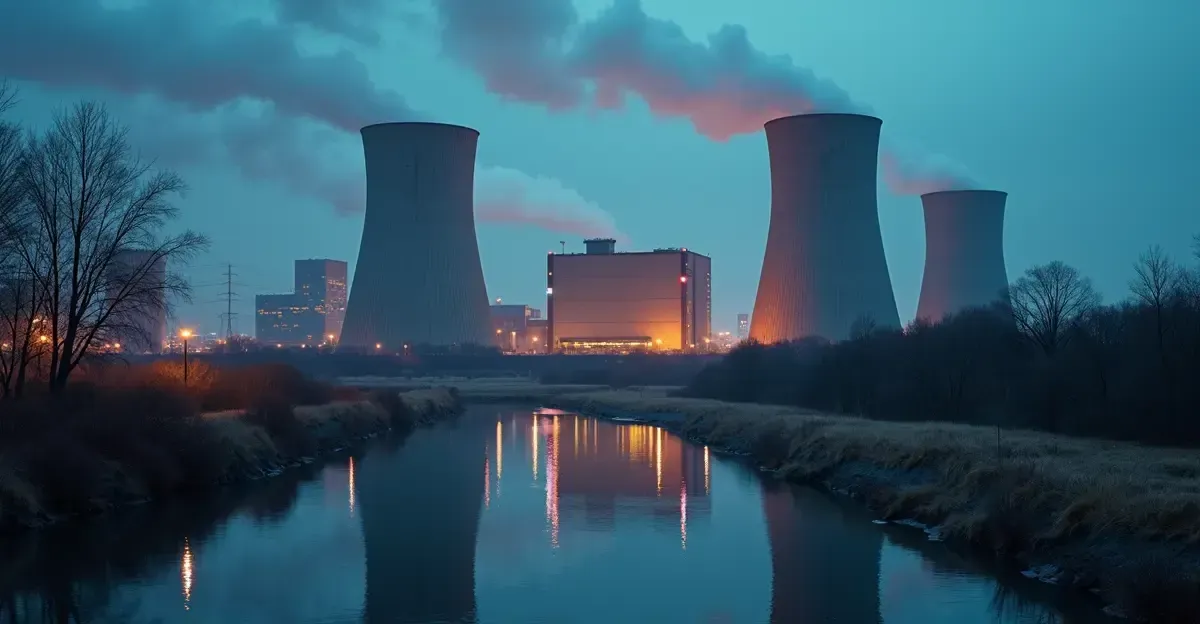
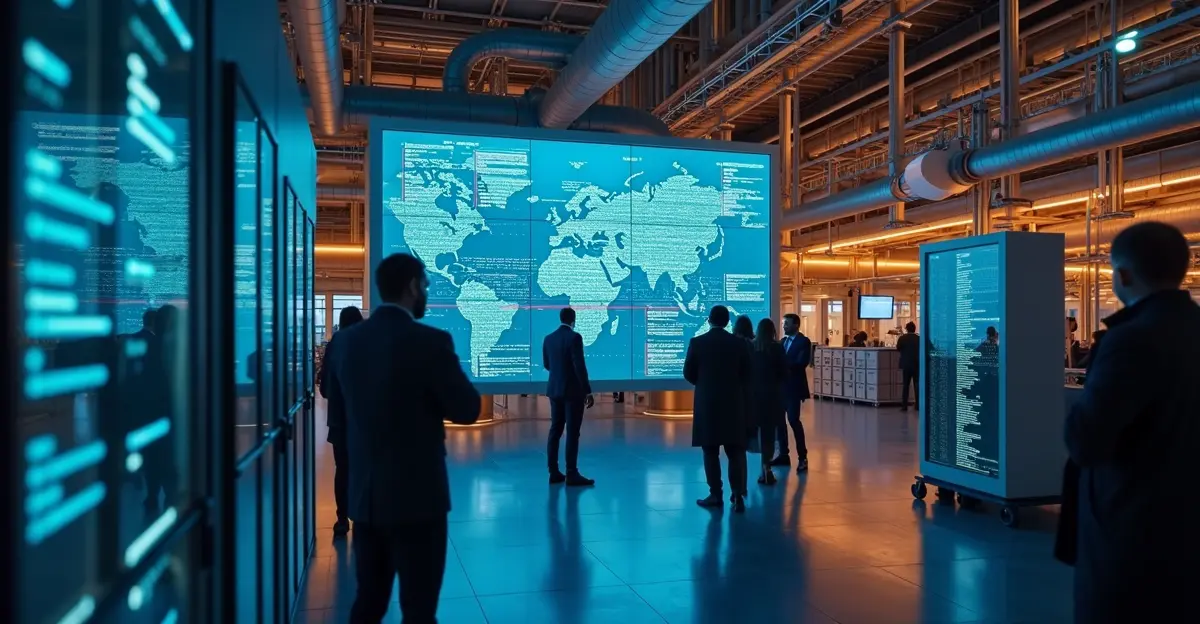
In 2026, the convergence of artificial intelligence and nuclear energy has become the defining energy-technology story of the year. With global data center electricity consumption projected to reach 1,100 TWh — equivalent to the entire power demand of Japan — major tech firms including Google, Amazon, Microsoft, and Meta are making unprecedented investments in small modular reactors (SMRs) to power the AI boom. These compact nuclear plants, typically under 300 megawatts (MWe) per module, promise factory-built, scalable, and safer nuclear deployment that could solve AI's insatiable power demand.
The AI data center power crisis has forced a strategic rethink. Unlike intermittent renewables, nuclear offers 24/7 baseload power with 90%+ capacity factors, essential for AI workloads that cannot tolerate downtime. Tech companies have committed over $480 billion in global AI infrastructure spending in 2026 alone, with nuclear energy emerging as a cornerstone of this investment cycle.
What Are Small Modular Reactors?
Small modular reactors are nuclear fission reactors with a rated electrical power of less than 300 MWe, designed for modular construction in factories and transport to installation sites. According to the American Nuclear Society, the term "small modular reactor" entered common use in the late 1970s, but the technology has gained urgency only in the past two years as AI demand surged. SMRs incorporate passive safety features that operate without external power or human intervention, and their modular design allows customers to add units incrementally to match growing power needs.
Key SMR designs in the 2026 pipeline include TerraPower's Natrium (345 MWe, construction permit received March 2026), Kairos Power's Hermes molten salt reactor, X-energy's Xe-100 gas-cooled reactor, and GE Hitachi's BWRX-300. NuScale Power's VOYGR (77 MWe) remains the only SMR with full NRC design certification as of May 2026.
The Tech-Nuclear Deal Frenzy
Google and Kairos Power
Google has partnered with Kairos Power to bring up to 500 megawatts of SMR capacity online by 2030. The deal marks one of the first corporate offtake agreements for advanced nuclear technology, with Kairos deploying its fluoride salt-cooled, high-temperature reactor design.
Amazon and X-energy
Amazon led a $500 million financing round for X-energy in 2025 and is pursuing a "behind-the-meter" model via its acquisition of the Cumulus Data Center campus, giving it direct access to Susquehanna nuclear power. The company plans to deploy X-energy's Xe-100 reactors near data center clusters.
Microsoft's Three Mile Island Revival
Microsoft signed a 20-year, $1.6 billion deal with Constellation Energy to restart the former Three Mile Island Unit 1 reactor — now renamed the Crane Clean Energy Center — targeting operations by 2027. The deal includes a $1 billion DOE loan and represents the first restart of a retired U.S. nuclear plant.
Meta and TerraPower
Meta has agreed with TerraPower for up to eight Natrium plants, while Oracle plans a gigawatt-scale data center powered by three SMRs. These corporate nuclear offtake agreements have grown from 25 GW to 45 GW in just one year, according to industry tracking.
Regulatory Watershed: NRC Decisions in 2026
The U.S. Nuclear Regulatory Commission is expected to issue the first commercial SMR construction permits in 2026, a milestone that could unlock billions in private investment. In March 2026, the NRC issued a construction permit to TerraPower for the Kemmerer Power Station in Wyoming — the first advanced reactor construction permit in U.S. history. The NRC also finalized Part 53, a new technology-inclusive licensing pathway designed to accelerate safe reactor deployment under the ADVANCE Act.
However, regulatory hurdles remain. The NRC defines SMRs as only light-water reactors under 300 MWe, while non-LWR designs are classified as "advanced reactors," creating a bifurcated approval process. The SMR NRC Approval Tracker (May 2026) lists 31 reactor designs in various stages: 2 certified, 8 under construction, and 21 in licensing or review.
Can SMRs Deliver on Cost and Speed?
The promise of SMRs is compelling: factory fabrication reduces on-site labor by 90%, targeting capital costs of $3,000–6,000/kW compared to $6,000–10,000/kW for large reactors. Levelized cost of electricity (LCOE) for SMRs is estimated at $40–90/MWh, potentially rivaling renewables with storage. However, first-of-a-kind costs have proven stubborn. NuScale's cancelled Idaho project saw costs balloon from $3 billion to $9 billion before being abandoned.
Notable progress includes Aalo Atomics, which completed a 10 MWe experimental reactor at Idaho National Laboratory in just 40 days — demonstrating the potential for rapid deployment. Yet experts caution that less than 10% of the needed 85–90 GW of new nuclear capacity will be available by 2030, ensuring continued reliance on natural gas and renewables in the near term.
The economics of nuclear vs renewables remain debated. While solar and wind have LCOEs of $30–60/MWh, they require expensive storage and cannot provide the 24/7 reliability that AI data centers demand. Nuclear offers firm, carbon-free power but faces persistent cost overrun risks, as seen with Hinkley Point C in the UK, where costs doubled to £34 billion.
Impact on Grids and Communities
The geographic concentration of AI data centers is straining regional grids. PJM capacity prices have spiked nearly tenfold, and electricity costs have risen 42% since 2019. Community backlash is mounting, with AEP Ohio freezing new data center connections and states demanding tech companies fund their own power infrastructure rather than shifting costs to ratepayers.
Nuclear-powered data centers offer a potential solution by operating behind the meter, reducing strain on public grids. However, this model raises questions about grid resilience and equitable cost sharing. The nuclear-powered data center model could reshape how energy-intensive industries interact with electricity markets.
Expert Perspectives
"The case for SMRs has shifted from policy-driven decarbonization to a commercially driven race for reliable baseload power," notes a Yale Clean Energy Forum analysis from April 2026. "Electricity supply has become a strategic constraint and competitive differentiator in the AI race."
Morgan Stanley warns of a 126 GW demand surge through 2028, with a 49 GW shortfall in the U.S. alone — equivalent to 49 large power plants. The IEA projects global data center electricity consumption will reach 1,100 TWh in 2026, with AI-specific infrastructure tripling by 2030.
FAQ
What is a small modular reactor (SMR)?
An SMR is a nuclear fission reactor with a rated electrical power of less than 300 MWe, designed for factory fabrication and modular deployment. SMRs incorporate passive safety features and can be scaled by adding multiple units.
Why are tech companies investing in nuclear power?
AI data centers require 24/7 reliable electricity that intermittent renewables cannot provide. Nuclear offers firm, carbon-free baseload power with 90%+ capacity factors, essential for AI workloads.
When will the first commercial SMRs be operational in the U.S.?
The NRC issued its first advanced reactor construction permit to TerraPower in March 2026. Commercial operations for SMRs are expected between 2027 and 2030, with Microsoft's Three Mile Island restart targeting 2027.
Are SMRs cheaper than traditional nuclear plants?
SMRs aim for capital costs of $3,000–6,000/kW and LCOE of $40–90/MWh, potentially lower than large reactors ($6,000–10,000/kW). However, first projects have faced cost overruns, and the technology has not yet proven its cost advantage at scale.
How much electricity do AI data centers consume?
Global data center electricity consumption is projected to reach 1,100 TWh in 2026, about 4% of global electricity use. U.S. data center consumption could reach 325–580 TWh by 2028, up from 176 TWh in 2023.
Conclusion: A Watershed Year for Nuclear and AI
2026 marks a historic inflection point where the energy demands of artificial intelligence are reshaping the nuclear industry. With the NRC issuing its first commercial SMR permits and tech companies committing hundreds of billions to AI infrastructure, the nuclear-for-AI story is the defining energy-technology intersection of the year. Whether SMRs can deliver on their promises of cheaper, faster, and safer nuclear deployment at scale remains to be seen, but the momentum is undeniable. The race to power the AI revolution has begun, and nuclear energy is at its core.


Follow Discussion