


 Deutsch
 English
 Español
 Français
 Nederlands
 Português


 Share
Share




By 2026, the insatiable energy appetite of artificial intelligence is reshaping the global power landscape. AI data centers are projected to consume over 1,000 TWh annually, prompting Microsoft, Amazon, Google, and Meta to bypass public grids through direct nuclear power purchase agreements totaling over 9.8 GW across 13 projects. This shift is creating a parallel energy economy where one-third of data centers may be fully off-grid by 2030, raising strategic questions about grid equity, energy security, and whether nuclear can scale fast enough to meet AI's demand.
The Nuclear Data Center Boom
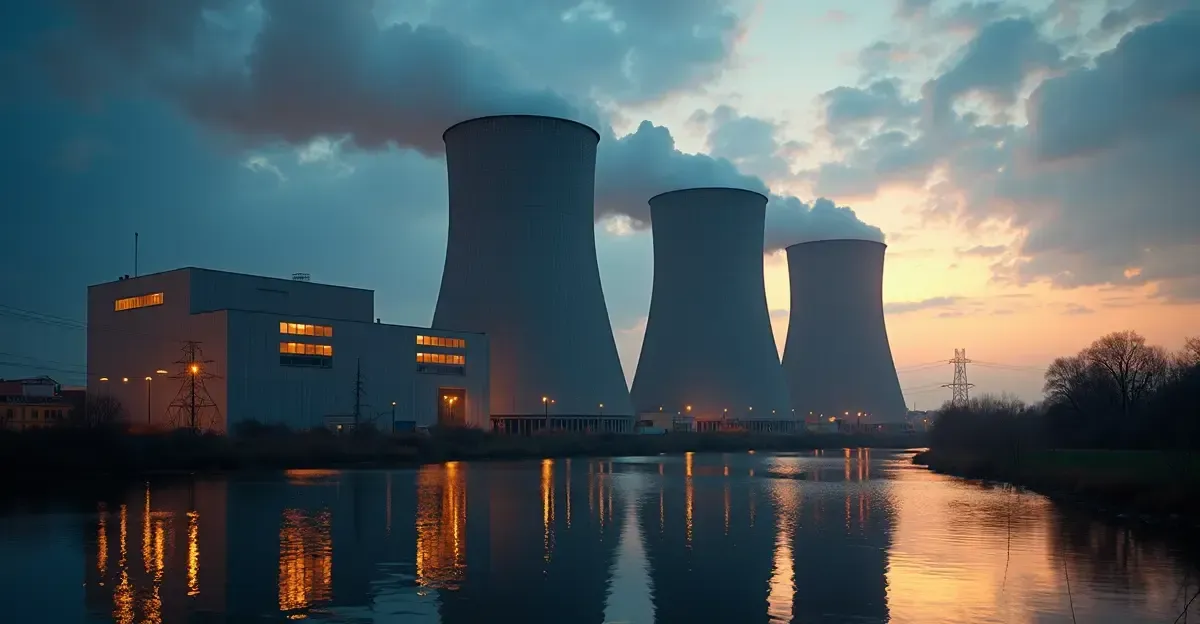
Every major hyperscaler has signed nuclear power deals for AI data centers as of May 2026. According to industry tracker SMR Intel, 13 announced projects now represent over 9.8 GW of committed capacity. Microsoft leads with a $16 billion, 20-year power purchase agreement (PPA) to restart the Three Mile Island Unit 1 reactor—renamed the Crane Clean Energy Center—which will deliver 835 MW of carbon-free baseload power by 2027. Amazon has invested $700 million in X-energy for up to 12 Xe-100 small modular reactors (SMRs) totaling 960 MW, plus a $20 billion+ AI campus at the Susquehanna nuclear plant. Google committed to 500 MW from Kairos Power's KP-FHR reactors, targeting 2030. Meta holds the largest total commitment at up to 6.6 GW across TerraPower, Oklo, Vistra, and Constellation.
The nuclear data center deals represent a strategic pivot: tech giants are no longer content to rely on public utilities. Instead, they are building dedicated energy infrastructure, often behind the meter, to ensure uninterrupted power for AI workloads.
Why Nuclear? The AI Energy Imperative
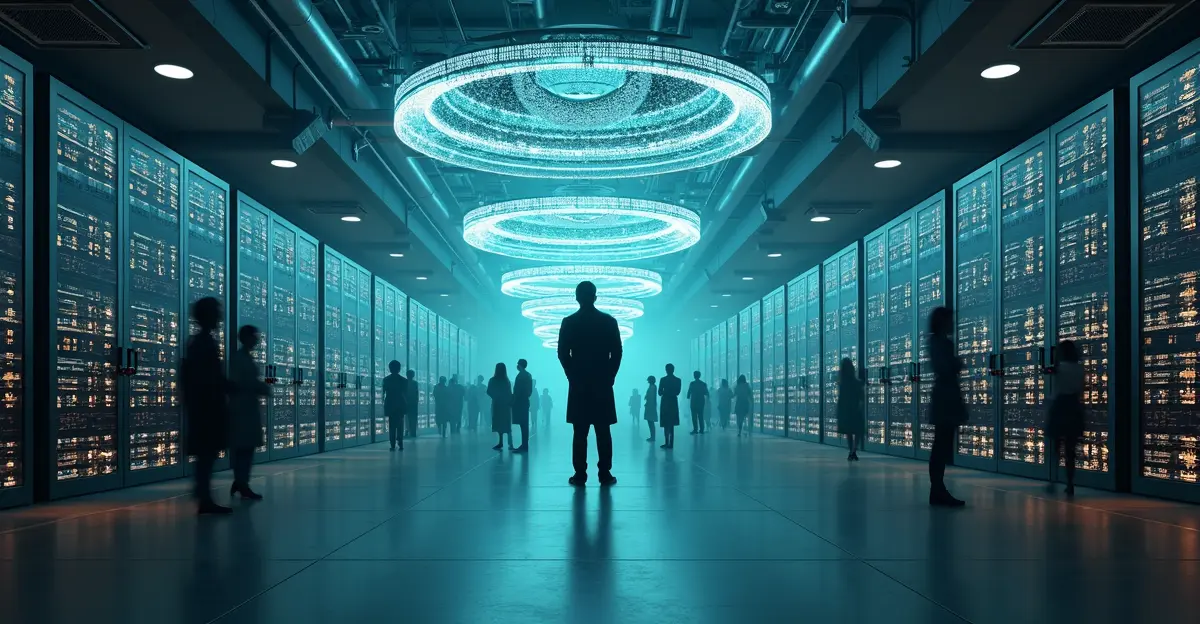
A single hyperscale AI facility can consume 300–500 MW of electricity, rivaling a mid-sized city. Unlike traditional cloud computing, AI training and inference require continuous, reliable baseload power—intermittent renewables like wind and solar cannot guarantee steady output. Nuclear energy offers 24/7 carbon-free electricity with capacity factors above 90%, making it the preferred solution for hyperscalers. The AI data center energy demand is projected to grow from 460 TWh in 2024 to 1,300 TWh by 2035, according to industry estimates.
The Three Mile Island Restart
The most symbolic deal is Microsoft's backing of the Three Mile Island restart. The Unit 1 reactor shut down in 2019 due to low power prices, but the $1.6 billion revival—supported by a $1 billion DOE loan—is expected to create 3,400 jobs and generate $3 billion in taxes. The plant will supply Microsoft's data centers in the PJM Interconnection region, which serves 65 million people across 13 states. Constellation Energy expects the reactor to return to service by mid-2027.
Small Modular Reactors: The Next Frontier
While existing nuclear restarts deliver power fastest, new-build SMRs offer scale. Amazon's investment in X-energy targets up to 12 Xe-100 reactors, each 80 MW, with the first units expected online by 2030. Google's deal with Kairos Power uses fluoride salt-cooled, high-temperature reactors. Meta's RFP for 1–4 GW of new nuclear includes advanced designs like TerraPower's Natrium sodium-cooled fast reactor and Oklo's Aurora microreactor. However, less than 10% of the 85–90 GW of nuclear capacity forecast for AI by 2030 will be available by that date, creating a supply crunch.
Regulatory Tailwinds: NRC Part 53
A critical enabler for this nuclear renaissance is the U.S. Nuclear Regulatory Commission's finalization of Part 53, a risk-informed, technology-inclusive regulatory framework for advanced reactors. Published in the Federal Register on March 30, 2026, and effective April 29, 2026, the rule replaces prescriptive, reactor-specific regulations with a flexible, performance-based approach. Key provisions include probabilistic risk assessment, generally licensed reactor operators, alternative siting criteria allowing higher population density areas, and factory fuel loading. This framework is designed to accommodate SMRs, microreactors, and non-light-water designs, drastically reducing licensing timelines and costs.
The NRC Part 53 framework is expected to accelerate the deployment of advanced reactors, with several companies already preparing license applications under the new rules.
Impact on Grid Equity and Energy Security
The parallel energy economy raises concerns about grid equity. As hyperscalers secure dedicated nuclear capacity, they effectively bypass public grids, reducing demand but also removing their financial contribution to grid maintenance. This could lead to higher costs for residential and small business customers. Additionally, the concentration of nuclear assets in the hands of a few tech giants poses energy security questions: what happens if a hyperscaler's AI operations are disrupted, or if nuclear plants become single-customer facilities?
Proponents argue that the AI nuclear energy security benefits outweigh the risks. By investing in new nuclear capacity, hyperscalers are accelerating the transition to carbon-free energy and funding advanced reactor development that could eventually benefit the broader grid.
Expert Perspectives
"Electricity supply is now a strategic constraint for AI," says a senior energy analyst at a major consulting firm. "Companies that secure reliable, carbon-free power first will hold the strongest competitive advantage in scaling AI. Nuclear is the only proven baseload clean energy source available at the scale required."
"The NRC's Part 53 rule is a game-changer," notes a nuclear regulatory expert. "It allows us to license advanced reactors on their safety merits rather than forcing them into a light-water reactor box. This will unlock a wave of innovation."
FAQ
How much nuclear capacity have hyperscalers committed to?
As of May 2026, hyperscalers have committed over 9.8 GW across 13 projects, with Meta leading at up to 6.6 GW, Microsoft at 835 MW (plus fusion), Amazon at 960 MW (SMRs) plus the Susquehanna campus, and Google at 500 MW.
When will the Three Mile Island restart be operational?
Constellation Energy expects the Crane Clean Energy Center (Three Mile Island Unit 1) to return to service by mid-2027, pending NRC review and licensing.
What is the NRC Part 53 rule?
Part 53 is a new risk-informed, technology-inclusive regulatory framework for advanced nuclear reactors, finalized in March 2026. It streamlines licensing for SMRs, microreactors, and non-light-water designs.
Will one-third of data centers be off-grid by 2030?
Industry projections suggest that up to one-third of new data centers could be fully off-grid by 2030, relying on dedicated nuclear or other behind-the-meter generation.
How much are hyperscalers investing in nuclear in 2026?
Hyperscalers have committed over $16 billion to nuclear projects in 2026 alone, including Microsoft's $16 billion PPA, Amazon's $700 million in X-energy, and Meta's multi-billion-dollar RFP.
Conclusion
The convergence of AI infrastructure and nuclear energy represents a defining strategic shift in both technology and energy markets. With the NRC's Part 53 framework now in effect and hyperscalers pouring billions into nuclear projects, a parallel energy economy is emerging. Whether this model can scale fast enough to meet AI's insatiable demand—while maintaining grid equity and energy security—will be one of the defining questions of the late 2020s.

Follow Discussion