


 Deutsch
 English
 Español
 Français
 Nederlands
 Português


 Share
Share




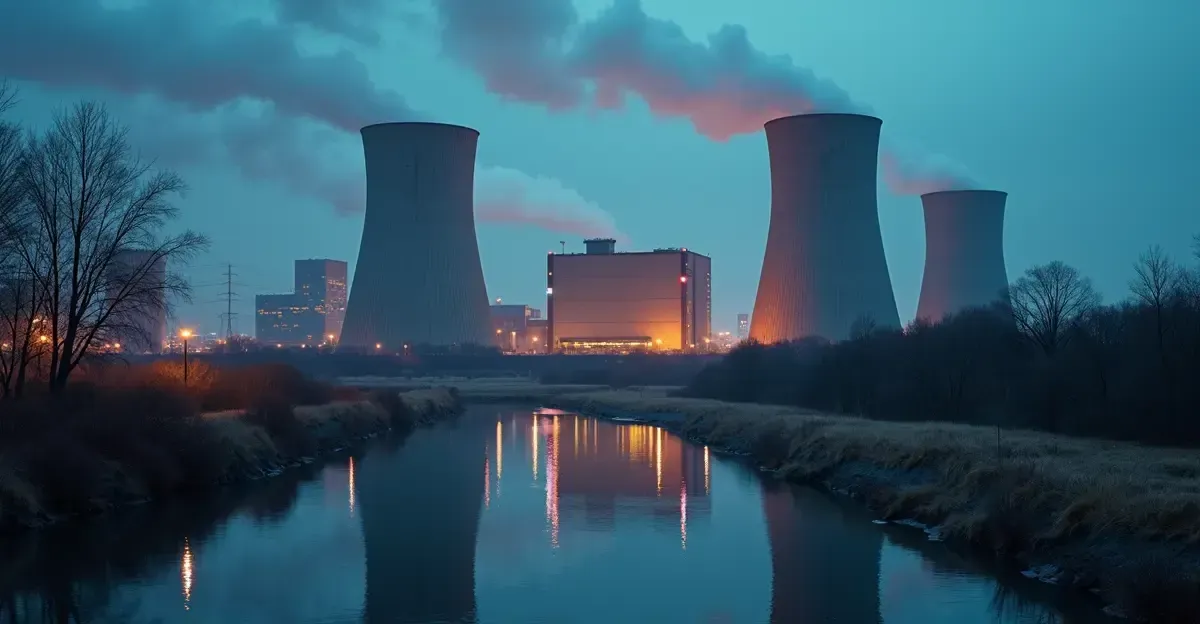
In a historic convergence of digital ambition and atomic energy, the world's largest technology companies have committed over 9.8 gigawatts of nuclear power capacity to fuel the artificial intelligence revolution — a figure exceeding the entire electricity consumption of nations like Switzerland or Austria. As of mid-2026, Microsoft, Amazon, Google, and Meta have collectively signed 13 nuclear power purchase agreements worth tens of billions of dollars, marking the largest private-sector nuclear procurement wave since the 1970s. This unprecedented pivot, reinforced by the Nuclear Regulatory Commission's newly finalized Part 53 framework for advanced reactors in March 2026, signals a decisive inflection point: AI infrastructure demand is now the primary driver of nuclear energy deployment in the United States.
The Scale of the Nuclear Pivot
The numbers are staggering. Microsoft set the pace with a $16 billion, 20-year PPA with Constellation Energy to restart Unit 1 at Three Mile Island — rechristened the Crane Clean Energy Center — which will deliver 835 megawatts of carbon-free power by 2028. The deal is symbolically potent, reviving a site synonymous with America's worst nuclear accident to power the next wave of AI computing. Amazon followed with a $700 million equity investment in X-energy, targeting up to 960 megawatts from twelve Xe-100 small modular reactors (SMRs) in Washington state, alongside a $20 billion-plus AI campus at Talen Energy's Susquehanna nuclear plant in Pennsylvania. Google committed to 500 megawatts from Kairos Power's molten-salt reactor fleet, with the first unit expected by 2030.
The most ambitious gambit, however, belongs to Meta. The parent company of Facebook and Instagram has amassed agreements totaling up to 6.6 gigawatts — more than the peak output of the Hoover Dam — through deals with Vistra, Oklo, and TerraPower. The cumulative 9.8 GW in hyperscaler nuclear PPAs represents the largest private-sector nuclear procurement wave since the 1970s. "We are witnessing a structural shift in how the tech sector approaches energy procurement," said Dr. Kathryn Huff, former Assistant Secretary for Nuclear Energy at the Department of Energy. "The hyperscalers have realized that intermittent renewables alone cannot meet the 24/7, 99.999% reliability requirements of AI training clusters."
Why Nuclear? The AI Power Imperative
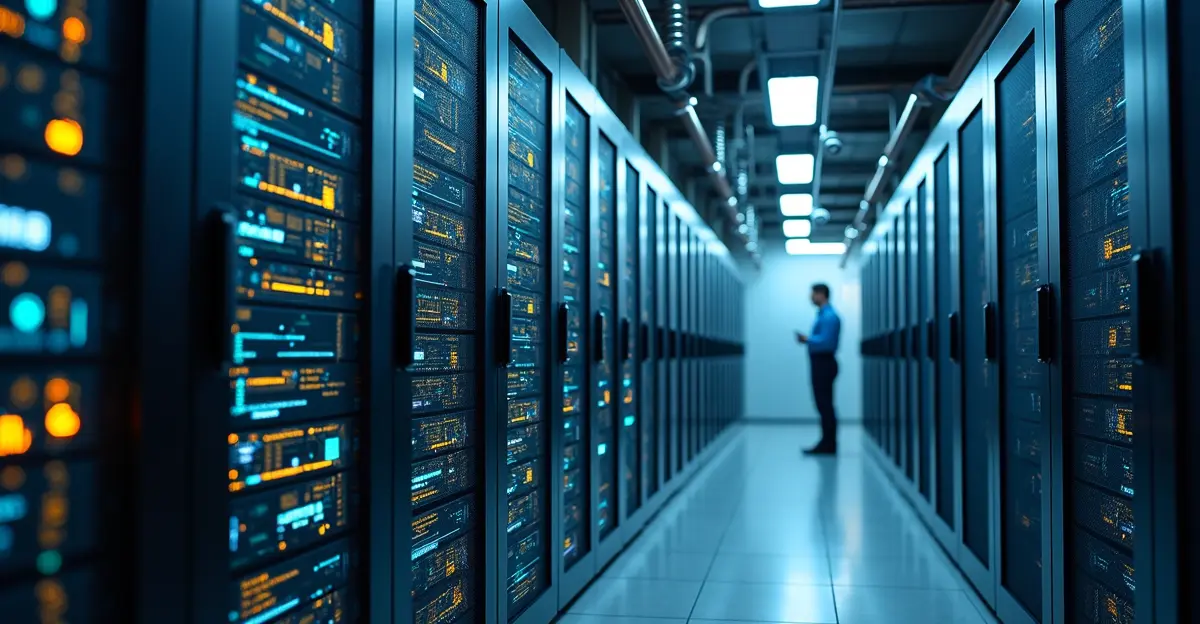
The explosive growth in AI data center energy demand has pushed global electricity consumption projections past 1,000 terawatt-hours annually by 2027, more than doubling from 2022 levels. AI training runs are uniquely power-intensive — a single frontier model can consume as much electricity as 130 US households use in a year. For hyperscalers committed to net-zero pledges, solar and wind cannot guarantee 24/7 reliability without massive battery storage, and grid interconnection queues now stretch to four years in bottlenecked regions like Northern Virginia.
Nuclear offers carbon-free baseload power that can be sited adjacent to data center campuses, bypassing congested transmission lines. "The bring-your-own-power model is becoming standard — data center developers are essentially building private grids anchored by dedicated nuclear generation," a senior PJM Interconnection grid planner told this publication.
Regulatory Breakthrough: Part 53 and the ADVANCE Act
The technical and financial commitments would mean little without a supportive regulatory environment. That changed decisively on March 30, 2026, when the NRC published its final Part 53 rule — a risk-informed, technology-inclusive licensing framework that replaces the prescriptive, light-water-reactor-centric rules of the past. Effective April 29, 2026, Part 53 allows developers to use probabilistic risk assessments rather than rigid design criteria, enables factory-fueled manufactured reactors to be shipped to site, and removes the single-failure criterion that plagued legacy licensing. The rule builds on the ADVANCE Act of 2024, which directed the NRC to streamline approvals and accelerate nuclear licensing timelines.
"Part 53 is the most significant regulatory modernization for advanced reactors in a generation," said Marcus Nichol, senior director of new reactor deployment at the Nuclear Energy Institute. "For the first time, we have a framework designed from the ground up for the technologies that hyperscalers are actually funding — SMRs, molten-salt reactors, and high-temperature gas-cooled designs."
The Road Ahead: Challenges and Timelines
For all the headline momentum, significant hurdles remain. Of the 9.8 GW committed, only about 3 GW comes from existing reactors — the rest depends on SMR technologies yet to be deployed at commercial scale. The HALEU nuclear fuel supply chain — high-assay low-enriched uranium required by most advanced designs — remains critically constrained, with US production of roughly 900 kilograms per year falling far short of projected demand.
Cost is another wildcard. While SMR advocates project levelized costs of $65-85 per megawatt-hour, independent analysts warn first-of-a-kind builds could exceed $120/MWh. The history of nuclear cost overruns looms large. Yet with AI electricity demand growing roughly 50% annually, the cost of inaction may prove steeper still.
Frequently Asked Questions
How much nuclear power have Big Tech companies committed to?
As of mid-2026, hyperscalers signed agreements for over 9.8 GW across 13 projects: Meta (6.6 GW), Amazon (~5 GW target), Microsoft (835 MW), Google (500 MW). Existing-plant PPAs are firm; SMR agreements represent contingent future capacity.
Why nuclear instead of renewables for AI data centers?
AI workloads require 99.999% uptime. Solar and wind are intermittent; nuclear provides continuous carbon-free baseload. SMRs can be sited adjacent to data centers, bypassing grid interconnection queues.
What is the NRC's Part 53 rule?
Finalized March 2026, Part 53 is a risk-informed licensing framework for advanced reactors, replacing prescriptive rules with performance-based criteria to accelerate SMR approvals and reduce costs.
When will nuclear-powered AI data centers come online?
Microsoft's Three Mile Island restart targets 2027-2028. Meta's Vistra PPAs begin delivering power in 2026. SMR projects (TerraPower, Oklo, X-energy) are expected to reach commercial operation between 2030 and 2035.
Conclusion
The nuclear-for-AI thesis, once dismissed as techno-optimist fantasy, is now being executed at billion-dollar scale. With Part 53 in force, ADVANCE Act implementation accelerating, and AI demand curves showing no sign of flattening, 2026 marks the year the question shifted from whether nuclear would power the AI revolution to how fast the industry can deliver. The answer will shape not only the future of computing but the trajectory of global energy policy for decades to come.

Follow Discussion