


 Deutsch
 English
 Español
 Français
 Nederlands
 Português


 Share
Share




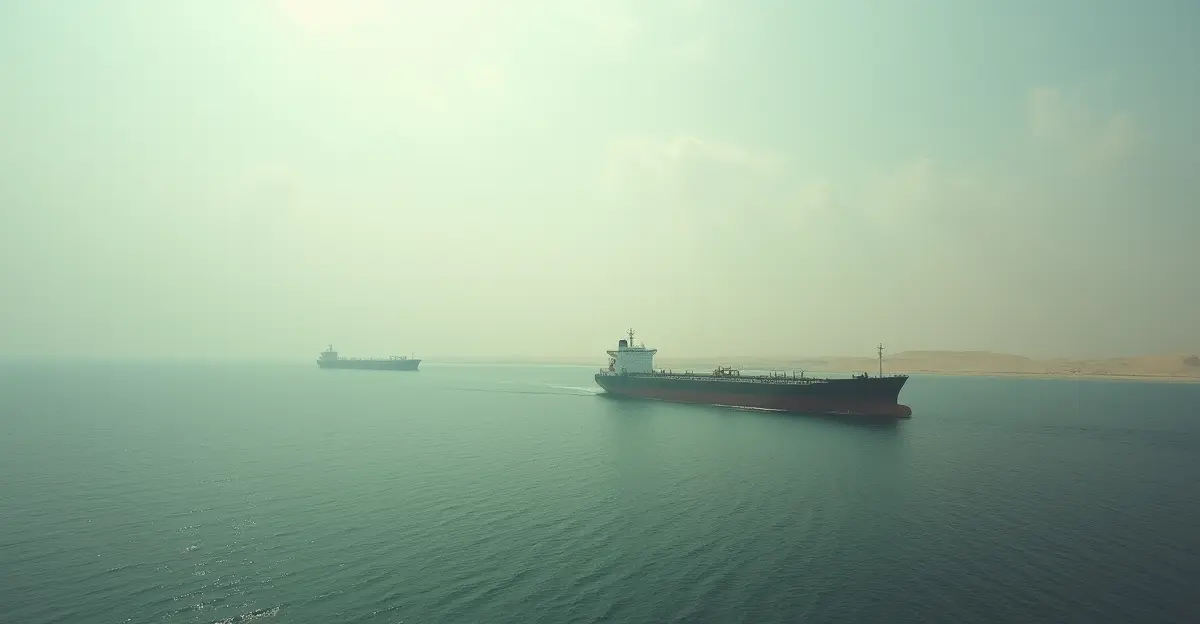
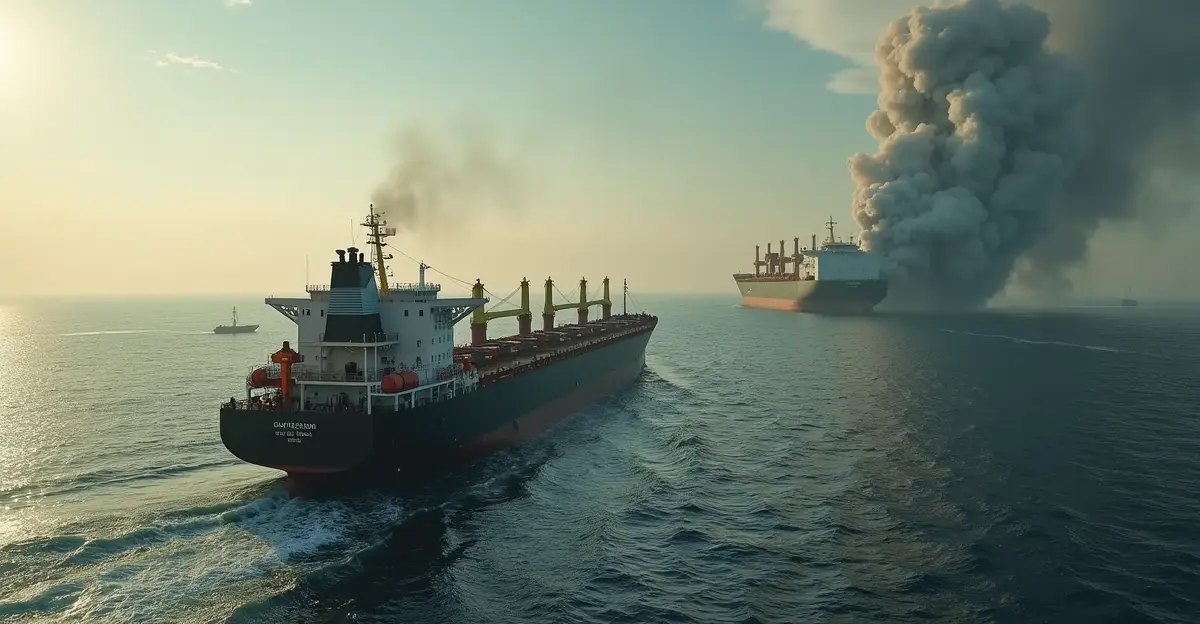
Since February 28, 2026, the Strait of Hormuz has been effectively closed following the outbreak of military conflict between the United States, Israel, and Iran. This narrow waterway, which carries roughly 20% of the world's daily oil supply and 25% of seaborne liquefied natural gas (LNG), has seen ship transits collapse by over 90% — from an average of 130 vessels per day to just six. The resulting supply shock is the largest in history, dwarfing the 1973 Arab oil embargo and the 1979 Iranian Revolution combined. Brent crude surged past $105 per barrel in May 2026, and the U.S. Energy Information Administration (EIA) projects that OECD inventories will fall to their lowest level since 2003. This article analyzes the cascading economic consequences — from surging inflation and transport costs to the UN warning that persistent disruption could push tens of millions into poverty and trigger a global recession — while exploring how this crisis is accelerating energy diversification, strategic reserve drawdowns, and a permanent recalibration of global energy security policy.
Context: The World's Most Critical Energy Chokepoint
The Strait of Hormuz connects the Persian Gulf to the Gulf of Oman and the open ocean. At its narrowest point, the strait is just 21 miles (33 km) wide, with two two-mile-wide shipping lanes separated by a two-mile median. Before the 2026 crisis, approximately 20 million barrels of oil per day — roughly one-fifth of global consumption — passed through these waters, along with significant volumes of LNG from Qatar, the world's largest exporter. The strait is the only maritime route for Saudi Arabia, Iraq, Kuwait, the United Arab Emirates, Qatar, and Bahrain, making it indispensable to global energy markets.
Iran has long threatened to close the strait in response to geopolitical pressure, but the 2026 conflict marked the first extended closure in modern history. According to the Federal Reserve Bank of Dallas, the disruption is three to five times larger than previous geopolitical oil shocks. The 2026 Iran war triggered immediate retaliation from Iran, including the mining of the strait and attacks on commercial shipping, effectively shutting down the waterway.
Oil Market Shock: Prices, Inventories, and Supply Chains
Price Surge and Volatility
Brent crude, which traded around $70 per barrel in early February 2026, surged to a peak of $138 per barrel in April before settling at $105–$107 in May and June. The World Bank reported that the monthly price increase of 65% in March was the largest on record. The EIA's June 2026 Short-Term Energy Outlook forecasts Brent averaging $105 per barrel in the second quarter, declining to $89 by year-end if the strait reopens. However, analysts at JPMorgan and Morgan Stanley warn that prices could reach $130 per barrel by July–August if the blockade persists, potentially driving U.S. gasoline prices above $5 per gallon.
Inventory Drawdowns at Historic Levels
The EIA projects that OECD commercial inventories will fall to under 2.3 billion barrels by December 2026 — the lowest level since 2003. Days of supply are expected to drop to just 50 days, dangerously close to operational minimums. The U.S. Strategic Petroleum Reserve (SPR), already depleted by previous drawdowns, is nearing 1980s lows. China, by contrast, holds an estimated 1.54 billion barrels in strategic reserves — nearly 3.7 times the U.S. stockpile — giving Beijing significant leverage in global energy markets.
Production Shut-Ins and Demand Destruction
The EIA estimates that approximately 10.5 million barrels per day of crude production from Iraq, Saudi Arabia, Kuwait, UAE, Qatar, and Bahrain was shut in during April 2026. Global oil demand is forecast to decline by 1.1 million barrels per day in 2026 as high prices and fuel shortages curb consumption. The global oil supply disruption 2026 has forced refineries in Asia and Europe to reduce runs, with developing economies in Asia — which receive 80% of Persian Gulf oil — hit hardest.
Shipping and Trade: Rerouting at Unprecedented Scale
The closure has forced container ships and tankers to reroute via the Cape of Good Hope, adding 10–14 sailing days and increasing freight costs by 30–50% on key trade lanes. Shipping lines have introduced Emergency Conflict Surcharges (ECS) of $2,000–$4,000 per container, causing all-in shipping costs on India–Middle East routes to more than double. The total cost of rerouting is estimated at $8 billion per month globally, according to industry analysts.
Air freight rates on India–Middle East routes have surged 250–300%, with capacity booked weeks ahead for time-sensitive goods. India's trade deficit widened to $27.1 billion in February 2026 — nearly double from a year earlier — while the rupee depreciated to 92.33 against the dollar, driven by surging energy costs and disrupted trade flows. The global shipping crisis 2026 is compounding existing supply chain vulnerabilities, particularly for food and fertilizer imports critical to developing nations.
Macroeconomic Fallout: Inflation, Growth, and Poverty
Inflationary Pressures
The International Monetary Fund (IMF) estimates that a sustained $30 per barrel oil premium reduces global GDP growth by 0.7–1.0 percentage points. With Brent averaging $105–$107 in the second quarter, the inflationary impact is already visible. Central banks in advanced economies, which had begun easing monetary policy in late 2025, are now facing renewed price pressures. The UN Conference on Trade and Development (UNCTAD) warns that food and fertilizer prices are rising sharply, threatening food security in import-dependent regions.
Recession Risk
On April 30, 2026, UN Secretary-General António Guterres warned that the crisis could trigger a global recession. In a worst-case scenario extending through year-end, the world would face a severe economic contraction with devastating impacts on political and social stability. The Dallas Fed estimates that a one-quarter closure reduces global real GDP growth by an annualized 2.9 percentage points in Q2 2026. A two-quarter closure pushes oil to $115 per barrel, while a three-quarter closure could send prices to $132 with negative growth persisting through year-end.
Poverty and Humanitarian Impact
Guterres outlined three scenarios: In the best case (immediate restoration of passage), global growth would fall from 3.4% to 3.1% with inflation at 4.4%. If disruptions continue through midyear, 32 million people could be pushed into poverty and 45 million more face extreme hunger. Roughly 50 million people already in food crisis could fall into severe insecurity. The 2026 global recession risk is particularly acute for Sub-Saharan Africa and South Asia, where energy and food imports consume a large share of foreign exchange.
Energy Security Recalibration: Diversification and Strategic Responses
Accelerated Energy Transition
The crisis is accelerating the global shift away from fossil fuels. According to the Gulf International Forum, Gulf states including Saudi Arabia, Oman, and the UAE are increasingly framing renewable energy and battery storage as essential to economic security and geopolitical resilience. The International Energy Agency (IEA) reports that 72% of energy executives now cite geopolitical instability as the top risk to economic conditions, driving investment in solar, wind, and electrification.
However, analysts caution that the transition will not be instantaneous. Electrification of transport and grid-scale storage are the fastest-moving responses, while hydrogen and advanced biofuels remain constrained by infrastructure gaps. The crisis compresses timelines for deployable technologies while exposing the fragility of just-in-time energy supply chains.
Strategic Reserve Coordination
The EIA launched new quarterly energy security datasets in May 2026, tracking global strategic petroleum reserves and shipping flows through key chokepoints. The U.S., Japan, South Korea, and European nations have coordinated drawdowns from strategic reserves, but the pace of depletion is raising concerns about readiness for future shocks. China's massive reserve — built over years of low-price purchases — gives it a strategic advantage, allowing it to cut crude imports while maintaining consumption.
Alternative Routes and Infrastructure
Saudi Arabia's East-West Petroline pipeline, which bypasses the Strait of Hormuz by carrying oil to the Red Sea, has been operating at full capacity of approximately 4.5–4.9 million barrels per day. However, Iran has repeatedly targeted this pipeline with drones and missiles, demonstrating asymmetric warfare economics where $30,000 drones can disrupt multi-billion dollar infrastructure. Other alternative routes, including the Iraq–Turkey pipeline and the UAE's Habshan–Fujairah pipeline, are also under strain.
Expert Perspectives
"This is the most consequential energy supply disruption in decades," said Tristan Abbey, EIA Administrator, in a May 2026 statement. "The timing of resumed oil flows through the Strait and the rate of output restoration from Middle Eastern producers are the key factors in our price forecasts."
UN Secretary-General António Guterres demanded immediate action: "The Strait of Hormuz is strangling the global economy. We call on all parties to open the Strait and let the global economy breathe again."
John Kemp, a veteran energy analyst, noted in a May 2026 analysis that the crisis represents "a structural turning point in global energy security. The era of assuming free passage through critical chokepoints is over."
Frequently Asked Questions
What caused the Strait of Hormuz closure in 2026?
The closure resulted from the outbreak of war between the United States, Israel, and Iran on February 28, 2026. Iran retaliated against U.S.–Israeli airstrikes by mining the strait and attacking commercial shipping, effectively blocking the waterway.
How much oil passes through the Strait of Hormuz daily?
Approximately 20 million barrels of oil per day — about 20% of global consumption — along with 25% of seaborne LNG trade. This makes it the world's most important energy chokepoint.
What is the economic impact of the closure?
Brent crude surged above $105 per barrel, OECD inventories are falling to 2003 lows, and the UN warns that 32 million people could be pushed into poverty if disruptions continue through mid-2026. Global GDP growth could fall by 2.9 percentage points in Q2 2026.
How are shipping routes being affected?
Vessels are rerouting via the Cape of Good Hope, adding 10–14 days and increasing freight costs by 30–50%. Emergency surcharges of $2,000–$4,000 per container have been imposed, and air freight rates have surged 250–300% on affected routes.
Is the crisis accelerating the energy transition?
Yes. The crisis is driving investment in renewable energy, electrification, and battery storage as nations seek energy sovereignty. However, the transition will take years, and the immediate response relies on strategic reserves and alternative pipeline routes.
Conclusion: A Permanent Recalibration
The Strait of Hormuz closure of 2026 is not merely a temporary disruption — it is a watershed event that is permanently reshaping global energy security policy. The crisis has exposed the fragility of chokepoint-dependent supply chains, accelerated the diversification of energy sources, and forced governments to rethink strategic reserve policies. Even if the strait reopens in the coming months — negotiations mediated by Oman are ongoing — the world will not return to the pre-2026 status quo. The global energy security policy 2026 recalibration will include greater investment in domestic production, alternative routes, and renewable energy, as well as enhanced coordination of strategic reserves. The human cost, however, is already being felt: tens of millions face poverty and hunger, and the risk of a global recession remains elevated. As the crisis enters its fourth month, the world watches and waits for a resolution that seems increasingly elusive.

Follow Discussion