


 Deutsch
 English
 Español
 Français
 Nederlands
 Português


 Share
Share




The February 2026 military conflict with Iran effectively closed the Strait of Hormuz, removing nearly 20% of global oil supply from the market — the largest geopolitical oil disruption in history. With Brent crude prices surging roughly 65% in March alone and global GDP growth projected to fall by nearly 3 percentage points in Q2 2026, this analysis examines the cascading effects on energy security, supply chain reconfiguration, and the accelerating pivot toward alternative energy sources across Asia and Europe.
Context: The Largest Oil Supply Disruption in History
On February 28, 2026, joint Israeli-U.S. strikes (Operation Epic Fury) prompted Iran's Islamic Revolutionary Guard Corps to close the Strait of Hormuz, a narrow waterway through which 25% of the world's seaborne oil and 20% of LNG pass. The closure removed approximately 10.1 million barrels per day (mb/d) from global markets — three to five times larger than previous geopolitical oil shocks like the 1973 Yom Kippur War or the 1990 Gulf War. By mid-2026, the World Bank, Dallas Fed, and UNCTAD had all published urgent analyses quantifying the macroeconomic damage, making this the defining global economic story of 2026.
The 2026 global energy crisis has been compounded by disruptions to nine critical commodities beyond oil, including fertilizers, helium, and aluminum, threatening global food security and manufacturing supply chains. Freight rates surged 750-900%, and fertilizer prices jumped 31%, putting an additional 45 million people at risk of food insecurity.
Macroeconomic Fallout: GDP and Inflation Shockwaves
Global Growth Projections Slashed
The Dallas Federal Reserve, using a newly developed model, estimated that a one-quarter closure would lower global real GDP growth by an annualized 2.9 percentage points in Q2 2026. If the closure extends to two quarters, oil prices could reach $115 per barrel, with growth remaining negative through Q3. A three-quarter closure would push oil prices to $132 per barrel by year-end, with negative growth persisting through all of 2026. The International Monetary Fund slashed its 2026 global growth forecast to 3.1%, down from pre-crisis projections of around 3.5%.
Oil Price Surge and Market Dislocation
Brent crude surged from $72 per barrel in late February to $118 per barrel by the end of March — a 63% monthly gain, the largest since records began in 1988. The World Bank reported that global oil output is expected to fall 6.6% year-on-year in Q2 2026, the largest quarterly decline since COVID-19. The market faces a projected 3.7 mb/d deficit in Q2 2026. Oil prices are expected to average $86 per barrel in 2026, but upside risks could push prices to $95-$115 per barrel if hostilities escalate. Wood Mackenzie warned that an extended closure could push oil toward $200 per barrel and trigger a global recession.
The Brent crude price forecast 2026 remains highly uncertain, with analysts divided between a quick resolution scenario and a prolonged conflict that could permanently alter energy markets.
Supply Chain Reconfiguration and Energy Security
Global Shipping Paralysis
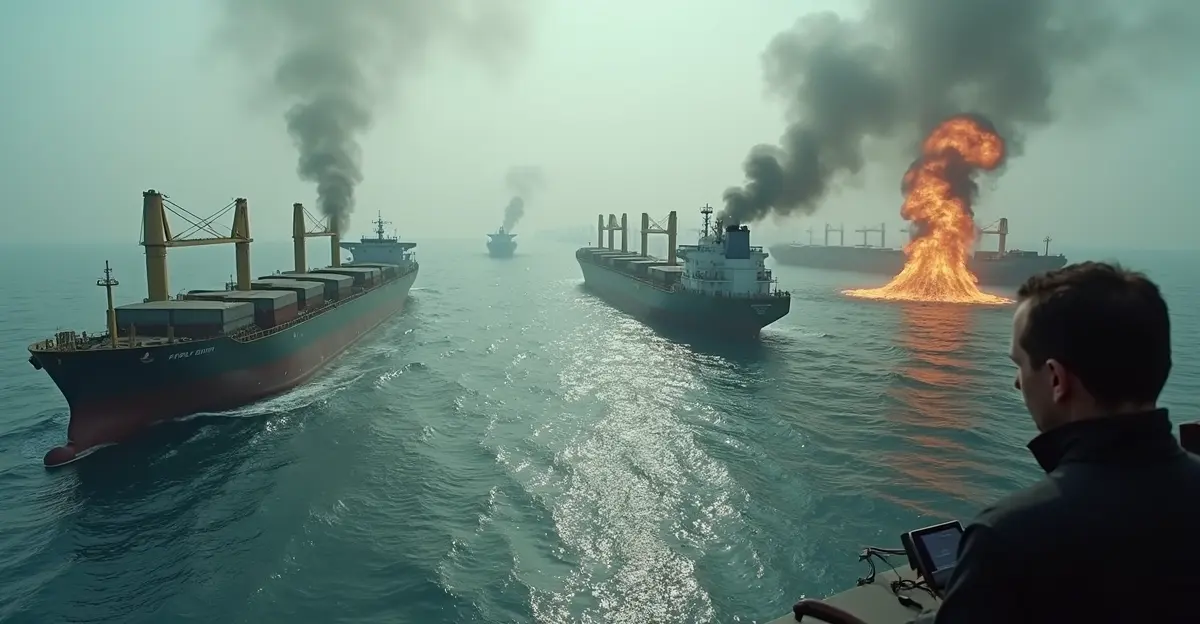
The closure paralyzed shipping through the Strait of Hormuz, forcing tankers to take longer routes around the Cape of Good Hope or the Cape of Horn. Freight rates for Very Large Crude Carriers (VLCCs) surged 750-900%, adding $3-5 per barrel to delivered oil costs for Asian refiners. Insurance premiums for vessels transiting the Persian Gulf skyrocketed, with war risk premiums reaching 5-10% of hull value.
Regional Impacts: Asia and Europe
Asia, which relies on the Strait for 65% of its oil imports, was hit hardest. China faced a severe energy squeeze, with its crude oil imports falling 25% in March. Japan and South Korea drew down strategic petroleum reserves at record rates. Europe, already reeling from the 2022 energy crisis, saw LNG prices spike 40% as alternative supplies from the U.S., Qatar, and Australia were redirected. The crisis accelerated the global energy transition 2026, with governments in both regions announcing accelerated timelines for renewable energy deployment and electric vehicle adoption.
Geopolitical Realignments and the FORGE Alliance
The crisis catalyzed the FORGE alliance — a 54-country coalition for critical minerals security with $30 billion in U.S. financing — aimed at reducing dependence on chokepoint-dependent supply chains. Saudi Arabia and the UAE pivoted toward Asia, signing long-term oil supply agreements with China and India at discounted prices. The United States, now a net oil exporter, saw its geopolitical leverage increase, but domestic gasoline prices still rose 30%, fueling political pressure on the Biden administration.
The Iran conflict 2026 economic impact has also triggered $400 billion in new global defense commitments, as nations race to secure energy infrastructure and maritime chokepoints.
Expert Perspectives
"This is a structural break, not a temporary spike," said a senior analyst at Wood Mackenzie. "The Strait of Hormuz closure is permanently altering global energy security calculus. Even if the strait reopens tomorrow, the trust is broken. Countries will accelerate diversification of supply routes and energy sources."
A World Bank economist noted: "The scale of this disruption dwarfs anything we've seen in modern history. The 1973 oil embargo removed about 4-5 mb/d. This is more than double that. The global economy is now far more interconnected, and the cascading effects are hitting everything from food prices to manufacturing."
FAQ
What caused the Strait of Hormuz closure in 2026?
The closure was triggered by joint Israeli-U.S. military strikes (Operation Epic Fury) against Iranian nuclear facilities on February 28, 2026, prompting Iran's IRGC to block the strait.
How much oil supply was lost?
Approximately 10.1 million barrels per day (mb/d) were removed from global markets, representing nearly 20% of global oil supply — the largest geopolitical disruption in history.
How high did oil prices go?
Brent crude surged from $72 per barrel to $118 per barrel by end of March 2026, a 63% monthly gain. Some analysts warned prices could reach $200 per barrel if the closure extended.
What is the FORGE alliance?
The FORGE alliance is a 54-country coalition formed in response to the crisis, focused on critical minerals security and reducing dependence on chokepoint-dependent supply chains, backed by $30 billion in U.S. financing.
How long is the closure expected to last?
As of mid-2026, the closure is ongoing. The Dallas Fed analyzed scenarios ranging from one quarter to three quarters, with the worst-case scenario projecting negative global growth through all of 2026.
Conclusion: A Permanent Shift in Global Energy Architecture
The Strait of Hormuz closure of 2026 represents a watershed moment for global energy markets. Beyond the immediate price spikes and GDP losses, the crisis is accelerating a permanent shift toward regionalized supply chains, diversified energy sources, and enhanced strategic reserves. The 2026 oil crisis long-term effects will likely include a faster global energy transition, increased investment in domestic energy production, and a fundamental rethinking of energy security in an era of great-power competition. As the world grapples with the aftermath, one thing is clear: the era of cheap, secure oil from the Persian Gulf is over.



Follow Discussion