


 Deutsch
 English
 Español
 Français
 Nederlands
 Português


 Share
Share




The February 2026 blockade of the Strait of Hormuz has triggered the largest energy supply disruption since the 1973 oil crisis, sending oil prices surging over 60% and more than doubling natural gas costs. As the world grapples with the cascading macroeconomic consequences—from inflation spikes and supply chain fragmentation to a UN warning that 32 million people could be pushed into poverty—this crisis is paradoxically accelerating investments in renewable energy and critical technology supply chains as nations race to reduce fossil fuel dependence.
What Happened: The Strait of Hormuz Blockade
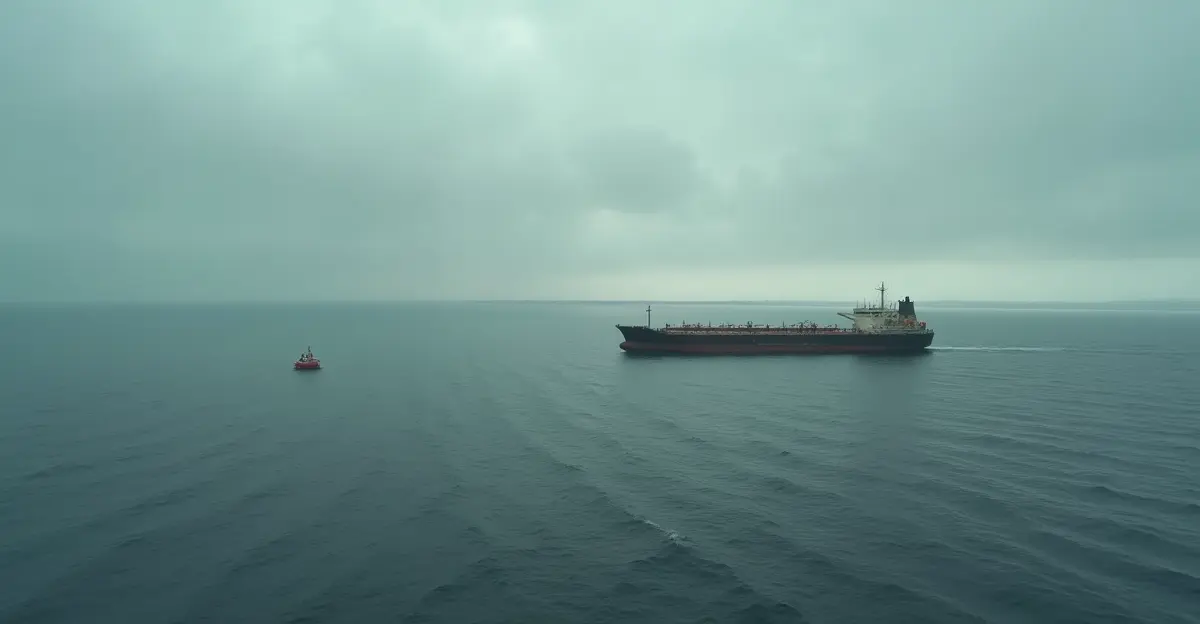
On February 28, 2026, coordinated U.S.-Israeli military strikes on Iran triggered a swift and devastating response. Tehran effectively sealed the Strait of Hormuz, the 33-kilometer-wide chokepoint through which roughly 20% of global oil and 25% of liquefied natural gas (LNG) flows daily. According to UNCTAD's rapid assessment, ship transits through the strait collapsed by approximately 95%—from 130 per day in February to just 6 in March. The Dallas Federal Reserve described the disruption as removing close to 20% of global oil supplies from the market, a shock three to five times larger than past geopolitical oil crises like the 1973 Yom Kippur War or the 1990 Gulf War.
By late March, Brent crude had surged roughly 65% from its pre-war baseline of around $70 per barrel, reaching $106–$119 per barrel depending on the day. The World Bank's Commodity Markets Outlook called it "the largest oil market shock in history." Global oil supply crashed by 10.1 million barrels per day (mb/d) in March alone, the largest monthly decline since the COVID-19 pandemic. The global energy crisis of 2026 was now in full swing.
Macroeconomic Fallout: Inflation, Trade, and Poverty
Inflation Spikes Across Continents
The energy price shock has fed directly into consumer prices worldwide. The European Commission estimates that EU gas prices have risen 70% and oil prices 50%, adding €13 billion to fossil fuel import costs. In Asia, the impact has been even more severe. Laos saw inflation jump from 6.2% to over 10% in just two months, while Pakistan's inflation rose to 10.9%. Several regional currencies have weakened sharply, and borrowing costs have increased across developing economies.
Trade and Growth Deceleration
Global merchandise trade growth is projected to decelerate from 4.7% in 2025 to between 1.5% and 2.5% in 2026, according to UNCTAD. Global economic growth is expected to slow from 2.9% to 2.6%—and the Dallas Fed warns that if the closure extends to two quarters, global real GDP growth could be lowered by an annualized 2.9 percentage points in Q2 2026 alone. A three-quarter closure could push oil prices to $132 per barrel, with negative growth impacts persisting through year-end. The UN Secretary-General warned that even in the best-case scenario—with immediate lifting of restrictions—global growth would still fall to 3.1% and inflation rise to 4.4%.
Human Cost: 32 Million Pushed into Poverty
The human toll is staggering. The UN projects that if disruptions continue through mid-2026, an estimated 32 million people could be pushed into poverty, 45 million more could face extreme hunger, and fertilizer shortages would reduce crop yields globally. The International Labour Organization (ILO) warns that if oil prices remain 50% above early-2026 averages, global working hours could fall by 1.1% in 2027—equivalent to 38 million full-time jobs lost—with real labour incomes declining by up to $3 trillion by 2027. The 2026 global recession risk is now a central concern for policymakers.
Supply Chain Fragmentation: Beyond Oil
While oil and gas dominate headlines, the crisis has exposed severe vulnerabilities in critical supply chains. The Strait of Hormuz is a vital artery for chemical precursors used in semiconductor manufacturing, including specialty gases, helium, and bromine. Bloomberg reports that the blockade is severely disrupting global chip supply chains, compounding existing shortages and increasing production costs for electronics and automotive manufacturers. South Korea's memory chip production has been hit by a bromine shortage, while Taiwan—which imports 70% of its crude oil and 30% of its LNG from the Middle East—faces energy vulnerabilities that threaten its dominant semiconductor industry.
The global semiconductor supply chain disruption has prompted major industry players to take extraordinary measures. SK Hynix is stockpiling critical materials, Global Foundries is directly intervening with suppliers, and TSMC is accelerating its Arizona fab construction. The crisis has also disrupted fertilizer supply chains, threatening global food security at a time when food prices were already elevated.
The Paradox: Accelerating the Energy Transition
Perhaps the most surprising outcome of the crisis is the dramatic acceleration of investments in renewable energy and energy independence. According to the International Energy Agency (IEA), as of April 2026, 150 countries have active policies to advance renewable and nuclear deployment, 130 have energy efficiency and electrification policies, and 32 have policies to incentivize supply chain resilience and diversification across critical minerals and clean energy technologies. Clean energy spending hit a record $2.2 trillion in 2025, and the crisis has only intensified that momentum.
The World Economic Forum notes that the conversation around energy has shifted from climate rhetoric to themes of security, affordability, and industrial competitiveness. Nations are racing to build strategic resilience against future geopolitical shocks. The EU is fast-tracking renewable projects, India is expanding its solar manufacturing capacity, and the U.S. is accelerating domestic battery production. The renewable energy investment boom 2026 is being driven as much by national security concerns as by climate goals.
Expert Perspectives
Fatih Birol, Executive Director of the IEA, called the Strait of Hormuz disruption "the largest supply disruption in the history of the global oil market." UN Secretary-General António Guterres demanded that navigational rights be restored immediately, saying, "Let the global economy breathe again." The Dallas Fed's modeling suggests that even a one-quarter closure will have lasting effects, with oil prices remaining elevated and growth suppressed for the rest of 2026.
"This is not just an energy crisis—it is a development crisis, a food crisis, and a potential financial crisis all rolled into one," said a senior UNCTAD official in the agency's second rapid assessment. The geopolitical risk analysis 2026 underscores that the world's dependence on a single maritime chokepoint represents a structural vulnerability that must be addressed.
FAQ: The Strait of Hormuz Crisis
What caused the Strait of Hormuz blockade in 2026?
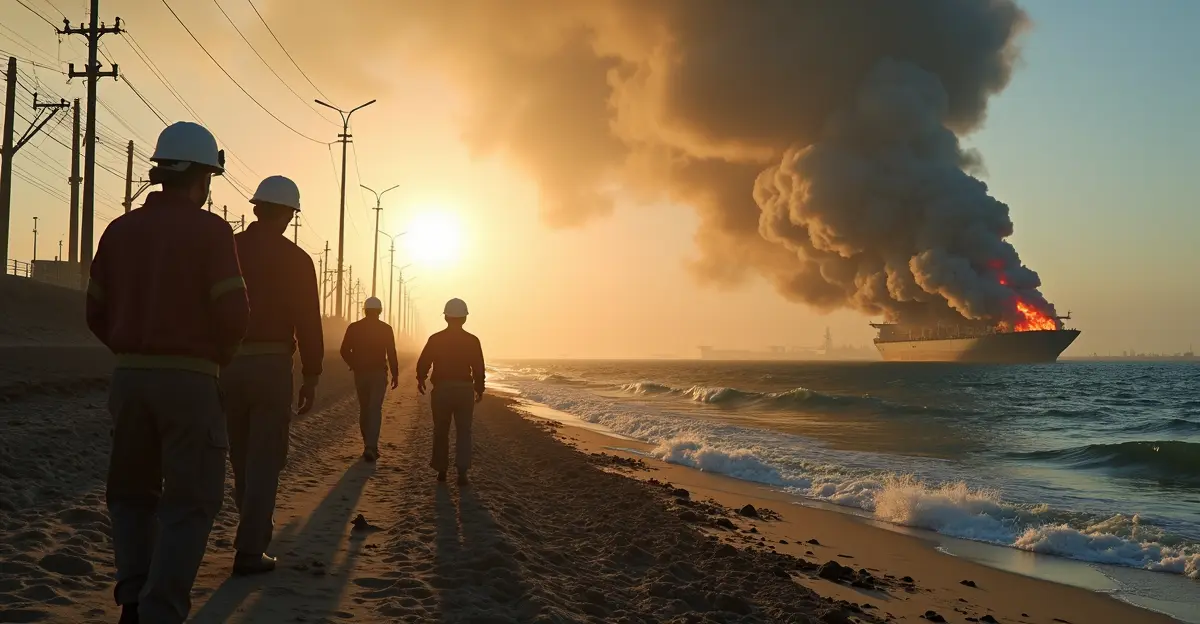
The blockade was triggered by U.S.-Israeli military strikes on Iran on February 28, 2026. In retaliation, Iran effectively sealed the strait by attacking tankers, laying mines, and restricting passage through its territorial waters.
How much have oil and gas prices increased?
Brent crude surged approximately 65% from ~$70/barrel to over $106–$119/barrel. Natural gas prices more than doubled in some markets, with EU gas prices rising 70%.
How many people could be pushed into poverty?
The UN estimates that 32 million people could be pushed into poverty if disruptions continue through mid-2026, with 45 million more facing extreme hunger.
Is the crisis accelerating renewable energy adoption?
Yes. The crisis has dramatically accelerated investments in renewables, energy efficiency, and supply chain diversification as nations seek to reduce dependence on fossil fuels and enhance energy security.
What is the outlook for the global economy?
The Dallas Fed projects that a one-quarter closure could lower global GDP growth by 2.9 percentage points in Q2 2026. The UN warns of a potential global recession if disruptions persist through year-end.
Conclusion: A Defining Geoeconomic Event
The Strait of Hormuz crisis of 2026 is the defining geoeconomic event of early 2026, with the Dallas Fed, UNCTAD, and the World Economic Forum all issuing urgent warnings of global recession. The crisis has laid bare the fragility of a world still tethered to a single maritime chokepoint for its energy needs. Yet it has also sparked an unprecedented push for energy independence, technological resilience, and supply chain diversification that could reshape the global economy for decades to come. As the future of global energy security hangs in the balance, the decisions made in the coming months will determine whether this crisis becomes a catalyst for transformation or a prelude to deeper instability.

Follow Discussion