


 Deutsch
 English
 Español
 Français
 Nederlands
 Português


 Share
Share




The de facto closure of the Strait of Hormuz in early 2026 has triggered the largest disruption to global oil markets in history, severing 25–30% of the world's oil and 20% of liquefied natural gas (LNG) flows. The World Bank projects a 24% energy price surge for 2026—the sharpest since Russia's 2022 invasion of Ukraine—while energy-importing economies across Asia, Europe, and Africa face cascading inflationary pressure, tighter financial conditions, and food security risks from disrupted fertilizer shipments. This crisis is forcing a structural reassessment of global energy transit chokepoints and accelerating diversification away from Persian Gulf hydrocarbons.
Background: The Strait of Hormuz and the 2026 Conflict
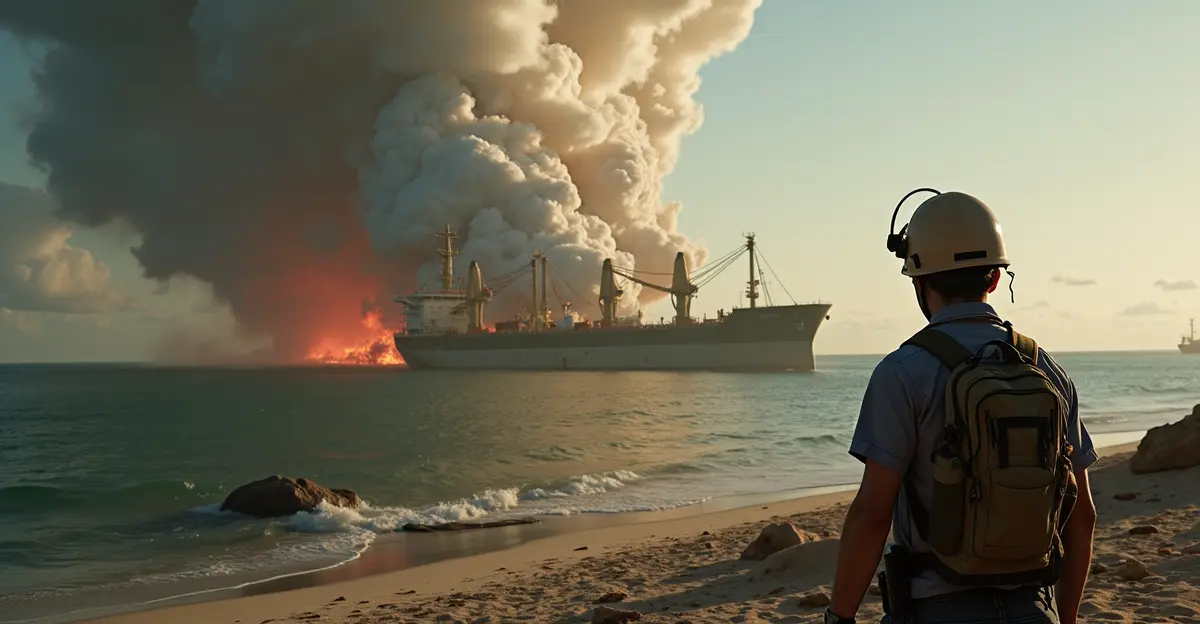
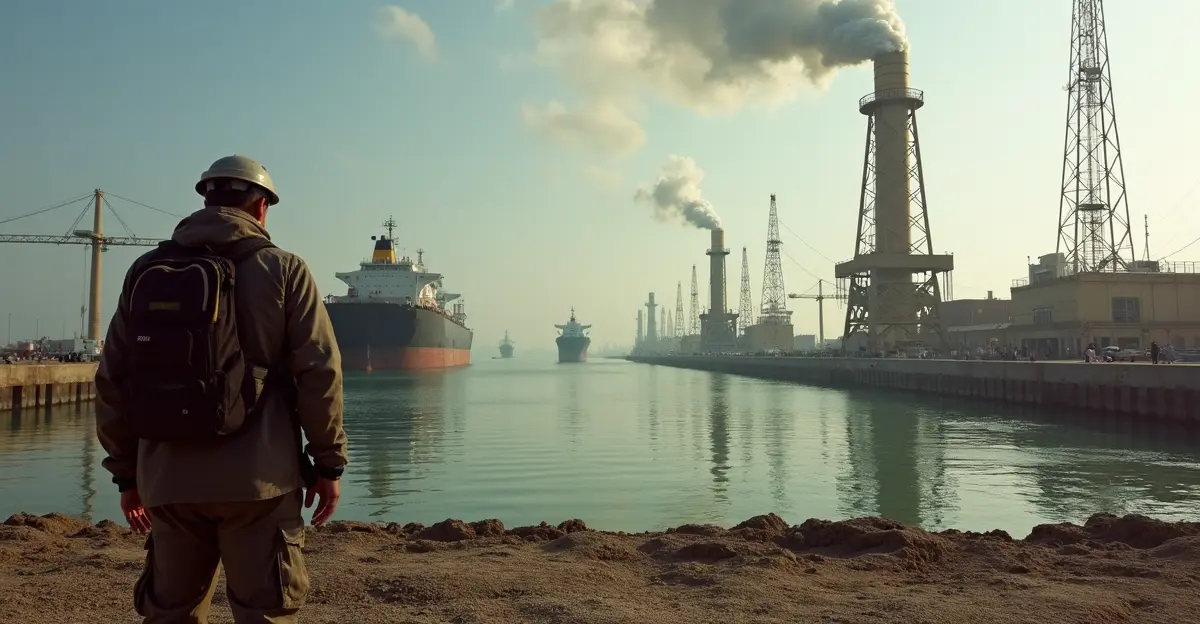
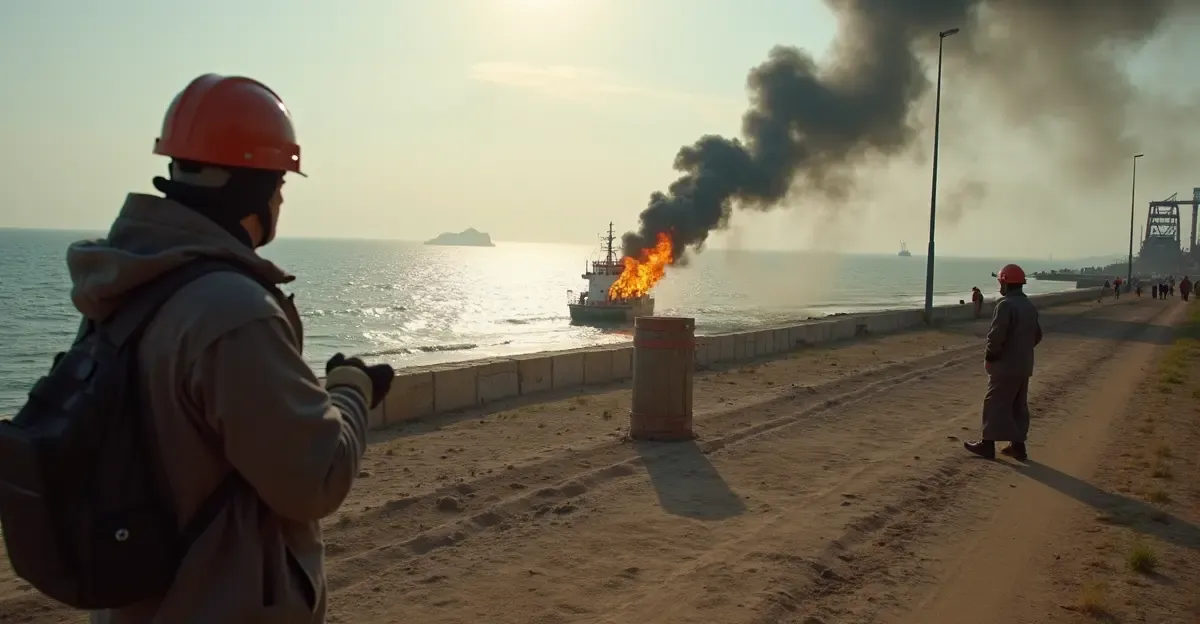
The Strait of Hormuz is a narrow waterway between Iran and Oman, connecting the Persian Gulf to the Gulf of Oman. It is the only sea passage from the Persian Gulf to the open ocean and one of the world's most strategically important chokepoints. In 2025, roughly 20% of global LNG and 25% of seaborne oil passed through the strait annually. On February 28, 2026, joint Israeli-U.S. strikes on Iran triggered a rapid escalation, leading to the effective closure of the strait. Iran mined the waterway and attacked shipping, while Qatar's Ras Laffan LNG facility—the world's largest—was hit by drone strikes on March 18–19, halting production. By March 31, Brent crude had surged 64% in a single month, and the IEA confirmed the largest oil supply disruption in history, with cumulative losses exceeding 1 billion barrels and over 14 million barrels per day (mb/d) of production shut in.
Global Energy Market Shock
Oil: Record Supply Loss and Price Spikes
The World Bank's April 2026 Commodity Markets Outlook reports that global oil supply crashed by 10.1 mb/d in March—the largest monthly decline on record. Brent crude is forecast to average $86/barrel in 2026, up from $69 in 2025, but the Dallas Federal Reserve warns that a two-quarter closure could push prices to $115/barrel, while a three-quarter closure could see $132/barrel. The market faces a 3.7 mb/d deficit in Q2 2026, with demand destruction already emerging as global consumption fell 0.8 mb/d in March. The IEA member countries agreed on March 11 to the largest-ever coordinated release of emergency oil stocks—400 million barrels—but analysts warn this is a temporary measure.
LNG: A Harder Hit Than Oil
LNG markets have been hit even harder. Approximately 20% of global LNG flows through the Strait of Hormuz, primarily from Qatar's Ras Laffan complex. The attack on Ras Laffan wiped out about 25% of Qatar's projected 2026 LNG production (roughly 20 million tonnes per annum). European TTF gas prices surged over 30% in a single day, while Asian spot LNG prices hit $23.40/MMBtu. Unlike oil, LNG requires specialized tankers and lacks pipeline alternatives, making the disruption more severe. Shell and TotalEnergies have invoked force majeure on Qatari cargoes, and restarting LNG production is expected to take weeks due to the complexity of cooling gas. The global LNG supply chain faces unprecedented contractual disputes, with force majeure and hardship clauses being tested in arbitration.
Fertilizer Crisis and Food Security Threats
The disruption has cascaded into fertilizer markets, with 34% of globally traded urea and 23% of traded ammonia passing through the Strait of Hormuz. According to Yara International CEO Svein Tore Holsether, up to 10 billion meals per week could be lost due to reduced fertilizer availability. Urea prices jumped to around $700 per metric ton from $400–490 pre-war, while ammonia and potash prices also surged. The FAO warns that nearly 1.07 billion people rely on food produced from imported nitrogen fertilizers, and not applying nitrogen could reduce crop yields by 50% in the first season. The World Bank projects fertilizer prices will rise 31% in 2026, threatening food security in developing economies across Asia and Africa. China has also restricted fertilizer exports, compounding the shortage. The food security risks from energy disruptions are now a central concern for policymakers.
Macroeconomic Fallout: Inflation, Growth, and Financial Stability
The IMF's April 2026 World Economic Outlook warns that global growth could fall to 2.0% under a severe scenario, with oil at $125/barrel and inflation above 6%. The World Bank projects that inflation in developing economies could average 5.1% in 2026, with growth revised downward to 3.6%—0.4 percentage points lower than January projections. Energy-importing economies in Asia are the most exposed: the Philippines has declared a national energy emergency, while Japan, South Korea, and China are drawing on strategic stockpiles sufficient for 100+ days. Europe, having learned from the 2022 Ukraine crisis, appears more resilient but still faces higher gas prices. The U.S. benefits from strong domestic production but still sees rising consumer prices. The Dallas Fed estimates that a one-quarter closure would reduce annualized global GDP growth by 2.9 percentage points, with economic growth remaining negative through year-end 2026 even after reopening. The macroeconomic impact of energy price shocks is being closely monitored by central banks worldwide.
Strategic Reassessment: Accelerating the Energy Transition
The crisis is reshaping the strategic calculus behind renewable energy investment, nuclear capacity builds, and domestic energy independence programs. IEA Executive Director Fatih Birol stated that the crisis will likely drive more investment into clean energy as a way to enhance energy security while reducing emissions. Asia, which receives 80% of the strait's oil and LNG, is experiencing what analysts call "Asia's Ukraine moment." South Korea has committed to 100 GW of renewables by 2030, calling the crisis a "significant turning point." The UK now requires heat pumps and solar panels in new homes, while Poland has invested more in renewables and nuclear. Spain and other European countries with strong renewable investments have experienced lower gas prices despite the conflict. According to Stanford professor Mark Z. Jacobson, countries are increasingly recognizing the vulnerabilities of fossil fuel dependence and turning to domestic renewable sources. However, the U.S. government under President Trump shows no interest in transitioning, though consumer interest in EVs and solar is rising. The renewable energy investment trends are expected to accelerate as energy security concerns mount.
Expert Perspectives
"The Strait of Hormuz disruption is the single most important factor for easing pressure on energy supplies, prices, and the global economy," said the IEA in a March 2026 statement. "This crisis is a wake-up call for the world. It shows that fossil fuel dependence is not just an environmental issue but a geopolitical vulnerability," added Mark Z. Jacobson of Stanford University. Yara CEO Svein Tore Holsether warned: "We are facing a potential global food security crisis. The fertilizer supply chain is broken, and the consequences will be felt for years."
FAQ
What caused the Strait of Hormuz closure in 2026?
The closure followed joint Israeli-U.S. strikes on Iran on February 28, 2026, which escalated into a broader conflict. Iran mined the strait and attacked shipping, while Qatar's Ras Laffan LNG facility was hit by drone strikes on March 18–19.
How much oil and LNG flows through the Strait of Hormuz?
Approximately 25–30% of global oil and 20% of global LNG transits the strait annually, making it the world's most important energy chokepoint.
What is the economic impact of the crisis?
The World Bank projects a 24% energy price surge in 2026, with Brent oil averaging $86/barrel. The IMF warns global growth could fall to 2.0% under a severe scenario. Fertilizer prices are expected to rise 31%, threatening food security.
How are countries responding to the crisis?
IEA countries released 400 million barrels of emergency oil stocks. Asian nations are drawing on strategic reserves and accelerating renewable energy investments. The EU is expanding LNG imports from the U.S. and Africa, while some countries are imposing fuel rationing.
Will the crisis accelerate the energy transition?
Yes, many analysts believe the crisis will accelerate investment in renewables, nuclear, and domestic energy independence as countries seek to reduce their vulnerability to geopolitical shocks. However, near-term fossil fuel subsidies and coal use may also rise temporarily.
Conclusion and Future Outlook
The Strait of Hormuz crisis represents a watershed moment for global energy security. Even if a ceasefire holds—an April 8, 2026 ceasefire was announced but LNG tanker traffic has not sustainably resumed—the structural vulnerabilities exposed by the disruption will have lasting consequences. The World Bank's worst-case scenario sees Brent averaging $115/barrel, while the Dallas Fed warns that GDP would lag pre-crisis levels for years. The crisis is accelerating a global reassessment of energy transit chokepoints, with countries investing in domestic renewables, nuclear, and strategic reserves. The future of global energy security will depend on how quickly nations can diversify away from Persian Gulf hydrocarbons and build resilient, low-carbon energy systems. The coming months will be critical in determining whether this crisis becomes a catalyst for lasting change or a temporary shock that fades once the strait reopens.



Follow Discussion