


 Deutsch
 English
 Español
 Français
 Nederlands
 Português


 Share
Share




The February 2026 military conflict in the Middle East triggered the largest oil supply disruption in history, removing nearly 20% of global supply and pushing Brent crude above $100 per barrel. This analysis examines the cascading macroeconomic impacts — from the Dallas Fed's estimate of a 2.9 percentage point hit to global GDP growth, to surging fertilizer prices threatening food security for up to 45 million additional people, and the unprecedented emergency measures governments are deploying, including remote work mandates and building temperature restrictions. The crisis marks a structural break in energy security assumptions and is accelerating diversification away from chokepoint-dependent supply chains.
Background: The Strait of Hormuz Crisis
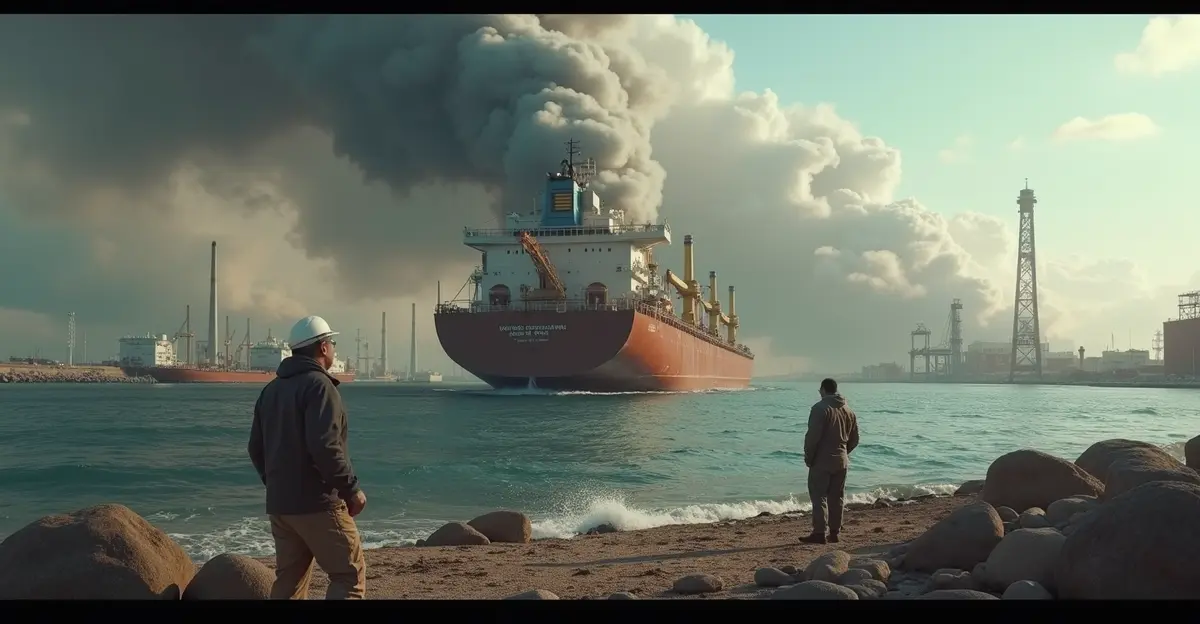
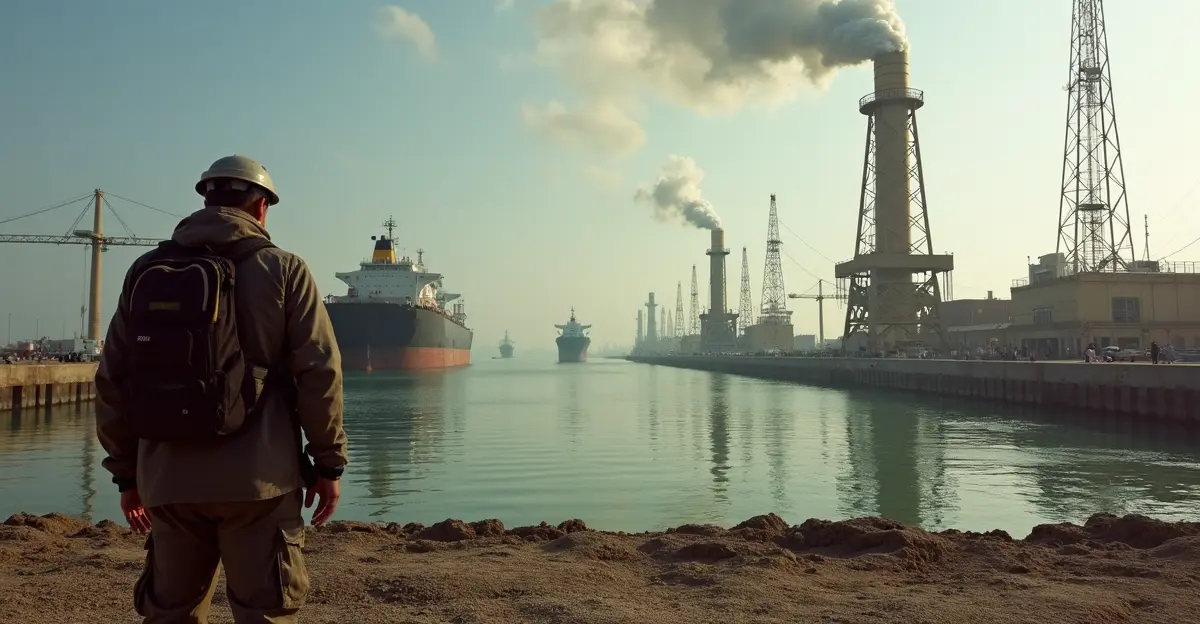
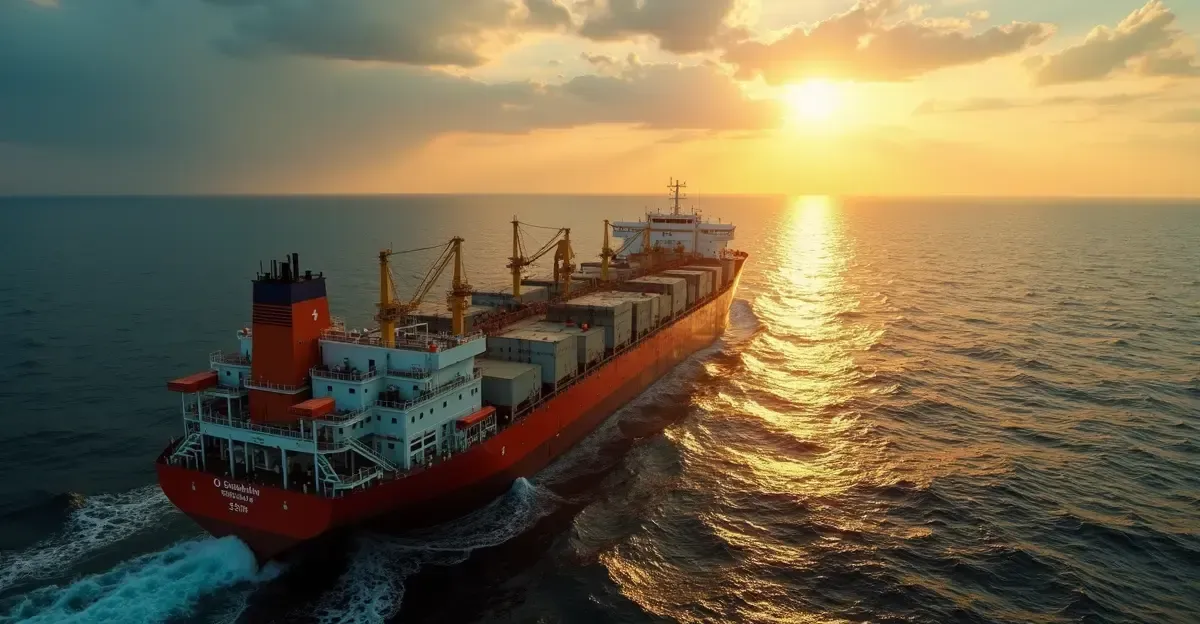
The Strait of Hormuz, a narrow waterway between Iran and Oman, handles approximately 25% of the world's seaborne oil and 20% of liquefied natural gas (LNG) trade. On February 28, 2026, the United States and Israel launched Operation Epic Fury — a coordinated air war against Iran that killed Supreme Leader Ali Khamenei and dozens of officials. Iran retaliated by effectively closing the strait, issuing passage warnings, attacking merchant ships, and laying sea mines. Within days, 138 container ships carrying 470,000 TEUs were trapped in the Persian Gulf, and oil prices surged from $61 per barrel at the start of the year to $118 by the end of the first quarter — the largest inflation-adjusted quarterly increase since 1988.
The 2026 Iran war has displaced millions and caused thousands of casualties across Iran, Lebanon, Israel, and Gulf states. A temporary ceasefire on April 7-8 failed to hold, and despite Iran briefly reopening the strait, the crisis continues to disrupt global energy supplies. The U.S. Energy Information Administration (EIA) estimates that Iraq, Saudi Arabia, Kuwait, UAE, Qatar, and Bahrain collectively shut in 7.5 million barrels per day (b/d) of crude oil production in March, rising to 9.1 million b/d in April.
Macroeconomic Fallout: GDP, Inflation, and Stagflation Risks
Global Growth Takes a Hit
The Dallas Federal Reserve's analysis, published March 20, 2026, provides the most detailed modeling of the economic impact. Using a formal economic model, researchers estimate that a one-quarter closure of the strait would raise WTI oil prices to approximately $98 per barrel and reduce annualized global real GDP growth by 2.9 percentage points in Q2 2026. If the closure extends to two quarters, oil prices could reach $115 per barrel, with growth only recovering by Q4 2026. A three-quarter closure could push prices to $132 per barrel with negative growth persisting through year-end 2026.
The International Monetary Fund (IMF), in its April 2026 World Economic Outlook, presents three scenarios: a reference forecast with short-lived conflict showing 3.1% growth and 4.4% inflation; an adverse scenario with 2.5% growth and 5.4% inflation; and a severe scenario with prolonged disruptions showing 2% growth and over 6% inflation — a close call for global recession. IMF chief economist Pierre-Olivier Gourinchas warned that the adverse scenario already looks increasingly likely, describing the global economy as being 'in the shadow of war.'
Energy Price Shock
The World Bank's Commodity Markets Outlook, released April 28, 2026, warns that the Middle East war will trigger the biggest energy price surge in four years. Energy prices are projected to jump 24% in 2026, with overall commodity prices rising 16% — the highest since Russia's 2022 invasion of Ukraine. Brent crude oil is forecast to average $86 per barrel in 2026, up from $69 in 2025. In a worst-case escalation scenario, Brent could average $115 per barrel, pushing developing-economy inflation to 5.8%.
Retail fuel prices have already spiked dramatically. The U.S. average retail gasoline price reached $3.99 per gallon in late March, with diesel peaking above $5.40 per gallon. The EIA forecasts retail gasoline will peak near $4.30 per gallon in April, while diesel exceeds $5.80 per gallon. The Brent-WTI spread widened significantly, peaking at $25 per barrel, reflecting the disproportionate impact on globally-traded crude.
Food Security Crisis: Fertilizer Prices Surge
The disruption is cascading from energy markets into food systems. The Persian Gulf accounts for approximately 40% of global urea trade and 44% of seaborne sulfur — critical inputs for fertilizer production. The UN Conference on Trade and Development (UNCTAD) reports that shipping through the strait has collapsed by over 95%, with daily vessel transits dropping from 103 to single digits. The region accounts for 13% of global nitrogen and 9% of phosphate fertilizer exports, and roughly one-third of global seaborne fertilizers pass through the strait.
According to farmdoc daily at the University of Illinois, under a contested transit scenario, urea prices could peak at $784 per short ton, with prices remaining above $700 through November 2026 — a 56% increase above pre-crisis levels. The World Bank warns that fertilizer prices are expected to rise 31%, threatening food security for up to 45 million additional people, particularly in import-dependent developing countries in Asia and Africa. The global food security risks are compounded by the fact that the disruption coincides with spring planting season in the Northern Hemisphere.
Unprecedented Government Emergency Measures
Governments worldwide have deployed emergency measures unseen since the 1970s energy crisis. The International Energy Agency (IEA) issued a 10-point emergency plan on March 20, 2026, titled 'Sheltering from Oil Shocks,' pivoting from supply management to aggressive demand-side intervention. Key measures include:
- A three-day-per-week work-from-home minimum for eligible workers
- Mandatory highway speed limit reductions of 10 km/h
- Car-free Sundays and number-plate rotation schemes for city access
- A 40% reduction in non-essential business air travel
- Diverting LPG from transport to essential uses like cooking
The IEA's policy tracker shows countries implementing these measures with varying intensity. Australia launched a voluntary fuel reduction campaign; India capped industrial natural gas usage; Korea mandated odd-even no-driving days for public sector workers; Malaysia implemented remote work for civil servants; Pakistan adopted a 4-day work week with 50% remote work; and the Philippines followed suit with a 4-day work week for public officials. The IEA also launched its largest-ever release of emergency oil stocks, aiming to cut demand by 2.7 million barrels per day within four months.
The IEA emergency oil stock release has created winners in communication technology firms like Zoom and Microsoft Teams, while energy giants face potential windfall taxes. The transportation and aviation sectors, including major airlines, are most vulnerable to the 'fly less' proposals.
Structural Implications: The End of Chokepoint Dependency
The crisis represents a structural break in energy security assumptions. Unlike previous disruptions — the 1973 Arab oil embargo or the 1990 Gulf War — this event is three to five times larger in scale, according to the Dallas Fed. About 80% of Gulf oil exports are shipped to Asia, making Asian economies particularly vulnerable. The crisis is accelerating diversification away from chokepoint-dependent supply chains, with renewed investment in alternative energy routes, strategic petroleum reserves, and domestic energy production.
The IMF warns that geopolitical fragmentation, trade restrictions, and weakened international cooperation pose long-term risks. The energy security policy shift 2026 is likely to reshape global trade patterns for years to come, as countries prioritize supply chain resilience over cost efficiency.
Expert Perspectives
World Bank Chief Economist Indermit Gill stated: 'War is development in reverse.' The World Bank's analysis highlights that inflation in developing economies could reach 5.1%, dampening growth to 3.6%. Reserve Bank of Australia Deputy Governor Andrew Hauser described the situation as a 'central banker's nightmare,' warning of stagflation with inflation up and activity down.
The IMF recommends central banks focus on anchoring inflation expectations, while fiscal policy should employ narrowly targeted, temporary support rather than broad subsidies — lessons drawn from the 2022 energy crisis.
FAQ
What caused the 2026 Strait of Hormuz crisis?
The crisis began on February 28, 2026, when the U.S. and Israel launched airstrikes against Iran (Operation Epic Fury), killing Supreme Leader Ali Khamenei. Iran retaliated by blocking the Strait of Hormuz, a critical maritime chokepoint for global oil and LNG trade.
How much oil supply has been disrupted?
Approximately 7.5 to 9.1 million barrels per day of crude oil production have been shut in, representing nearly 20% of global supply — the largest disruption in history, three to five times larger than the 1973 Arab oil embargo.
What is the impact on global GDP?
The Dallas Federal Reserve estimates a 2.9 percentage point reduction in annualized global real GDP growth in Q2 2026 for a one-quarter closure. The IMF's severe scenario projects global growth slowing to 2% with inflation exceeding 6%.
How are governments responding?
Governments are implementing emergency demand-side measures including remote work mandates, speed limit reductions, car-free days, and the largest-ever release of emergency oil stocks. The IEA's 10-point plan aims to cut oil demand by 2.7 million bpd within four months.
What does this mean for food security?
Fertilizer prices are expected to rise 31%, threatening food security for up to 45 million additional people, as the Persian Gulf region is a major exporter of nitrogen and phosphate fertilizers and the disruption coincides with spring planting season.
Conclusion and Future Outlook
The Strait of Hormuz crisis of 2026 is the defining economic event of the year, with consequences that will reshape energy policy, trade patterns, and global economic governance for years to come. The World Bank's largest energy price surge in four years, combined with the IMF's warning of a global economy 'in the shadow of war,' underscores the severity of the situation. As the crisis continues, the world is witnessing an accelerated transition away from chokepoint-dependent supply chains toward more resilient and diversified energy systems. The future of global energy trade will never be the same.

Follow Discussion