


 Deutsch
 English
 Español
 Français
 Nederlands
 Português


 Share
Share




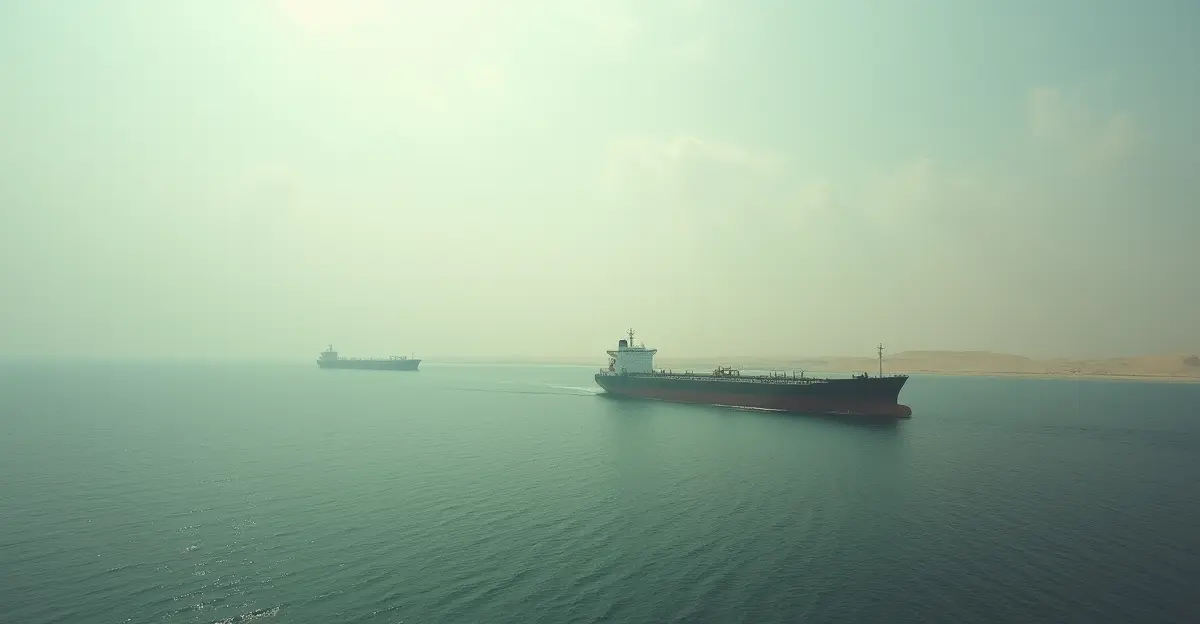
The Strait of Hormuz, the world's most critical energy chokepoint, experienced a near-total collapse in maritime transit during March 2026, with daily ship movements plummeting by approximately 95% following the outbreak of direct U.S.-Israeli military conflict with Iran. By late March, average daily transits had fallen from 129 in early February to just six, effectively severing a corridor that normally carries about 20% of global petroleum and a significant share of liquefied natural gas (LNG) trade. Brent crude oil surged past $100 per barrel on March 8 for the first time since 2022, peaking at $126, while the global oil supply lost over 10 million barrels per day. The crisis has triggered cascading effects across shipping costs, food security in developing nations, and a projected deceleration of global trade growth from 4.7% to as low as 1.5%, according to the United Nations Conference on Trade and Development (UNCTAD).
How the Strait of Hormuz Closure Unfolded
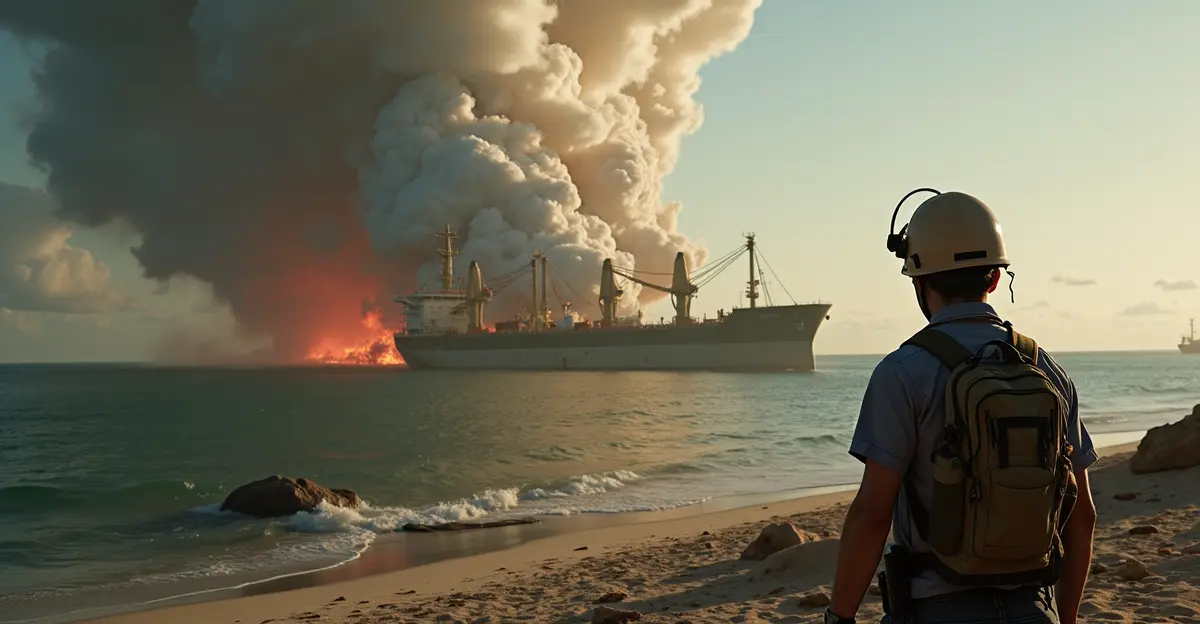
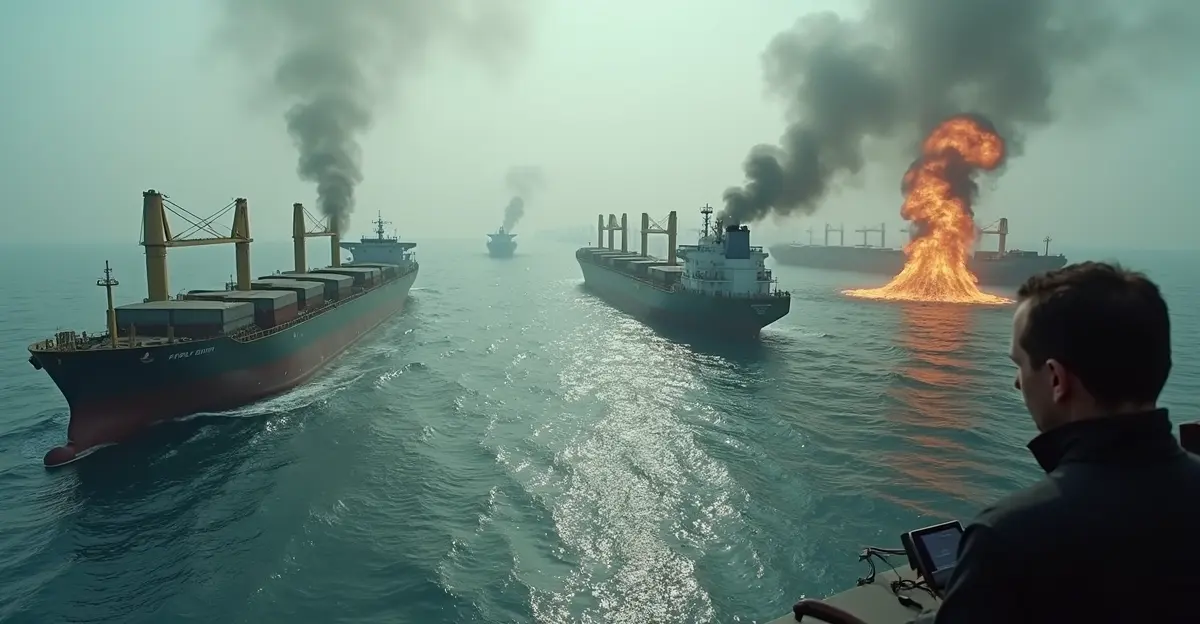
The crisis began on February 28, 2026, when the United States and Israel launched airstrikes on Iranian nuclear and military sites under Operation Epic Fury. In retaliation, Iran's Islamic Revolutionary Guard Corps (IRGC) issued warnings forbidding passage through the strait, boarded and attacked merchant ships, and laid sea mines in the narrow 34-kilometer-wide waterway. By March 2, over 138 container ships carrying approximately 470,000 TEUs were trapped in the Persian Gulf, with major carriers including Maersk, MSC, and CMA CGM declaring force majeure and rerouting vessels around the Cape of Good Hope — adding 10 to 14 days per voyage.
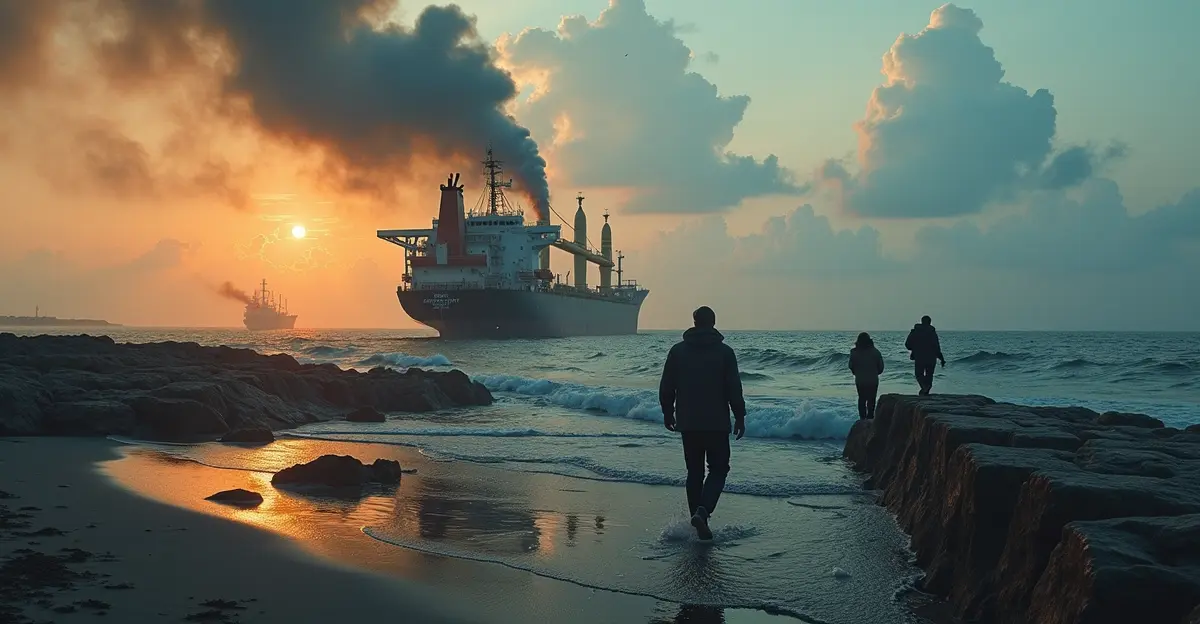
The 2026 Iran-US conflict escalated rapidly. On March 27, the IRGC announced the strait was closed to any vessel traveling to or from ports of the U.S., Israel, and their allies. The International Maritime Organization reported on April 21 that about 20,000 mariners and 2,000 ships remained stranded in the Persian Gulf. A temporary ceasefire on April 8 allowed partial reopening, but Iran began charging tolls exceeding $1 million per vessel. When the Islamabad Talks failed, the U.S. Navy imposed its own blockade on Iranian ports from April 13, creating what The Guardian described as a "dual blockade."
Global Oil Supply Shock and Price Spiral
The U.S. Energy Information Administration (EIA) estimated that 7.5 million barrels per day (b/d) of crude oil production was shut in across Iraq, Saudi Arabia, Kuwait, UAE, Qatar, and Bahrain in March, rising to 9.1 million b/d in April. The International Energy Agency (IEA) called it the largest supply disruption in oil market history, surpassing the 1970s energy crisis and the loss of Russian gas combined.
Brent crude averaged $103 per barrel in March and was forecast to peak at $115 in the second quarter of 2026. Prediction markets placed a 51.5% probability on West Texas Intermediate reaching $110 by end of May, with scenarios extending to $130–$150 if disruption persisted. The largest-ever monthly increase in oil prices occurred in March 2026. Retail gasoline in the U.S. was forecast to peak near $4.30 per gallon in April, while diesel exceeded $5.80 per gallon.
Shipping and Freight Costs Explode
War-risk premiums for very large crude carriers (VLCCs) jumped from approximately 0.125% of hull value to as high as 5%, equivalent to roughly $5 million per transit. The Baltic Dirty Tanker Index surged to 215 and the Clean Tanker Index to 188. Container lines imposed emergency surcharges of up to $3,000 per FEU. Transpacific container rates rose approximately 40%, while Asia–North Europe rates climbed about 20%. The global shipping crisis 2026 compounded existing supply chain pressures from the Red Sea disruptions.
Food Security Crisis Looms for Developing Nations
The disruption has severely impacted global food systems by choking the flow of fuel and fertilizers. The Strait of Hormuz region accounts for 13% of global nitrogen fertilizer exports and 9% of phosphate nutrients, with roughly one-third of global seaborne fertilizer volumes passing through the chokepoint. FAO Chief Economist Máximo Torero warned that a fragile ceasefire had not restored shipping confidence and that the window to prevent a food crisis was closing.
An additional 9.1 million people in Asia could face acute food insecurity, according to Amnesty International analysis. Bangladesh, Sri Lanka, Pakistan, Nepal, and the Philippines are at extreme risk from fertilizer shortages disrupting rice harvests. Sudan faces immediate impacts due to its reliance on Asian and Gulf supply chains. Around 3.4 billion people in 46 developing countries already spend more on debt servicing than on health or education, leaving virtually no fiscal buffer to absorb these shocks.
The food security risks 2026 are compounded by higher transport costs — freight rates rose up to 90% — and surging insurance premiums. UNCTAD warned that persistently high fertilizer costs could affect planting decisions and crop yields, particularly in import-dependent developing economies with limited fiscal capacity.
Global Trade Growth Deceleration
UNCTAD's Trade and Development Foresights 2026 report projected world merchandise trade growth would fall from 4.7% in 2025 to between 1.5% and 2.5% in 2026 — the lowest since 2023. The slowdown is driven by the geopolitical shock, trade uncertainty weighing on supply chains and investment, and financial volatility. While AI-related trade in semiconductors remained robust, broader momentum was slowing sharply.
Developing economies are disproportionately affected, with currencies weakening up to 2.9% in Africa, equities falling, and financing conditions tightening. The World Bank and IMF have been urged to provide emergency financing and debt relief to prevent a cascading crisis across energy, trade, and finance.
Alternative Routes and the Acceleration of Renewable Energy
The crisis has exposed the extreme vulnerability of relying on a single maritime chokepoint. Existing bypass pipelines — Saudi Arabia's East-West pipeline (capacity up to 7 million b/d) and the UAE's Habshan-Fujairah pipeline (1.5–1.8 million b/d) — provided only 3.5 to 5.5 million barrels per day of combined capacity, far short of the 20 million barrels that normally transited Hormuz. Both pipelines were also attacked by Iran during the conflict.
IEA Executive Director Fatih Birol warned that the global economy was being "held hostage" by the strait's vulnerability. Experts say Iran's gambit may backfire long-term as Gulf states seek permanent alternative routes, with new pipeline projects being explored and transnational infrastructure investments accelerated. The renewable energy investment surge 2026 has gained significant momentum, with governments worldwide accelerating electrification, solar and wind deployment, and energy storage to reduce dependence on Middle East energy supplies.
Corporate beneficiaries of the crisis include U.S. LNG exporters like Cheniere Energy, as well as ExxonMobil and Equinor, while Sinopec, Korea Gas, and TotalEnergies face notable downside risks. The IEA released a record 400 million barrels from emergency stockpiles to stabilize markets.
Expert Perspectives
"This is the largest disruption to world energy supply since the 1970s energy crisis and the largest in the history of the world oil market," the IEA stated in its April assessment. UNCTAD Secretary-General Rebeca Grynspan called for "more predictable trade conditions, financial safeguards for developing economies, and increased investment in clean energy to build resilience against future geopolitical and energy shocks."
FAO Chief Economist Máximo Torero added: "Higher oil prices may also divert crops toward biofuel production, compounding food availability challenges. We urge governments to avoid trade restrictions, support vulnerable households, and pursue diplomatic solutions to avert what could become a perfect storm."
Frequently Asked Questions
What caused the Strait of Hormuz closure in 2026?
The closure was triggered by U.S. and Israeli airstrikes on Iranian nuclear and military sites on February 28, 2026. Iran retaliated by blocking the strait, boarding ships, laying mines, and issuing warnings that effectively halted commercial transit through the waterway.
How much oil normally passes through the Strait of Hormuz?
Approximately 20 million barrels of oil per day — about 20% of global petroleum consumption — along with roughly 20% of global LNG trade, transited the strait before the crisis.
What impact has the crisis had on oil prices?
Brent crude surged past $100 per barrel on March 8, 2026, and peaked at $126. The EIA forecast Brent averaging $103 in March and peaking at $115 in Q2 2026. It was the largest monthly increase in oil prices in history.
How has the crisis affected global trade growth?
UNCTAD projected global merchandise trade growth would slow from 4.7% in 2025 to between 1.5% and 2.5% in 2026 — the lowest since 2023 — driven by the geopolitical shock, supply chain disruptions, and financial volatility.
What are the long-term implications for energy security?
The crisis is accelerating investment in alternative pipeline routes, renewable energy, and energy storage. Analysts expect a structural shift away from dependence on Middle East chokepoints, with Gulf states seeking permanent bypass options and global renewable energy deployment receiving unprecedented policy support.
Conclusion: A Post-Hormuz World Order?
The 2026 Strait of Hormuz crisis has fundamentally altered the architecture of global energy security. Even if the strait fully reopens — which remains uncertain as of mid-2026 — the psychological and strategic damage is done. Energy-dependent economies now understand that a single chokepoint can be weaponized, and the race to diversify supply routes, accelerate renewable deployment, and build strategic reserves will define the next decade of global energy policy. The post-Hormuz world order, whether it arrives in 2026 or 2027, will be characterized by fragmentation, resilience-building, and a permanent premium on energy security.
Sources
- UNCTAD Rapid Assessment, April 1, 2026
- U.S. Energy Information Administration, April 2026 Short-Term Energy Outlook
- International Energy Agency, April 2026 statements
- FAO Chief Economist warnings, April 2026
- Wikipedia: 2026 Strait of Hormuz crisis
- Seavantage: Strait of Hormuz Crisis Timeline
- Foreign Policy Journal, May 13, 2026
- Amnesty International analysis, May 2026
- CNBC, April 23, 2026
- Global Trade Review, April 2026


Follow Discussion