


 Deutsch
 English
 Español
 Français
 Nederlands
 Português


 Share
Share




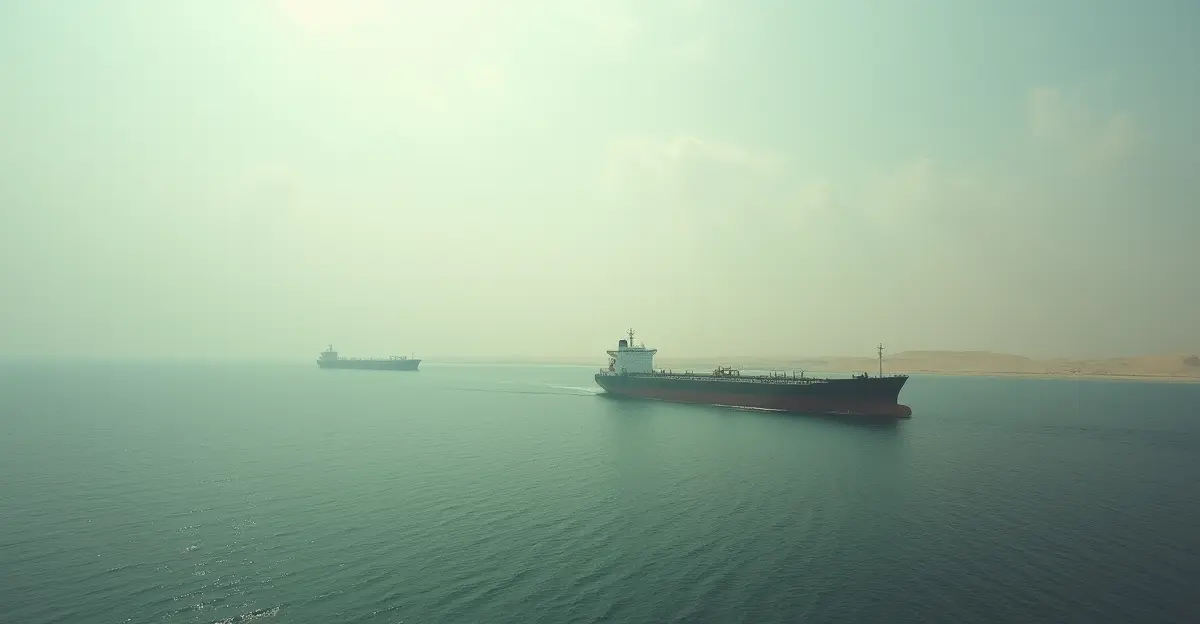
The Strait of Hormuz, the world's most critical maritime chokepoint, has experienced a catastrophic collapse in shipping traffic of approximately 95% as of early 2026, triggering what experts are calling the largest energy supply disruption in history. Ship transits through the 21-mile-wide strait plummeted from 130 vessels per day in February to just six in March 2026, cutting off roughly 20 million barrels of daily oil transit—about 20% of global consumption—and more than doubling natural gas prices in Asia and Europe. The United Nations Conference on Trade and Development (UNCTAD) now projects world merchandise trade growth will decelerate from 4.7% in 2025 to as low as 1.5% in 2026, while the International Labour Organization (ILO) warns that up to 38 million full-time jobs could be lost by 2027 if oil prices remain elevated. This article analyzes the cascading effects on global supply chains, energy security, and financial stability, and assesses whether the crisis could trigger a systemic economic downturn comparable to the 1973 oil shock.
Context: The Strait of Hormuz and the 2026 Crisis
The Strait of Hormuz connects the Persian Gulf with the Gulf of Oman and the Indian Ocean, serving as a vital artery for global energy trade. Before the crisis, approximately 20 million barrels of oil (20-25% of global seaborne oil) and 20% of global LNG trade passed through this narrow waterway daily. Five nations—Saudi Arabia (37.2% of flows), Iraq (22.8%), UAE (12.9%), Iran, and Kuwait—accounted for 93.6% of oil transits, with Asia absorbing 89.2% of exports. China alone received 37.7% of the oil, followed by India (14.7%) and South Korea (12%).
The crisis began on February 28, 2026, when Iran's Islamic Revolutionary Guard Corps (IRGC) effectively closed the strait following U.S. and Israeli military strikes. Iran subsequently established the Persian Gulf Strait Authority (PGSA) on May 5, 2026, to regulate transit. The disruption is unique in being a dual-sided blockade enforced by both the United States and Iran—an unprecedented configuration that made war-risk insurance prohibitively expensive. Major carriers including Maersk, CMA CGM, Hapag-Lloyd, MSC, and COSCO suspended transits, rerouting vessels around the Cape of Good Hope, adding 10-14 days to journeys. The 2025 global trade outlook had been relatively optimistic, but the Hormuz crisis has reversed those gains.
Energy Market Shock: Oil and Gas Prices Surge
Oil: The Largest Supply Disruption on Record
According to the World Bank's April 2026 Commodity Markets Outlook, Brent crude prices surged approximately 65% ($46 per barrel) by the end of March 2026, recording the highest monthly price rise in history. Global oil supply crashed by 10.1 million barrels per day (mb/d) in March due to attacks on energy infrastructure and shipping restrictions. Global oil output is projected to fall 6.9 mb/d year-on-year in Q2 2026—the largest quarterly decline since the COVID-19 pandemic. A global oil shortage of 3.7 mb/d is expected in Q2 2026. Prices are forecast to average $86 per barrel in 2026 and drop to $70 in 2027 assuming supply stabilizes, but if hostilities escalate, prices could reach $95-$115 per barrel. The International Energy Agency (IEA) released a record 400 million barrels from emergency reserves to stabilize markets.
Natural Gas: LNG Markets in Disarray
The de facto closure of the Strait of Hormuz cut off nearly 20% of global LNG supply, causing prices in Asia and Europe to soar to their highest levels since the 2022/23 energy crisis. The World Bank's natural gas price index rose 24% in March 2026, with Asia's LNG benchmark spiking 94% and Europe's climbing 59% as both regions competed for fewer available cargoes. Qatar, which accounts for approximately 93% of LNG flows through the strait, saw its exports severely constrained. The IEA warns that each month without Strait of Hormuz transit results in approximately 10 billion cubic meters (bcm) of LNG supply loss, delaying the expected "LNG wave" by at least two years. The global energy security crisis has prompted a race toward energy independence, with surging investments in renewables and nuclear power.
Global Trade and Supply Chain Disruption
UNCTAD's April 2026 Global Trade Update warns that the Strait of Hormuz disruption is rapidly worsening global economic conditions. Global merchandise trade growth is projected to decelerate from 4.7% in 2025 to between 1.5% and 2.5% in 2026, while global GDP growth is expected to slow to 2.6%. The crisis has driven up tanker freight rates and war-risk insurance premiums, with around one-third of global seaborne fertilizer trade passing through the strait. Fertilizer prices have surged over 50% in major agricultural markets like Brazil and the United States, raising risks to food production and supply. The Food and Agriculture Organization (FAO) warns that sustained price increases could reduce yields of staple crops such as wheat, maize, and rice, potentially triggering a wider food emergency that could ripple into 2027.
Developing economies are bearing the brunt of the crisis. Approximately 3.4 billion people live in countries already spending more on debt servicing than on health or education, leaving no fiscal room to absorb new shocks. Inflation has spiked across Asia: Laos saw inflation rise from 6.2% to over 10%, and Pakistan's jumped from 7.3% to 10.9%. Multiple regional currencies have depreciated against the U.S. dollar, raising import costs further. The developing economy debt crisis is being exacerbated by these compounding shocks.
Impact on Financial Stability and Employment
The ILO warns that if oil prices remain 50% above early-2026 averages, global working hours could fall by 1.1% by 2027—equivalent to 38 million full-time jobs—with real labor incomes declining by up to $3 trillion. Migrant workers, remittance-reliant families, and conflict-hit countries like Myanmar are among the most vulnerable. In Myanmar, fuel prices have tripled, and a quarter of the population faces acute food insecurity. The United Nations Economic and Social Commission for Asia and the Pacific (ESCAP) warns the crisis could trigger disruptions comparable to the 1973 oil shock.
The crisis is also reshaping financial markets. Oil price volatility has been extreme, with Brent crude fluctuating between $90 and $120 per barrel. Corporate winners include U.S. LNG exporters like Cheniere Energy, while Asian importers such as Sinopec and Korea Gas (KOGAS) face significant downside risks. The crisis is accelerating structural shifts toward energy security and infrastructure resilience, with $400 billion in new defense commitments announced globally.
Alternative Routes and Mitigation Efforts
Existing bypass pipeline infrastructure can offset at most 35% of lost volumes. Saudi Arabia's East-West Pipeline (Petroline) spans 750 miles from Abqaiq to Yanbu on the Red Sea, with a design capacity of 7 million barrels per day, which Aramco expects to reach full capacity. The UAE's Abu Dhabi Crude Oil Pipeline (ADCOP, or Habshan–Fujairah pipeline) handles approximately 1.5-1.8 million barrels per day. However, combined capacity of 3.5-5.5 million barrels per day falls far short of the pre-crisis 20 million barrels per day that moved through the strait. Moreover, these alternative routes have proven vulnerable—Iran attacked Saudi's East-West pipeline and the UAE's Fujairah port in April 2026. The global energy infrastructure resilience has become a top priority for governments worldwide.
Comparison to the 1973 Oil Shock
The 1973 Arab Oil Embargo disrupted 4.5 million barrels per day over five months, quadrupling oil prices and triggering stagflation, 9% U.S. unemployment, and a global recession. The 2026 Strait of Hormuz crisis is far larger in scale, disrupting up to 20 million barrels per day—roughly three times the 1979 Iranian Revolution disruption. Unlike the 1970s when infrastructure remained intact, the 2026 crisis involves actual military conflict, causing refinery shutdowns and disrupting refined products like gasoline and diesel. While today's system has buffers such as U.S. oil production, strategic reserves, and improved energy efficiency, risks are amplified by a more interconnected global economy, limited spare capacity, and real-time oil market reactions. A prolonged closure could reduce global GDP by 1.3 percentage points and trigger recessions in Asia, which absorbs 84% of Hormuz oil.
Expert Perspectives
UN Secretary-General António Guterres warned in April 2026 that the escalating crisis could "push tens of millions into poverty, trigger a surge in global hunger, and even tip the world towards recession." IEA Executive Director Fatih Birol called the situation "the biggest energy security threat in history," urging rapid diversification of supply routes. The World Bank noted that the crisis has already caused the largest oil market shock ever recorded, with the monthly price surge in March 2026 exceeding any previous episode.
FAQ
What caused the Strait of Hormuz shipping collapse in 2026?
The collapse was triggered by Iran's de facto closure of the strait on February 28, 2026, following U.S. and Israeli military strikes. A dual-sided blockade enforced by both the United States and Iran made insurance prohibitively expensive, causing major shipping carriers to suspend transits.
How much oil transits the Strait of Hormuz daily?
Before the crisis, approximately 20 million barrels of oil (20-25% of global seaborne oil) and 20% of global LNG trade passed through the strait daily. Ship traffic has since collapsed by about 95%, from 130 vessels per day to just six.
What is the economic impact of the Hormuz crisis?
UNCTAD projects global merchandise trade growth will fall from 4.7% in 2025 to as low as 1.5% in 2026. Global GDP growth is expected to slow to 2.6%. The ILO warns that up to 38 million full-time jobs could be lost by 2027, with $3 trillion in lost labor earnings.
How does this compare to the 1973 oil shock?
The 2026 crisis is larger in scale, disrupting up to 20 million barrels per day compared to 4.5 million in 1973. While today's buffers include U.S. production and strategic reserves, the interconnected global economy and limited spare capacity amplify risks. A prolonged closure could trigger a shock exceeding the 1970s in both scale and speed.
What alternative routes exist to bypass the Strait of Hormuz?
Saudi Arabia's East-West Pipeline (7 million bpd capacity) and the UAE's ADCOP pipeline (1.5-1.8 million bpd) provide partial bypass capacity, but combined they can offset at most 35% of lost volumes. These routes have also faced attacks, highlighting the need for more resilient infrastructure.
Conclusion and Future Outlook
The Strait of Hormuz crisis represents the single most consequential global economic story unfolding in real time. With ship transits collapsed by 95%, oil prices surging over 60%, and the UN warning of potential job losses affecting 38 million workers by 2027, the crisis is reshaping global supply chains, energy security, and financial stability. The outcome depends critically on the duration of the disruption. A short closure could mean a temporary spike, while prolonged disruption risks stagflation and a shock exceeding the 1970s in both scale and speed. The crisis is accelerating structural shifts toward energy independence, alternative trade routes, and military re-evaluations that will shape geopolitical strategy for the rest of the decade.

Follow Discussion