


 Deutsch
 English
 Español
 Français
 Nederlands
 Português


 Share
Share




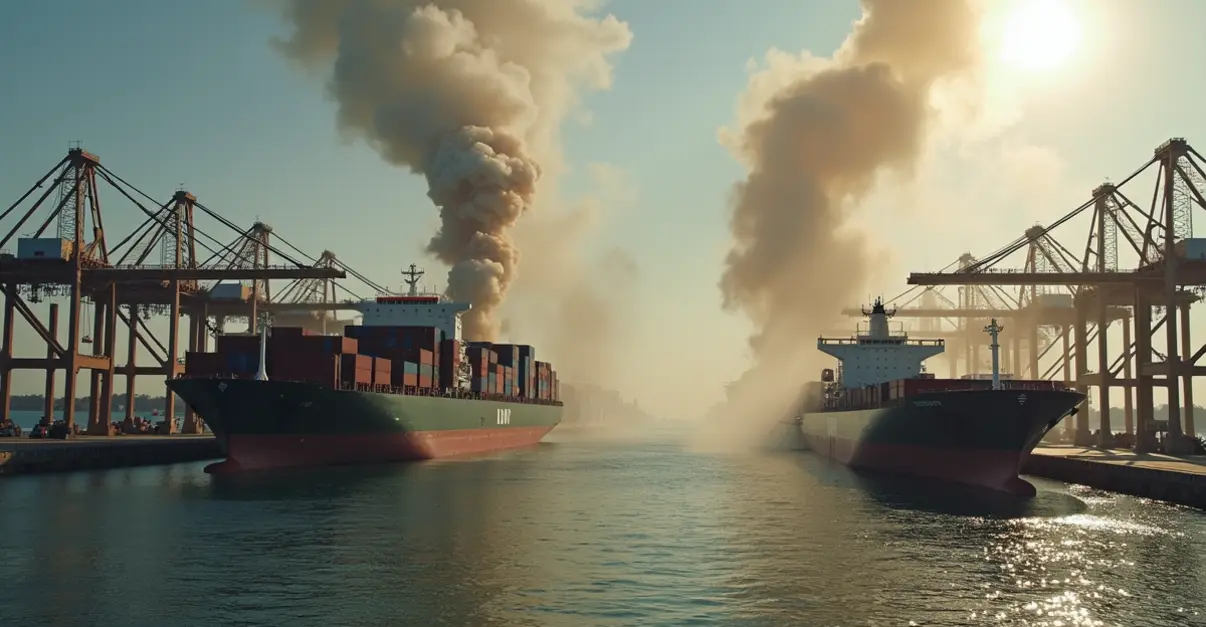
In a dramatic escalation of the U.S.-China rivalry over critical global infrastructure, Panama's Supreme Court annulled the operating license of Hong Kong-based CK Hutchison Holdings for two strategic terminals on the Panama Canal in late January 2026. By February 23, Panamanian authorities had formally seized the Balboa and Cristobal ports, transferring interim control to Danish shipping giant Maersk and Switzerland-based Mediterranean Shipping Co. (MSC). The move has triggered a fierce diplomatic backlash from Beijing, which retaliated by halting state-company projects in Panama and threatening higher import inspections, while CK Hutchison launched $2 billion arbitration proceedings against the Panamanian government. This dispute crystallizes a broader strategic contest: the United States is aggressively rolling back Chinese infrastructure footholds in Latin America, and Beijing is testing how far it can push back without triggering a full-scale trade war.
Background: The Ports at the Heart of the Crisis
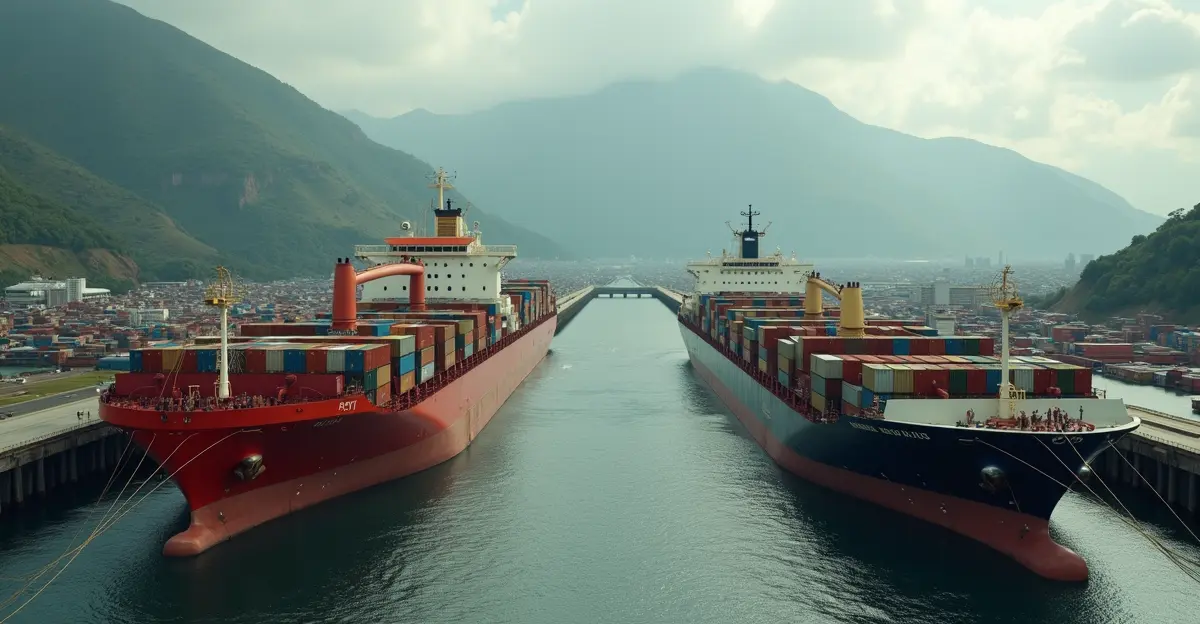
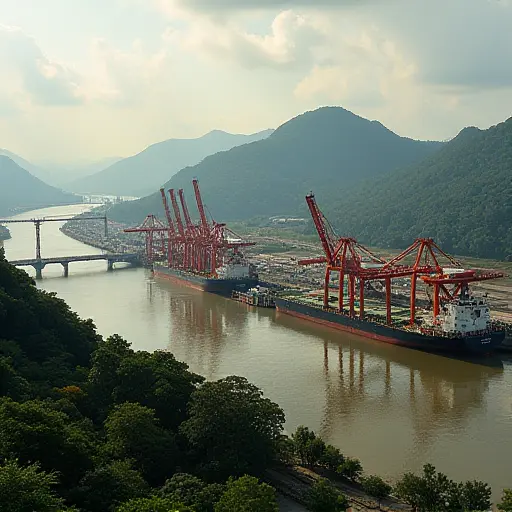
The Balboa terminal on the Pacific side and the Cristobal terminal on the Atlantic side sit at the entrances of the Panama Canal, a 51-mile waterway through which approximately 40% of all U.S. container traffic transits annually. CK Hutchison's subsidiary, Panama Ports Company (PPC), had operated these facilities since 1997 under a concession that was extended in 2021. Together, the terminals handle roughly 39% of Panama's container traffic and are linked to nearly 5% of global maritime trade.
On January 29, 2026, Panama's Supreme Court ruled that the original 1997 concession and its 2021 extension were unconstitutional, citing irregularities in the contracting process. The decision came amid intense U.S. pressure on Panama to limit Chinese influence over the canal. President Donald Trump's administration had repeatedly threatened to "take back" the canal if Chinese control expanded, framing the issue as a national security priority.
The Seizure and Interim Transfer
On February 23, Panamanian officials entered the Balboa and Cristobal facilities and assumed administrative and operational control. The government issued a decree authorizing the Panama Maritime Authority to take immediate possession of cranes, vehicles, and infrastructure. Temporary 18-month operating contracts were awarded to APM Terminals (a Maersk subsidiary) for Balboa and Terminal Investment Limited (an MSC affiliate) for Cristobal.
Panamanian President Jose Raul Mulino defended the action, stating it was "not an expropriation but a necessary step to ensure operational continuity while preparing a new competitive bidding framework." Former Panama Canal Administrator Alberto Alman was appointed to coordinate the transition. CK Hutchison called the decree "unlawful" and vowed to pursue all legal remedies.
China's Retaliation: Economic and Diplomatic Pressure
Beijing's response was swift and multifaceted. Within days of the court ruling, China directed state-owned enterprises to halt all new projects and investment talks in Panama. This freeze threatened billions of dollars in infrastructure deals, including railway expansions, energy projects, and port upgrades that had been part of China's Belt and Road Initiative in the region.
China also intensified customs inspections on Panamanian imports, causing delays at Chinese ports. In March 2026, Chinese authorities detained nearly 70 Panamanian-flagged vessels for extended inspections — a figure far exceeding historical norms. The U.S. Federal Maritime Commission warned that these actions could have "significant commercial and strategic consequences for U.S. shipping."
Chinese Foreign Minister Wang Yi accused the United States of "bullying Panama into violating international law" and warned that China would "take all necessary measures to protect the legitimate rights of Chinese enterprises." The Chinese government described the court ruling as "utterly ridiculous" and a product of U.S. geopolitical coercion in Latin America.
CK Hutchison's $2 Billion Arbitration Claim
On March 24, 2026, CK Hutchison's Panama Ports Company filed an additional claim with the International Chamber of Commerce Court of Arbitration, pushing the total arbitration demand beyond $2 billion. The company alleges "unlawful takeover, extreme executive actions, document seizure, and misconduct" by Panamanian authorities over more than a month. CK Hutchison also cited "geopolitical pressure" in its year-end report, noting that the conflict had complicated a planned $23 billion global port sale to a BlackRock-led consortium that included MSC. The legal case is expected to run for years.
Geopolitical Fallout: A New Front in the U.S.-China Rivalry
The Panama Canal dispute has become a defining test case for whether Chinese commercial assets at critical global chokepoints remain viable or become primary targets in the U.S.-China rivalry. The United States and five Latin American nations — Bolivia, Costa Rica, Guyana, Paraguay, and Trinidad and Tobago — issued a joint statement in April 2026 criticizing China's retaliatory actions. U.S. Secretary of State Marco Rubio expressed solidarity with Panama, calling China's ship detentions "a blatant attempt to politicize maritime trade and infringe on sovereignty."
Analysts warn that the crisis signals a broader erosion of international maritime norms. The Panama Canal showdown unfolds alongside tensions in the Strait of Hormuz, where U.S.-Iran confrontations have effectively closed the waterway. Together, these events suggest major powers are increasingly willing to contest control of global shipping lanes, with direct implications for supply chains and inflation worldwide.
For Latin America, China's aggressive retaliation has backfired in some respects. According to a Council on Foreign Relations report from March 2026, Beijing's strong-arm tactics have pushed regional nations closer together and toward diversifying partnerships. The debt-trap diplomacy narrative has gained renewed traction, reducing Beijing's leverage in the region.
Expert Perspectives
"This is the opening salvo in a new phase of the U.S.-China contest," said Dr. Elena Marquez, a geopolitics scholar at the Inter-American Dialogue. "The Panama Canal is not just a trade route — it's a symbol of sovereignty. Whoever controls its ports controls a chokepoint for global commerce. The U.S. has drawn a red line, and China is testing its limits."
Maritime security analyst James Whitaker of the Center for Strategic and International Studies added: "The CK Hutchison case will set a precedent. If Chinese companies can be pushed out of Panama under legal pretext, other nations may follow suit. Beijing's retaliation shows it understands the stakes, but its options are limited without triggering a broader trade war."
Frequently Asked Questions
What triggered the Panama Canal port dispute?
Panama's Supreme Court ruled on January 29, 2026 that CK Hutchison's 1997 concession to operate the Balboa and Cristobal ports was unconstitutional. The ruling followed years of U.S. pressure on Panama to limit Chinese influence over the canal.
Who is operating the ports now?
Danish shipping giant Maersk (via APM Terminals) is temporarily managing Balboa on the Pacific side, while Switzerland-based MSC (via Terminal Investment Limited) is running Cristobal on the Atlantic side. The interim contracts last up to 18 months.
How has China retaliated?
China halted state-company projects in Panama, intensified customs inspections on Panamanian imports, and detained nearly 70 Panamanian-flagged ships in March 2026. Beijing also launched a diplomatic campaign accusing the U.S. of bullying Panama.
What is CK Hutchison's legal response?
CK Hutchison filed international arbitration claims against Panama that now exceed $2 billion. The company alleges unlawful takeover and misconduct by Panamanian authorities.
What are the broader implications for global trade?
The dispute threatens to disrupt a chokepoint handling 40% of U.S. container traffic. Analysts warn that if Chinese assets become targets in the U.S.-China rivalry, supply chains could face severe disruptions, driving up costs and inflation worldwide.
Conclusion: The Future of Chinese Assets at Strategic Chokepoints
The Panama Canal showdown represents a watershed moment in the U.S.-China rivalry. The outcome will determine whether Chinese commercial investments in critical infrastructure remain viable or become primary targets in an escalating geopolitical contest. With CK Hutchison pursuing $2 billion in arbitration, China retaliating economically, and the U.S. consolidating its influence in Latin America, the crisis is far from resolved. The future of Chinese infrastructure investments in the Western Hemisphere hangs in the balance, and the world's supply chains are watching closely.
Follow Discussion