


 Deutsch
 English
 Español
 Français
 Nederlands
 Português


 Share
Share




The Great Mineral Stockpile Race: How US, EU, and China Are Securing Critical Supply Chains
In a dramatic escalation of great power competition over essential resources, the United States, European Union, and China are engaged in a high-stakes race to secure strategic stockpiles of critical minerals. This emerging geopolitical contest centers on materials essential for everything from electric vehicles and renewable energy to defense systems and advanced electronics. The US's $12 billion 'Project Vault', the EU's newly announced stockpiling plans, and China's existing dominance in mineral processing are reshaping global supply chain security and creating new fault lines in international relations.
What Are Critical Minerals and Why Do They Matter?
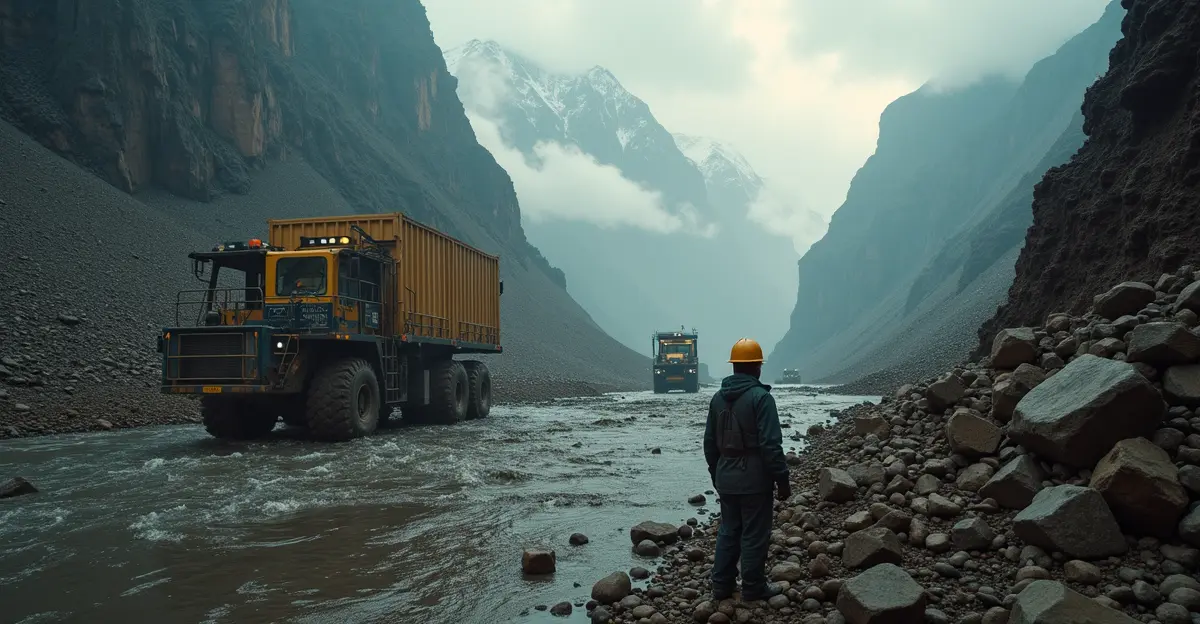
Critical minerals are materials deemed essential for economic and national security, with supply chains vulnerable to disruption. These include rare earth elements, lithium, cobalt, nickel, and other metals crucial for modern technology. According to the European Court of Auditors 2026 report, these materials are fundamental to the energy transition, with demand projected to increase 400-600% by 2040 for minerals like lithium and graphite. The strategic importance of these resources has transformed them from commodities into instruments of geopolitical power.
The US Project Vault: A $12 Billion Strategic Reserve
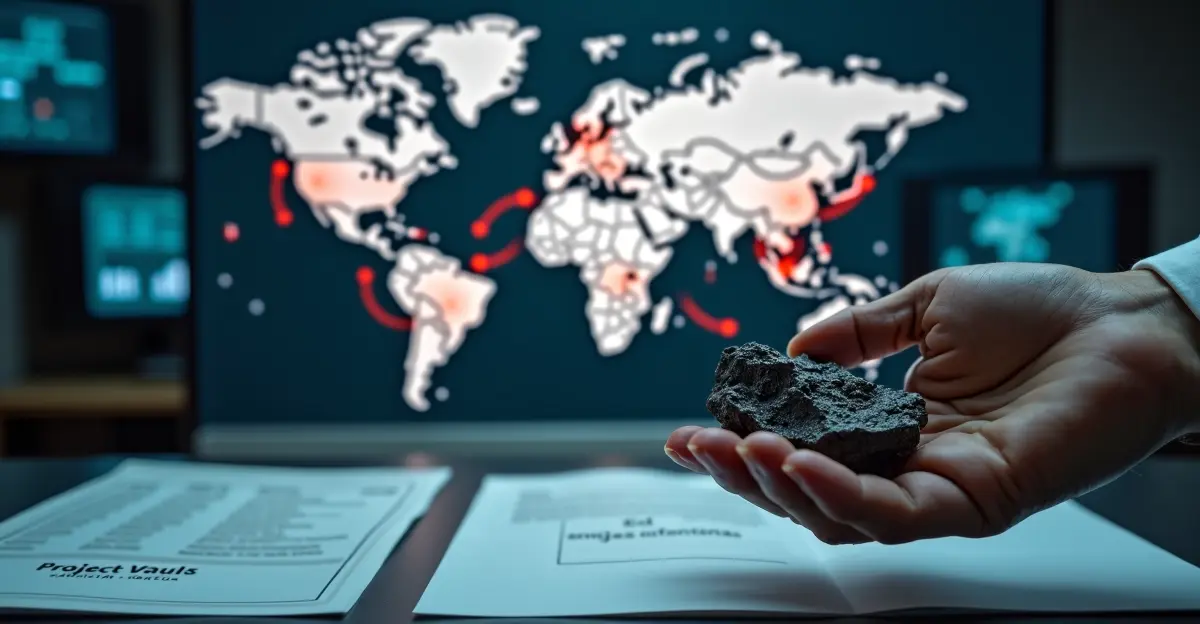
The United States has launched its most ambitious critical minerals initiative to date: Project Vault. This $12 billion public-private partnership, announced in February 2026, establishes the U.S. Strategic Critical Minerals Reserve through a $10 billion EXIM Bank loan and nearly $2 billion in private investment. 'Project Vault ensures American businesses and workers are never harmed by mineral shortages,' stated EXIM Chairman Jovanovic during the initiative's launch.
How Project Vault Works
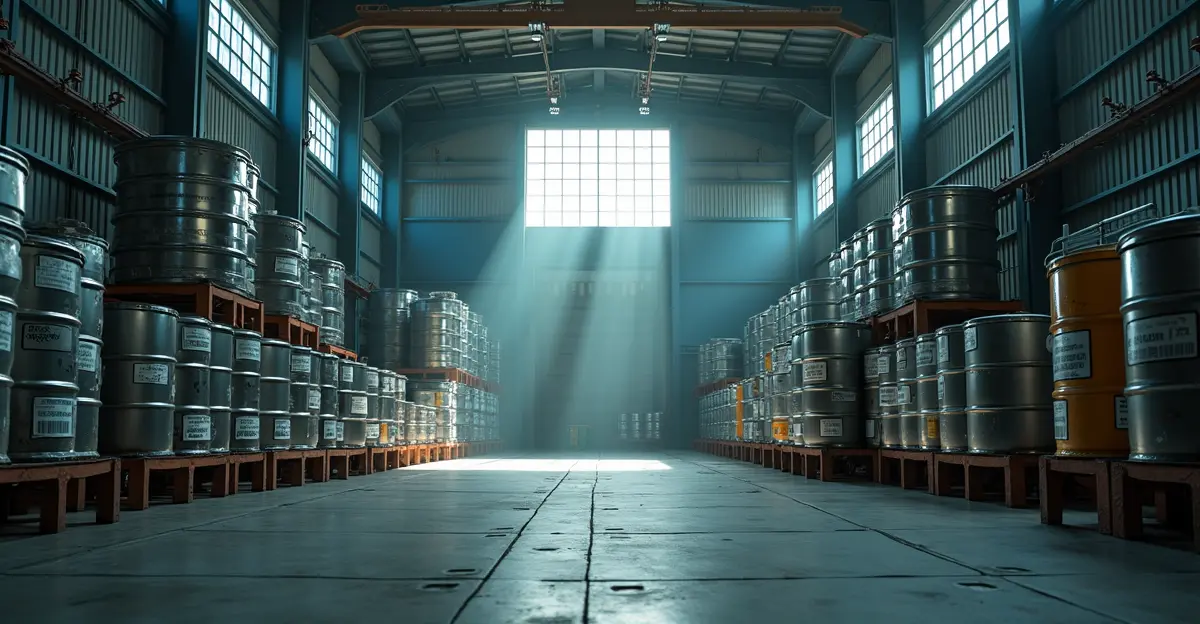
The program allows companies to secure minerals at fixed prices to hedge against supply disruptions and price volatility. Participants commit to purchasing minerals at predetermined rates while covering storage costs in secure facilities across the United States. This initiative represents a significant escalation in U.S. efforts to counter China's dominance, following the establishment of FORGE (Forum on Resource Geostrategic Engagement), a global partnership involving 54 countries aimed at strengthening mineral supply chains.
EU's Strategic Stockpiling: A Coordinated European Response
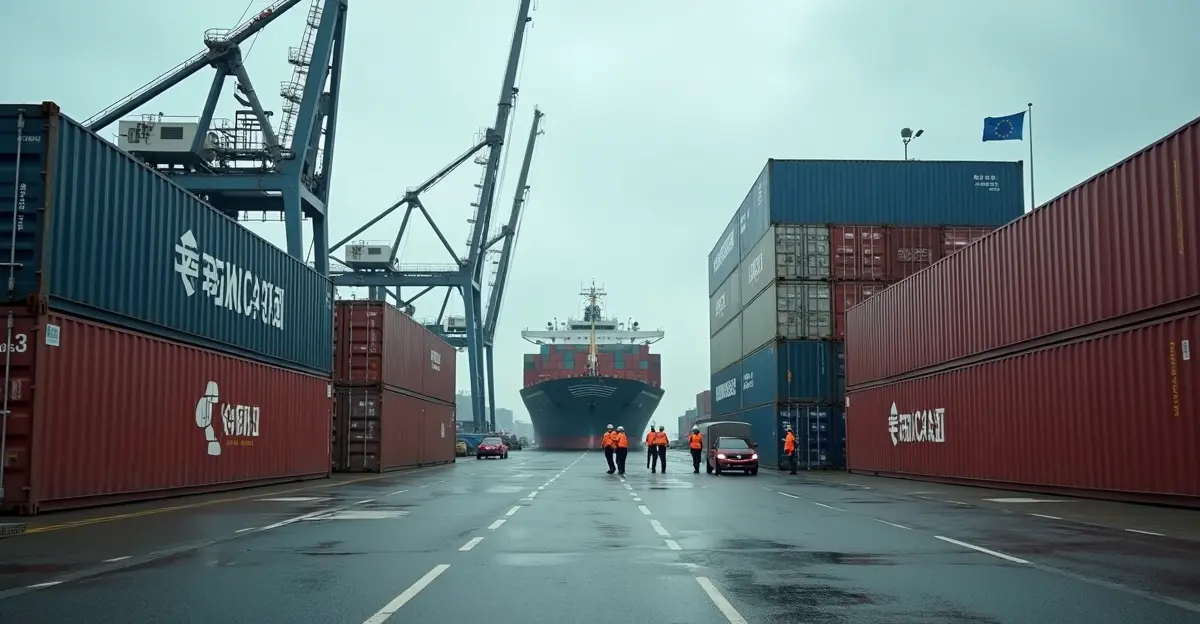
Following the U.S. initiative, the European Union has announced plans to establish strategic stockpiles of critical materials through its Critical Raw Materials Center. According to Reuters reports, Italy, France, and Germany will lead this coordinated effort to enhance EU supply chain resilience. The move comes after China announced export controls on rare-earth magnets in late 2025, prompting EU trade chief Maroš Šefčovič to engage with Chinese counterparts.
The EU's strategy includes diversifying supply chains away from China, enhancing monitoring capabilities, and promoting 'Made in Europe' criteria for sensitive products in public procurement. This comprehensive plan also addresses technology sovereignty across batteries, cloud computing, AI, and advanced materials while streamlining legislation to boost competitiveness. The EU Green Deal implementation now faces new challenges as mineral security becomes paramount.
China's Established Dominance: The 90% Processing Control
While Western powers scramble to build stockpiles, China maintains near-total dominance in critical mineral processing. According to Fortune analysis, China controls approximately 90% of global rare earth processing capacity despite producing only 70% of raw rare earths. This strategic advantage gives Beijing significant geopolitical leverage, as rare earths are essential for electric vehicles, wind turbines, semiconductors, and defense systems.
China has demonstrated its willingness to use this position strategically, imposing export controls on key metals like samarium, dysprosium, and terbium in response to U.S. tariffs, and previously cutting off supplies to Japan during diplomatic disputes. The country's 30+ years of investment in specialized processing technology creates a formidable barrier to entry that experts warn could take a decade for competitors to overcome.
Geopolitical Implications: A New Front in Great Power Competition
The mineral stockpile race represents a significant escalation in economic competition between major powers. According to the ODI 2026 analysis, critical minerals are reshaping geopolitical risk, industrial policy, and national security worldwide. The second Trump administration has prioritized domestic production through expanded equity participation in rare earths, lithium, and gallium companies, while allocating billions for supply chain investments and stockpiles.
This competition creates complex dynamics for international relations. The U.S. and EU initiatives aim to reduce dependency on Chinese supplies, but they also risk creating new trade tensions and supply chain fragmentation. The global semiconductor shortage of recent years provides a cautionary tale about the consequences of concentrated supply chains and the challenges of diversification.
Impact on Energy Transition Timelines
The mineral stockpile race has significant implications for global climate goals. Critical minerals are essential components of renewable energy technologies, electric vehicles, and energy storage systems. According to the European Court of Auditors' Special Report 04/2026, securing sustainable access to these materials is crucial for achieving Europe's green transition objectives.
However, the competition for resources could potentially delay energy transition timelines if supply chain disruptions occur or if stockpiling leads to price volatility. The International Energy Agency reports indicate that mineral supply constraints could slow the deployment of clean energy technologies, making strategic stockpiling both a solution and a potential source of market distortion.
Expert Perspectives: Stockpiling vs. Sustainable Solutions
Industry experts are divided on whether stockpiling represents a sustainable solution or merely shifts vulnerabilities in the critical minerals supply chain. 'Strategic stockpiles provide essential buffer capacity during supply disruptions, but they don't address the fundamental need for diversified, resilient supply chains,' notes a mining sector analyst from HSF Kramer's 2026 Global M&A Report.
Some experts argue that stockpiling should be part of a broader strategy that includes developing domestic mining capabilities, strengthening recycling systems, and investing in material substitution research. Others warn that excessive stockpiling could create artificial shortages and price spikes, potentially harming the very industries these measures aim to protect.
FAQ: Critical Minerals Stockpile Race
What is Project Vault?
Project Vault is a $12 billion U.S. initiative to establish the Strategic Critical Minerals Reserve through public-private partnership, funded by a $10 billion EXIM Bank loan and $2 billion in private investment.
Why is China dominant in critical minerals?
China controls approximately 90% of global rare earth processing capacity due to 30+ years of strategic investment in specialized technology and infrastructure, giving it significant geopolitical leverage.
What minerals are considered critical?
Critical minerals include rare earth elements, lithium, cobalt, nickel, graphite, and other metals essential for modern technology, defense systems, and renewable energy infrastructure.
How will stockpiling affect energy transition?
Strategic stockpiles can provide supply security for renewable energy projects but may also create market distortions; their impact depends on implementation and broader supply chain strategies.
What is the EU's stockpiling plan?
The EU plans to establish strategic stockpiles through its Critical Raw Materials Center, led by Italy, France, and Germany, as part of efforts to enhance supply chain resilience and reduce dependency on external suppliers.
Future Outlook: Beyond Stockpiling
As the mineral stockpile race intensifies, the long-term solution likely lies in a combination of strategies: strategic reserves for emergency situations, diversified global supply chains, increased recycling and circular economy approaches, and continued innovation in material science. The coming years will test whether great power competition over critical minerals accelerates or hinders the global energy transition, with implications for climate goals, economic stability, and international relations.


Follow Discussion