


 Deutsch
 English
 Español
 Français
 Nederlands
 Português


 Share
Share




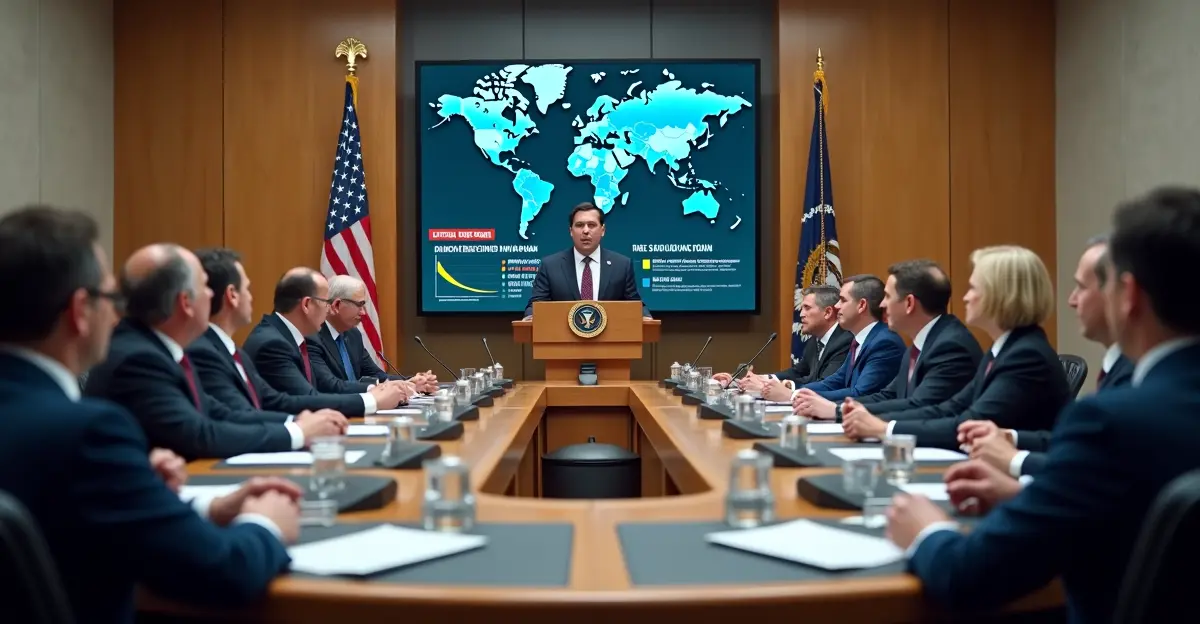
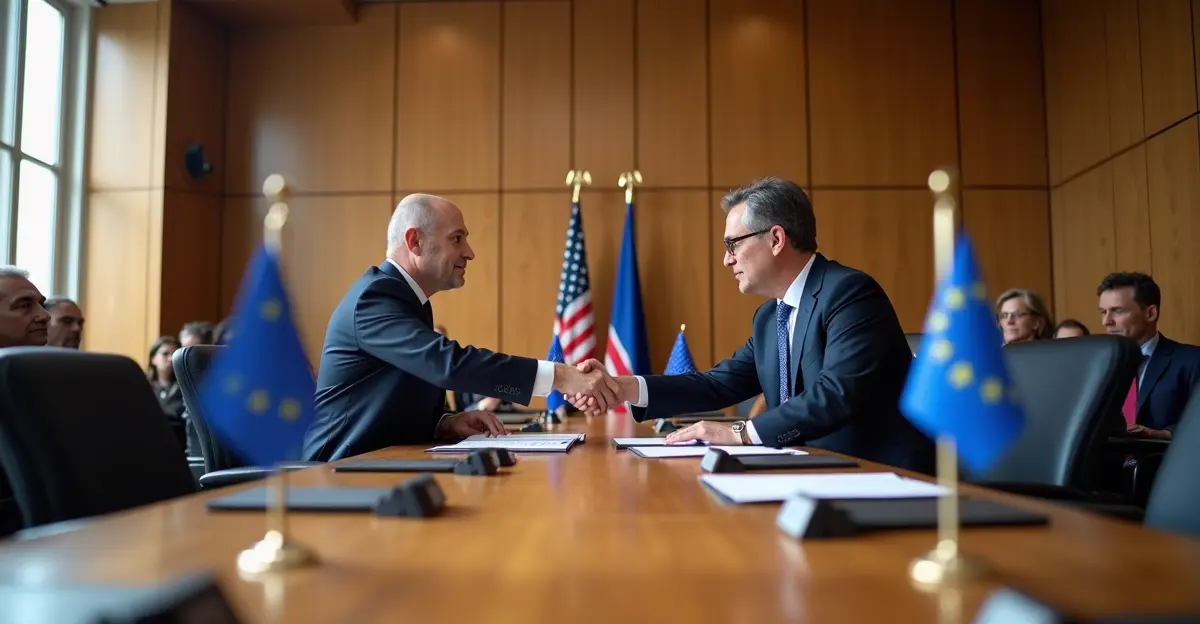
On February 4, 2026, the United States launched the Forum on Resource Geostrategic Engagement (FORGE) at a State Department Ministerial attended by 54 nations, replacing the Minerals Security Partnership (MSP). Simultaneously, Washington and Brussels signed the U.S.-EU Critical Minerals Action Plan in April 2026, a coordinated framework to reduce dependence on China's near-monopoly over rare earth and critical mineral processing. Backed by over $30 billion in U.S. government financing, these initiatives represent the most significant Western push for resource security in decades. This article examines whether this supply chain realignment can achieve genuine strategic autonomy or simply create new dependencies, and what it means for global trade, energy transition costs, and geopolitical competition through 2030.
Background: The Critical Minerals Challenge
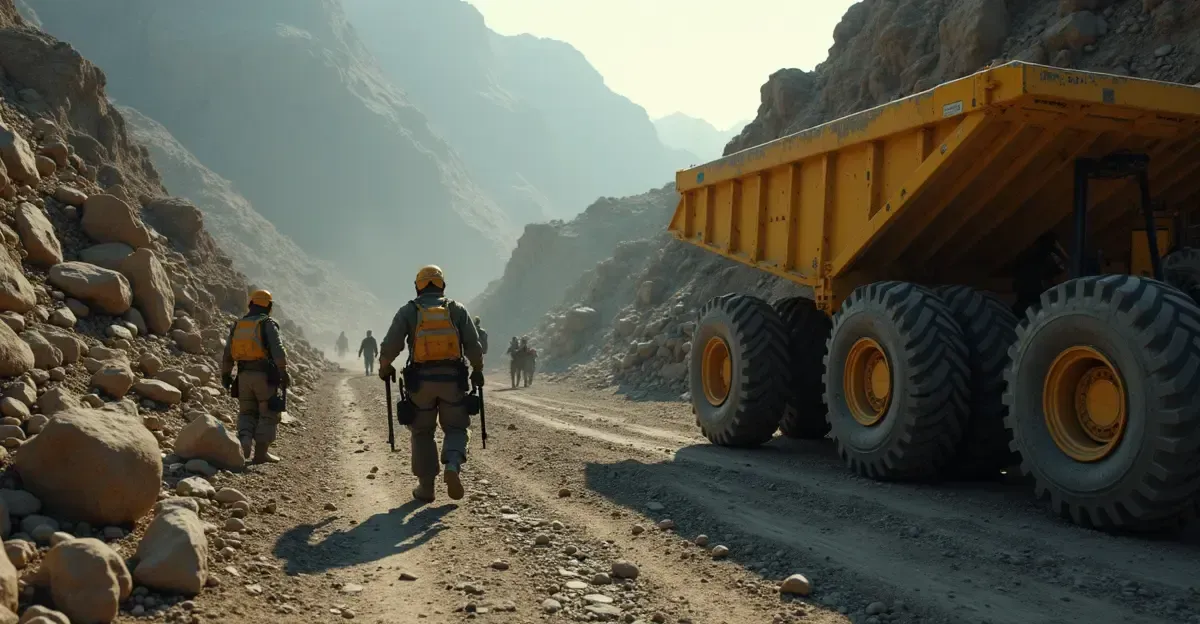
Critical minerals — including rare earth elements, lithium, cobalt, and tungsten — are essential for AI chips, EV batteries, defense systems, and renewable energy technologies. China currently controls approximately 90% of global rare earth processing and 80% of tungsten refining, giving Beijing extraordinary leverage over global supply chains. In 2025 and 2026, China imposed export controls on rare earths, tungsten, and antimony, triggering price spikes of up to sixfold and reducing European licensing approval rates below 25%. The geopolitical risks of resource dependency have become a central concern for Western capitals.
The U.S. and EU have long recognized this vulnerability. The EU's Critical Raw Materials Act, effective May 2024, identified 34 critical raw materials and set targets for domestic processing capacity. The U.S. 2025 Critical Mineral List added ten new minerals. However, concrete multilateral action remained limited until the February 2026 Ministerial.
FORGE: A New Plurilateral Framework
FORGE, chaired by South Korea, succeeds the Biden-era Minerals Security Partnership. Unlike its predecessor, FORGE establishes a preferential trade-and-investment zone for critical minerals with coordinated price floors and adjustable tariffs. Vice President JD Vance announced reference prices for critical minerals at each stage of production, including cobalt at $25.20/lb, lithium at $15,200/tonne, copper at $5.10/lb, and neodymium at $95,000/tonne. These price floors are designed to protect Western mining companies from Chinese market dumping and stabilize investment conditions for projects requiring decades to deliver returns.
The ministerial produced 11 new bilateral critical minerals framework agreements with countries including Argentina, Morocco, the Philippines, the UAE, and the UK, bringing the total to 21 deals in five months. The U.S. bilateral critical minerals agreements represent a shift from bilateralism toward plurilateral coordination, though whether this network can transform into genuine multilateral coordination remains an open question.
Project Vault: A Strategic Reserve
Alongside FORGE, the U.S. Export-Import Bank announced Project Vault (VaultCo), a $12 billion strategic minerals reserve combining $2 billion in private capital with a $10 billion EXIM loan — the agency's largest ever. Project Vault will cover all 60 minerals on the USGS Critical Minerals List, prioritizing rare earth elements, cobalt, copper, germanium, scandium, and gallium. Key offtake partners include Boeing, GE Vernova, and General Motors. The initiative mirrors the Strategic Petroleum Reserve and aims to provide a buffer against supply disruptions.
The U.S.-EU Critical Minerals Action Plan
In April 2026, the United States and European Union released a joint Action Plan for Critical Minerals Supply Chains, coordinated through the Office of the U.S. Trade Representative. The plan focuses on reducing strategic dependencies, enhancing supply chain resilience, and promoting sustainable mining, processing, and recycling. Key objectives include supporting investment in domestic and allied processing capacity, advancing research for mineral substitution and recycling, and aligning environmental and labor standards. The transatlantic critical minerals partnership represents a strategic move to build a Western-led supply chain bloc.
The Action Plan is not a free trade agreement but a framework for coordinating trade policies, including border-adjusted price floors and joint investment screening. It complements FORGE by linking the U.S. and EU markets, which together represent nearly half of global GDP.
Can the West Achieve Strategic Autonomy?
The central question is whether these initiatives can break China's processing monopoly. China's dominance is not accidental — it results from decades of strategic investment, subsidies, and state planning. According to the Council on Foreign Relations, the U.S. cannot overcome China's critical minerals dominance by trying to out-mine or out-process it, a strategy that takes decades. Instead, the CFR recommends a complementary approach centered on innovation: scaling disruptive technologies, recovery, and recycling that are cheaper, cleaner, and faster to deploy.
Analysts estimate a 12-to-18-month minimum to build new processing facilities and 5-7 years for meaningful scale. Defense sectors are hit hardest, with NATO warning stockpiles cover only 6-9 months of high-intensity conflict. The critical minerals supply chain timeline suggests that Western diversification will take years, leaving the world largely dependent on China for the foreseeable future.
New Dependencies Risk
There is also a risk that FORGE and the U.S.-EU Action Plan simply create new dependencies. Many of the bilateral agreements are with countries like Argentina, Morocco, and the Philippines, which have limited processing capacity and may become new chokepoints. Furthermore, the price floor mechanism could raise costs for downstream industries, potentially slowing the energy transition. The ODI warns that the EU struggles to scale financing for its Critical Raw Materials Act's 60 Strategic Projects, with current investment volumes falling short.
Impact on Global Trade and Geopolitics
The Western push is already reshaping global trade dynamics. China's 15th Five-Year Plan (2026-2030) will reinforce its dominance in processing and refining, with projections showing China supplying over 60% of refined lithium and cobalt by 2035. Beijing has responded to FORGE by tightening export controls and accelerating stockpiling of its own. The result is a bifurcating global market: a Western-led preferential trade zone and a China-centric supply chain, with developing countries caught in between.
For the energy transition, the implications are significant. Critical mineral prices have already spiked due to export controls and supply chain uncertainty. The energy transition cost implications could slow renewable energy deployment and EV adoption if prices remain elevated. However, the price floor mechanism may also provide the investment certainty needed to bring new mining and processing projects online.
Expert Perspectives
"FORGE represents a shift from bilateralism to plurilateral coordination in critical minerals policy," notes the Atlantic Council. "It practices statecraft through markets rather than around them." However, the same analysis warns that whether this network can transform into genuine multilateral coordination remains an open question.
Vice President JD Vance stated at the Ministerial: "The current international market for critical minerals is failing. Brittle supply chains, depressed prices, and stalled mining projects due to erratic pricing and foreign market flooding require predictable pricing to enable investment and domestic supply chain development."
Critics argue that the price floor mechanism could distort markets and trigger trade disputes. The EU has expressed concerns about the compatibility of U.S. price floors with WTO rules, though the Action Plan seeks to align approaches.
FAQ
What is FORGE?
FORGE (Forum on Resource Geostrategic Engagement) is a U.S.-led plurilateral initiative launched in February 2026, succeeding the Minerals Security Partnership. It brings together 54 nations to create a preferential trade zone for critical minerals with coordinated price floors and adjustable tariffs.
What is the U.S.-EU Critical Minerals Action Plan?
Signed in April 2026, this joint framework coordinates trade policies, investment, and standards for critical minerals supply chains between the United States and the European Union, aiming to reduce dependence on China.
How much funding is behind these initiatives?
The U.S. government has mobilized over $30 billion in letters of interest, investments, and loans for critical mineral projects, including $10 billion for Project Vault, a strategic minerals reserve.
Can the West break China's rare earth monopoly?
Analysts estimate it will take 5-7 years to build meaningful alternative processing capacity. China controls 90% of rare earth processing, and its 15th Five-Year Plan will reinforce this dominance. Innovation in recycling and substitution may offer faster solutions.
How will this affect energy transition costs?
Price floors may raise costs for downstream industries in the short term, but could also stabilize investment conditions for new mining projects. The net effect on energy transition costs remains uncertain and depends on how quickly alternative supply chains scale.
Conclusion: A Pivotal Moment
The launch of FORGE and the U.S.-EU Critical Minerals Action Plan marks a pivotal moment in global resource geopolitics. These initiatives represent the most coordinated Western effort to secure critical mineral supply chains in decades, backed by unprecedented financial commitments. However, the road to strategic autonomy is long and uncertain. China's entrenched processing dominance, the long lead times for new mining projects, and the risk of creating new dependencies all pose significant challenges. Through 2030, the world will likely see a bifurcating market, with the West and China competing for influence over critical mineral supply chains — a competition that will shape the future of AI, defense, and the energy transition.


Follow Discussion