


 Deutsch
 English
 Español
 Français
 Nederlands
 Português


 Share
Share




In early 2026, China's sweeping export controls on rare earths and critical minerals—imposed in phases throughout late 2025—triggered a sixfold price spike and exposed a severe Western dependency on Beijing's 90%+ processing monopoly. In response, the United States launched FORGE, a 54-nation alliance with over $30 billion in committed financing, alongside Project Vault's $10 billion Strategic Critical Minerals Reserve. This article analyzes whether these initiatives can achieve meaningful supply chain diversification before China's integrated refining and processing advantages become strategically irreversible, and what this means for defense, EV manufacturing, and global trade realignment.
China's Export Controls: A Strategic Shock
China's export control regime evolved in deliberate phases. In February 2025, indium was added to export control lists; by April 2025, seven heavy rare earths—including yttrium and scandium—were targeted. A second wave in October 2025 expanded controls to cover processing technology and technical know-how. These measures transformed critical mineral access from a commercial market into a permanent regulatory feature routed through national security licensing frameworks. Approval rates for European companies fell below 25%, while prices outside China spiked sixfold. The rare earth supply chain disruption has created severe constraints for Western aerospace, semiconductor fabrication, and defense manufacturing.
The FORGE Alliance: A 54-Nation Response
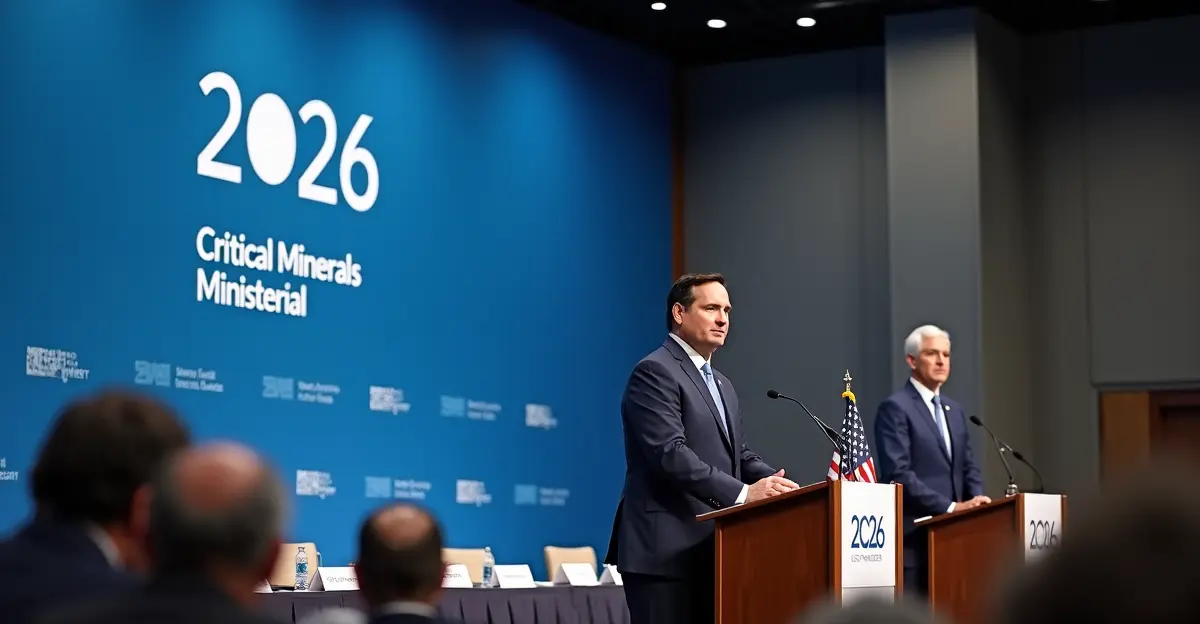
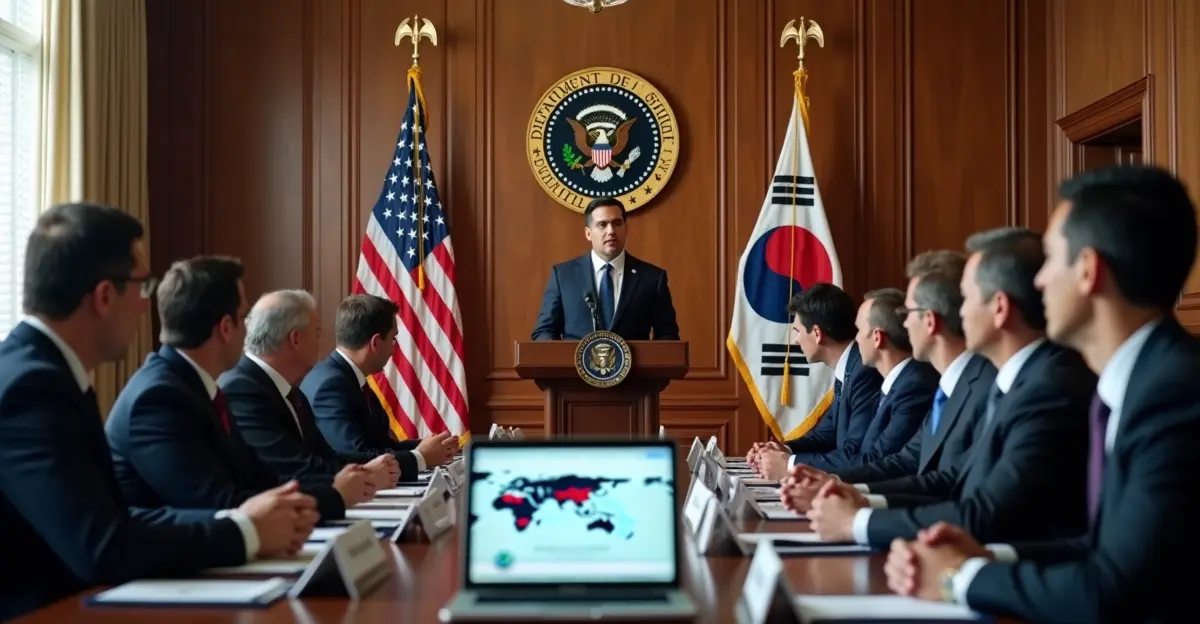
On February 4, 2026, the U.S. hosted the Critical Minerals Ministerial in Washington, D.C., led by Secretary of State Marco Rubio and Vice President JD Vance. Representatives from 54 countries and the European Commission convened to launch the Forum on Resource Geostrategic Engagement (FORGE), chaired by South Korea. FORGE succeeds the Minerals Security Partnership and creates a preferential trade-and-investment zone with coordinated price floors and adjustable tariffs to counter China's dominant position. Eleven new bilateral critical minerals frameworks were signed with countries including Argentina, Morocco, the Philippines, the UAE, and the UK. The U.S. mobilized over $30 billion in government-backed financing for critical minerals projects, marking the most coordinated Western effort to rewire strategic supply chains since the Cold War.
Project Vault: A $10 Billion Strategic Reserve
Project Vault is a public-private initiative establishing the U.S. Strategic Critical Minerals Reserve, backed by a $10 billion loan from the Export-Import Bank and nearly $2 billion in private-sector investment. Companies can lock in fixed prices for minerals and draw from the reserve when needed, reducing exposure to supply disruptions and price volatility. The reserve will store essential raw materials in secure facilities across the U.S., with industry leaders from GE Vernova, Mercuria, Traxys, Hartree, Clarios, and Boeing voicing strong support. However, challenges remain: storage infrastructure needs, the risk of market destabilization, and the importance of pairing stockpiling with procurement contracts to stimulate domestic supply. The critical minerals stockpile strategy is a cornerstone of U.S. economic security planning.
Can Diversification Succeed Before It's Too Late?
China controls 85–90% of global rare earth refining, roughly 90% of battery component production, and over 60% of lithium processing. These advantages were built over three decades through deliberate industrial policy. According to a multi-institutional analysis, rebuilding independent Western supply chains would take 20–30 years, leaving nations a critical 12–18 month window to act. The analysis outlines three strategic paths: managed dependence, costly independence, or a hybrid model balancing resilience with realism. The Western critical mineral diversification timeline remains the subject of intense debate among policymakers and industry experts.
Impact on Defense and EV Manufacturing
Defense applications are particularly vulnerable. Yttrium is essential for jet engine thermal coatings, and scandium is critical for semiconductor fabrication. The Pentagon has warned that current stockpiles cover only months of wartime consumption. In the EV sector, lithium, cobalt, and rare earth magnets are vital for battery and motor production. Automakers like Tesla and Ford have reported supply chain disruptions and price increases. The EV battery mineral supply crisis underscores the urgency of the FORGE and Project Vault initiatives.
Expert Perspectives
"China is weaponizing control rather than scarcity through temporary, reversible restrictions that maintain pricing leverage while discouraging Western alternative investment," noted a report from the European Parliamentary Research Service. EXIM Chairman Jovanovic stated at the Ministerial: "Project Vault will protect American manufacturers from supply shocks and ensure our economic security for decades to come." However, critics argue that $30 billion is insufficient compared to China's decades-long, state-directed investment, and that FORGE's voluntary framework lacks enforcement mechanisms.
Frequently Asked Questions
What are China's critical mineral export controls?
China's export controls, imposed in phases from February to October 2025, restrict exports of rare earths, tungsten, antimony, indium, and processing technology through national security licensing. Approval rates for Western companies have fallen below 25%.
What is the FORGE alliance?
FORGE (Forum on Resource Geostrategic Engagement) is a 54-nation alliance launched in February 2026, chaired by South Korea, to create a preferential trade-and-investment zone for critical minerals and counter China's dominance.
What is Project Vault?
Project Vault is a $10 billion public-private initiative to establish a U.S. Strategic Critical Minerals Reserve, backed by the Export-Import Bank, allowing companies to lock in prices and draw from stockpiles during disruptions.
How much does China dominate critical mineral processing?
China controls 85–90% of global rare earth refining, roughly 90% of battery component production, and over 60% of lithium processing.
Can the West reduce dependence on China?
Rebuilding independent supply chains would take 20–30 years. FORGE and Project Vault aim to create a hybrid model of managed dependence and targeted independence, but success depends on sustained investment and international cooperation.
Conclusion: A Defining Strategic Challenge
The critical minerals showdown represents one of the most consequential strategic developments of 2026. China's export controls have created permanent conditionality in global industrial planning, while FORGE and Project Vault signal a historic Western mobilization. Whether these initiatives can achieve meaningful diversification before China's advantages become irreversible will determine the future of defense, EV manufacturing, and global trade realignment. The next 12–18 months are critical.



Follow Discussion