


 Deutsch
 English
 Español
 Français
 Nederlands
 Português


 Share
Share




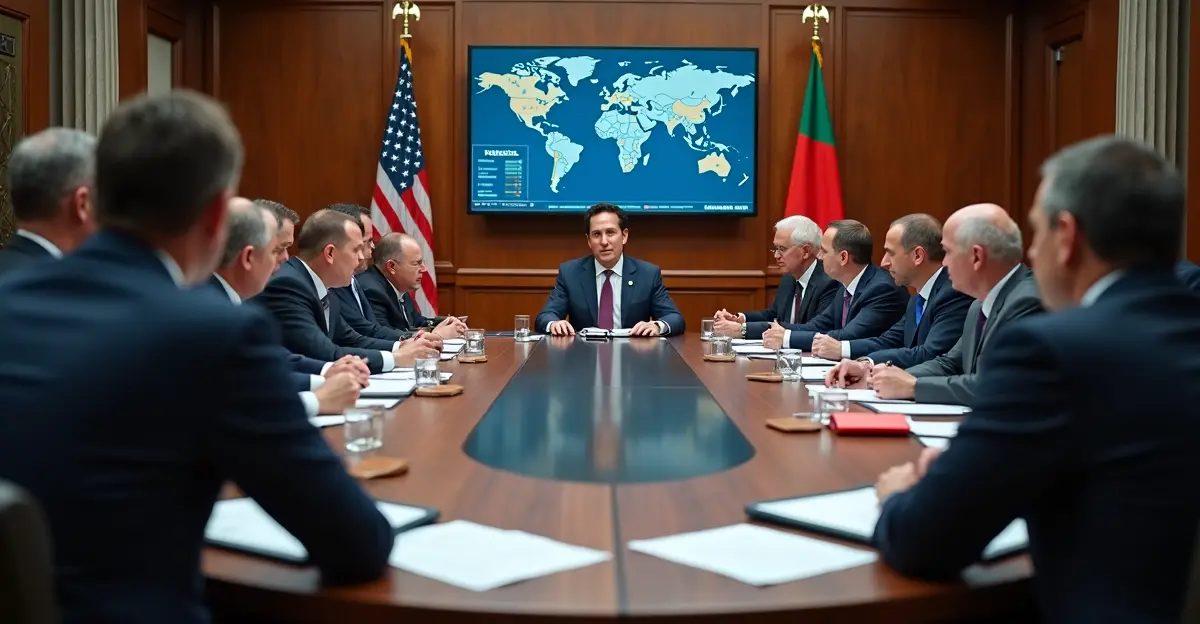
On February 4, 2026, the United States hosted the inaugural Critical Minerals Ministerial in Washington, D.C., convening representatives from 54 nations and the European Commission. The centerpiece of this historic gathering was Project Vault, a $12 billion public-private initiative to establish the U.S. Strategic Critical Minerals Reserve. Backed by a $10 billion Export-Import Bank (EXIM) loan and nearly $2 billion in private-sector commitments, Project Vault represents the most aggressive Western effort to break China's near-monopoly on minerals essential for AI hardware, defense systems, batteries, and renewable energy.
Led by Secretary of State Marco Rubio and Vice President JD Vance, the ministerial also launched the Forum on Resource Geostrategic Engagement (FORGE), a 54-country multilateral framework chaired by South Korea that replaces the Minerals Security Partnership. With over $30 billion in mobilized U.S. government financing and 11 new bilateral critical minerals frameworks signed with countries including Argentina, Morocco, the Philippines, the UAE, and the United Kingdom, the initiative marks a generational shift in strategic resource policy.
China's Dominance: The Strategic Imperative Behind Project Vault
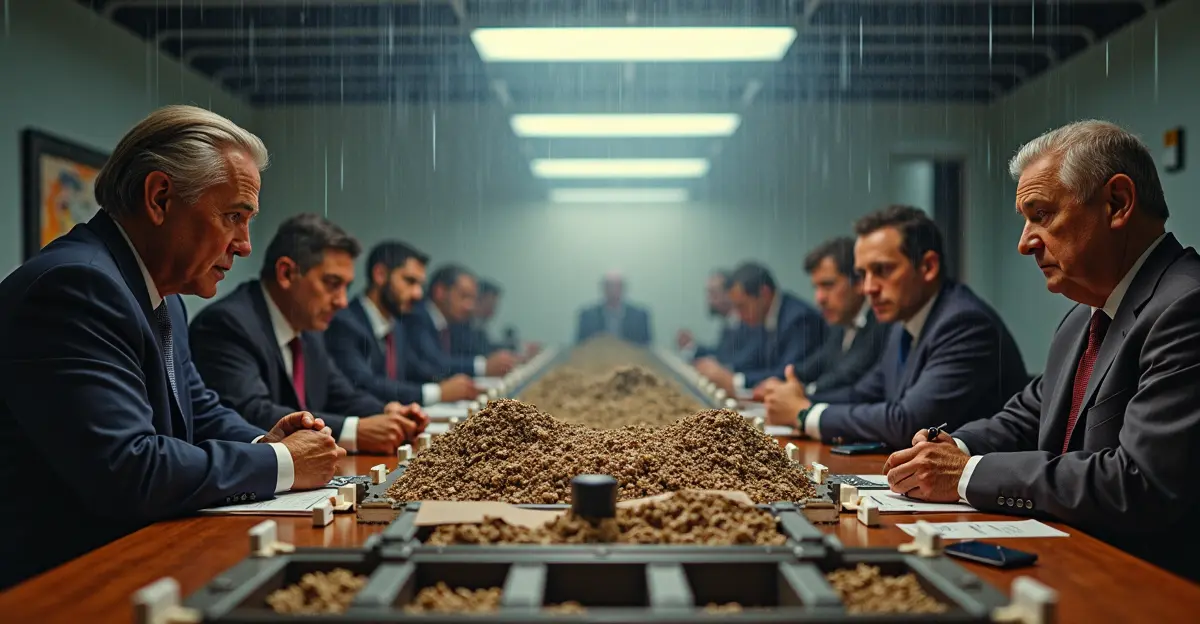
China's stranglehold on critical mineral supply chains is the defining geopolitical reality driving Project Vault. According to the International Energy Agency, China controls approximately 90% of global rare earth processing capacity, 80% of tungsten refining, 60% of antimony production, and 99% of heavy rare earth separation for elements like dysprosium and terbium. Beijing's 2025-2026 export controls triggered price spikes of up to sixfold outside China, while licensing approvals for European firms fell below 25%.
The US critical minerals strategy faces an uphill battle. Even with aggressive government funding, North America is projected to achieve only 9-10% of critical rare earth refining capacity by 2035. The sole U.S. rare earth mine, MP Materials, still ships concentrate to China due to a lack of domestic processing facilities. The Pentagon expects the first non-Chinese heavy rare earth facility online in Australia by late 2027, but it will supply only a fraction of defense needs.
Project Vault: Structure and Participants
Announced by EXIM Chairman John Jovanovic alongside President Trump in the Oval Office on February 2, 2026, Project Vault establishes a public-private partnership to stockpile essential raw materials in secure facilities across the United States. The initiative is designed to shield domestic manufacturers from supply disruptions, reduce dependence on foreign-controlled supply chains, and deliver a net positive return for U.S. taxpayers.
Participating original equipment manufacturers include Clarios, GE Vernova, Western Digital, and Boeing, with commodity suppliers such as Hartree Partners, Mercuria Americas, and Traxys. President Trump likened the initiative to the Strategic Petroleum Reserve, stating it ensures American businesses are never harmed by shortages. The EXIM Bank Project Vault structure allows manufacturers to access critical raw materials during market disruptions while creating domestic jobs and strengthening national security.
FORGE: A New Multilateral Framework
The FORGE framework represents a significant evolution in Western coordination on critical minerals. Unlike its predecessor, the Minerals Security Partnership, FORGE adopts a trade-focused model with coordinated price floors and adjustable tariffs to stabilize markets and protect against non-market distortions. Vice President JD Vance proposed a "preferential trade zone" for critical minerals with enforceable price floors, framing these mechanisms as essential to unlock sustained private investment.
South Korea, which previously chaired the MSP, will chair FORGE through June 2026. The U.S. is in initial talks with the EU and Japan about expanding this platform. The ministerial also produced 13 new bilateral critical minerals agreements, including a landmark strategic framework with Argentina that leverages the country's vast lithium reserves in the Lithium Triangle.
Global Supply Chain Reconfiguration
The critical minerals supply chain diversification effort is accelerating mining and processing projects from Argentina to Morocco. The U.S.-Argentina framework, signed on February 5, 2026, commits both countries to mobilize government and private sector support through grants, guarantees, loans, and equity investments. They will streamline permitting processes and establish high-standard markets with benchmark pricing frameworks to protect against unfair trade practices.
Morocco, the Philippines, and the UAE have also signed bilateral frameworks, positioning themselves as key nodes in the emerging Western-aligned supply chain. The U.S. government has mobilized over $30 billion in support for critical mineral projects over the past six months, including financing from EXIM, the Development Finance Corporation, the Department of Energy, and the Pentagon.
However, analysts warn that rebuilding independent alternative supply chains could take 20-30 years. The window for decisive action is narrowing to 12-18 months before China's dominance becomes insurmountable, according to a February 2026 analysis by the ODI think tank.
Geopolitical Risks and Resource Nationalism
As Western nations race to secure critical minerals, resource nationalism is intensifying worldwide. According to law firm Gibson Dunn, the shift has turned critical minerals from traditional mining into a geopolitical contest. Governments are increasingly relying on export controls, production quotas, and processing mandates rather than outright nationalizations. China's 2025 export controls on rare earths, the DRC's cobalt export ban (replaced by production quotas), Indonesia's nickel export ban, Vietnam's tightening of rare earth controls, and Chile's state-led lithium development all exemplify this trend.
The resource nationalism critical minerals 2026 landscape creates legal risks for investors. The report recommends companies review contracts, assess supply-chain design, and consider political-risk insurance before disputes arise. The EU has adopted the RESourceEU Action Plan to accelerate supply security, though funding remains insufficient.
Expert Perspectives
"Project Vault is the most consequential shift in strategic resource policy in a generation," said EXIM Chairman John Jovanovic at a CSIS forum following the ministerial. "This initiative will protect American manufacturers from supply shocks and strengthen our economic competitiveness."
Secretary of State Marco Rubio emphasized the multilateral dimension: "Argentina will be a key partner not only for the U.S. but for the world. Together, we are building supply chains that are secure, diversified, and resilient."
However, the Council on Foreign Relations warns that the U.S. cannot out-mine or out-process China. In a February 2026 report, CFR fellows Heidi Crebo-Rediker and Mahnaz Khan recommend an innovation-centered strategy to 'leapfrog' China's dominance through materials engineering, waste-based recovery, and advanced recycling.
Frequently Asked Questions
What is Project Vault?
Project Vault is a $12 billion public-private initiative launched by the U.S. Export-Import Bank in February 2026 to establish the U.S. Strategic Critical Minerals Reserve. It stockpiles essential raw materials to protect domestic manufacturers from supply disruptions.
What is FORGE?
FORGE (Forum on Resource Geostrategic Engagement) is a 54-country multilateral framework launched at the 2026 Critical Minerals Ministerial. Chaired by South Korea, it replaces the Minerals Security Partnership and uses trade mechanisms like price floors to stabilize critical mineral markets.
Why is China's role in critical minerals a concern?
China controls approximately 90% of global rare earth processing and has demonstrated willingness to weaponize this dominance through export controls, causing price spikes of up to sixfold outside China.
How much funding has been mobilized?
The U.S. government has mobilized over $30 billion in financing for critical mineral projects over the past six months, including Project Vault's $10 billion EXIM loan and nearly $2 billion in private investment.
What countries signed bilateral frameworks?
Eleven new bilateral critical minerals frameworks were signed with Argentina, Morocco, the Philippines, the UAE, the UK, and others, accelerating mining and processing projects worldwide.
Conclusion and Future Outlook
Project Vault and the FORGE framework represent the most ambitious Western effort to date to break China's grip on critical mineral supply chains. With $30 billion in mobilized capital and 54 nations aligned, the initiative has the potential to reshape global supply chains for AI hardware, defense systems, batteries, and renewable energy. However, the road ahead is daunting: China's decades-long head start in refining capacity, the 20-30 year timeline for building alternatives, and rising resource nationalism all pose significant challenges. The next 12-18 months will be critical in determining whether this coordinated Western push can succeed in creating truly independent supply chains.


Follow Discussion