


 Deutsch
 English
 Español
 Français
 Nederlands
 Português


 Share
Share




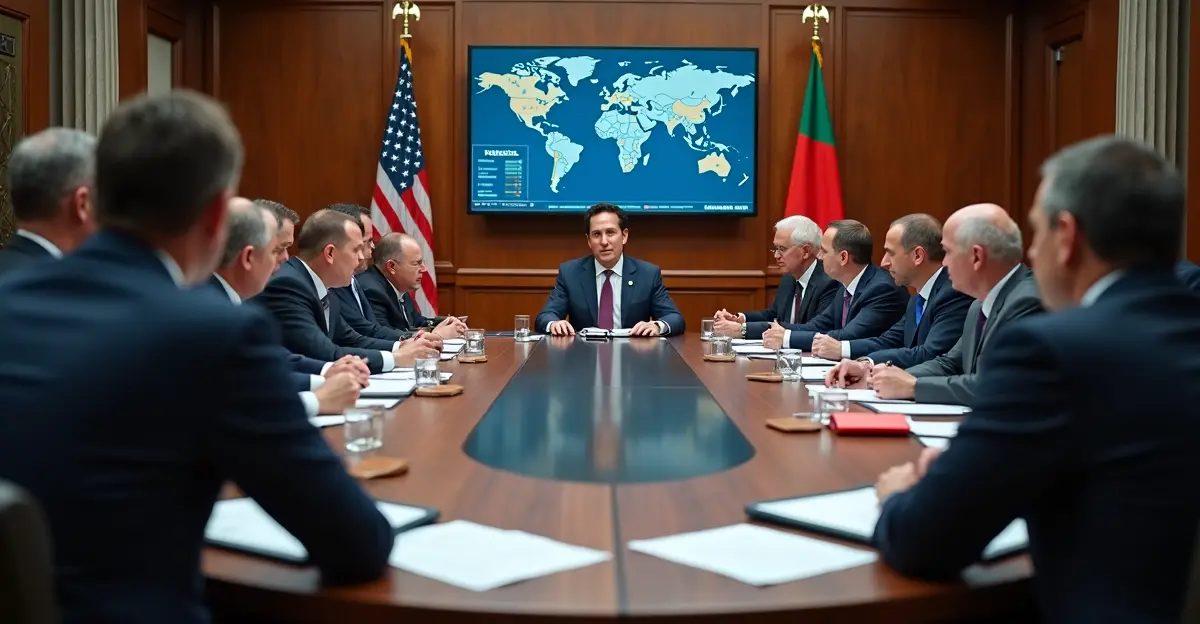
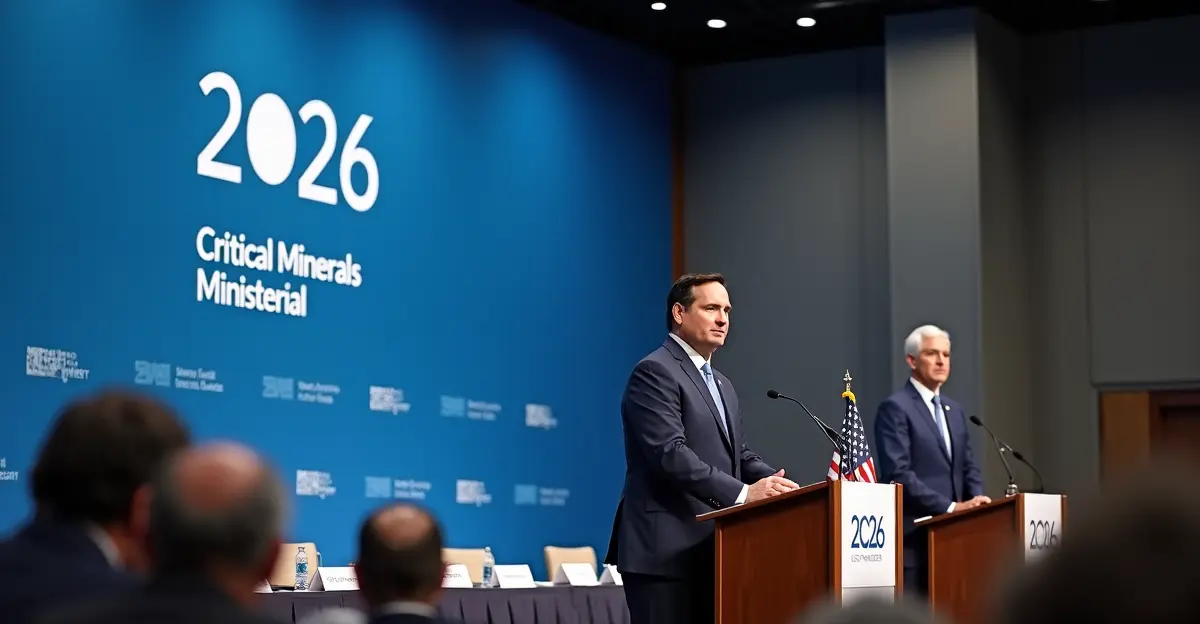
On February 4, 2026, the U.S. State Department convened representatives from 54 nations and the European Commission for the inaugural Critical Minerals Ministerial in Washington, D.C. The event marked the launch of the Forum on Resource Geostrategic Engagement (FORGE), a plurilateral coalition succeeding the Minerals Security Partnership (MSP), backed by over $30 billion in U.S. government financing. This includes a $10 billion domestic strategic minerals reserve under Project Vault, financed by the Export-Import Bank. The initiative represents the most ambitious Western effort to date to break China's stranglehold on critical mineral supply chains, where Beijing controls an estimated 60–80% of global processing for lithium, cobalt, rare earths, and other strategic materials.
What Is FORGE and Why Now?
FORGE is designed as a preferential trade-and-investment zone for critical minerals, with coordinated price floors to counter adversarial market manipulation. Chaired by South Korea through June 2026, the forum aims to link 21 bilateral framework agreements signed over the past five months—including 11 new deals announced at the ministerial—into a functioning plurilateral system covering two-thirds of the global economy. The Minerals Security Partnership Forum served as its predecessor, but FORGE introduces binding mechanisms absent from earlier efforts.
Secretary of State Marco Rubio stated: 'The critical minerals marketplace has been plagued by opaque pricing, predatory state-owned enterprises, and coercive supply chain leverage. FORGE will address these challenges with bold, collaborative action.' Vice President JD Vance proposed a preferential trade zone with enforceable price floors, arguing that erratic pricing undermines consistent investment in domestic processing capacity.
The $30 Billion Arsenal: Project Vault and Beyond
The centerpiece of U.S. financial commitment is Project Vault, a $10 billion public-private partnership establishing the U.S. Strategic Critical Minerals Reserve. Modeled after the Strategic Petroleum Reserve, Project Vault will store essential raw materials—including rare earths, cobalt, graphite, lithium, nickel, and titanium—across multiple U.S. facilities. The initiative is designed to yield a net positive return for taxpayers while ensuring domestic manufacturers have stable access during market disruptions.
Beyond Project Vault, the U.S. is mobilizing over $30 billion in total financing through EXIM Bank, the Development Finance Corporation, and private sector partners. The Pax Silica partnership, announced alongside FORGE, aims to secure technology supply chains for semiconductors and advanced manufacturing. Companies including GM, Boeing, and Google have signed on as participants, committing to purchase materials at agreed-upon prices and replenish the stockpile after drawing from it.
Bilateral Frameworks: A Network of 21 Deals
The 11 new bilateral frameworks signed at the ministerial include agreements with Argentina, Morocco, the Philippines, the United Arab Emirates, the United Kingdom, the Cook Islands, Ecuador, Guinea, Paraguay, Peru, and Uzbekistan. These join 10 earlier deals, bringing the total to 21 bilateral critical minerals frameworks in five months—an unprecedented diplomatic tempo.
The U.S.-Argentina critical minerals framework is particularly significant. Argentina holds one of the world's largest lithium reserves, and the agreement streamlines permitting, mobilizes government and private sector support through grants and loans, and establishes benchmark pricing to protect against unfair trade practices. Secretary Rubio noted that Argentina will be a 'key global partner' due to its resources and investment capacity under the RIGI incentive regime.
Morocco, meanwhile, is emerging as a critical hub for phosphate-based battery materials and cobalt processing. The Philippines and Peru offer substantial nickel and copper reserves, while the UAE provides strategic logistics and refining capacity. The UK framework focuses on joint research and recycling technologies.
Can Decoupling Succeed Without New Flashpoints?
China's dominance is deeply entrenched. According to the IEA's Global Critical Minerals Outlook 2025, China is the leading refiner for 19 out of 20 strategic minerals, with an average market share of 70%. Beijing controls roughly 90% of rare earth processing, 80% of tungsten refining, and 60% of antimony production. Export licensing approval rates for foreign firms have fallen below 25%, while neodymium-praseodymium oxide prices surged up to sixfold outside China in 2025.
China has already retaliated. In 2025, it restricted exports of rare earths, germanium, tungsten, and antimony to the U.S. and Japan. Beijing rejected the FORGE proposal, with Foreign Ministry spokesman Lin Jian calling it a 'small-circle' approach that undermines the international economic order. China's 15th Five-Year Plan (2026–2030) explicitly prioritizes strengthening its strategic minerals competitiveness, pledging to reinforce advantages in rare earths and minor metals.
Analysts warn of a narrowing 12–18 month window for decisive Western action. Rebuilding independent supply chains could take 20–30 years due to China's three-decade head start in specialized processing infrastructure. The critical minerals supply chain risks remain acute: over 80% of European firms remain dependent on Chinese supply chains for defense, EV, and renewable energy materials.
Implications for Energy Transition and Defense
The stakes extend far beyond trade. Critical minerals are essential for electric vehicle batteries, wind turbines, solar panels, semiconductors, AI hardware, and advanced defense systems. The U.S. Department of Defense has identified 12 critical minerals for which the U.S. is entirely reliant on imports, and 29 others for which import dependence exceeds 50%.
Vice President Vance emphasized the national security dimension: 'We cannot allow our defense industrial base to be held hostage by a strategic competitor. FORGE and Project Vault ensure that American soldiers, sailors, and airmen will never lack the materials they need.'
The energy transition adds urgency. Global demand for lithium is projected to increase 40-fold by 2040 under IEA net-zero scenarios, while demand for rare earths for permanent magnets could rise 7-fold. Without diversified supply chains, the green transition itself becomes a geopolitical vulnerability.
Expert Perspectives
India's External Affairs Minister S. Jaishankar, who attended the ministerial, called for 'structured international cooperation to de-risk critical mineral supply chains,' highlighting 'excessive concentration' as a major global risk. India has launched its own National Critical Minerals Mission and Rare Earth Corridors, signaling that the challenge is truly global.
The Atlantic Council notes that FORGE's success hinges on translating bilateral leverage into genuine plurilateral coordination. Key challenges include designing effective price mechanisms across different minerals and production stages, and ensuring that participating nations adhere to common standards. The Foundation for Defense of Democracies warns that FORGE 'will falter unless it becomes an enforceable trade regime,' arguing that Project Vault tackles investment risk directly but needs complementary trade enforcement.
Frequently Asked Questions
What is FORGE?
FORGE (Forum on Resource Geostrategic Engagement) is a plurilateral coalition launched in February 2026 as the successor to the Minerals Security Partnership. It aims to create a preferential trade-and-investment zone for critical minerals with coordinated price floors, involving 54 partner nations.
How much funding is behind the U.S. critical minerals push?
The U.S. has mobilized over $30 billion in financing, including $10 billion for Project Vault (the Strategic Critical Minerals Reserve), plus additional loans and investments through EXIM Bank and the Development Finance Corporation.
Which countries signed bilateral frameworks with the U.S.?
Eleven new frameworks were signed at the February 2026 ministerial with Argentina, Morocco, the Philippines, UAE, UK, Cook Islands, Ecuador, Guinea, Paraguay, Peru, and Uzbekistan, bringing the total to 21 bilateral deals in five months.
How dominant is China in critical mineral processing?
China controls 60–80% of global processing for lithium, cobalt, and rare earths, and is the leading refiner for 19 out of 20 strategic minerals, with an average market share of 70%.
Can the West realistically break China's grip?
Analysts give a 12–18 month window for decisive action, but rebuilding independent supply chains could take 20–30 years. Success depends on enforceable trade mechanisms, sustained investment, and coordinated plurilateral action.
Conclusion: A High-Stakes Gamble
The launch of FORGE and Project Vault marks the most serious Western push yet to rewire critical mineral supply chains. With $30 billion committed and 54 nations aligned, the initiative has scale and diplomatic momentum. Yet China's 30-year head start, its control over processing infrastructure, and its willingness to use export controls as a weapon mean that success is far from guaranteed. The next 18 months will determine whether FORGE becomes a genuine alternative to Chinese dominance—or another well-funded effort that falls short of decoupling. For the energy transition, defense supply chains, and global trade realignment, the stakes could not be higher.




Follow Discussion