


 Deutsch
 English
 Español
 Français
 Nederlands
 Português


 Share
Share




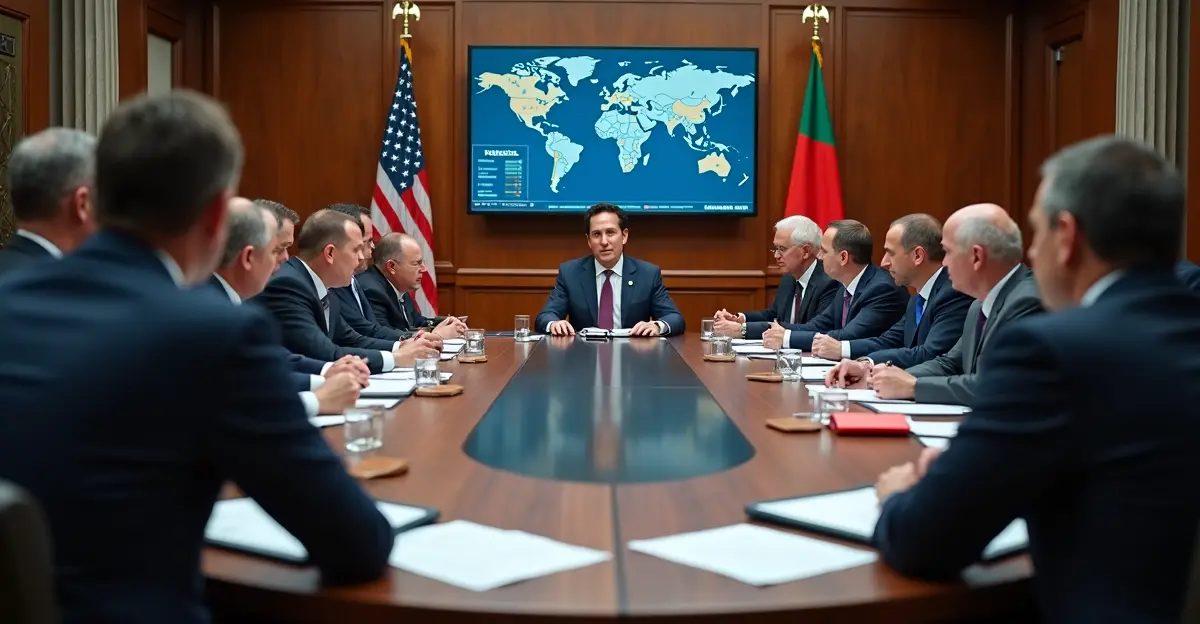
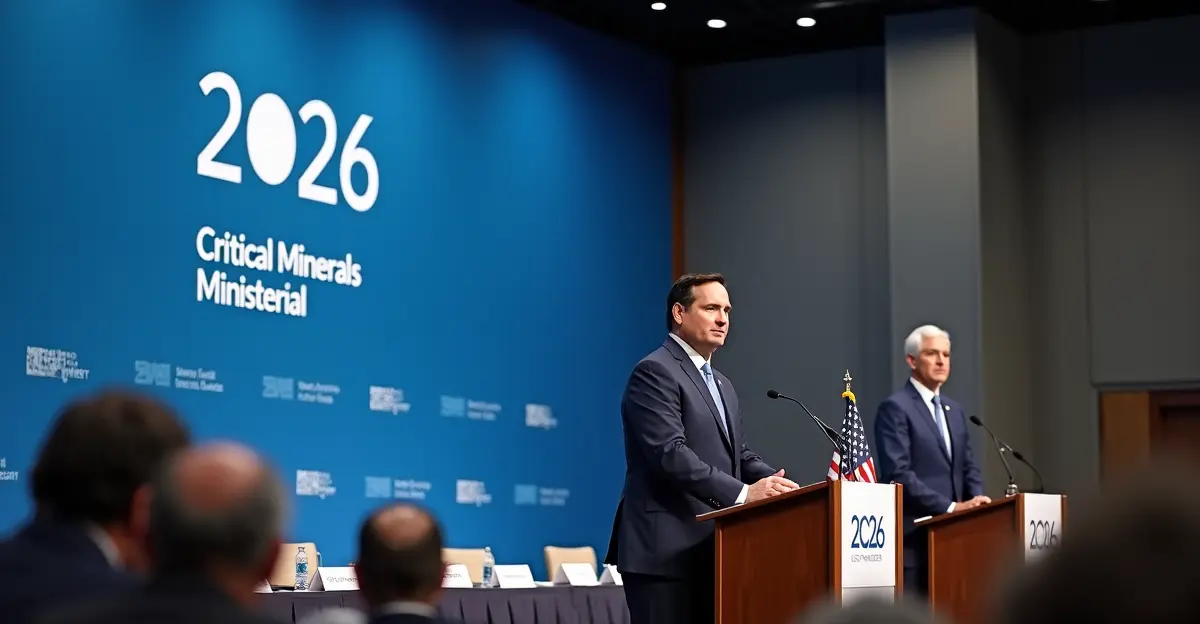
On February 4, 2026, the United States hosted the Critical Minerals Ministerial in Washington, D.C., bringing together representatives from 54 nations and the European Commission. The event marked a structural realignment of global resource strategy, with the U.S. announcing over $30 billion in financing for critical mineral projects and the launch of FORGE (Forum on Resource Geostrategic Engagement) to replace the Minerals Security Partnership (MSP). This pivot toward bilateral, U.S.-led critical mineral alliances directly challenges China's dominance, which controls over 60% of refined lithium and cobalt and roughly 80% of battery-grade rare earths.
Background: The Strategic Importance of Critical Minerals
Critical minerals—including lithium, cobalt, nickel, graphite, and rare earth elements—are essential for electric vehicle batteries, semiconductors, wind turbines, and defense technologies. China has spent decades building a stranglehold on these supply chains, investing nearly $57 billion between 2000 and 2021 in extraction and refining across Africa, Latin America, and Asia. The U.S. critical minerals strategy has long sought to reduce this dependency, but previous efforts under the MSP yielded limited results. The 2026 Ministerial represents a more aggressive, finance-driven approach.
Key Outcomes of the 2026 Critical Minerals Ministerial
11 New Bilateral Frameworks
The U.S. signed 11 new bilateral critical minerals frameworks or memoranda of understanding with countries including Argentina, Morocco, the Philippines, the United Arab Emirates, and the United Kingdom. These agreements cover joint investment in mining, processing, and recycling infrastructure, as well as technology sharing for refining and manufacturing. The bilateral approach allows the U.S. to tailor terms to each partner's resources and strategic needs, bypassing the slower consensus-building of multilateral forums.
Launch of FORGE
Secretary of State Marco Rubio announced the creation of FORGE as the successor to the MSP. Chaired by the Republic of Korea through June 2026, FORGE aims to create a preferential trade-and-investment zone among member nations, with coordinated price floors and adjustable tariffs to stabilize markets. Unlike the MSP, which focused on dialogue, FORGE is designed for bold, decisive action—including joint stockpiling, shared processing facilities, and coordinated responses to market manipulation. The FORGE critical minerals partnership represents a shift from coordination to operational integration.
$30 Billion in Financing and Project Vault
The U.S. government has mobilized over $30 billion in letters of interest, investments, and loans over the past six months to support strategic minerals projects. The centerpiece is Project Vault, a $10 billion initiative backed by the Export-Import Bank of the United States (EXIM) to establish a U.S. Strategic Critical Minerals Reserve. This domestic stockpile will cover lithium, cobalt, rare earths, and other materials essential for defense and energy transition. Additionally, private sector partnerships such as Pax Silica—a $250 million venture for secure semiconductor supply chains—and a Glencore-Orion MOU for copper and cobalt assets in the Democratic Republic of the Congo were announced.
Implications for Global Supply Chains
The new alliance structure has profound implications for three key sectors:
Electric Vehicle Battery Supply Chains
With China controlling over 60% of lithium refining and 70% of cobalt processing, automakers and battery manufacturers have faced severe supply risks. The EV battery supply chain diversification efforts under FORGE aim to create alternative processing hubs in partner countries like Morocco and the Philippines. The $30 billion financing package includes loans for new lithium hydroxide plants and cobalt refineries outside China, potentially reducing dependency within five years.
Semiconductor and Tech Manufacturing
Rare earths are critical for semiconductors, magnets, and advanced optics. China supplies roughly 80% of battery-grade rare earths. The Pax Silica partnership and Project Vault's rare earth stockpiling aim to secure inputs for U.S. chip fabrication plants. However, experts note that building domestic rare earth processing capacity will take years and require sustained investment.
Defense Technology Independence
Permanent magnets, night-vision goggles, and precision-guided munitions rely on rare earths and specialty metals. The U.S. Department of Defense has identified critical mineral supply chains as a national security vulnerability. FORGE's coordinated stockpiling and price stabilization mechanisms are designed to insulate defense procurement from geopolitical coercion.
Expert Perspectives
"The $30 billion pivot is a recognition that multilateral dialogue alone cannot break China's grip on critical minerals," said Dr. Emily Benson, a trade policy scholar at the Center for Strategic and International Studies. "FORGE creates a preferential trading bloc that can offer partners tangible benefits—financing, technology, and market access—in exchange for diversifying away from Chinese processing."
However, some analysts caution that the strategy faces significant hurdles. "Permitting times for new mines in the U.S. can exceed a decade, and many partner countries lack the infrastructure for advanced refining," noted James Kynge, a global resources correspondent. "China's head start is measured in decades, not years."
Frequently Asked Questions
What is FORGE?
FORGE (Forum on Resource Geostrategic Engagement) is a U.S.-led critical minerals alliance launched in February 2026 as the successor to the Minerals Security Partnership. It creates a preferential trade-and-investment zone among member nations, with coordinated price floors, adjustable tariffs, and joint stockpiling mechanisms.
How much is the U.S. investing in critical minerals?
The U.S. government has mobilized over $30 billion in letters of interest, investments, and loans for critical mineral projects over the six months leading to February 2026. This includes $10 billion for Project Vault, a domestic strategic reserve.
Which countries signed bilateral frameworks?
Eleven new bilateral frameworks were signed with countries including Argentina, Morocco, the Philippines, the UAE, and the UK. These agreements cover joint investment, technology sharing, and supply chain development.
How does this challenge China's dominance?
China controls over 60% of refined lithium and cobalt and roughly 80% of battery-grade rare earths. FORGE and the bilateral frameworks aim to create alternative processing hubs, stabilize prices, and reduce dependency on Chinese supply chains through coordinated investment and trade policies.
What is Project Vault?
Project Vault is a $10 billion initiative backed by the Export-Import Bank of the United States to establish a U.S. Strategic Critical Minerals Reserve. It will stockpile lithium, cobalt, rare earths, and other materials essential for defense, energy transition, and technology manufacturing.
Conclusion and Future Outlook
The February 2026 Critical Minerals Ministerial and the launch of FORGE represent a structural realignment of global resource strategy. While the $30 billion financing package and bilateral frameworks signal unprecedented U.S. commitment, the long-term success will depend on execution—speeding up permitting, building processing capacity in partner countries, and maintaining political will across administrations. The critical minerals geopolitics 2026 landscape will be shaped by whether FORGE can deliver tangible supply chain diversification before China deepens its lead. For now, the pivot from multilateral coordination to bilateral, finance-driven alliances marks a new chapter in the race for resource security.



Follow Discussion