


 Deutsch
 English
 Español
 Français
 Nederlands
 Português


 Share
Share




What Are FORGE and Project Vault?
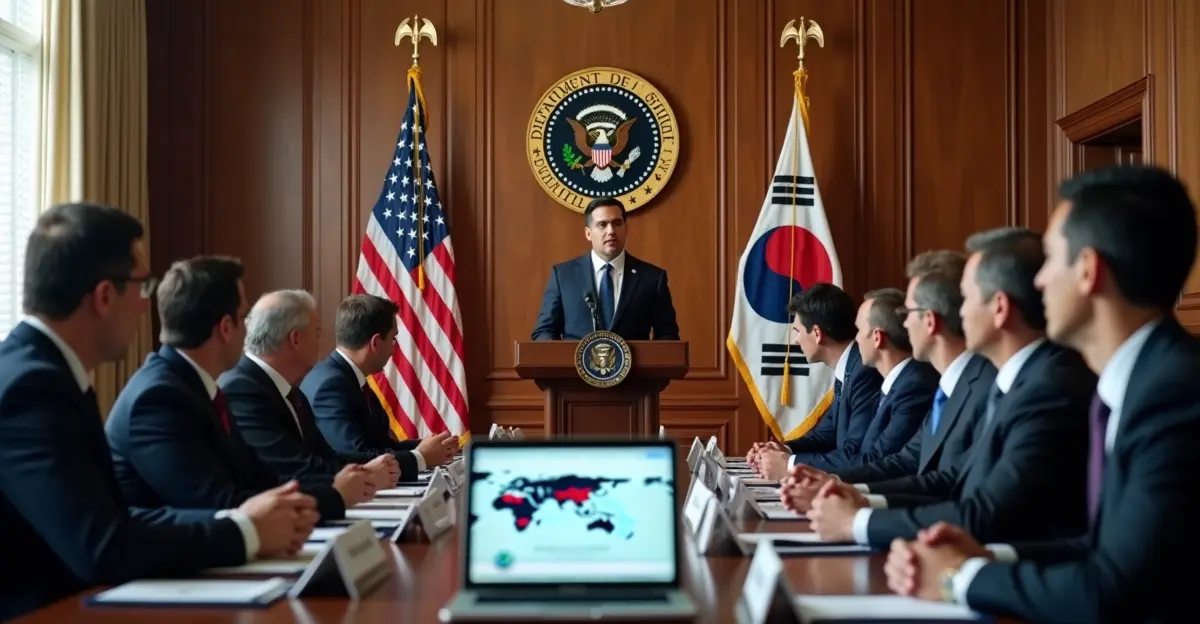
In February 2026, the United States launched two landmark initiatives — the Forum on Resource Geostrategic Engagement (FORGE) and Project Vault — at the largest diplomatic summit on raw materials in history, the Critical Minerals Ministerial in Washington, D.C. With 54 nations participating, these programs represent a fundamental pivot from the Minerals Security Partnership toward a plurilateral trade-and-investment zone with coordinated price floors, designed to counter China's near-total dominance of rare earth processing. FORGE is a new international forum chaired by the Republic of Korea, while Project Vault is a $12 billion public-private partnership to establish the U.S. Strategic Critical Minerals Reserve, backed by a $10 billion Export-Import Bank loan and nearly $2 billion in private capital.
The critical minerals race has become the defining geostrategic story of early 2026, as resource nationalism escalates globally and governments shift from market-based sourcing to state-coordinated resource security.
Context: Why FORGE and Project Vault Matter Now
China controls approximately 90% of global rare earth processing and 60% of lithium processing, with over $120 billion invested in overseas mining since 2023. In 2025, Beijing expanded export controls on rare earth elements, tungsten, antimony, and silver, with export licensing approval rates falling below 25% for European firms and triggering price spikes of up to sixfold. Over 80% of European companies depend on Chinese supply chains for materials essential to defense, electric vehicles, and renewable energy.
The Minerals Security Partnership (MSP), launched in 2022, was widely seen as too weak to counter these pressures. FORGE replaces it with enforceable mechanisms, including adjustable tariffs under Section 232 and coordinated reference prices for critical minerals at each stage of production, as outlined by Vice President JD Vance at the ministerial.
How FORGE Works: A Plurilateral Trade Bloc for Minerals
Structure and Membership
FORGE is designed as a plurilateral coalition creating a preferential trade-and-investment zone for critical minerals. South Korea chairs the forum through June 2026, and the United States has signed 21 bilateral critical minerals framework agreements with countries including Argentina, Morocco, Peru, the Philippines, the UAE, and the United Kingdom. The goal is to link these bilateral deals into a system covering two-thirds of the global economy.
Price Floors and Tariff Mechanisms
A key innovation is the use of coordinated price floors backed by adjustable tariffs. Vice President Vance described "reference prices for critical minerals at each stage of production" that would be maintained through trade measures. This mechanism aims to protect producers in partner countries from predatory pricing by state-owned Chinese enterprises and ensure stable returns for mining and processing investments. The U.S. government has mobilized over $30 billion in letters of interest, investments, and loans for critical mineral supply chain projects over the past six months.
Project Vault: America's $12 Billion Strategic Reserve
Project Vault is the most aggressive U.S. strategic stockpiling initiative since the Korean War. The independently governed public-private partnership will store essential raw materials — including rare earths, lithium, cobalt, and other critical minerals — in secure facilities across the United States. Companies can request specific minerals, pay upfront costs, and withdraw from the reserve at agreed-upon fixed rates, protecting manufacturers from supply shocks and price volatility.
The initiative has received strong support from major industrial players including GE Vernova, Boeing, Clarios, Mercuria, Traxys, and Hartree. Chairman Jovanovic of EXIM promoted the project at CSIS, on CNBC and Bloomberg, and at the Critical Minerals Ministerial. The strategic mineral reserve model draws on the National Defense Stockpile and Strategic Petroleum Reserve but is designed to be more flexible and market-responsive.
Parallel Global Stockpiling Moves
The U.S. initiatives are part of a broader global trend. Australia announced an $800 million reserve for antimony, gallium, and rare earths. The EU is advancing its RESourceEU joint critical raw materials strategy, while India and Brazil deepened cooperation on critical minerals. South Korea committed $172 million to expand stockpiles. The Australia-EU Free Trade Agreement, concluded in March 2026 after eight years of negotiations, offers tariff-free access for lithium, antimony, tungsten, and rare earths — though analysts warn it is not a quick fix for Australia's deep structural dependence on China, which processes 97% of Australia's lithium exports and 90% of its rare earths.
The resource nationalism trend is accelerating: governments increasingly treat supply chains as national security infrastructure rather than commercial markets.
Expert Perspectives: Can These Initiatives Succeed?
Analysts at the Atlantic Council describe FORGE as reflecting "the belief that collaboration, though slower, produces more durable solutions." However, key challenges remain. Coordinating reference prices across different minerals and production stages is technically complex. Translating bilateral leverage into genuine plurilateral coordination requires sustained diplomatic engagement. The Bipartisan Policy Center notes that Project Vault faces storage infrastructure needs and potential market destabilization risks.
A Council on Foreign Relations report by Heidi Crebo-Rediker and Mahnaz Khan argues that the U.S. cannot out-mine or out-process China and recommends an innovation-centered strategy to "leapfrog" China's dominance through substitute materials, waste-based recovery, and frontier technologies. The Chatham House warns that rebuilding independent alternatives would take 20-30 years, far exceeding the current geopolitical window, and that Western nations face a narrowing 12-18 month window to act decisively.
"The United States cannot address its critical mineral dependency alone," notes a Chatham House analysis from March 2026. "International partnerships are essential to counter China's dominant position."
FAQ: FORGE and Project Vault Explained
What is FORGE?
FORGE (Forum on Resource Geostrategic Engagement) is a plurilateral coalition launched by the U.S. in February 2026 to replace the Minerals Security Partnership. It creates a preferential trade-and-investment zone for critical minerals with coordinated price floors to counter adversarial market manipulation.
What is Project Vault?
Project Vault is a $12 billion public-private partnership to establish the U.S. Strategic Critical Minerals Reserve. Backed by a $10 billion EXIM loan and private investment, it stockpiles essential raw materials to protect manufacturers from supply disruptions and price volatility.
How does FORGE differ from the Minerals Security Partnership?
FORGE includes enforceable mechanisms such as adjustable tariffs under Section 232 and coordinated reference prices, whereas the MSP was a looser consultation framework without enforcement tools.
Which countries are participating in FORGE?
54 nations attended the Critical Minerals Ministerial. The U.S. has signed 21 bilateral critical minerals framework agreements, with South Korea chairing FORGE through June 2026. Partners include Argentina, Morocco, Peru, the Philippines, the UAE, and the UK.
What are the main challenges facing these initiatives?
Key challenges include coordinating price floors across diverse minerals and production stages, building storage infrastructure for Project Vault, streamlining domestic permitting, investing in recycling technologies, and maintaining genuine multilateral coordination beyond bilateral deals.
Conclusion: A New Era of Mineral Geopolitics
The launch of FORGE and Project Vault signals a decisive shift from market-based mineral sourcing to state-coordinated resource security. Whether these frameworks can de-risk supply chains for AI, defense, and energy transition technologies — or whether they accelerate geopolitical fragmentation into competing mineral blocs — will depend on execution. The next 12-18 months are critical for Western nations to build resilient alternatives before China's dominance becomes irreversible. As the global critical minerals landscape evolves, the race is on to secure the raw materials that power the 21st century economy.


Follow Discussion