


 Deutsch
 English
 Español
 Français
 Nederlands
 Português


 Share
Share




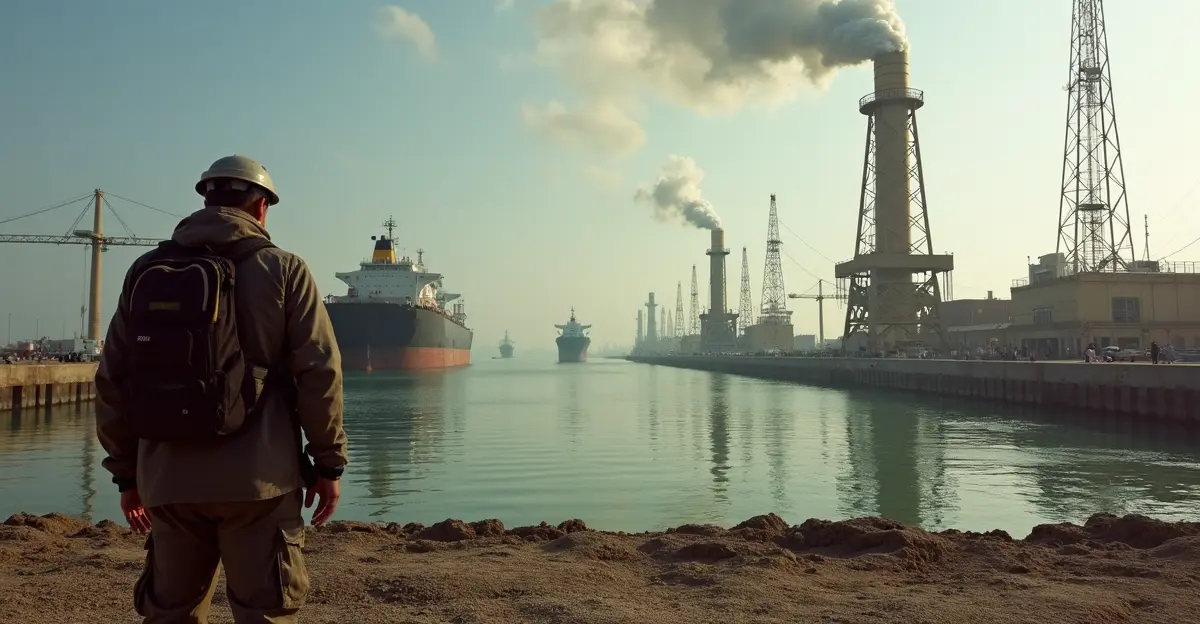
The Strait of Hormuz crisis, triggered by the US-Israeli air war against Iran on February 28, 2026, has slashed daily ship transits from approximately 130 to just 6—a 95% collapse that represents the largest disruption to world oil markets in history. As the United Nations Secretary-General declared in April that the blockade is 'strangling the global economy,' the ripple effects are cascading far beyond energy markets, threatening to push 32 million people into poverty and halve global trade growth to 1.5-2.5% in 2026, according to UNCTAD projections.
Background: How the Crisis Unfolded
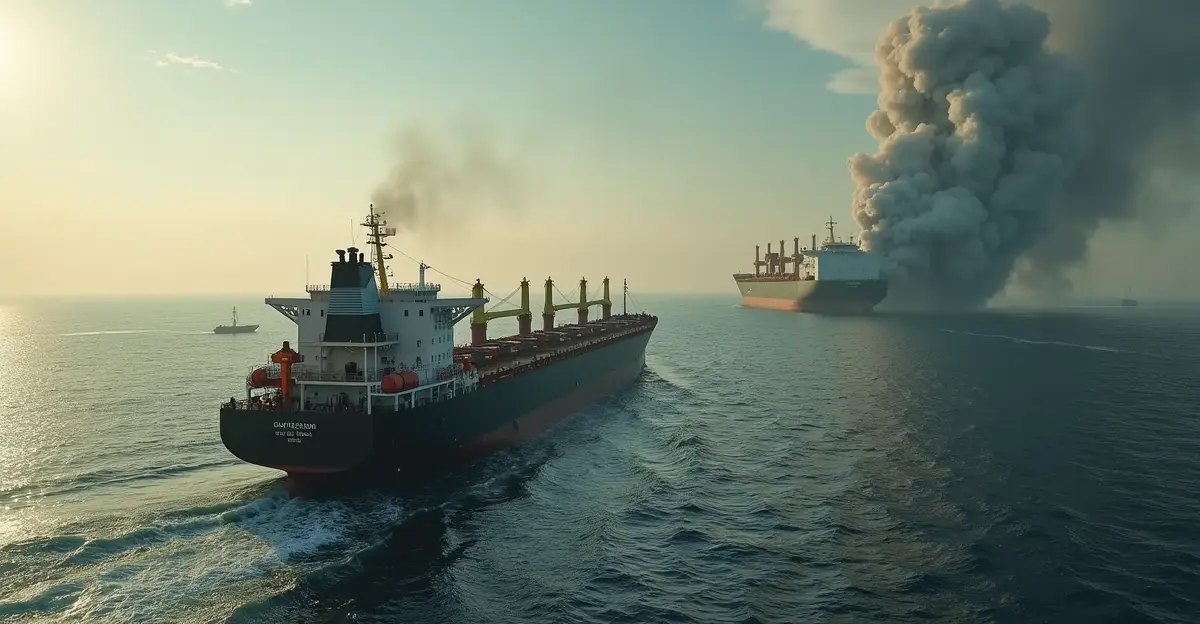
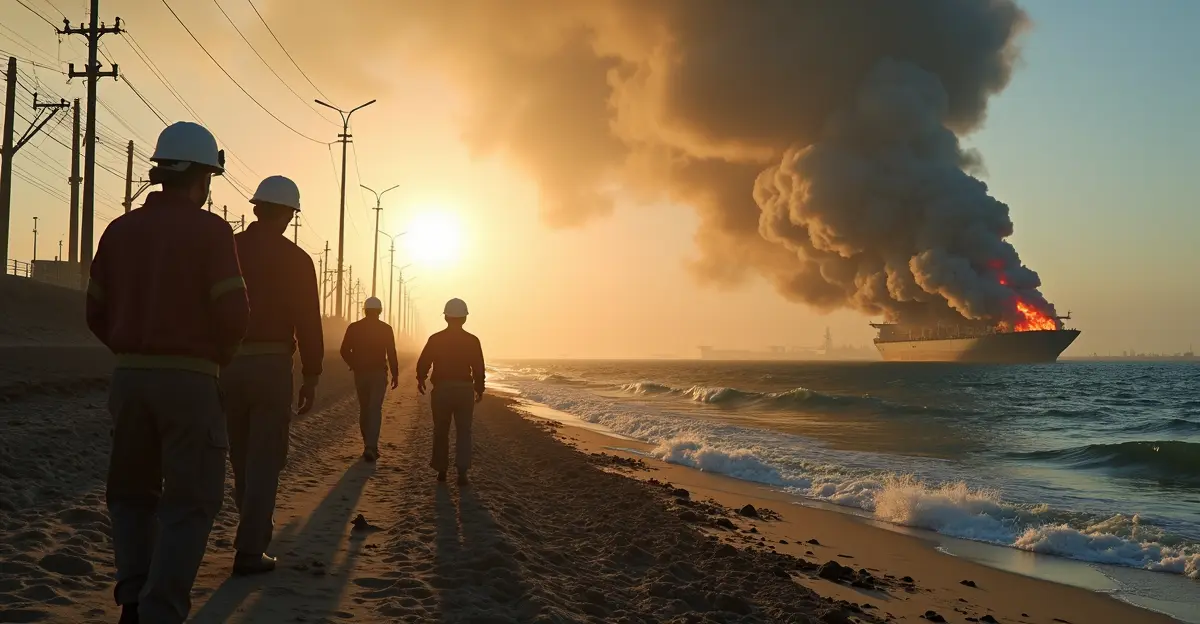
The crisis began on February 28, 2026, when the United States and Israel launched coordinated airstrikes against Iran, assassinating Supreme Leader Ali Khamenei. In retaliation, Iran's Islamic Revolutionary Guard Corps (IRGC) issued warnings forbidding passage through the Strait of Hormuz, boarded and attacked merchant ships, and laid sea mines. Tanker traffic initially dropped by 70%, with over 150 ships anchoring outside the strait. By March 27, Iran declared the strait closed to vessels going to or from the US, Israel, and their allies. The International Maritime Organization reported that approximately 20,000 mariners and 2,000 ships were stranded in the Persian Gulf.
The US naval blockade of Iran began on April 13, creating what The Guardian described as a 'dual blockade'—the US blockading Iranian ports while Iran blockaded the Gulf. In early May, President Trump launched Operation Project Freedom to escort merchant ships out of the Gulf, before pausing it on May 6 amid ceasefire negotiations that remain fragile.
Oil Markets: The Largest Supply Shock Since 1973
Brent crude oil prices surpassed $100 per barrel on March 8 for the first time in four years, peaking at $126 per barrel. The Dallas Federal Reserve estimates that the closure removes nearly 20% of global oil supplies—three to five times larger than previous shocks like the 1973 or 1990 oil crises. Their analysis models that a one-quarter closure would raise WTI oil prices to $98/barrel and reduce global real GDP growth by an annualized 2.9 percentage points. A prolonged closure of two to three quarters could push oil prices as high as $132/barrel, with persistent negative growth effects.
Wood Mackenzie's worst-case scenario warns that if the strait remains closed through end-2026, Brent crude could approach $200/barrel, triggering a global GDP contraction of 0.4%. The Middle East itself could see GDP contract by 10.7% under this scenario.
Beyond Oil: The Commodity Domino Effect
Fertilizers and Food Security
The strait handles at least 20% of global seaborne fertilizer exports, including 46% of urea and 30% of ammonia. Fertilizer prices have already jumped 30-40%, with analysts warning nitrogen fertilizer prices could double. India, Bangladesh, and Brazil face acute risks to their planting seasons, threatening global food production. The UN warns that 45 million more people could face extreme hunger if disruptions continue through midyear.
Aluminum and Industrial Metals
Gulf producers account for approximately 10% of global primary aluminum output and 20% of exports. US imports of over 20% of its aluminum from the Persian Gulf, with prices hitting a four-year high. The global aluminum supply chain is under severe strain as smelters face feedstock shortages.
Helium and High-Tech Manufacturing
Qatar produces about one-third of the world's helium, vital for semiconductor manufacturing and MRI scanners. US suppliers are already warning of shortages that could disrupt medical imaging and electronics production globally.
Other Critical Commodities
Nearly half of global seaborne sulfur trade—critical for EV batteries and fertilizers—passes through the strait. A third of global seaborne methanol trade is disrupted, impacting plastics and chemical production in China. Petrochemicals worth $20-25 billion transit Hormuz annually, with polyethylene exports from the Middle East exceeding 40% of global trade.
Shipping and Trade: Rerouting the Global Economy
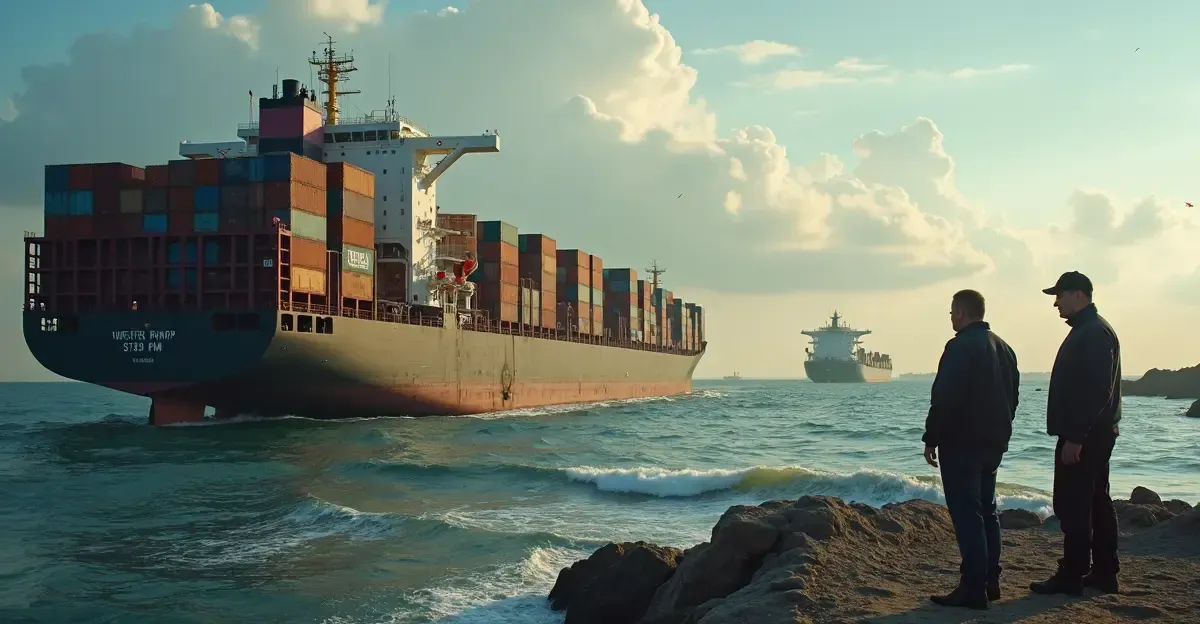
Major shipping lines including Maersk, MSC, CMA CGM, and Hapag-Lloyd have suspended operations through the Strait of Hormuz and Suez Canal, rerouting vessels around the Cape of Good Hope. This adds 10-14 days per voyage, with emergency surcharges reaching $3,000 per FEU. Transpacific rates to the US West Coast have risen approximately 40%, while Asia-North Europe rates have risen about 20%.
The Cape of Good Hope rerouting is becoming the new normal, with analysts at Stellenbosch University arguing this shift may persist beyond the current crisis. However, South African ports have not yet seen a meaningful surge in traffic, raising concerns about infrastructure readiness.
UNCTAD's April 2026 Global Trade Update projects that global trade growth—which reached $35 trillion in 2025—will halve to 1.5-2.5% in 2026, with the Hormuz crisis as the primary headwind. Trade inflation rebounded to nearly 1.5% in Q1 2026, driven by higher energy costs and tariff pressures.
Human Impact: Poverty, Jobs, and Inflation
The UN Secretary-General outlined three scenarios on April 30. In the best case—immediate lifting of restrictions—global growth could fall from 3.4% to 3.1% with inflation rising to 4.4%. If disruptions continue through midyear, 32 million people could be pushed into poverty and 45 million more could face extreme hunger. A worst-case scenario persisting through year-end risks a global recession with dramatic impacts on economic and political stability.
The International Labour Organization warns the crisis could cost up to 38 million full-time jobs globally by 2027, with real labor incomes declining by $3 trillion. Asia-Pacific and Arab states are most exposed. Inflation is already rising sharply across Asia—Laos saw prices jump from 6.2% to over 10%, and Pakistan from 7.3% to 10.9%. Regional currencies are weakening under the strain.
Developing economies are hit hardest. Around 80% of Gulf oil exports go to Asia, and the developing economy energy crisis is deepening as import-dependent nations face impossible fiscal trade-offs between food, fuel, and debt payments.
Energy Diversification: Accelerating the Transition?
The crisis has renewed global urgency around energy diversification. Gulf Cooperation Council countries have already committed to significant green energy investments, with renewable capacity rising 58% in 2025 to 24 GW and another 165 GW planned. However, experts at Argus Media note that Gulf states are unlikely to radically shift policies, focusing instead on alternative export routes like the UAE's West-East overland pipeline.
For oil-importing nations, the crisis is accelerating electrification and renewable energy deployment. The European Union has fast-tracked several solar and wind projects, while Japan and South Korea are expanding strategic petroleum reserves and LNG import terminals. Wood Mackenzie notes that under an extended disruption scenario, oil-importing countries would 'accelerate electrification efforts to reduce dependence on hydrocarbons.'
Expert Perspectives
'This is the largest disruption to world energy supply since the 1970s energy crisis,' said a senior analyst at the International Energy Agency. 'The scale and speed of the shock are unprecedented in the history of the world oil market.'
ADNOC's CEO called the closure 'economic terrorism,' while Singapore's Foreign Minister labeled it an 'Asian crisis,' reflecting the disproportionate impact on the region that consumes 80% of Gulf oil exports.
UN Secretary-General António Guterres urged parties to immediately restore navigational rights, stating: 'Open the Strait. Let all ships pass. Let the global economy breathe again.'
Frequently Asked Questions
What caused the Strait of Hormuz crisis in 2026?
The crisis began on February 28, 2026, when the US and Israel launched an air war against Iran and assassinated Supreme Leader Ali Khamenei. Iran retaliated by blocking the Strait of Hormuz, boarding ships, and laying sea mines.
How much has shipping traffic declined?
Daily ship transits have fallen from approximately 130 to just 2-16 vessels per day—a decline of over 90%. About 20,000 mariners and 2,000 ships remain stranded in the Persian Gulf.
What commodities are affected beyond oil?
Fertilizers (46% of global urea trade), aluminum (10% of global supply), helium (33% of global supply), sulfur, methanol, petrochemicals, and LNG are all severely disrupted.
How many people could be pushed into poverty?
The UN estimates that 32 million people could be pushed into poverty if disruptions continue through mid-2026, with 45 million more facing extreme hunger. Up to 38 million jobs could be lost by 2027.
What are the long-term implications for global trade?
UNCTAD projects global trade growth will halve to 1.5-2.5% in 2026. The crisis is accelerating energy diversification, rerouting shipping lines around the Cape of Good Hope, and forcing a fundamental revaluation of supply chain resilience across Asia, Europe, and the Middle East.
Conclusion: A Defining Crisis for 2026
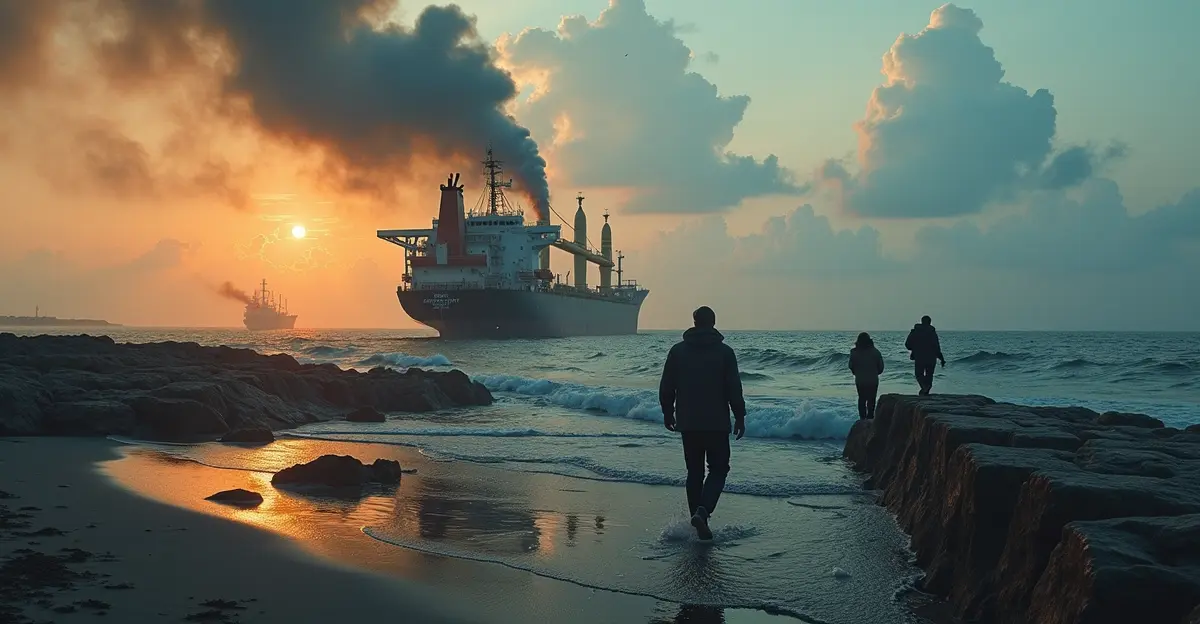
The Strait of Hormuz crisis is the defining geopolitical and economic event of 2026, with implications still unfolding in real time. Beyond the immediate oil price shock, the crisis is fundamentally reshaping global supply chains, accelerating energy transitions, and redrawing the map of maritime trade. The future of global trade routes hangs in the balance as the world watches whether diplomacy or further escalation will prevail. What is clear is that the global economy will not emerge from this crisis unchanged.
Follow Discussion