


 Deutsch
 English
 Español
 Français
 Nederlands
 Português


 Share
Share




In February 2026, the United States launched the Forum on Resource Geostrategic Engagement (FORGE), a preferential trade bloc designed to counter China's near-monopoly on rare earths, lithium, and copper processing. The initiative, signed with 11 countries at the inaugural Critical Minerals Ministerial in Washington, D.C., marks the most aggressive U.S. push to restructure global critical minerals supply chains since the Cold War. Combined with the Strait of Hormuz oil shock in March 2026 and the Pax Silica AI chip framework, FORGE signals a fundamental realignment of world trade along resource-security lines.
What Is FORGE and Why Does It Matter?
FORGE is the successor to the Minerals Security Partnership (MSP), a plurilateral coalition that aims to create a preferential trade-and-investment zone for critical minerals with coordinated price floors. At the February 4, 2026 ministerial, Vice President JD Vance proposed reference prices maintained through adjustable tariffs to counter what the administration calls 'non-market distortions' by China. The bloc now includes 21 bilateral framework agreements signed in five months, covering Argentina, Morocco, Peru, the Philippines, the UAE, the UK, and others. South Korea chairs FORGE through June 2026.
The U.S. has mobilized over $30 billion in investments, including a $10 billion Export-Import Bank loan for Project Vault, a domestic critical minerals stockpile. The Minerals Security Partnership Forum laid the groundwork, but FORGE elevates cooperation to a binding economic security architecture.
The Strait of Hormuz Shock: Energy Vulnerability Exposed
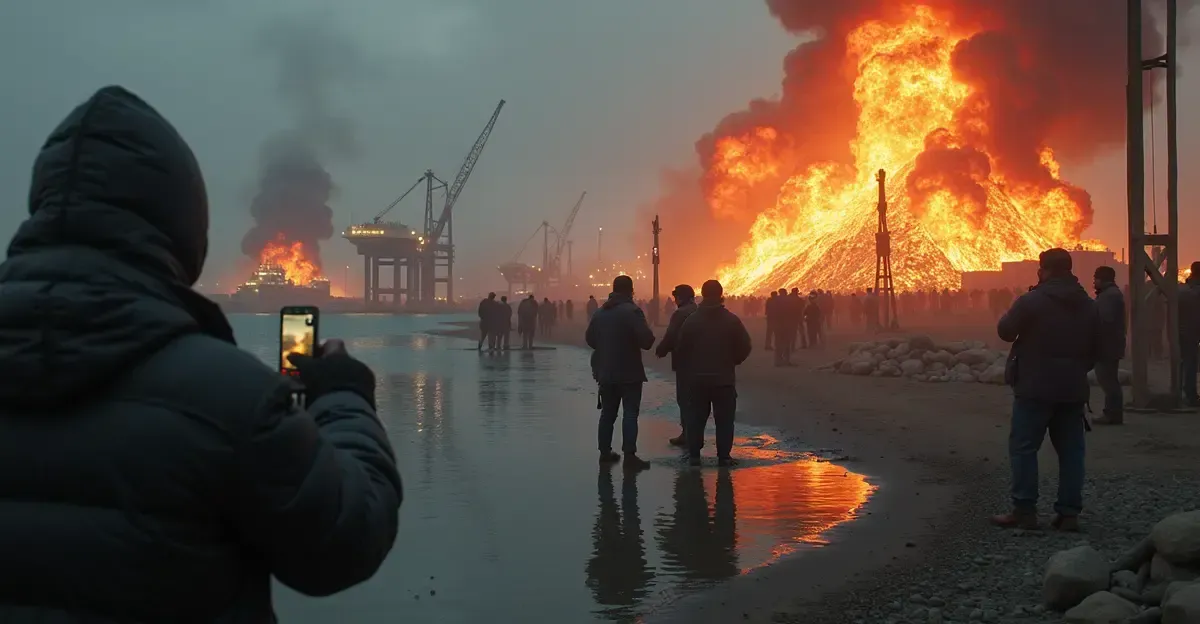
Just weeks after FORGE's launch, the effective closure of the Strait of Hormuz in March 2026 sent oil prices to $119 per barrel—the highest since 2008. The U.S.-Israeli conflict with Iran shut a chokepoint through which 20.5 million barrels of oil and LNG pass daily. The International Energy Agency coordinated a record 400-million-barrel strategic reserve release, but analysts estimate a net shortfall of 10 million barrels per day persists.
The crisis underscored the urgency of resource security. Asia, heavily reliant on Middle Eastern crude, faced severe disruptions: China halted fuel exports, South Korea imposed price caps for the first time in 30 years, and Bangladesh shut universities to conserve power. The Strait of Hormuz oil disruption 2026 demonstrated that energy and mineral supply chains are equally vulnerable to geopolitical shocks.
Pax Silica: The AI Supply Chain Framework
Complementing FORGE, the Pax Silica initiative—launched in December 2025—focuses on securing supply chains for semiconductors and AI infrastructure. Named to evoke the 'Pax Romana' era of stability, Pax Silica brings together 15 signatory nations including Australia, Japan, South Korea, Singapore, the UK, and the U.S. to reduce 'coercive dependencies' on China for silicon, rare earths, and advanced manufacturing.
In early 2026, the U.S. pledged $250 million toward an investment consortium for energy and critical mineral supply chains under Pax Silica. The initiative includes supply-chain mapping, co-investment projects, and critical infrastructure protection. Together, FORGE and Pax Silica create a layered architecture: FORGE secures raw materials, while Pax Silica protects the high-tech processing and fabrication stages.
China's Dominance and the West's Narrowing Window
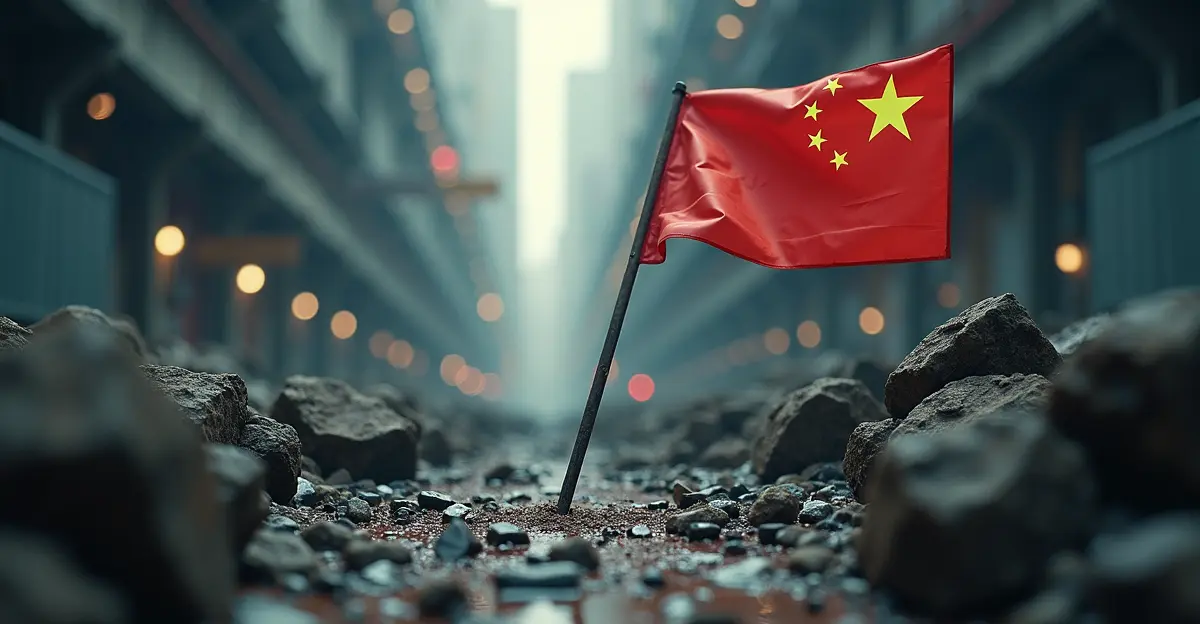
China controls approximately 90% of global rare earth processing, 80% of battery-grade graphite, and 60% of refined lithium and cobalt. Its 15th Five-Year Plan (2026–2030) will further cement this dominance. Chinese state-owned enterprises have invested $12.1 billion in African mining alone, and own roughly 80% of Indonesia's nickel refining capacity.
Analysts warn the West has a 12- to 18-month window to build alternative processing capacity. Rebuilding independent refineries could take 20–30 years, leaving supply chains vulnerable to potential cartelization. The China critical minerals dominance 2026 remains the single greatest structural challenge to Western industrial strategy.
Multinationals Forced to Choose Sides
The emerging bloc system is forcing multinational corporations to pick allegiances. Companies operating in both the U.S.-led and China-dominated spheres face rising compliance costs, dual supply chains, and potential market exclusion. For example, Argentina—which signed a framework with the U.S.—has stated its agreement does not exclude Chinese investment, highlighting the friction between economic necessity and geopolitical alignment.
European firms are particularly caught in the middle. The EU's Critical Raw Materials Act and ReSourceEU initiative allocate €3 billion for strategic projects, but financing volumes remain insufficient to match China's scale. Some European and South Korean officials have signaled reluctance to fully decouple from China given deep economic interdependencies.
Global Trade Growth Slows to 1.5–2.5%
UNCTAD's Trade and Development Foresights 2026 report projects world merchandise trade growth will slow from 4.7% in 2025 to just 1.5–2.5% in 2026—the lowest since 2023. The decline is attributed to geopolitical tensions, supply chain disruptions, and volatile shipping costs. Developing economies face mounting pressure from higher import costs, currency weakening, and tighter financing conditions.
The UNCTAD trade growth 2026 report warns that trade growth has become concentrated in AI-related products like semiconductors and servers, while traditional commodity trade stagnates. This bifurcation mirrors the broader fragmentation of global supply chains along geopolitical lines.
Expert Perspectives
'The United States cannot out-mine or out-process China in critical minerals,' warns a Council on Foreign Relations report. 'Instead, it must pursue an innovation-led strategy to leapfrog Chinese dominance through materials engineering, waste-based recovery, and AI-enabled materials research.'
Hany Besada and Nancy Abdelhadi of the London School of Economics argue that 'true power lies not in who owns mineral deposits underground, but who controls midstream processing and refining after extraction.' They note that resource-rich countries in Africa and Latin America are repositioning themselves as strategic actors, leveraging competition to advance their own industrial ambitions.
FAQ
What is FORGE?
FORGE (Forum on Resource Geostrategic Engagement) is a U.S.-led plurilateral coalition launched in February 2026 to create a preferential trade-and-investment zone for critical minerals, with coordinated price floors to counter Chinese market influence.
How does the Strait of Hormuz crisis affect critical minerals?
The March 2026 closure of the Strait of Hormuz sent oil prices to $119/barrel, demonstrating the vulnerability of global resource supply chains. It reinforced the urgency of diversifying critical mineral sources away from geopolitically risky chokepoints.
What is Pax Silica?
Pax Silica is a U.S.-led international initiative launched in December 2025 to secure supply chains for semiconductors, AI infrastructure, and critical minerals. It involves 15 signatory nations and focuses on reducing coercive dependencies on China.
Can the West catch up to China in critical minerals processing?
Analysts estimate a 12- to 18-month window to begin building alternative capacity, but full independence could take 20–30 years. China currently controls ~90% of rare earth processing and ~80% of battery-grade graphite.
How are developing countries affected?
Developing economies face higher import costs, currency weakening, and tighter financing due to trade fragmentation. However, resource-rich countries in Africa and Latin America are leveraging competition between blocs to negotiate better terms and build domestic processing capacity.
Conclusion: A New Geopolitical Landscape
The launch of FORGE, the Strait of Hormuz shock, and the Pax Silica framework collectively represent the most significant restructuring of global resource supply chains in decades. As the U.S.-led bloc and China's existing network compete for dominance, multinationals, developing nations, and allied governments must navigate a fragmented landscape where resource security trumps free trade. The outcome will determine not only who powers the 21st-century economy, but who controls the strategic leverage that comes with it.


Follow Discussion