


 Deutsch
 English
 Español
 Français
 Nederlands
 Português


 Share
Share




The year 2026 marks a decisive turning point in global trade as nations race to secure critical minerals essential for AI chips, semiconductors, and clean energy infrastructure. The U.S.-led Critical Minerals Ministerial in February 2026 launched the FORGE initiative with over $30 billion in financing from 54 countries, signaling a strategic shift away from China-dominated supply chains for gallium, germanium, and rare earths. This new supply chain geopolitics, combined with UNCTAD data showing 18,000 discriminatory trade measures since 2020 and slowing global trade growth, is creating a structural paradigm where supply chain security rivals cost efficiency as the primary corporate and national imperative.
What Is Driving the Critical Mineral Competition in 2026?
The competition for critical minerals has intensified as demand for AI chips, semiconductors, and clean energy technologies skyrockets. China currently controls over 90% of rare-earth processing and more than 60% of lithium and cobalt refining, according to industry analyses. Beijing's export controls on rare earths, tungsten, and lithium materials have driven price spikes up to sixfold outside China, exposing acute vulnerabilities in Western defense and green energy supply chains. The critical minerals race has become a central geoeconomic battleground, prompting the U.S. and its allies to launch ambitious countermeasures.
The FORGE Initiative: A New Framework for Mineral Security
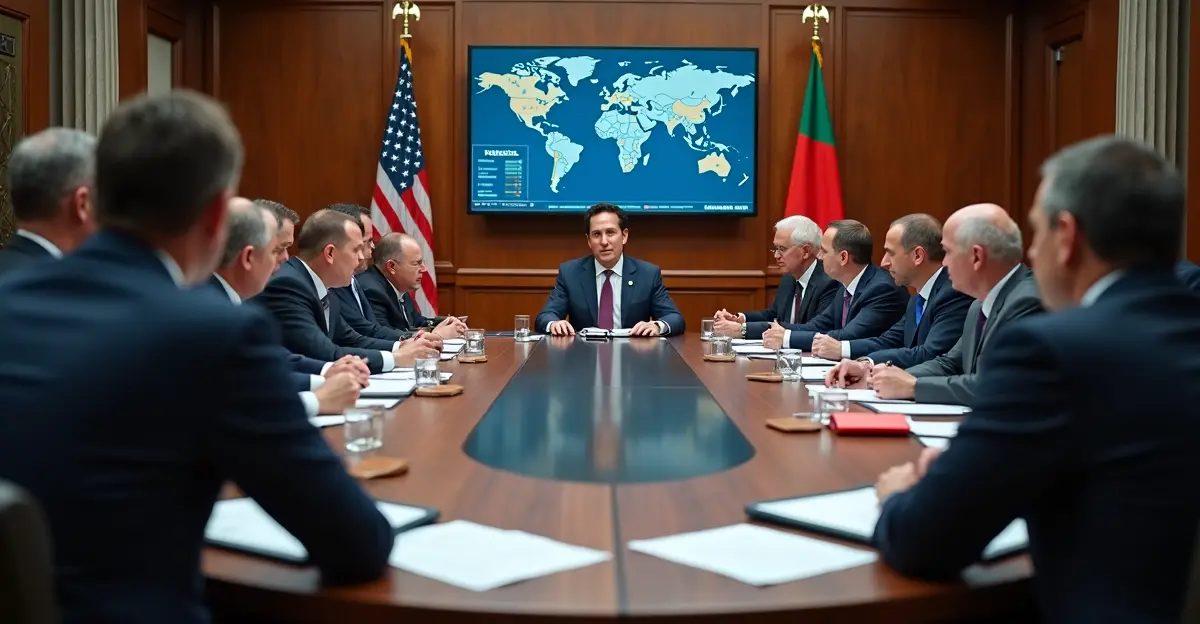
On February 4, 2026, the United States hosted the inaugural Critical Minerals Ministerial in Washington, D.C., led by Secretary of State Marco Rubio and Vice President JD Vance, with representatives from 54 countries and the European Commission. The event announced FORGE (Forum on Resource Geostrategic Engagement) as the successor to the Minerals Security Partnership (MSP), chaired by South Korea. FORGE is a plurilateral coalition creating a preferential trade-and-investment zone for critical minerals, featuring coordinated price floors to counter adversarial market manipulation. Vice President Vance described "reference prices" maintained through adjustable tariffs to ensure pricing integrity and stable investment conditions.
The ministerial produced 11 new bilateral critical minerals frameworks or MOUs, bringing the total to 21 deals in five months, with 17 more countries reportedly completing negotiations. The U.S. mobilized over $30 billion in letters of interest, investments, and loans, including a $10 billion Export-Import Bank initiative called Project Vault to establish a domestic Strategic Critical Minerals Reserve. However, significant challenges remain: building processing plants takes 5–7 years and costs up to $1 billion, while specialized expertise remains concentrated in China. Analysts warn of a narrow 12-to-18-month window before dependencies become structurally entrenched.
Global Trade Under Pressure: UNCTAD's 2026 Report
UNCTAD's January 2026 Global Trade Update paints a stark picture of a fragmenting global trading system. Since 2020, nearly 18,000 discriminatory trade measures have been enacted globally, affecting roughly two-thirds of global trade. Global trade growth is projected to slow to 1.5–2.5% in 2026, down from 7% growth in 2025 when trade hit a record $35 trillion. Services now account for 27% of global trade, growing at approximately 9%, with 56% of services digitally delivered — though only 16% in least developed countries.
US-China bilateral trade has shrunk by about 30%, with $165 billion in flows redirected through third countries like Vietnam and Mexico, raising corporate operating costs by 15–25%. Meanwhile, South-South trade surged to $6.8 trillion in 2025, with 57% of developing-country exports now flowing to other developing economies — up from less than 40% a decade ago. Global GDP growth is projected to stagnate at 2.6% in 2026. The global trade reconfiguration is creating both risks and opportunities, particularly for developing economies that can position as neutral connectors between competing blocs.
How Critical Mineral Diplomacy Is Reshaping Alliances
The scramble for critical minerals is forging new geopolitical alliances. The U.S. FORGE initiative aims to link bilateral agreements into a system covering two-thirds of the global economy. Countries like Argentina, Morocco, the UAE, and the UK signed new frameworks at the February ministerial. The EU is pursuing its Critical Raw Materials Act with 60 Strategic Projects, while Gulf states like Saudi Arabia and the UAE are pivoting into mining investments. Australia and Vietnam are emerging as alternative sources for rare earths and lithium.
However, the transition faces structural hurdles. Building new processing capacity typically takes 10–15 years, and the specialized expertise required remains heavily concentrated in China. The rare earth supply chain remains vulnerable to disruption, and the effectiveness of FORGE's plurilateral coordination remains untested. As one analyst noted, "The question is whether a network built on bilateral leverage can become genuine plurilateral coordination."
Impact on AI, Semiconductors, and Clean Energy
The critical mineral competition directly affects the production of AI chips and semiconductors, which rely on gallium, germanium, and rare earths. China's export controls on these materials have already caused supply disruptions and price volatility. Clean energy technologies — including electric vehicle batteries, wind turbines, and solar panels — depend on lithium, cobalt, nickel, and graphite. The AI chip supply chain is particularly exposed, as advanced semiconductors require specialized minerals that are currently processed predominantly in China.
The U.S. Department of Defense has identified critical minerals as a national security priority, linking mineral security to defense manufacturing and AI hardware. The FORGE initiative's reference price mechanism aims to stabilize investment conditions, but the long lead times for new processing capacity mean that vulnerabilities will persist for years.
Expert Perspectives on the New Supply Chain Paradigm
Economists and geopolitical analysts emphasize that supply chain security has become the primary corporate and national imperative, surpassing cost efficiency. The era of "just-in-time" supply chains is giving way to "just-in-case" strategies, with companies building buffer stocks and diversifying suppliers. UNCTAD's report warns that protectionism and policy uncertainty are creating a new trade order where geopolitical alignment determines market access.
As one trade expert commented, "The 18,000 discriminatory measures since 2020 represent a systemic shift away from the multilateral trading system. Countries are now building supply chains based on trust and security, not just price." The US-China trade war has accelerated this trend, with both superpowers using mineral diplomacy to build spheres of influence.
Frequently Asked Questions
What is the FORGE initiative?
FORGE (Forum on Resource Geostrategic Engagement) is a U.S.-led plurilateral coalition launched in February 2026 to create a preferential trade-and-investment zone for critical minerals, featuring coordinated price floors to counter market manipulation by adversarial nations.
Why are critical minerals important for AI chips?
AI chips and semiconductors require gallium, germanium, and rare earths for their production. These minerals are essential for advanced computing, and China currently dominates their processing, creating supply chain vulnerabilities.
How many discriminatory trade measures have been enacted since 2020?
According to UNCTAD's January 2026 report, nearly 18,000 discriminatory trade measures have been enacted globally since 2020, affecting roughly two-thirds of global trade.
What is Project Vault?
Project Vault is a $10 billion Export-Import Bank initiative announced at the Critical Minerals Ministerial to establish a U.S. Strategic Critical Minerals Reserve, aimed at reducing dependence on Chinese supply chains.
How is South-South trade changing global commerce?
South-South trade surged to $6.8 trillion in 2025, with 57% of developing-country exports now flowing to other developing economies, up from less than 40% a decade ago, reshaping traditional trade patterns.
Conclusion: A New Structural Paradigm
The convergence of critical mineral competition, tariff escalation, and AI-driven semiconductor demand is creating a new structural paradigm in global trade. Supply chain security now rivals cost efficiency as the primary driver of corporate and national strategy. The FORGE initiative represents a significant diplomatic effort to build alternative supply chains, but the long timelines for new processing capacity and China's entrenched dominance mean that the transition will be gradual and contested. As 2026 unfolds, the world is witnessing the birth of a new supply chain geopolitics that will define global trade for decades to come.




Follow Discussion