


 Deutsch
 English
 Español
 Français
 Nederlands
 Português


 Share
Share




The Strait of Hormuz, a 33-kilometer-wide maritime chokepoint connecting the Persian Gulf to the open ocean, has been effectively closed since February 28, 2026, triggering what the UN Food and Agriculture Organization (FAO) calls one of the most severe shocks to global commodity flows in recent history. With tanker traffic collapsing by over 90%, the disruption is reshaping global food security by severing supply chains for crude oil, natural gas, and fertilizers—commodities that represent 20–35% of global seaborne trade. As fertilizer prices surge up to 28% in early 2026 and the FAO warns that a prolonged disruption could severely reduce yields of staple crops like wheat and rice, the crisis threatens to trigger a cascading food emergency in import-dependent nations from South Asia to Sub-Saharan Africa.
Background: The Strait of Hormuz as a Global Chokepoint
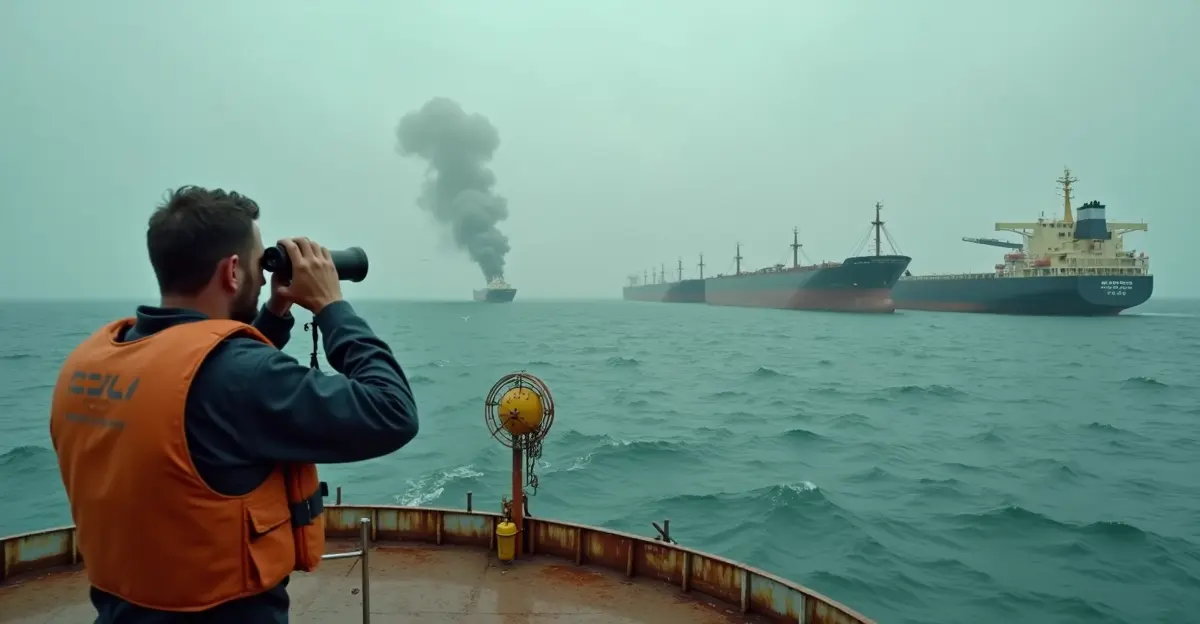
The Strait of Hormuz is one of the world's most strategically important waterways. According to the WTO Strait of Hormuz Trade Tracker, before the crisis, roughly 20 million barrels of crude oil (25% of global seaborne oil), 20% of liquefied natural gas (LNG), and up to 30% of internationally traded fertilizers passed through the strait daily. The waterway is the only maritime route for major Gulf producers including Saudi Arabia, Iraq, Qatar, the UAE, and Kuwait. The 2026 Iran war and subsequent US-Israeli military operations led Iran to block the strait on February 28, 2026, deploying sea mines and attacking merchant vessels. By early March, outbound crude oil flows had dropped by 95%, LNG by 99%, and fertilizer-related cargoes by 87%, according to the WTO tracker. Brief reopening windows in April produced no measurable recovery.
The Fertilizer Shock: Prices Surge and Supply Chains Fracture
Urea Prices Soar 80%
The World Bank's fertilizer price index rose over 12% in Q1 2026, reaching its highest level since October 2022. Urea prices surged above $850 per metric ton by April—up 80% since February—driven by halted ammonia production in Iran and suspended urea output in Qatar following facility damage. Middle East urea rose 19% and Egyptian urea 28% in early March alone, according to FAO data. DAP (diammonium phosphate) prices rose over 10% in April, while MOP (muriate of potash) increased 5% in Q1. The World Bank projects the index will rise over 30% in 2026 before easing in 2027, though risks remain elevated if shipping disruptions persist beyond Q3.
Vulnerable Nations Face a 'Double Shock'
FAO Chief Economist Máximo Torero warned at a March 2026 UN press briefing that farmers face a 'double shock' from rising fertilizer and fuel prices. Countries most at risk include Sri Lanka, Bangladesh, India, Egypt, Sudan, and several Sub-Saharan African nations. Bangladesh sources 53.3% of its fertilizers from the Gulf and applies 170 kg of nitrogen per hectare—among the highest rates globally. Sudan imports 54% of fertilizers from Gulf sources. Kenya imports 40% of its fertilizer and 90% of its wheat. Even Brazil, a major global food exporter, sources ~20% of its fertilizers from the Gulf, meaning higher production costs could tighten global supplies. The global fertilizer supply chain has proven alarmingly fragile.
Energy Crisis Compounds Agricultural Pressures
The disruption has also sent energy prices soaring. Brent crude surged from around $61 per barrel before the conflict to $138 per barrel at its peak, before settling below $100 after a fragile April ceasefire brokered by Pakistan. The IMF's April 2026 World Economic Outlook explicitly frames the global economy as operating 'in the shadow of war,' presenting three scenarios: a baseline with oil at $82/barrel and global growth at 3.1%; an adverse scenario with oil at $100/barrel, growth at 2.5%, and inflation at 5.4%; and a severe scenario with oil at $110–125/barrel, growth collapsing to 2.0%, and inflation exceeding 6%—bringing the world close to recession. IMF Chief Economist Pierre-Olivier Gourinchas warned the world is drifting from the baseline toward the adverse scenario daily. War-risk insurance premiums for vessels transiting the strait spiked from 0.25% to 10% of vessel value, further discouraging shipping.
Modern agriculture is heavily dependent on energy for irrigation, mechanization, and fertilizer production. The energy-fertilizer-food nexus means that higher oil and gas prices directly increase the cost of nitrogen-based fertilizers, which require natural gas as a feedstock. The FAO warns that if the disruption persists beyond three months, reduced fertilizer application will lower yields for wheat, rice, and maize, potentially triggering crop substitutions and increased competition from biofuel production.
Impact on Global Food Security: A Cascading Crisis
The FAO's May 2026 Cereal Supply and Demand Brief forecasts 2025 global cereal production at 3,040 million tonnes, a 6% increase year-over-year, with comfortable stock-to-use ratios. However, the 2026 outlook for wheat and maize faces significant uncertainty due to rising input costs. FAO projects wheat production could decline about 2% year-on-year if fertilizer shortages persist. The crisis is evolving from a short-term shipping issue into a systemic global agri-food crisis, according to FAO warnings. Global food price shocks could be triggered within 6 to 12 months if the strait remains closed.
Import-dependent nations in South Asia and Sub-Saharan Africa are most vulnerable. India and China rely on the Gulf for ~20% of fertilizer imports. West African cocoa producers face disruptions that could affect global chocolate prices. The crisis also threatens the livelihoods of millions of migrant workers in Gulf countries who send remittances home—a critical income source for many developing economies.
Expert Perspectives and Policy Responses
Máximo Torero, FAO Chief Economist, stated at the UN: 'This is not just a shipping crisis; it is a food security crisis in the making. We are seeing a double shock to farmers—higher fuel costs and higher fertilizer costs—at a time when many are already struggling with debt and climate impacts.' He called for urgent international action, including alternative trade corridors, emergency balance-of-payment support, diversifying fertilizer sources, and treating food systems with the same strategic importance as energy and transport sectors.
The World Bank notes that unlike the 2021–2022 fertilizer price spike, the current surge is somewhat tempered because Northern Hemisphere growers had pre-secured supplies, natural gas prices rose less sharply, and trade flows are being rerouted through land corridors. However, risks remain elevated if energy prices persist and shipping disruptions continue beyond Q3 2026. The IMF's World Economic Outlook scenarios underscore the gravity of the situation.
FAQ
What percentage of global fertilizer trade passes through the Strait of Hormuz?
Approximately 30% of globally traded fertilizers—including urea, ammonia, and phosphates—pass through the Strait of Hormuz. The disruption has cut fertilizer-related cargoes by 87%.
How much have fertilizer prices increased due to the crisis?
The World Bank fertilizer price index rose over 12% in Q1 2026. Urea prices surged 80% from February to over $850 per metric ton by April. Middle East urea rose 19% and Egyptian urea 28% in early March alone.
Which countries are most vulnerable to food insecurity from this crisis?
Countries most at risk include Sri Lanka, Bangladesh, India, Egypt, Sudan, Kenya, and several Sub-Saharan African nations. Bangladesh sources 53.3% of its fertilizers from the Gulf, while Sudan imports 54% from Gulf sources.
How long can the disruption continue before it impacts crop yields?
The FAO warns that if the disruption persists beyond three months, reduced fertilizer application will begin to lower yields for wheat, rice, and maize. Global food price shocks could be triggered within 6 to 12 months.
What are the IMF's economic scenarios for this crisis?
The IMF's April 2026 World Economic Outlook presents three scenarios: baseline (oil at $82/barrel, growth 3.1%), adverse (oil at $100/barrel, growth 2.5%, inflation 5.4%), and severe (oil at $110–125/barrel, growth 2.0%, inflation >6%). The world is currently drifting toward the adverse scenario.
Conclusion: A Watershed Moment for Global Food Systems
The Strait of Hormuz crisis has exposed the profound vulnerability of global food systems to disruptions in energy and fertilizer supply chains. As the 2026 global food crisis unfolds, policymakers face urgent decisions about diversifying supply routes, investing in domestic fertilizer production, and building strategic reserves. The crisis underscores that food security is inseparable from energy security—and that the world's dependence on a handful of maritime chokepoints represents a systemic risk that demands coordinated international action. With the IMF warning of near-recession scenarios and the FAO signaling potential harvest failures, the coming months will test the resilience of global food systems as never before.


Follow Discussion