


 Deutsch
 English
 Español
 Français
 Nederlands
 Português


 Share
Share




Since late February 2026, the Strait of Hormuz — the world's most critical maritime chokepoint — has been virtually shut down, triggering a cascading crisis that now threatens global food security. Vessel transits through the strait have collapsed by over 95%, blocking 20-30% of global fertilizer trade and 30-35% of crude oil flows. This energy-fertilizer linkage is transmitting directly into food production costs as the next planting season approaches, with fertilizer prices spiking dramatically — urea up 46% month-on-month in March 2026, according to the World Bank. The World Food Programme now estimates that 45 million additional people could be pushed into acute hunger by mid-2026 if the crisis persists.
Background: The Strait of Hormuz Blockade
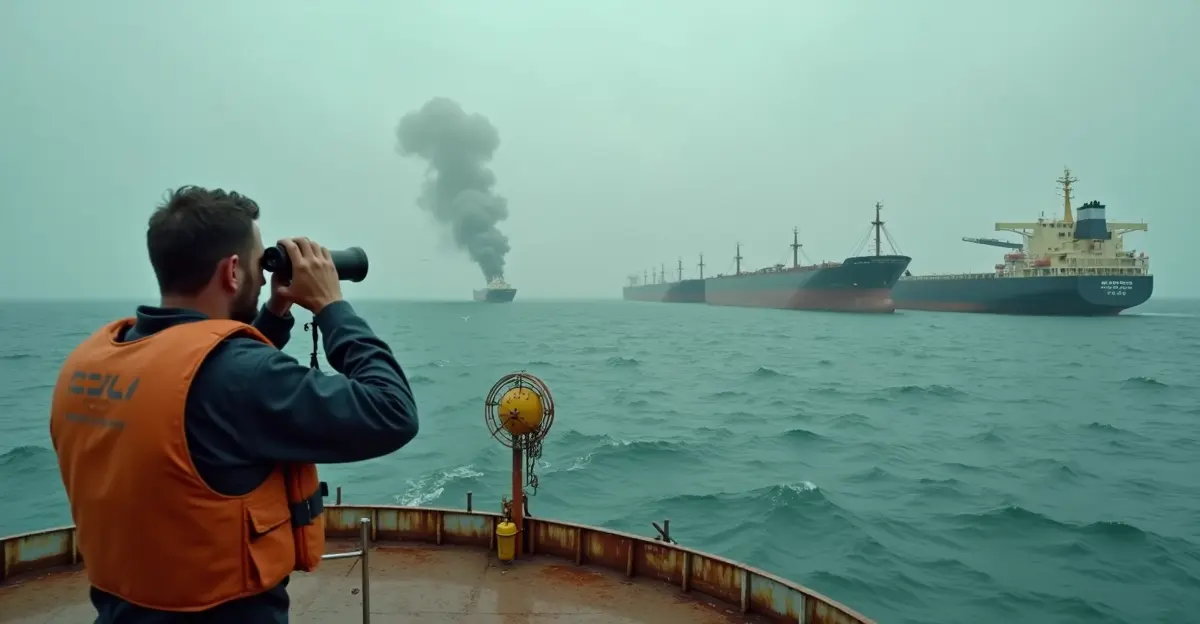
The crisis began on February 28, 2026, when the United States and Israel launched coordinated airstrikes against Iran (Operation Epic Fury), killing Supreme Leader Ali Khamenei and targeting military infrastructure. Iran retaliated by effectively closing the Strait of Hormuz to commercial traffic, mining the waterway, and launching missile attacks across the region. A fragile ceasefire was agreed on April 7-8, but shipping confidence has not returned — insurers remain reluctant to cover vessels, and the US has announced a blockade on ports used by Iranian entities. Daily transits, which normally exceed 100 ships, have fallen to fewer than 10.
The strait normally carries about 20 million barrels of oil per day (one-fifth of global supply), 20% of globally traded liquefied natural gas, and roughly one-third of all seaborne fertilizer trade. The 2026 Iran war has created what analysts call a 'dual choke point' crisis, with both the Strait of Hormuz and the Bab el-Mandeb strait disrupted simultaneously — a scenario unprecedented in modern history.
The Energy-Fertilizer-Food Nexus
Fertilizer Price Shock
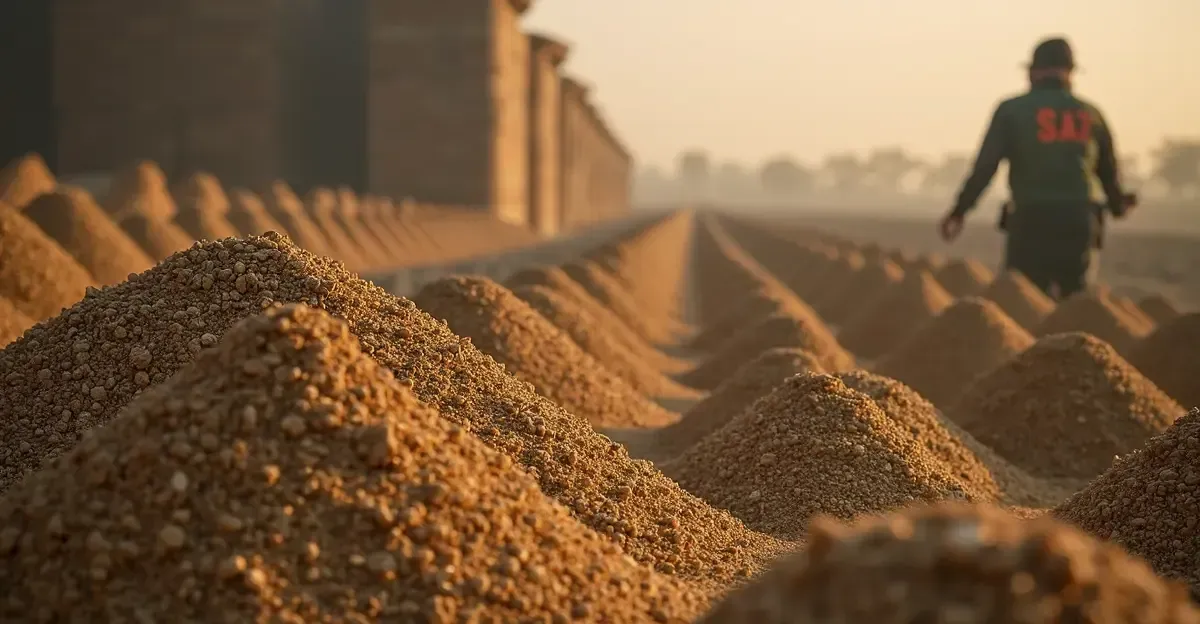
The World Bank's April 2026 Commodity Markets Outlook projects a 31% rise in global fertilizer prices for 2026, driven overwhelmingly by the Hormuz disruption. Urea prices surged 53.7% month-on-month in March 2026, reaching $725.6 per ton, and could end the year 60% higher than 2025 levels. The shutdown of Qatar Fertiliser Company (QAFCO), the world's largest single-site urea producer, following Iranian strikes on Qatari industrial complexes, removed approximately 14% of globally traded urea from the market. China's near-total export ban on nitrogen fertilizers has compounded the supply crunch.
Nitrogen-based fertilizers are particularly vulnerable because they are manufactured from natural gas — and the Hormuz blockade has also driven up gas prices sharply. The energy price surge 2026 has created a double shock: higher feedstock costs for fertilizer producers and disrupted shipping routes for finished products.
Impact on Planting Seasons
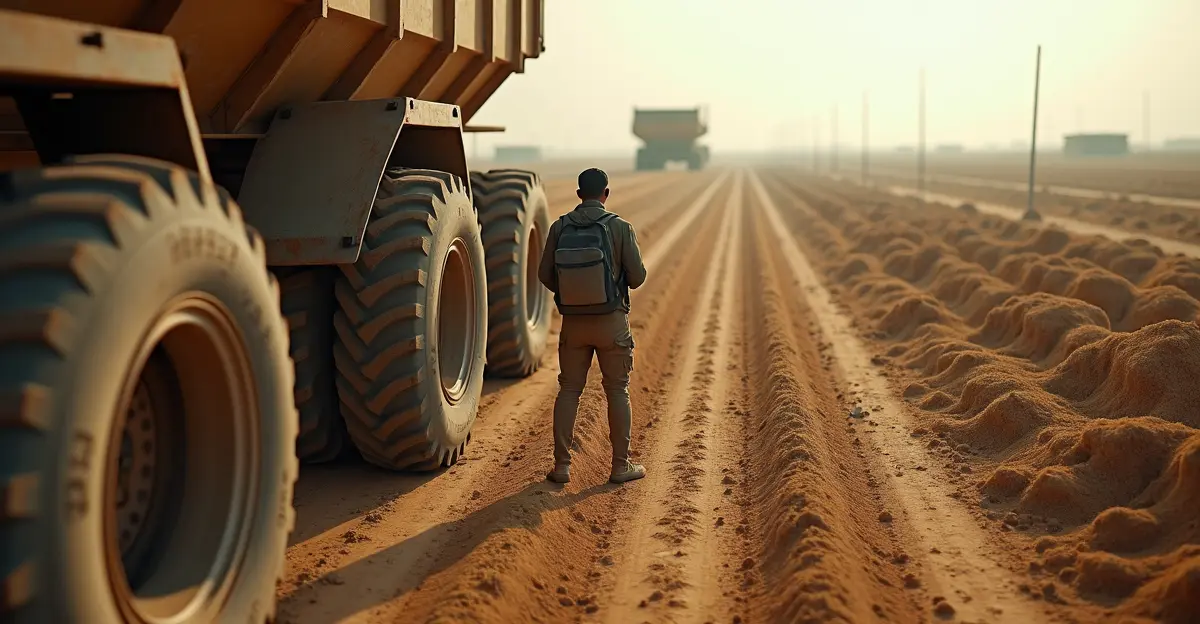
The timing of the crisis is catastrophic. The next planting season window is closing within weeks for many regions. FAO Director-General QU Dongyu warned at a MED9++ Ministerial Meeting in Rome that fertilizers must be applied at specific moments in the crop cycle — delays of even weeks force farmers to reduce or abandon application, with impacts carried forward into future harvests. Import-dependent countries in Africa, Asia, and parts of the Middle East are most exposed, especially those already facing food insecurity or climate shocks.
Countries such as Sudan (which imports 80% of its wheat), Somalia, Mozambique, Kenya, Sri Lanka, Bangladesh, and India are among the most vulnerable. According to data from the International Trade Centre, Sudan sources 54% of its maritime fertilizer imports from the Persian Gulf, Tanzania 31%, Somalia 30%, and Mozambique 22%. These nations have no immediate alternative suppliers.
Global Food Security at Risk
The FAO Food Price Index averaged 128.5 points in March 2026, a 2.4% increase from February — the second consecutive monthly rise. While global food stocks and good harvests have kept headline prices relatively stable so far, FAO Chief Economist Máximo Torero warns this buffer is temporary. 'Farmers facing higher costs may reduce input use, lowering yields and driving up food prices later in the year,' Torero said at a UN press briefing. 'The window to prevent a full-blown food crisis is rapidly closing.'
The World Food Programme projects that an additional 45 million people could face acute food insecurity by mid-2026, potentially raising the total number of hungry people worldwide to 363 million — a record high. Sub-Saharan Africa and South Asia are expected to bear the brunt of the impact, with countries already grappling with conflict, climate shocks, and economic instability facing the greatest risks.
The global food crisis 2026 is unfolding against a backdrop of rising inflation in developing economies, which the World Bank projects will reach 5.1% in 2026, up from 4.2% in 2025. Higher food and energy prices are eroding household purchasing power and straining government budgets.
International Response and Challenges
UN Secretary-General António Guterres has established a task force led by UNOPS Executive Director Jorge Moreira da Silva to facilitate safe passage of fertilizers and raw materials through the Strait of Hormuz. The mechanism, which could become operational within seven days of receiving political approval from combatant parties, would create a 'one-stop platform' for humanitarian shipments of urea, sulphur, and ammonia. However, the plan has faced resistance, with some parties to the conflict reluctant to grant safe passage while hostilities continue.
In parallel, the African Union is pursuing domestic fertilizer production under the Nairobi Declaration, aiming to triple output by 2034 to reduce reliance on vulnerable shipping routes. Ghana has already shifted from fertilizer subsidies to full free distribution for the 2026 farming season. The United States has announced antitrust investigations into the fertilizer industry and efforts to boost domestic production capacity.
FAO has outlined three priority actions: keeping supply chains functioning through alternative routes and avoiding export restrictions; strengthening regional coordination and diversifying fertilizer and energy sources; and investing in long-term structural transformation including sustainable agriculture, renewable energy, and innovative fertilizer solutions such as green ammonia.
Expert Perspectives
'This is not just a geopolitical crisis — it is a direct threat to global agrifood systems,' said QU Dongyu, FAO Director-General. 'The concentration of fertilizer production and exports through a single maritime chokepoint represents a systemic vulnerability that the world can no longer ignore.'
David Laborde, FAO economist, warned of a potential 'perfect storm' if export restrictions or climate shocks emerge alongside the current disruption. 'We are seeing the energy-fertilizer-food nexus in real time. The shock to input markets will translate into higher commodity and retail prices later this year and into 2027,' he said.
Jorge Moreira da Silva, UNOPS Executive Director, emphasized the urgency: 'The world cannot wait for a full political resolution before acting. If we do not get fertilizer to farmers in the next few weeks, we will see a massive humanitarian crisis for the world's poorest populations.'
FAQ: Strait of Hormuz and Food Security
What is the Strait of Hormuz and why is it important for food security?
The Strait of Hormuz is a narrow waterway between Iran and Oman connecting the Persian Gulf to the open ocean. It is the world's most important maritime chokepoint, carrying 20-30% of global fertilizer trade, 30-35% of crude oil, and 20% of liquefied natural gas. Disruptions here directly impact fertilizer availability and energy costs for food production worldwide.
How much have fertilizer prices increased since the crisis began?
Urea prices surged approximately 46-54% month-on-month in March 2026, reaching $725-726 per ton. The World Bank projects a 31% overall increase in fertilizer prices for 2026, with urea potentially rising 60% above 2025 levels.
Which countries are most vulnerable to the fertilizer shortage?
Developing economies in Africa and Asia are most exposed. Sudan, Somalia, Tanzania, Mozambique, Kenya, Sri Lanka, Bangladesh, and India are among the most vulnerable due to their heavy reliance on fertilizer imports from the Persian Gulf region and limited fiscal capacity to absorb price shocks.
How many additional people could face hunger because of this crisis?
The World Food Programme estimates that 45 million additional people could be pushed into acute food insecurity by mid-2026, potentially raising the global total of hungry people to 363 million — a record high.
What is the UN doing to address the crisis?
The UN has established a task force led by UNOPS to facilitate safe passage of fertilizer shipments through the Strait of Hormuz. The mechanism would create a one-stop platform for humanitarian shipments, but requires political approval from all parties to the conflict. FAO is also urging governments to avoid export restrictions, support vulnerable households, and invest in long-term diversification of fertilizer supply chains.
Outlook and Conclusion
The Strait of Hormuz crisis represents the dominant geopolitical shock of 2026, with cascading consequences that extend far beyond energy markets. The energy-fertilizer-food nexus means that disruptions at this single chokepoint are transmitting directly into food production costs, threatening the livelihoods of millions of farmers and the food security of billions of consumers.
While a fragile ceasefire has raised some hopes, shipping confidence has not returned, and the window for action is closing rapidly. Without coordinated international intervention — including safe passage mechanisms, emergency financial support for vulnerable countries, and long-term investment in diversified supply chains — the world faces a food crisis that could rival or exceed the 2007-2008 and 2022 food price shocks.
The geopolitical risk 2026 landscape has been fundamentally reshaped by this crisis, with implications for global stability, inflation, and development that will persist for years. As FAO's Torero warned: 'The clock is ticking.'


Follow Discussion