


 Deutsch
 English
 Español
 Français
 Nederlands
 Português


 Share
Share




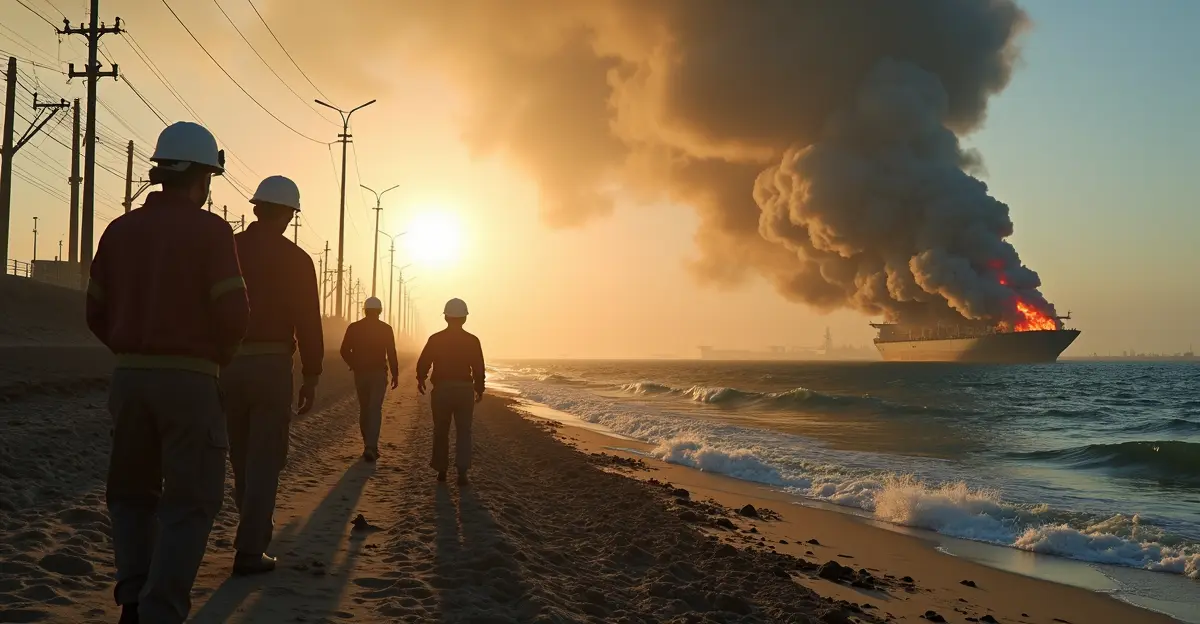
The Strait of Hormuz crisis of 2026 has triggered what the International Energy Agency (IEA) calls the largest oil supply disruption in history, but the shockwaves extend far beyond crude markets. As of May 2026, tanker traffic through the 21-mile-wide chokepoint has collapsed by over 90%, severing flows of liquefied natural gas (LNG), fertilizers, sulfur, aluminum, and helium. The cascading effects are reshaping global energy markets, threatening food security for millions across Asia and Africa, and accelerating the push for alternative payment systems and strategic reserves. For global strategic planners, the Hormuz disruption represents the most consequential supply chain event of the year.
Background: The Largest Oil Supply Disruption in History
Since the US-Israeli air war against Iran began on February 28, 2026, Iran's Revolutionary Guard Corps (IRGC) has effectively closed the Strait of Hormuz to commercial shipping. Before the conflict, approximately 20 million barrels per day (mb/d) of crude oil and oil products—about 25% of global seaborne oil trade—transited the strait daily. By April 2026, only 191 vessels crossed the waterway, representing just 5% of pre-war traffic, according to CNN analysis of satellite data. The IEA described the disruption as the largest in the history of the global oil market, surpassing even the 1973 Arab oil embargo.
Brent crude prices surged past $100 per barrel on March 8, peaking at $126, with the World Bank recording a 65% price increase ($46/bbl) in March alone—the highest monthly rise ever. The IEA's 32 member nations responded with the largest coordinated emergency stock release in history, agreeing to release 400 million barrels from strategic petroleum reserves. The US Strategic Petroleum Reserve held 413 million barrels at the time, while China held an estimated 1.4 billion barrels in strategic inventories.
Beyond Oil: LNG and Industrial Commodities in Crisis
LNG Markets Upended
The strait is equally vital for natural gas. Qatar and the UAE shipped nearly 20% of global LNG exports through Hormuz in 2025, with over 80 million tons of LNG transiting the waterway. Iranian missile strikes knocked out nearly 20% of Qatar's liquefaction capacity, removing approximately 13 million tons per year of LNG from the market for up to three years, according to S&P Global Energy. Asian LNG prices surged over 140% to above $25 per mmBtu from pre-crisis levels of $10. Shell CEO Wael Sawan warned at CERAWeek that elevated prices would spread from Asia to Europe by April. US LNG producers like Cheniere Energy are already at maximum capacity and cannot provide near-term relief.
Fertilizer: The Food Security Time Bomb
Perhaps the most alarming dimension of the crisis is its impact on global fertilizer supplies. The Middle East accounts for approximately 30% of globally traded fertilizers, including 23% of ammonia and 34% of urea. According to FAO Chief Economist Máximo Torero, Middle East urea prices jumped 19% in early March 2026, while Egyptian urea rose 28%. The Financial Content reported that fertilizer exports through the strait collapsed by 98% in March 2026. The global fertilizer trade disruption is creating a direct threat to food production.
Farmers in the Northern Hemisphere are now facing critical spring planting decisions without access to essential nitrogen fertilizers. Unlike potash or phosphates, nitrogen fertilizers cannot be skipped for a season without devastating yield losses. The UN warns that 9.1 million additional people could face acute food insecurity in Asia alone, while FAO Director-General QU Dongyu cautioned that reduced yields will tighten food supplies through late 2026 and into 2027. Vulnerable countries include Sri Lanka, Bangladesh, India, Egypt, Sudan, and several Sub-Saharan African nations.
Industrial Commodities Under Pressure
The World Economic Forum identified nine non-oil commodities severely impacted by the Hormuz closure. Sulfur, a byproduct of refining essential for fertilizer production and battery chemistry, saw nearly 20 million metric tons of annual trade disrupted—with Qatar losing 60-70% of its sulfur output. Aluminum prices hit four-year highs as Gulf producers account for about 10% of global primary supply and 20% of exports. Qatar produces roughly one-third of the world's helium, critical for MRI machines and semiconductor manufacturing, with supplies already facing shortages after Iranian attacks. The helium supply chain crisis is affecting medical imaging and electronics manufacturing worldwide.
Financial and Geopolitical Implications
The crisis is accelerating the push for de-dollarization and alternative payment systems. BRICS nations, now representing 11 members with ~37% of global GDP (PPP), are advancing multiple mechanisms to reduce dollar dependence. China's Cross-Border Interbank Payment System (CIPS) has reached 1,467 participants across 119 countries, while the planned 2026 launch of "BRICS Pay" aims to provide a SWIFT alternative. The dollar's share of global reserves has fallen to 56.32% (Q2 2025), its lowest in 30 years. The BRICS de-dollarization efforts are gaining momentum as the Hormuz crisis demonstrates the vulnerability of dollar-denominated energy trade.
UN Secretary-General António Guterres warned on April 30 that the crisis is "strangling the global economy." His office outlined three scenarios: best-case (immediate lifting of restrictions) would still see global growth fall to 3.1% and inflation rise to 4.4%; prolonged disruptions through midyear could push 32 million into poverty and leave 45 million more facing extreme hunger; worst-case disruptions through year-end risk a global recession.
Expert Perspectives
"This is the largest disruption to world energy supply since the 1970s energy crisis," said IEA Executive Director Fatih Birol. "The impact extends far beyond oil—it is reshaping global commodity markets in ways we have never seen."
Jorge Moreira da Silva, head of the UN task force on the Strait of Hormuz, warned PBS NewsHour that fertilizer disruption poses the gravest threat: "Missing the planting season now through May will devastate farmers, drive up food prices, and push 45 million more people into food insecurity." The UN has a plan ready—including monitors, a digital platform for vessel approval, and a verification system—but requires a political deal to proceed.
ADNOC's CEO described the closure as "economic terrorism," while Singapore's Foreign Minister called it an "Asian crisis."
FAQ: Strait of Hormuz Crisis 2026
What caused the Strait of Hormuz closure in 2026?
The closure began on February 28, 2026, after the US and Israel launched an air war against Iran. In retaliation, Iran's IRGC issued warnings forbidding passage, attacked merchant ships, and laid sea mines. The US subsequently blockaded Iranian ports from April 13, creating a "dual blockade."
How much oil transits the Strait of Hormuz daily?
Approximately 20 million barrels per day of crude oil and oil products transited the strait in 2025, representing about 25% of global seaborne oil trade. By April 2026, traffic had collapsed by over 90%.
Which countries are most vulnerable to food insecurity from this crisis?
The FAO identifies Sri Lanka, Bangladesh, India, Egypt, Sudan, and several Sub-Saharan African nations as most vulnerable. The UN warns 9.1 million additional people could face acute food insecurity in Asia alone.
What is being done to mitigate the crisis?
The IEA coordinated the largest-ever emergency oil stock release of 400 million barrels. The UN is pursuing a humanitarian corridor and safe passage framework. The US launched Operation Project Freedom on May 4 to escort merchant ships, though it was paused on May 6 pending diplomatic progress.
How is the crisis affecting alternative payment systems?
The disruption is accelerating BRICS de-dollarization efforts, including the expansion of China's CIPS system and the planned launch of "BRICS Pay" as a SWIFT alternative. The dollar's share of global reserves has fallen to its lowest level in 30 years.
Conclusion: A Watershed Moment for Global Strategic Planning
The Strait of Hormuz crisis of 2026 is more than an energy disruption—it is a stress test for the entire global supply chain architecture. From oil and LNG to fertilizers, aluminum, and helium, the cascading failures reveal deep vulnerabilities in just-in-time supply chains and over-reliance on a single maritime chokepoint. For strategic planners, the lessons are clear: diversify energy sources, accelerate the renewable transition, build strategic reserves of critical commodities, and develop resilient payment systems. The future of global trade resilience depends on the actions taken in the coming months. As the UN's Guterres warned, the world faces a choice between cooperation and catastrophe.

Follow Discussion