


 Deutsch
 English
 Español
 Français
 Nederlands
 Português


 Share
Share




What Is the Strait of Hormuz and Why Does It Matter?
The Strait of Hormuz, a narrow 33-kilometer waterway connecting the Persian Gulf to the Gulf of Oman, has become the epicenter of a global economic crisis in 2026. Since the outbreak of military conflict on February 28, 2026, this critical chokepoint — through which roughly 20% of the world's oil and one-third of seaborne fertilizer trade passes — has been effectively closed. The disruption has removed nearly 20% of global oil supply from markets, triggered a 24% surge in energy prices, and sent fertilizer prices soaring by 31%, according to the World Bank's April 2026 Commodity Markets Outlook. Maritime insurance costs have skyrocketed, and vessel traffic through the strait has collapsed by over 97%, creating the most consequential supply chain disruption since the 1973 oil shock.
Background: The February 2026 Conflict and Immediate Fallout
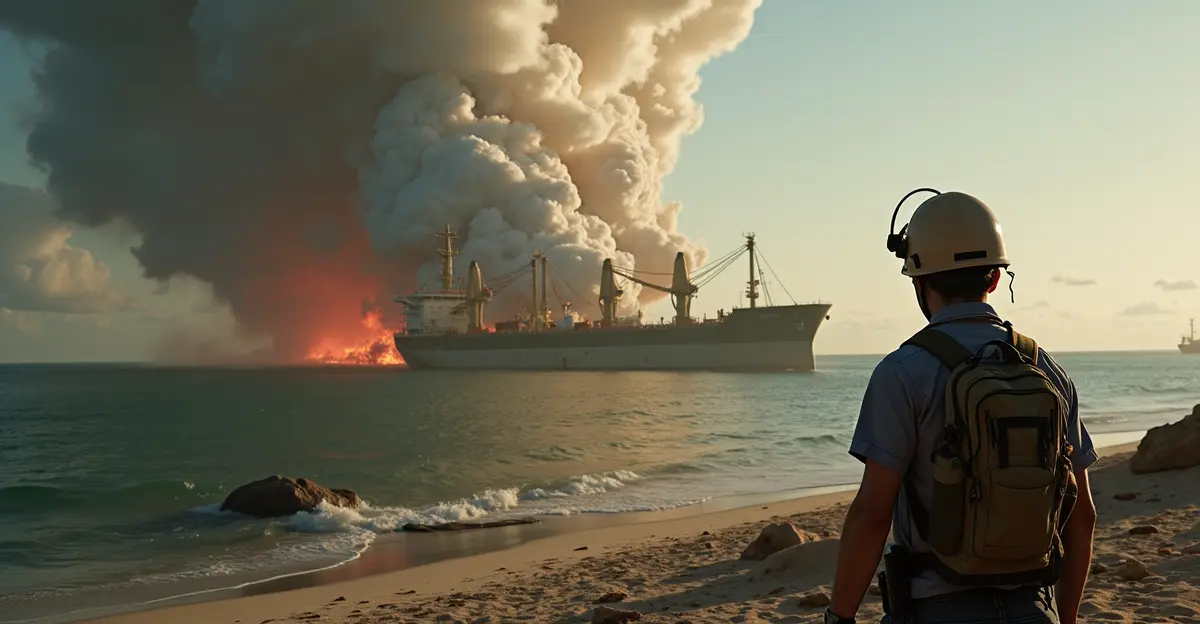
The crisis began when military confrontation erupted between Iran and coalition forces in late February 2026. Within days, the Strait of Hormuz became a war zone. Mines, naval engagements, and damaged infrastructure halted nearly all commercial shipping. The 2026 Iran conflict quickly escalated into a broader regional crisis, with reported damage to energy and fertilizer infrastructure in Qatar and Iran. By early March, oil producers like Iraq and Kuwait began curtailing production as local storage filled up, with about 80% of Gulf oil exports typically destined for Asian markets.
Energy Markets in Turmoil
The Dallas Federal Reserve's March 2026 analysis quantified the shock: the removal of nearly 20% of global oil supply is three to five times larger than past geopolitical disruptions like the 1973 Yom Kippur War or the 1990 Persian Gulf War. Under the most optimistic scenario — reopening after one quarter — West Texas Intermediate (WTI) crude is expected to average $98 per barrel in Q2 2026, with global real GDP growth falling by an annualized 2.9 percentage points. Longer closures of two or three quarters could drive oil prices as high as $132 per barrel, prolonging negative growth impacts through year-end 2026. Brent crude has already reached around $118 a barrel, while natural gas prices have roughly doubled in Asia and surged sharply in Europe.
Fertilizer Crisis Compounds Food Security Risks
The disruption's impact on fertilizer markets is equally alarming. The Strait of Hormuz carries about one-third of global seaborne fertilizer volumes. Countries in the region account for 13% of global nitrogen and 9% of phosphate fertilizer exports. With shipping collapsed, fertilizer prices have spiked 31% overall, with urea — a nitrogen-based fertilizer heavily dependent on natural gas — jumping 60%. The global fertilizer supply chain 2026 is under severe strain, as natural gas is a key input for nitrogen fertilizer production. The UN Trade and Development (UNCTAD) warns that higher energy, fertilizer, and transport costs are straining agricultural production worldwide, with developing nations facing the greatest vulnerability due to limited fiscal space and constrained access to alternative supplies.
Impact: Food Security and Economic Fallout
The crisis is hitting just ahead of planting season for many regions in Asia and the Global South. The Food and Agriculture Organization (FAO) cautions that current stable food prices are deceptive — as farmers face rising costs and limited fertilizer access, yields will likely drop, driving food prices higher later in 2026. The World Food Programme estimates that 45 million more people could face acute food insecurity. The World Bank projects developing economy inflation will average 5.1% in 2026, with growth slowing to 3.6%. World Bank chief economist Indermit Gill stated: 'The war is hitting the global economy through waves of higher energy prices, food prices, and inflation, hitting the poorest hardest.'
Regional Vulnerabilities
Import-dependent countries in Asia and Africa are especially exposed. Bangladesh has seen fertilizer plants pause operations. Pakistan has closed schools due to energy shortages. The food crisis in developing nations 2026 is already materializing, with the UN warning that 32 million people could be pushed into poverty if the crisis continues through midyear. A worst-case scenario with disruptions lasting through year-end raises the risk of a global recession.
Expert Perspectives and Policy Responses
The Dallas Fed's April 2026 Energy Survey reveals that despite surging oil prices, U.S. energy producers remain unenthusiastic about ramping up production, citing uncertainty and a focus on shareholder returns. This lack of supply response means high prices are likely to persist. Meanwhile, the UN Secretary-General has warned that restrictions on free passage through the strait could push tens of millions into poverty and drive a sharp rise in global hunger. UN projections show that even an immediate end to disruptions would leave supply chains struggling for months, with global growth falling from 3.4% to 3.1% and inflation rising to 4.4%.
In a TIME article, Comfort Ero proposed a 'Hormuz Transit Initiative' — a limited diplomatic arrangement focused solely on ensuring safe passage of food, fertilizer, and raw materials, drawing lessons from the 2022 Black Sea Grain Initiative. The FAO urges governments to avoid export restrictions, support vulnerable households, and ensure farmer liquidity, warning that the window to prevent a full-blown food crisis is rapidly closing.
FAQ: The Hormuz Crisis and Its Global Impact
What percentage of global oil passes through the Strait of Hormuz?
Approximately 20% of the world's oil supply transits the Strait of Hormuz, along with about 20% of natural gas and one-third of seaborne fertilizer trade.
How much have energy prices increased due to the crisis?
Energy prices have surged 24% overall, with Brent crude reaching around $118 per barrel and natural gas prices roughly doubling in Asia.
How many people are at risk of food insecurity?
The World Food Programme estimates 45 million additional people could face acute food insecurity, with 32 million at risk of being pushed into poverty.
What is the economic impact on global GDP?
The Dallas Fed models a 2.9 percentage point reduction in annualized global GDP growth if the strait reopens after one quarter, with longer closures causing deeper and more prolonged contractions.
Is there any diplomatic solution in progress?
A fragile US-Iran ceasefire exists as of April 2026, but shipping has not resumed due to security fears and failed talks. Proposals like the 'Hormuz Transit Initiative' aim to secure safe passage for food and fertilizer, but no deal has been reached.
Conclusion: A Looming Crisis with No Easy Fix
The Hormuz shock of 2026 represents a cascading crisis that intertwines energy security, food systems, and geopolitical stability. With the World Bank and UN issuing urgent warnings, and the planting season already underway, the world faces a narrowing window to avert a humanitarian catastrophe. The geopolitical consequences of Hormuz closure will likely reshape global trade alliances and energy policy for years to come. As the Dallas Fed analysis underscores, even a swift resolution would leave lasting scars on the global economy.

Follow Discussion