


 Deutsch
 English
 Español
 Français
 Nederlands
 Português


 Share
Share




Introduction: The Unprecedented Chokepoint Closure
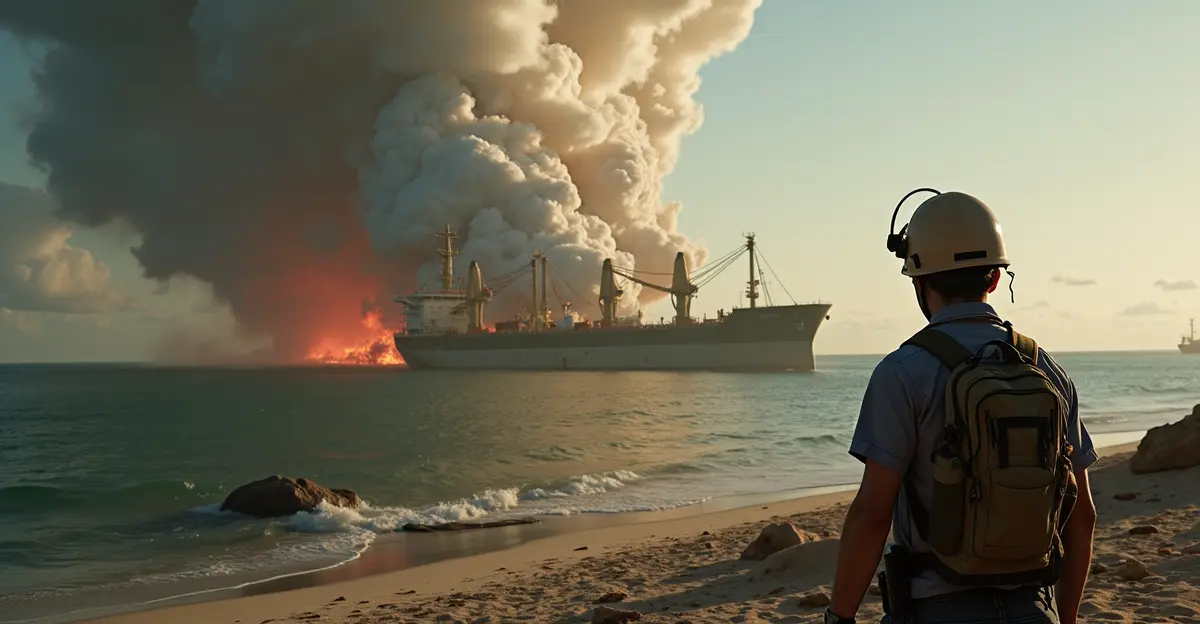
In late February 2026, the Strait of Hormuz—the world's most critical maritime energy chokepoint—was effectively shut down after US and Israeli airstrikes on Iran triggered a retaliatory blockade by Tehran's Islamic Revolutionary Guard Corps (IRGC). By March 2026, daily ship transits had collapsed by over 95%, from roughly 130 vessels per day to single digits, marking the largest disruption to global oil markets in history. Brent crude surged past $126 per barrel, fertilizer prices jumped 30–40%, and the United Nations Conference on Trade and Development (UNCTAD) projects global trade growth will halve to between 1.5% and 2.5% in 2026. This article examines the four transmission channels identified by UNCTAD—rising energy costs, quadrupled war-risk insurance premiums, disrupted fertilizer exports, and broader supply chain rerouting—and analyzes how the crisis is accelerating structural shifts in energy diversification, strategic reserves policy, and global maritime security architecture.
Background: From Airstrikes to Blockade
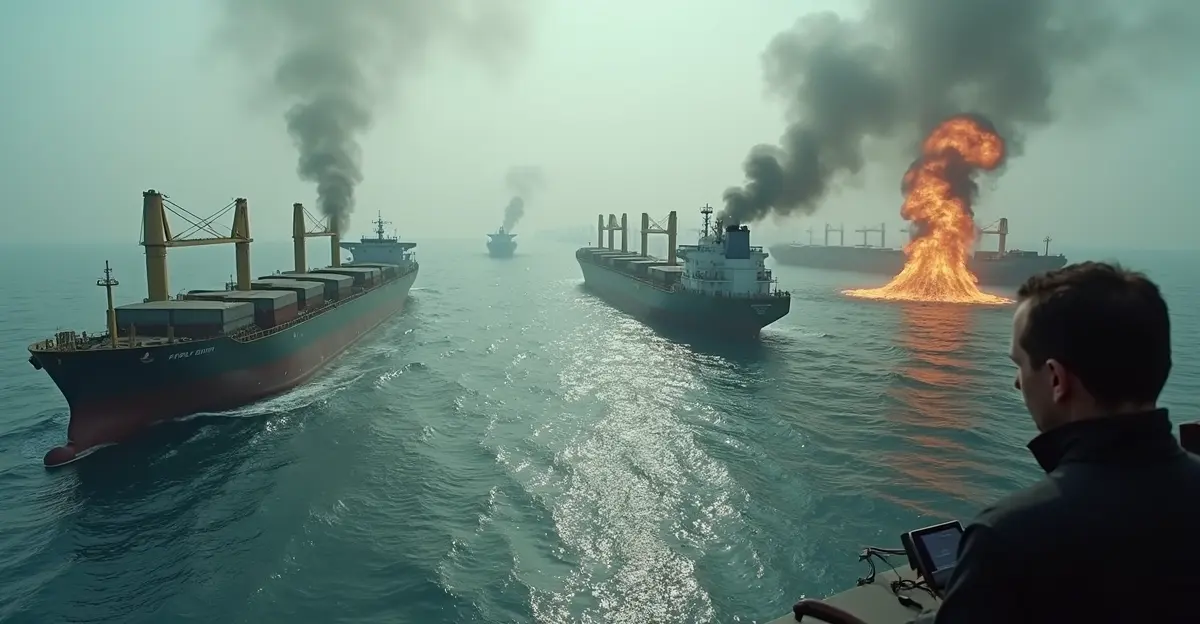
On February 28, 2026, the United States and Israel launched coordinated airstrikes under Operation Epic Fury, targeting military facilities, nuclear sites, and leadership positions in Iran. The strikes resulted in the assassination of Supreme Leader Ali Khamenei and approximately 40 senior officials. Iran retaliated with missile barrages on Israeli cities and US bases in the Gulf, including in the UAE, Qatar, and Bahrain. Crucially, the IRGC immediately moved to block the Strait of Hormuz through mining, small-boat attacks, and the imposition of transit tolls exceeding $1 million per vessel. Unlike previous Middle East conflicts where the strait remained open, this closure has been total and sustained. The 2026 Iran war thus became the catalyst for a cascading global economic crisis.
The Four Transmission Channels of Economic Disruption
UNCTAD's rapid assessment, released on March 10, 2026, identifies four primary channels through which the Strait of Hormuz closure is transmitting shocks to the global economy.
1. Surging Energy Costs
Brent crude oil prices, which had averaged around $66 per barrel in January 2026, spiked to a peak of $126.69 per barrel on March 31, 2026—a 65% surge in just one month. Asian natural gas prices roughly doubled, and European gas markets saw sharp increases as well. The strait normally handles about 20 million barrels per day of crude oil and petroleum products—roughly 20% of global consumption—along with 25% of the world's liquefied natural gas (LNG). With the strait effectively closed, bypass pipelines can only handle approximately 7 million barrels per day, leaving a massive supply gap. The global energy crisis of 2026 has forced governments to tap strategic petroleum reserves at unprecedented rates.
2. Quadrupled War-Risk Insurance Premiums
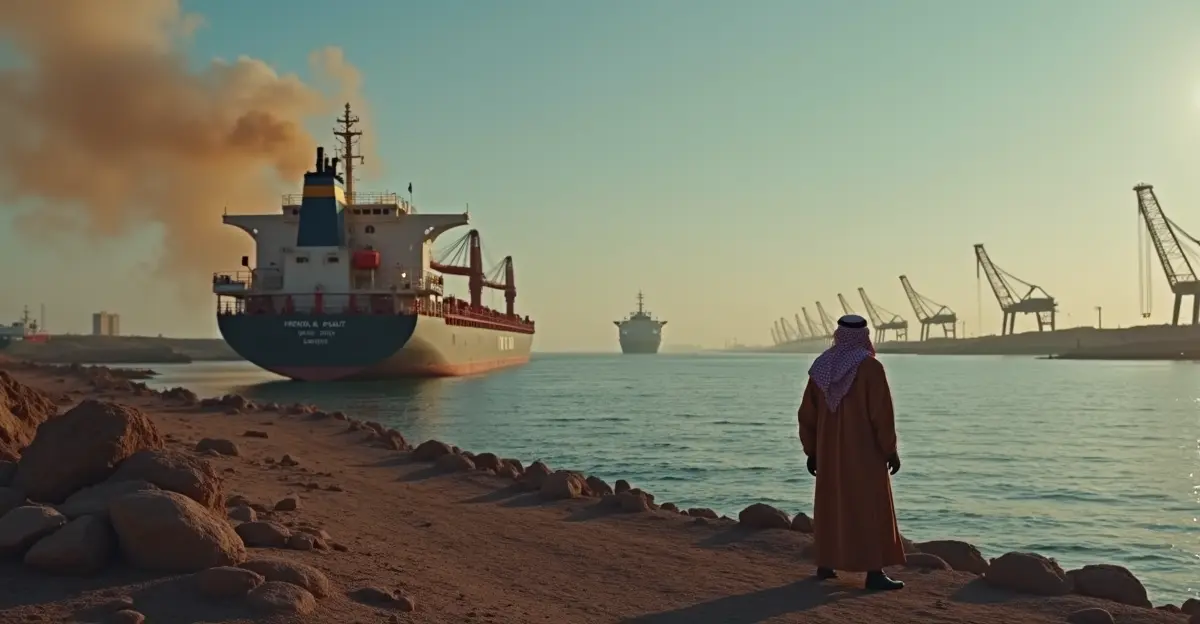
Marine war risk insurance premiums for vessels transiting the Strait of Hormuz have surged from roughly 0.25% of vessel value before the conflict to between 1% and 3% in March 2026—a four- to twelve-fold increase. For a $250 million tanker, a 3% premium implies approximately $7.5 million in hull insurance costs per transit. The Lloyd's Joint War Committee updated its Listed Areas to include Bahrain, Djibouti, Kuwait, Oman, and Qatar, further expanding the high-risk zone. These soaring costs have forced all nine major shipping lines—Maersk, MSC, CMA CGM, Hapag-Lloyd, COSCO, ONE, HMM, Evergreen, and PIL—to suspend Hormuz transits entirely, rerouting vessels around the Cape of Good Hope, adding 10–14 days per voyage and driving freight rates up by 20–40% on key routes.
3. Disrupted Fertilizer Exports and Food Security
The Strait of Hormuz region accounts for 13% of global nitrogen fertilizer exports and 9% of phosphate exports, with approximately one-third of global seaborne fertilizer volumes passing through the chokepoint. Natural gas is the primary input for nitrogen-based fertilizers, and with Gulf gas supplies cut off, production costs have soared. The World Bank projects the fertilizer price index will rise by more than 30% in 2026. The timing is catastrophic: the crisis coincides with spring planting season in the Northern Hemisphere. If farmers cannot secure affordable fertilizer, crop yields could decline sharply. UNCTAD's Frida Youssef, Chief of Transport, warns that the world's least developed economies—with the least capacity to absorb shocks—face increased food insecurity, higher food and fuel prices, and strained public budgets. The World Bank estimates up to 45 million more people could face acute food insecurity as a direct result of the crisis.
4. Broader Supply Chain Rerouting and Trade Slowdown
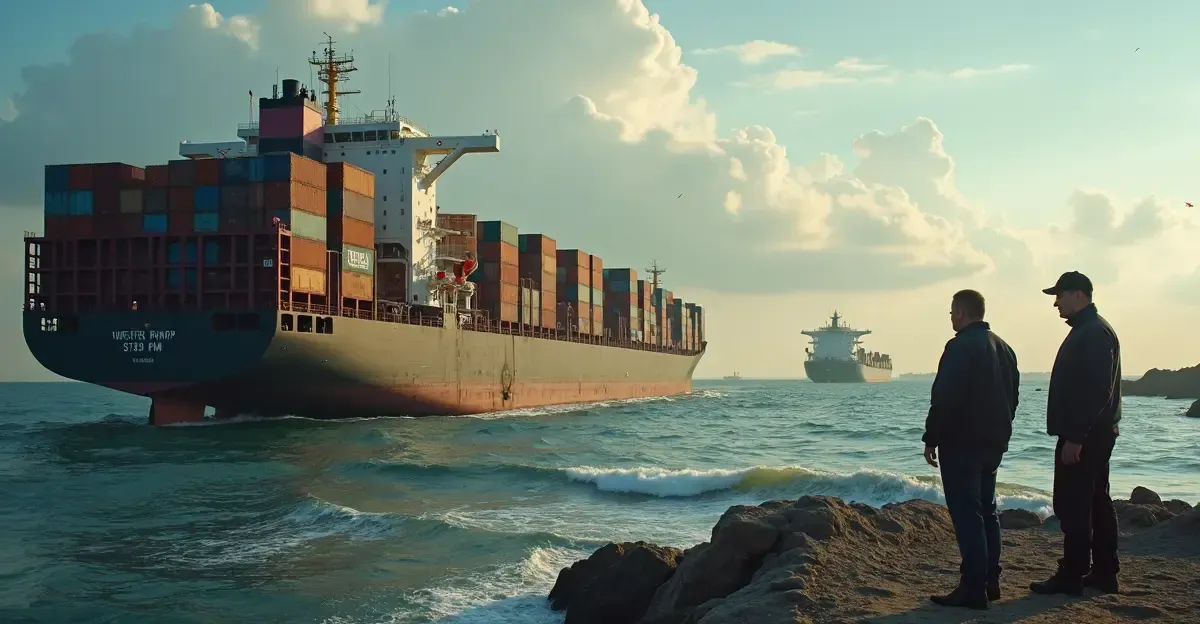
The disruption has spread beyond Hormuz to affect Red Sea routes, Suez Canal transits, and global shipping networks. By early March, 138 container ships representing nearly 470,000 TEUs were trapped in the Persian Gulf. Ocean carriers imposed emergency surcharges up to $3,000 per FEU. Transpacific container rates rose approximately 40%, and Asia–Europe rates rose about 20%. Tanker freight rates surged over 90%, while bunker fuel prices nearly doubled. UNCTAD projects global merchandise trade growth will decelerate from 4.7% in 2025 to just 1.5–2.5% in 2026—the lowest level since 2023. Global GDP growth is expected to slow from 2.9% to 2.6%. The global trade slowdown 2026 is hitting developing economies hardest, as they face higher import costs for energy, food, and fertilizers alongside tighter financial conditions.
Impact on Vulnerable Populations
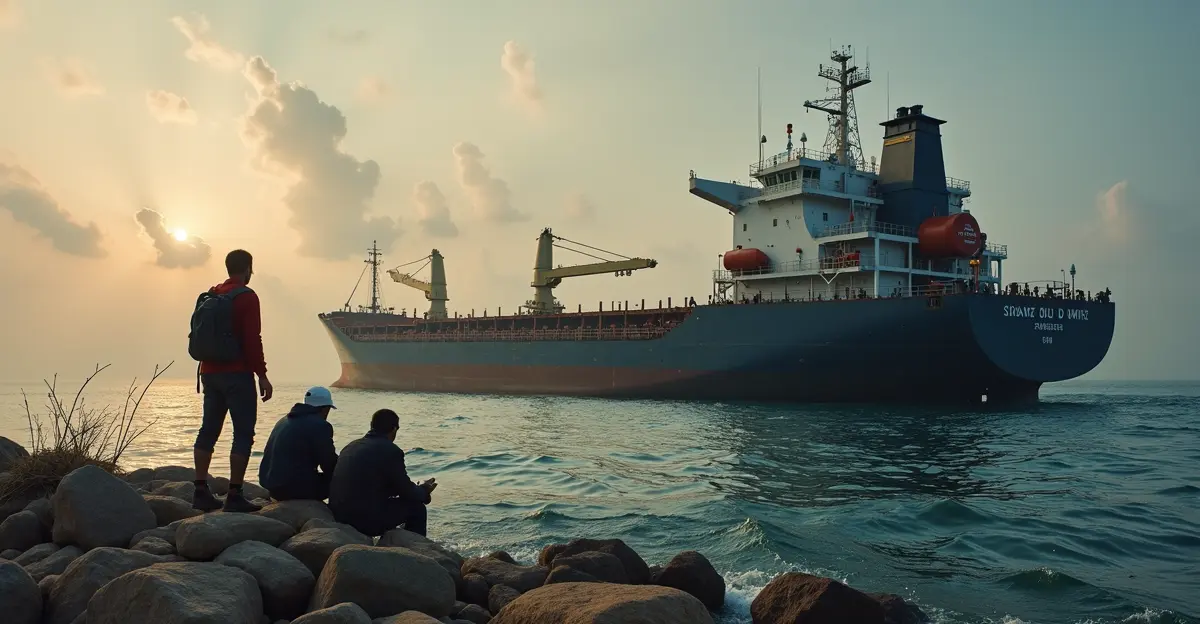
The human toll of the crisis is mounting. The International Labour Organization (ILO) warns that if oil prices remain 50% above early 2026 levels, up to 38 million full-time jobs could be lost globally by 2027, with real labor incomes declining by as much as $3 trillion. In Myanmar, fuel prices have tripled, and one in four people are acutely food insecure. Laos saw inflation rise from 6.2% to over 10%, while Pakistan's inflation jumped to 10.9%. Up to 20,000 seafarers remain stranded on some 2,000 vessels in the Persian Gulf, with the IMO's Secretary-General Arsenio Dominguez calling commercial shipping "leverage in geopolitical disputes."
Structural Shifts: Energy Diversification and Maritime Security
The crisis is accelerating long-term structural changes. South Korea, which channels approximately 68% of its crude imports through Hormuz (1.7 million barrels per day), has announced emergency contingency planning and holds strategic petroleum reserves equivalent to roughly 200 days of supply. European nations are fast-tracking renewable energy investments, with Nordic energy CEOs arguing that renewables are now more reliable than fossil fuels due to fragile supply chains. The global energy diversification push is gaining unprecedented momentum.
On the maritime security front, the IMO held an extraordinary council session on March 18–19, 2026, calling for a coordinated international approach and the establishment of a safe maritime framework to evacuate stranded vessels. A 40-nation coalition is now preparing a bid to reopen the strait, though analysts expect disruption to persist through the rest of 2026. The crisis has exposed fundamental vulnerabilities in the global shipping architecture, with Dominguez emphasizing that naval escorts are not a sustainable solution and that diplomacy and de-escalation are essential.
Expert Perspectives
"This is the most dangerous geopolitical crisis since the Cold War," said a senior analyst at the Atlas Institute. "The simultaneous disruption of energy, fertilizer, and shipping markets creates a perfect storm for the global economy." UNCTAD's Frida Youssef noted: "The disruption is spreading beyond Hormuz to the Red Sea and beyond, causing rerouted vessels, extended journeys, and rising costs across the board." The IMO's Dominguez added: "Seafarers are not combatants and should never be targets. We need a humanitarian framework to evacuate those stranded."
FAQ: Strait of Hormuz Crisis 2026
What caused the Strait of Hormuz closure in 2026?
The closure began on February 28, 2026, after US and Israeli airstrikes on Iran killed Supreme Leader Ali Khamenei. Iran retaliated by mining the strait, attacking vessels, and imposing transit tolls, effectively blocking all commercial shipping.
How much has oil prices risen due to the crisis?
Brent crude surged from around $66 per barrel in January 2026 to a peak of $126.69 per barrel on March 31, 2026—a 65% increase. Prices have since moderated to around $94–95 per barrel but remain highly volatile.
How is the crisis affecting global food security?
The region supplies 13% of global nitrogen fertilizers and 9% of phosphates. Fertilizer prices have jumped 30–40%, threatening spring planting. The World Bank warns up to 45 million more people could face acute food insecurity.
What are the four transmission channels identified by UNCTAD?
UNCTAD identifies four channels: (1) rising energy costs, (2) quadrupled war-risk insurance premiums, (3) disrupted fertilizer exports driving up food production costs, and (4) broader supply chain rerouting and trade slowdown.
When is the Strait of Hormuz expected to reopen?
As of May 2026, the strait remains effectively closed despite a fragile US-Iran ceasefire. A 40-nation coalition led by the IMO is working on a safe passage framework, but analysts expect disruption to persist through the rest of 2026.
Conclusion: A Watershed Moment for Global Economic Security
The Strait of Hormuz crisis of 2026 represents a watershed moment for global economic security. The simultaneous disruption of energy, fertilizer, and shipping markets has exposed the fragility of concentrated supply chains and the vulnerability of the global economy to geopolitical shocks. As UNCTAD warns, if disruptions persist, the situation could evolve into a cascading crisis with far-reaching consequences for development. The future of global trade security now hinges on diplomatic resolution, accelerated energy diversification, and a fundamental rethinking of maritime security architecture.

Follow Discussion