


 Deutsch
 English
 Español
 Français
 Nederlands
 Português


 Share
Share




Escalation in the Gulf: US Reimposes Naval Blockade After Ceasefire Collapse
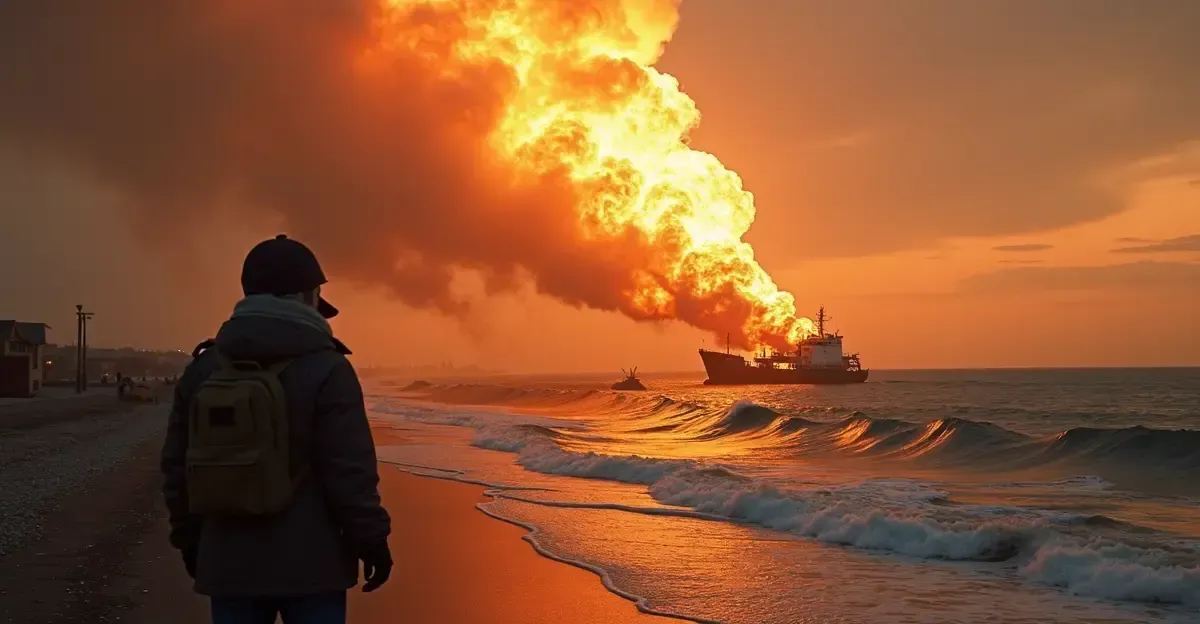
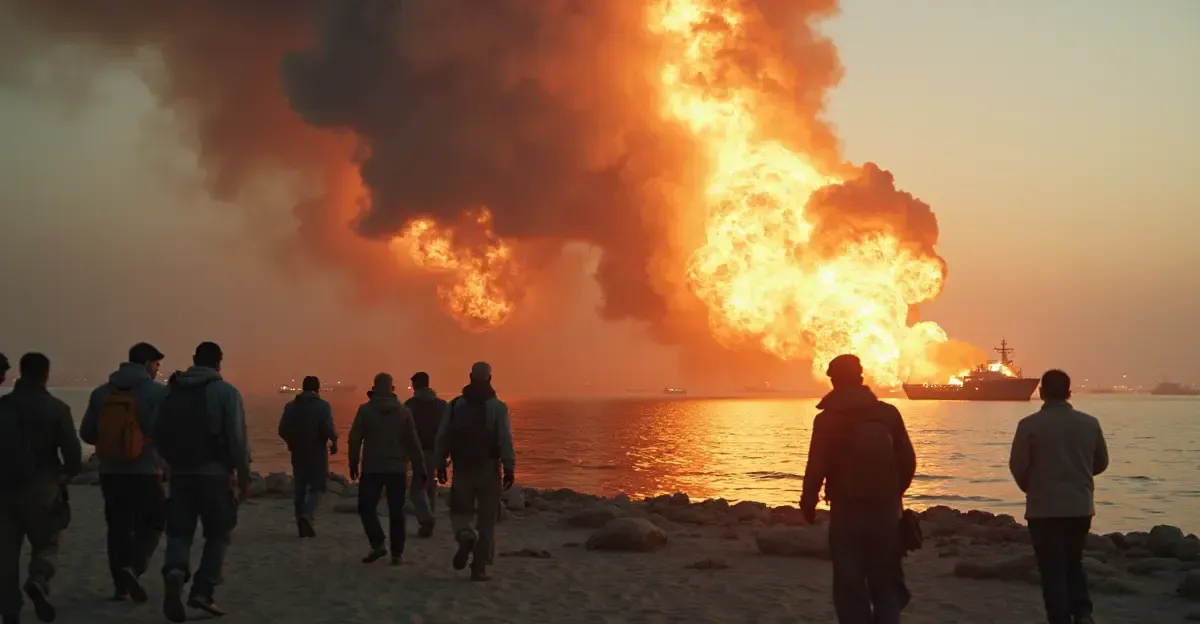
On July 14, 2026, the United States dramatically escalated its military confrontation with Iran by resuming a full naval blockade of Iranian ports and launching fresh airstrikes against Iranian coastal defense systems. This marks the definitive collapse of the interim ceasefire agreement signed on June 17 between President Donald Trump and Iranian President Masoud Pezeshkian. The Strait of Hormuz, through which roughly 20% of the world's petroleum passes, remains effectively closed, sending Brent crude oil prices surging past $80 per barrel and threatening global energy markets with the largest supply disruption since the 1970s oil crisis.
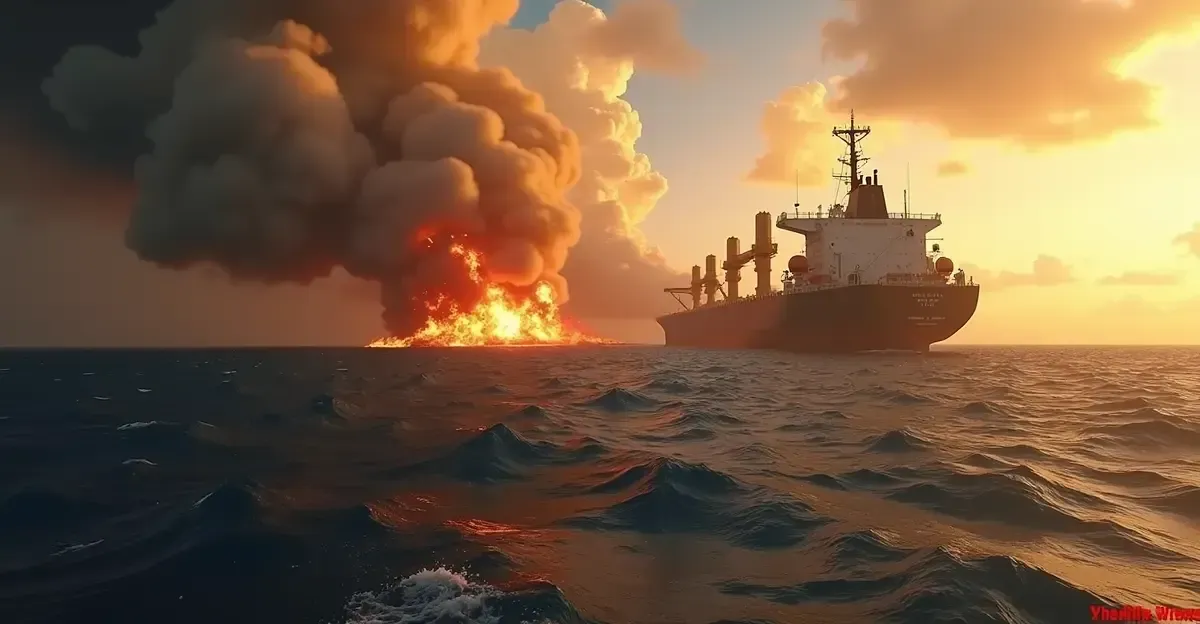
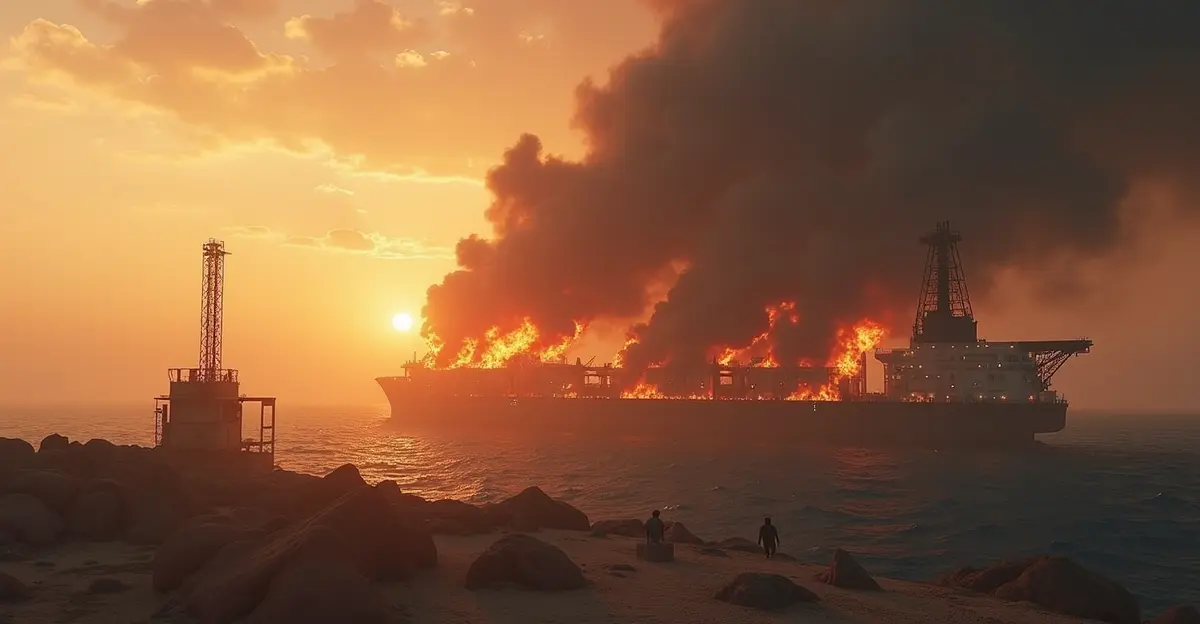
The renewed hostilities follow a series of Iranian attacks on commercial shipping in the Gulf. According to U.S. Central Command, the IRGC struck multiple vessels, including an oil tanker off the Omani coast, leaving six injured and three missing. In response, President Trump ordered over 20 U.S. Navy warships and hundreds of military aircraft into operation across the Middle East. The 2026 Strait of Hormuz crisis has now entered its most dangerous phase yet.
Military and Economic Fallout
Oil Markets in Turmoil
Brent crude oil prices rose 5.3% to $80 per barrel on July 13 alone, while West Texas Intermediate hit $75.18. Analysts warn that a prolonged closure could push prices toward $200 per barrel. The blockade has stranded over 150 vessels in the Persian Gulf, with an estimated daily economic cost exceeding $4 billion. War risk insurance premiums for ships transiting the region have soared to more than 16 times normal rates. The International Maritime Organization reports that roughly 20,000 mariners remain trapped aboard ships in the Gulf.
Regional Military Response
Iran's Islamic Revolutionary Guard Corps (IRGC) retaliated by launching missile and drone strikes against U.S. military facilities in Bahrain, Jordan, Kuwait, Qatar, and Oman. Kuwait's air defense systems intercepted 33 drones, five cruise missiles, and one ballistic missile, though a Kuwaiti naval vessel was hit, injuring four service members. Iran's IRGC has threatened that "not a single drop of oil and gas" will leave the region as long as U.S. actions continue. Meanwhile, India summoned Iran's diplomat after attacks on two commercial vessels killed an Indian seafarer.
Trump Abandons Strait Toll in Favor of Trade Deals
President Trump announced he is backing away from a previously proposed 20% fee on cargo moving through the Strait of Hormuz, instead pursuing investment deals with Gulf states. The White House indicated the shift aims to strengthen economic partnerships with Saudi Arabia, the UAE, and Qatar while maintaining military pressure on Tehran. Iran has countered by threatening to impose its own tolls on any vessel passing through the strait without permission.
Europe's Heatwave Crisis: France Shuts Nuclear Reactors
As the Gulf crisis unfolds, Europe is grappling with a brutal heatwave that has forced France's state-owned energy group EDF to temporarily shut down three nuclear reactors and reduce power at eight others. The affected reactors—Golfech Unit 2 (1,300 MW), Bugey Unit 3 (900 MW), and Chooz Unit 2 (1,450 MW)—account for roughly 6% of France's 61 GW nuclear fleet. EDF stated the measure is an environmental requirement to avoid discharging excessively hot water into rivers, protecting aquatic life. Temperatures have topped 40°C across much of the country, marking France's third heatwave since May. The France nuclear reactor shutdowns 2026 highlight the vulnerability of energy infrastructure to climate change. EDF has announced an €8.7 billion adaptation plan over 15 years to improve resilience.
Fontainebleau Wildfire: 'Exceptional Scale' Blaze Near Paris
The heatwave has also fueled a massive wildfire in the Fontainebleau forest, about 40 miles southeast of Paris. Officials described the blaze as of "exceptional scale," burning roughly 1,900 acres and forcing the evacuation of 900 homes. Hundreds of firefighters and aerial crews, including Canadair aircraft drawing water from the Seine, battled the flames. The fire caused the partial closure of the A6 highway and disrupted high-speed rail traffic at Paris Gare de Lyon. The fire occurred during a busy summer travel weekend, ahead of France's July 14 national holiday. Scientists from the World Weather Attribution group noted that such heatwaves would have been "virtually impossible" without climate change.
Bangkok Pub Fire: 30 Dead in Nightclub Tragedy
In Thailand, a devastating fire broke out shortly before midnight on July 12 at the Rong Beer Na Lat Phrao beer hall in Bangkok's Chatuchak district, killing 30 people and injuring over 70 others. The fire reportedly started from an electrical short circuit in a ceiling-mounted air conditioning unit near the stage. Thick smoke quickly filled the venue when the power failed, and many victims were found near the kitchen and bathrooms at the rear. Officials reported that emergency exits were obstructed by beer crates and tables, and flammable ceiling materials contributed to the fire's rapid spread. The venue was registered as a "restaurant with live music" rather than an "entertainment venue," meaning it was not legally required to use fire-retardant materials. This is Thailand's deadliest blaze since 2009. The Bangkok pub fire safety regulations are now under intense scrutiny.
Hungary's Political Shakeup and Other Global Headlines
In Hungary, parliament voted to remove President Tamás Sulyok in a dramatic political shakeup. Meanwhile, the "Coalition of the Willing" met in Paris to support Ukraine's defense capabilities. In the United States, immigration agents fatally shot 26-year-old Colombian Joan Sebastián Durán Guerrero in Maine, sparking protests. Mexican President Sheinbaum called for criminal investigations into the deaths of 17 Mexicans in the U.S. A federal judge also blasted Trump's $10 billion lawsuit against the IRS, and 12 Democratic-led states sued to block Paramount Skydance's $111 billion acquisition of Warner Bros. Discovery.
FAQ
What is the Strait of Hormuz and why is it important?
The Strait of Hormuz is a 34-kilometer-wide maritime chokepoint between Iran and Oman. Roughly 20% of the world's seaborne oil trade and 25% of global LNG transit through it daily, making it the most critical energy artery in the world.
Why did the US resume the blockade of Iran?
The US resumed the blockade after the interim June 17 ceasefire collapsed. Iran allegedly struck multiple commercial ships in the strait, prompting President Trump to order a new round of airstrikes and a naval blockade of Iranian ports.
How high could oil prices go?
Brent crude has already surpassed $80 per barrel. Analysts warn that a prolonged full closure could push prices toward $200 per barrel, which would be the largest disruption to world energy supply since the 1970s.
What caused the Bangkok pub fire?
The fire started from an electrical short circuit in an air conditioning unit near the stage. Flammable ceiling materials, obstructed exits, and a lack of fire-retardant requirements contributed to the high death toll of 30.
How is climate change affecting France's nuclear power?
Extreme heatwaves are forcing EDF to shut down or reduce power at nuclear reactors because environmental regulations limit the discharge of hot water into rivers. This is the second such shutdown in weeks, and EDF is investing €8.7 billion in adaptation measures.

Follow Discussion