


 Deutsch
 English
 Español
 Français
 Nederlands
 Português


 Share
Share




Deadly Hong Kong Fire Followed Year of Ignored Safety Complaints
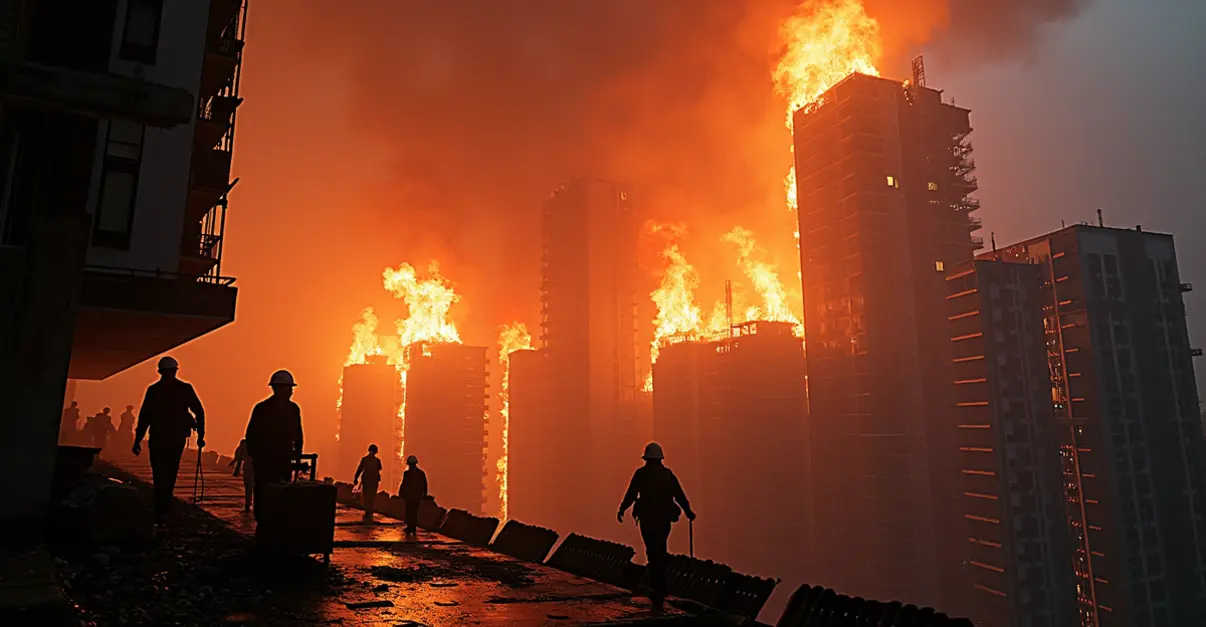
Residents of the Wang Fuk Court apartment complex in Hong Kong's Tai Po district had repeatedly warned authorities about fire safety hazards for over a year before a devastating blaze claimed at least 128 lives, making it the city's deadliest fire in 70 years. The tragedy has exposed serious regulatory failures and raised questions about building safety enforcement in one of the world's most densely populated cities.
Repeated Warnings Went Unheeded
According to documents obtained by Reuters, residents first raised concerns in September 2024 about the potential fire hazards posed by renovation work at the 32-story residential towers. Their complaints specifically focused on the flammable protective green mesh covering bamboo scaffolding around the buildings and foam insulation attached to windows.
Despite these warnings, the Labour Department told residents they faced "relatively low fire risks" after reviewing safety certifications. The department conducted 16 safety inspections between July 2024 and November 2025 and issued six improvement notices to contractor Prestige Construction, but residents say their most serious concerns were never adequately addressed.
Systemic Failures in Fire Safety
The fire, which began on November 27, 2025, spread rapidly through the exterior scaffolding system, engulfing seven of the eight towers within hours. Police have confirmed that the safety netting "suspected of not meeting fire safety standards" and arrested three senior managers from the construction company on suspicion of manslaughter.
Fire Chief Andy Yeung Yan-kin confirmed that the building's fire alarm systems failed to function during the emergency. "Specialized teams concluded after inspecting all eight towers that the fire alarm systems were not operational," Yeung told reporters. This critical failure meant residents received no automated warning as flames consumed their homes.
Fire Department Faces Criticism
The fire department's response has come under intense scrutiny, with critics questioning why helicopters, drones, and taller ladder trucks weren't deployed more effectively. Fire Chief Yeung defended his department's tactics, explaining that water bombs dropped from helicopters could have worsened the situation by increasing airflow to the fire.
"Our 100-meter ladder trucks require 10-meter wide roads to deploy stabilizers, but most Hong Kong streets only have 6-meter emergency access," Yeung stated. "Drones also couldn't carry sufficient water to combat a fire spreading across multiple buildings simultaneously."
Victim Identification Challenges
With only 39 of the 128 victims officially identified, authorities face a massive identification challenge. Approximately 200 people remain missing, and the government has warned that more victims may be found in the still-smoldering complex. Families have been gathering at community centers to review photographs of the deceased and personal items recovered from the scene.
The tragedy has drawn comparisons to London's 2017 Grenfell Tower disaster, where similar fire-spreading mechanisms through building facades claimed 72 lives. Both incidents highlight the catastrophic consequences when residents' safety concerns are dismissed and regulatory oversight fails.
Government Response and Investigation
Hong Kong authorities have declared a three-day mourning period and launched a comprehensive investigation into the disaster. The government has announced HK$200,000 condolence payments for victims' families and HK$50,000 for affected households. Public donations have reached HK$500 million, supplemented by HK$300 million in government funding.
As structural safety inspections and police investigations continue, the Wang Fuk Court fire serves as a tragic reminder of the importance of heeding resident concerns and maintaining rigorous building safety standards in high-density urban environments.
Follow Discussion