


 Deutsch
 English
 Español
 Français
 Nederlands
 Português


 Share
Share




What Is FORGE? A New Era for Critical Mineral Security
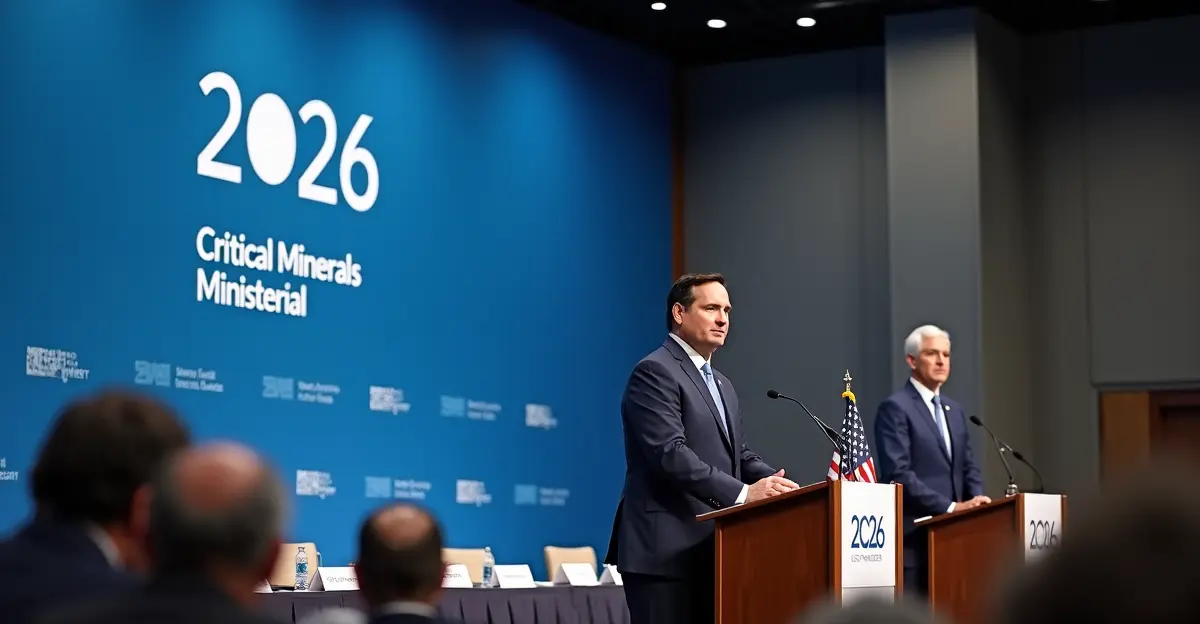
In February 2026, the United States launched the Forum on Resource Geostrategic Engagement (FORGE) at the inaugural Critical Minerals Ministerial in Washington, D.C., fundamentally reshaping how Western allies approach critical mineral supply chains. FORGE replaces the Minerals Security Partnership (MSP) with a preferential trade-and-investment zone and coordinated price floors, directly countering China's projected control of 60-80% of refined critical minerals by 2035. With 54 nations participating, over $30 billion mobilized, and 11 new bilateral framework agreements signed, FORGE represents the most aggressive Western response yet to critical mineral supply concentration.
The Minerals Security Partnership was the predecessor to FORGE, but the new framework goes much further by creating enforceable mechanisms for price stability and investment coordination.
Background: Why FORGE Was Needed
China currently controls roughly 90% of global rare earth processing and dominates refining for 19 of 20 strategic minerals tracked by the International Energy Agency. In 2025, China imposed export controls on germanium, tungsten, antimony, and other critical minerals, causing price spikes of up to 600% outside China. Over 80% of European companies remain dependent on Chinese supply chains for defense and energy materials. The U.S. is fully import-dependent for 12 critical minerals and relies on foreign sources for over 50% of 29 more. These vulnerabilities threaten not only the energy transition—which requires massive amounts of lithium, cobalt, nickel, and rare earths—but also defense supply chains for systems like the F-35 fighter jet and advanced munitions.
Key Components of FORGE
Preferential Trade-and-Investment Zone
FORGE establishes a plurilateral coalition creating a preferential trade zone for critical minerals among allied nations. Over 30 countries have expressed interest in joining, benefiting from enforceable price protections, shared stockpiles, and unified tariff policies against external market manipulation. The framework is chaired by South Korea and aims to link bilateral agreements into a system covering two-thirds of the global economy.
Coordinated Price Floors
On February 4, 2026, Vice President JD Vance announced the Critical Minerals Price Floor, a state-backed financial guarantee setting minimum reference prices for key minerals: cobalt at $25.20/lb, lithium at $15,200/tonne, copper at $5.10/lb, and neodymium at $95,000/tonne. These floors protect Western producers from predatory Chinese pricing, where state-subsidized oversupply has historically crushed competing projects. The price floors are maintained through adjustable tariffs, though this mechanism risks WTO challenges and could raise costs for downstream industries.
Project Vault: The $12 Billion Strategic Reserve
Project Vault is a $12 billion public-private strategic minerals stockpile, backed by a $10 billion Export-Import Bank loan (the largest in the bank's history) and nearly $2 billion in private capital. Participating OEMs—including Boeing, GE Vernova, General Motors, and Western Digital—request specific minerals and commit to purchasing them at fixed prices. The reserve covers all 60 minerals on the USGS 2025 Critical Minerals List, with emphasis on rare earth elements. The government has also taken equity stakes in mining companies like MP Materials, USA Rare Earth, and Lithium Americas. However, a key challenge remains timing: new mines in the U.S. take 16-29 years to develop.
Impact on the Energy Transition and Defense Supply Chains
The energy transition supply chain is heavily dependent on critical minerals. China's dominance means that supply shocks could increase battery costs by 28% and delay grid-connected battery projects by two years. FORGE's initiatives aim to de-risk these supply chains by diversifying sources and stabilizing prices. For defense, the U.S. Department of Defense has identified critical minerals as essential for F-35 jets, advanced electronics, and munitions. The 2025 export controls by China demonstrated how quickly supply disruptions can impact national security.
AI infrastructure is also creating unprecedented competition for copper, with data centers projected to require 475,000+ tonnes in 2026 alone, while the copper market faces a 330,000-tonne supply deficit. The AI and critical minerals nexus is becoming a central concern for policymakers.
Expert Perspectives
"FORGE represents the most ambitious Western counter-coordination since the Cold War," said a senior State Department official involved in the negotiations. "We are moving from a reactive posture to a proactive strategy that uses market mechanisms and diplomatic coordination to secure our supply chains." However, analysts caution that rebuilding independent alternatives could take 20-30 years, leaving a narrowing 12-18 month window for decisive action. The Bipartisan Policy Center noted that physical stockpiles require significant storage infrastructure and risk market destabilization if not managed carefully.
Geopolitical Realignment
FORGE has triggered a broader realignment of 54 nations around resource security. The initiative includes competition between Saudi Arabia and the UAE to become the Middle East's critical minerals processing hub. The geopolitics of critical minerals is reshaping alliances, with resource-rich nations gaining strategic leverage. The 11 new bilateral framework agreements signed in February 2026—with Argentina, Morocco, Peru, the Philippines, UAE, UK, and others—bring the total to 21 deals in five months.
Frequently Asked Questions
What is FORGE?
FORGE (Forum on Resource Geostrategic Engagement) is a U.S.-led plurilateral initiative launched in February 2026 to secure critical mineral supply chains through a preferential trade zone, coordinated price floors, and investment coordination. It replaces the Minerals Security Partnership.
How does FORGE differ from the Minerals Security Partnership?
FORGE goes beyond the MSP by creating enforceable mechanisms for price stability, including coordinated price floors maintained through adjustable tariffs, and a more structured investment framework with over $30 billion mobilized.
What is Project Vault?
Project Vault is a $12 billion public-private strategic critical minerals reserve funded by a $10 billion EXIM loan and $2 billion in private capital. It allows companies to secure minerals at fixed prices, protecting against supply disruptions and price volatility.
How will FORGE affect the energy transition?
By diversifying supply chains and stabilizing prices for lithium, cobalt, nickel, and rare earths, FORGE aims to reduce battery costs and accelerate deployment of renewable energy and electric vehicle technologies.
What are the risks of FORGE?
Key risks include potential WTO challenges to price floor mechanisms, the long lead times for new mine development (16-29 years), storage infrastructure needs for physical stockpiles, and the possibility of market destabilization if reserves are mismanaged.
Conclusion: A Narrow Window for Action
FORGE represents a fundamental shift in Western strategy toward critical minerals, moving from reliance on market forces to active statecraft through markets. With China's dominance projected to grow through 2035, the initiative faces a race against time. Success will depend on rapid implementation of bilateral agreements, effective coordination of price floors, and significant investment in domestic processing capacity. The next 12-18 months will be critical in determining whether FORGE can deliver on its promise of secure, diversified supply chains for the energy transition and national defense.




Follow Discussion