


 Deutsch
 English
 Español
 Français
 Nederlands
 Português


 Share
Share




In February 2026, the United States launched the Forum on Resource Geostrategic Engagement (FORGE) and Project Vault, a $10 billion Strategic Critical Minerals Reserve, marking the most ambitious Western institutional response to China's dominance over lithium, rare earths, and graphite processing. Backed by 11 new bilateral deals and over $30 billion in total financing, this plurilateral coalition introduces coordinated price floors and preferential trade rules designed to rewire global critical mineral supply chains within 5–7 years. The initiative has profound implications for electric vehicle (EV) supply chains, artificial intelligence (AI) infrastructure, and defense systems worldwide.
What Is FORGE and Why Was It Created?
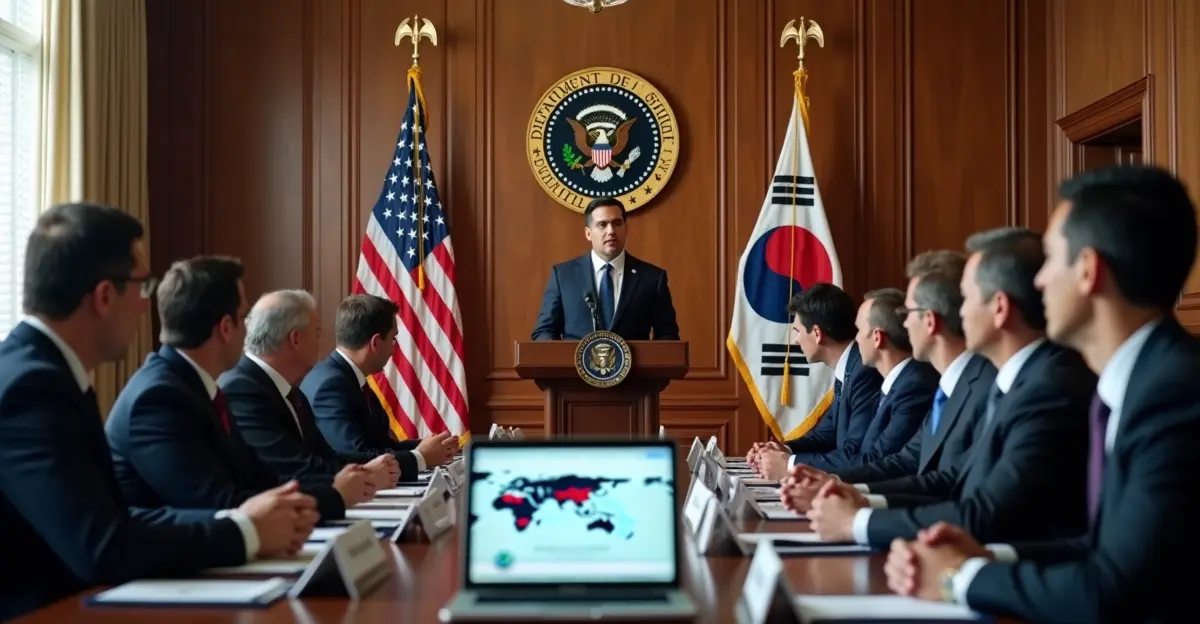
FORGE is a plurilateral coalition that succeeds the Minerals Security Partnership (MSP), initially chaired by South Korea. It was formally announced at the inaugural Critical Minerals Ministerial hosted by the U.S. State Department on February 4, 2026, with delegations from 55 countries. The forum aims to create a preferential trade-and-investment zone with coordinated price floors to counter what U.S. officials describe as non-market distortions by dominant producers—primarily China. Vice President JD Vance outlined the mechanism: "reference prices for critical minerals at each stage of production" enforced through adjustable tariffs.
The World Economic Forum Global Risks Report 2026 ranked geoeconomic confrontation as the top global risk, underscoring the urgency behind FORGE. China currently controls over 60% of lithium processing, 90% of rare earth processing, and 70% of graphite production, giving Beijing significant leverage over industries essential for clean energy, advanced computing, and national defense.
Project Vault: A $10 Billion Strategic Reserve
Project Vault establishes the U.S. Strategic Critical Minerals Reserve, an independently governed public-private partnership backed by the largest loan in Export-Import Bank (EXIM) history—$10 billion. Announced on February 2, 2026, by EXIM Chairman John Jovanovic alongside President Trump, the reserve will store essential raw materials in secure facilities across the United States. Participating original equipment manufacturers (OEMs) include Clarios, GE Vernova, Western Digital, and Boeing, with suppliers such as Hartree Partners, Mercuria Americas, and Traxys.
The reserve is designed to shield domestic manufacturers from supply shocks and ensure uninterrupted access to materials critical for advanced manufacturing. Unlike traditional stockpiles, Project Vault is structured as a public-private partnership expected to deliver a net positive return for U.S. taxpayers while reducing dependence on foreign-controlled supply chains. The initiative complements the U.S. Inflation Reduction Act provisions for critical minerals and aligns with broader efforts to onshore processing capacity.
Bilateral Deals and $30 Billion Financing
The Critical Minerals Ministerial produced 11 new bilateral framework agreements, bringing the total to 21 deals in five months. Key partners include Argentina, Morocco, Peru, the Philippines, the United Arab Emirates, and the United Kingdom. These agreements cover joint exploration, processing technology transfers, and investment guarantees. The U.S. has mobilized over $30 billion in total financing through EXIM, the U.S. International Development Finance Corporation (DFC), the Department of Energy, and the Pentagon.
A notable development is the U.S.-Mexico Critical Minerals Action Plan, which takes a trade-centered approach and signals a shift away from trilateral coordination under the USMCA. The EU Critical Raw Materials Act and the U.S.-EU critical minerals partnership deal further illustrate the transatlantic dimension of this strategy.
Coordinated Price Floors: A New Tool in Geoeconomic Competition
A central feature of FORGE is the introduction of coordinated price floors for critical minerals at each stage of production—from mining to processing to refining. Vice President Vance argued that price floors are essential to protect mining and processing projects from volatile prices that have forced major operations to suspend or close. The mechanism works by setting a minimum reference price; if market prices fall below that threshold, adjustable tariffs are applied to imports from non-participating countries.
This approach directly challenges China's ability to flood markets with low-priced materials, a tactic that has historically driven Western competitors out of business. The price floor system is expected to stabilize investment in new processing capacity, which requires billions of dollars and 5–7 years to bring online. Critics, however, warn that price floors could distort markets and raise costs for downstream industries like battery manufacturing.
Implications for EV Supply Chains, AI Infrastructure, and Defense
The success of FORGE and Project Vault will determine whether Western allies can build alternative processing capacity within 5–7 years. For the EV industry, secure access to lithium, cobalt, nickel, and graphite is essential to meet growing demand for batteries. The International Energy Agency projects that lithium demand could increase 40-fold by 2040 under net-zero scenarios. Similarly, rare earths are critical for permanent magnets used in EV motors and wind turbines.
AI infrastructure relies on advanced semiconductors that require specialty chemicals and materials derived from critical minerals. Defense systems—from F-35 fighter jets to missile guidance systems—depend on rare earth magnets and other specialty metals. The U.S. Department of Defense's critical minerals strategy has identified these vulnerabilities, and FORGE provides a multilateral framework to address them.
Expert Perspectives
"FORGE represents a paradigm shift from bilateral resource diplomacy to a plurilateral framework that can coordinate investment, trade rules, and price stabilization across two-thirds of the global economy," said a senior fellow at the Atlantic Council's Global Energy Center. "The question is whether this network built on bilateral leverage can be transformed into genuine plurilateral coordination."
Analysts at the Center for Strategic and International Studies (CSIS) noted that price floors were deemed essential to protect projects from volatile prices that have forced major operations to suspend or close. However, they cautioned that the crowded multilateral landscape—including the G7's Production Alliance, the EU's Critical Raw Materials Club, and the Minerals Security Partnership—creates complexity that could dilute FORGE's effectiveness.
Frequently Asked Questions
What is FORGE?
FORGE (Forum on Resource Geostrategic Engagement) is a plurilateral coalition launched by the U.S. in February 2026 to coordinate critical minerals policy among allied nations. It replaces the Minerals Security Partnership and is chaired by South Korea.
What is Project Vault?
Project Vault is a $10 billion public-private partnership that establishes the U.S. Strategic Critical Minerals Reserve, a stockpile of essential raw materials stored in secure domestic facilities to protect against supply disruptions.
How do price floors work under FORGE?
Member countries agree on minimum reference prices for critical minerals at each production stage. If market prices fall below these levels, adjustable tariffs are applied to imports from non-member countries to stabilize prices and protect domestic producers.
Which countries have signed bilateral deals with the U.S.?
As of February 2026, 21 bilateral framework agreements have been signed, including with Argentina, Morocco, Peru, the Philippines, the UAE, the UK, and Mexico. The U.S.-Mexico Critical Minerals Action Plan is a notable trade-centered agreement.
How long will it take to build alternative processing capacity?
Industry experts estimate 5–7 years to bring new processing facilities online, given the complexity of permitting, construction, and technology deployment. FORGE aims to accelerate this timeline through coordinated investment and streamlined regulations.
Future Outlook
The FORGE initiative and Project Vault represent a high-stakes test of Western resolve to counter China's critical minerals dominance. Success will require sustained political commitment, massive capital deployment, and effective coordination among diverse stakeholders. The 2026 U.S. midterm elections could influence the continuity of these policies, while China's response—potentially including export controls or price wars—will shape the trajectory of global supply chains. If successful, FORGE could become a model for geoeconomic cooperation in other strategic sectors. If it falters, the world may face a prolonged period of vulnerability to supply disruptions and geopolitical coercion.


Follow Discussion