


 Deutsch
 English
 Español
 Français
 Nederlands
 Português


 Share
Share




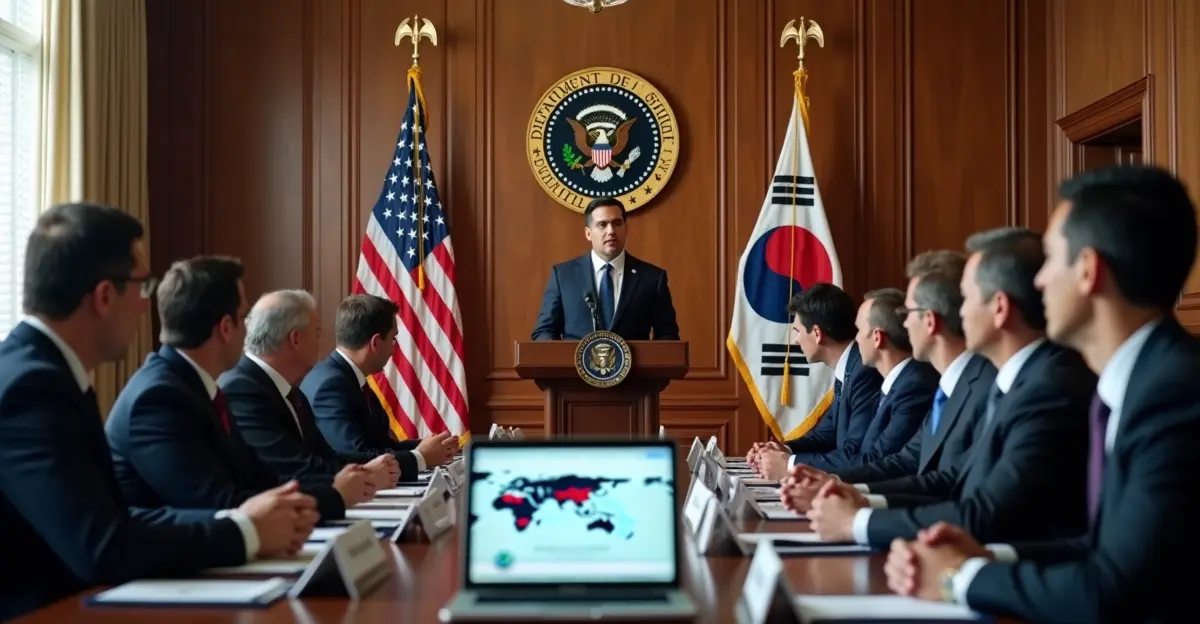
The launch of FORGE and Project Vault in early 2026 marks a seismic shift in global critical minerals strategy. On February 4, 2026, the United States unveiled the Forum on Resource Geostrategic Engagement (FORGE), a 54-nation coalition chaired by South Korea, alongside Project Vault—a $10 billion Export-Import Bank-backed domestic strategic reserve. These initiatives represent the most ambitious Western effort to break China's stranglehold on critical mineral processing and refining, which is projected to exceed 60% of global lithium and cobalt capacity by 2035. This article analyzes how the new U.S. strategy of price floors, sovereign loans, and bilateral MOUs is reshaping supply chain risk for manufacturers, EV producers, and defense contractors worldwide.
Background: The Critical Minerals Challenge
China currently controls approximately 90% of global rare earth processing and 80% of tungsten, and has tightened export controls on gallium, germanium, and antimony in early 2026. The Minerals Security Partnership, launched in 2022, struggled to secure concrete investment commitments. FORGE replaces this framework with a more agile plurilateral design, backed by over $30 billion in mobilized financing. The February 2026 Critical Minerals Ministerial in Washington, D.C., hosted by Secretary of State Marco Rubio and Vice President JD Vance, brought together representatives from 54 countries and the European Commission, signaling a new era of critical minerals diplomacy.
FORGE: A New Multilateral Architecture
Structure and Membership
FORGE is chaired by South Korea and includes major economies such as Japan, Australia, the European Union, and key resource-rich nations like Argentina, Morocco, the Democratic Republic of the Congo (DRC), and the Philippines. The initiative leverages the MINVEST public-private partnership to spur investment in strategic mining and minerals processing. Unlike its predecessor, FORGE emphasizes flexible plurilateral engagement and hybrid public-private financing models.
Key Mechanisms
- Price Floors: Participating companies can lock in fixed prices for critical minerals, reducing volatility risk.
- Sovereign Loans: EXIM and other development finance institutions provide concessional loans to partner countries.
- Bilateral MOUs: The U.S. signed 11 new bilateral critical minerals frameworks at the Ministerial, with countries including Argentina, Morocco, the DRC, and Uzbekistan.
Project Vault: The $10 Billion Strategic Reserve
Announced on February 2, 2026, by EXIM Chairman John Jovanovic alongside President Trump, Project Vault establishes the U.S. Strategic Critical Minerals Reserve—a public-private partnership storing essential raw materials in secure facilities nationwide. The initiative is backed by a $10 billion EXIM direct loan and nearly $2 billion in private capital. Participating manufacturers include Clarios, GE Vernova, Western Digital, and Boeing, with suppliers including Hartree Partners, Mercuria Americas, and Traxys. The structure is designed to deliver a net positive return for U.S. taxpayers while strengthening national security.
How It Works
Companies can draw minerals from the reserve during supply disruptions and replenish withdrawn amounts over time. This model protects against price spikes and supply shocks, particularly critical for EV battery supply chains and defense manufacturing.
Bilateral Agreements Reshaping Global Supply Chains
The 11 new bilateral MOUs signed at the Ministerial represent a sharp pivot from multilateral coordination toward targeted, equity-backed partnerships. Key agreements include:
| Country | Key Minerals | Strategic Importance |
|---|---|---|
| Argentina | Lithium | Part of the 'Lithium Triangle' with Chile and Bolivia |
| Morocco | Phosphates, Cobalt | Gate to African mineral wealth; stable governance |
| DRC | Cobalt, Copper | 70% of global cobalt production |
| Philippines | Nickel | Key for EV batteries and stainless steel |
These agreements offer partner countries preferential market access, investment protection, and infrastructure development. An MOU between Glencore and the Orion Critical Mineral Consortium regarding potential DRC asset acquisitions was also signed, promoting U.S. investment in the DRC's mining sector.
Impact on Manufacturers and Defense Contractors
For companies like Boeing and GE Vernova, Project Vault provides a hedge against supply disruptions that could halt production lines. The defense industrial base relies heavily on rare earths for magnets, guidance systems, and radar. EV producers such as Tesla and Rivian benefit from price stability for lithium and cobalt. However, experts warn that rebuilding processing capacity could take 20-30 years, and stockpiling may temporarily distort markets.
Expert Perspectives
"FORGE and Project Vault represent the most consequential U.S. strategic supply chain intervention in decades," said a senior State Department official. "We are moving from dependency to resilience." However, critics raise concerns about potential 'resource imperialism' and whether these agreements adequately address ESG considerations for developing nations. The Bipartisan Policy Center notes that storage infrastructure requirements and potential market destabilization risks from stockpiling remain challenges.
FAQ
What is FORGE?
FORGE (Forum on Resource Geostrategic Engagement) is a 54-nation coalition launched in February 2026 to secure diversified critical mineral supply chains, chaired by South Korea.
What is Project Vault?
Project Vault is a $10 billion EXIM-backed public-private partnership establishing the U.S. Strategic Critical Minerals Reserve to protect manufacturers from supply shocks.
How does Project Vault differ from the Defense Production Act stockpiles?
Project Vault is a market-based mechanism where companies can draw and replenish minerals, designed to generate returns for taxpayers, unlike traditional government stockpiles.
Which countries signed bilateral MOUs with the U.S.?
Eleven countries signed MOUs at the 2026 Ministerial, including Argentina, Morocco, DRC, Philippines, UAE, and Uzbekistan.
What is China's current share of critical mineral processing?
China controls about 90% of rare earth processing, 80% of tungsten, and is projected to control over 60% of lithium and cobalt refining by 2035.
Conclusion
The FORGE alliance and Project Vault signal a new era in critical minerals geopolitics. By combining plurilateral diplomacy, bilateral equity partnerships, and a domestic strategic reserve, the U.S. aims to build a resilient Western-led supply chain. Success will depend on execution, infrastructure investment, and maintaining partner trust. For manufacturers, EV producers, and defense contractors, the message is clear: supply chain risk is now a boardroom priority.



Follow Discussion